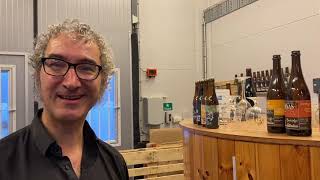
A filmed interview/walkthrough (Dec 7, 2019) by Richard Perkins visiting Martin’s family-scale microbrewery near Stockholm. The video covers Martin’s path from homebrewing to a one-person brewery intended to provide a family income, financing and equipment (lease-to-buy), Swedish alcohol retail rules, costs and volumes, detailed step-by-step brewing operations (mash, sparge, boil, heat-exchange, fermentation), bottling workflow, barrel-aged and wild-yeast beers (blending, aging in red-wine barrels), logistics/marketing (festivals, export), and operational routines (cleaning, courses, festivals). Emphasis is on small-scale, sustainable, craft production rather than growth.
Questions this video answers
Somewhere between €50,000 and €100,000.
He can brew up to 1,000 liters but typically keeps batches to 500 liters; in summer he brews ~500 L/week (in winter possibly once a month).
Beers above 3.5% ABV must be sold through the government alcohol retailer (Systembolaget); beers ≤3.5% can be sold in supermarkets.
About 1,500 bottles (for 500 L).
Approximately 1 year in barrel and then at least ~6 months (half a year) additional aging in bottle before tasting for final development.
Chapters
For today's video, something a little bit different. I'm near Stockholm, in Gynesters, where we lived when we first. When I first moved to Sweden and I met Wilbert and we lived in a small community together. And in this unsuspecting little building, he has a family income microbrewery. And I think it's nice to go check that out.
Hey.
It's super nice to be here. And we met. So we must have met back in 2013, I don't know, 2014. You had just moved to Sweden with your family. Yeah, I just moved to Sweden. So we were living at a small community very close by here. And while we were brewing little home.
Beers, the thing is, he wanted to make beer. So what he did, he bought this can of syrup. You have to add water and then, you know, cool it down and add yeast. And then people said, wow, that's simple. That's how you make beer. That's not how you make beer. I didn't see any grains, you know, so he was fermenting and then you. But yeah, you introduced me.
Well, and then you got quite serious, didn't you?
I felt like, no, that's not how you brew beer. You know, you start with grains. So yeah, from the start, around that time also Oklahoma University, they had a course the chemistry of beer. And I followed that. I followed that twice actually. And after already a lot of Internet research, I knew quite a lot. But it was nice to see, you know, really from the start to the.
Whole process to manage that. Yeah, you wanted to buy a farm that you could have the brewery on.
Ideally. Ideally, yeah, we want to have it on our own property.
And you might even move it to.
Your own property when you. At some point. I mean that's the nice thing about having a small brewery. You can take it mobile. Yeah, exactly. The countryside, I did it before and you know, an IT job you don't find, you know, everywhere, at least not on the scale that I was used to, but you know. Yeah, a brewery you can just take wherever you want.
So you've been going three years, is that right?
No, four years.
Four years now. And the aim is to get a family income with one person job and not grow the business. Keep it like a sustainable.
Yeah, the size it is right now, it's one man's operation, you know, and then people are used to these huge factories, you know. So they also ask me what is your, your vision on the future? You know, they want me to, to expand. Yeah, yeah. Like a carpenter, you know, you don't ask a carpenter, you know, when are you going to start hiring people? You know, it's a.
You do your thing and keep it a sustainable.
Exactly. You know, and where I grew up, next to Belgium, it was quite normal. Every village had a, you know, family run brewery and, you know, they did it with their family and maybe hired one person, you know, but that was it, you know, they were. They didn't want to grow bigger, they just want to have it.
Yeah, it's quite the setup, Will. But this is like. Tell us a bit how you got started. Like you rent this building.
Yeah.
And then you lease the equip. Like a lease to buy for the equipment.
Yeah, exactly. We really started with 00 money. So we just made a business plan. We went to the bank and said, this is our plan, this is the money we need, please give it to us.
And they were into the idea.
Absolutely, yeah. But yeah, it means that, you know, we're four years in the run now and we paid off the first loan, but one more year and then equipment is paid off.
That's awesome. But this is all from the uk, this.
Yeah, this is a traditional real ale setup, as they call it. It's very close to home brewing, just on a bigger scale. I can brew a thousand liter, but lots of times I still keep it to 500 liters. That is about what I can also bottle in one day.
So let's. We'll get into the technicals. But what's the sort of like, how much does this sort of gear cost? Like, what are you looking at as the initial investment to get started?
It all depends on what your expectations are. Do you want to make money right away? Do you want to invest in it first? Do you have your own place where you can set this up? You know, we have to pay rent each month. It all counts up. So you need to have starting a capital, you know, you need to buy stock your bottles and your malt and your. Yeah.
Can you give us like a ballpark figure? Like 40 grand, 50 grand? 100 grand?
Somewhere between 50,000 and €100,000, I would say. Yeah, that's a. And depending on how handy you are, you know, if you have a friend that is a stainless steel welder, you.
Could make some money. But you essentially bought like a turnkey solution that you could just bring it in here and off and go.
So that. Yeah, exactly.
And what sort of volume.
In Sweden? It's a little bit difficult because. Yeah. Or difficult. You know, there are some, some bumps, especially when you start the first year you just end up in the local system. So that's something run shut.
Something to clarify is like Sweden, basically anything above three and a half percent. Is that right? You can buy low alcohol beer in the supermarket, but anything stronger than 3.5%, you have to go to the government shop.
Yeah. And I'm not allowed to sell strong beer.
Yeah.
Like a 3. 3.5. I can get a permit to sell 3.5 to the public and then I can sell beer to anybody who has.
A liquor license or to system belong.
Yeah. If I want to have it on a shell where people can go and grab a bottle.
Yeah.
System liked.
And is it a benefit in one way that because there's a monopoly on alcohol, they have to stock your beer, is that correct or yes?
Yes and no. Locally, they have to put you on the shelf locally. But that means, you know, if you're starting your brewery in a small town, you also have to, you know, that's your only market, unless you are focusing on people that ordering beer. And then you really have to have specialty beer. So you have to make a choice there. Are you going to brew for the local market or are you brewing for, you know, people that normally like to order beer?
I know you. You're very interested in the alchemy of brewing and you've made a whole load of different beers. But maybe just give us a summary of like the style and approach you have.
Yeah. What? Two. Two versions? We have a normal ale. You can say a normal. And next to that we have a barrel aged wild ale. Wild ale is fermented with a wild yeast and. Or bacteria. Yeah, that is the better product. It is way more interesting. It has a long shelf life, but it's a specialty product. And locally we sell a few boxes here and there, but it's not enough. If you produce wild eel, you cannot sell that to the local market. So you have to rely on people. You really have to work on your brand.
And Martin, you've got a strong brand with your. With your hair.
It was so difficult to come up with a logo, you know, I wanted to have something Dutch. So first, you know, wooden shoes, windmills, cheese. And it was also cheesy. So then one day I just. You know what, it's a one man's business. So I just took a picture of myself, traced the outlines and, you know, voila.
I think you thought so.
Yeah. The name, by the way, it was a neighbor who, who came up with that. It's a. It's a play with words. You have the brewing Dutchman and the Flying Dutchman. And they, they sound pretty much the same. The Flugene or the Bruggene Hollender.
Yeah. Nice.
Yeah, we had the name and then the logo came later.
So these are current beers that you're brewing. What have we got here?
Yeah, well, for instance, you know, play with words. Elderflower beer. Elderflower in Swedish is flatter. So we called it don't flatter yourself. It's all hand picked. Flatter. I picked together with my daughter. We rent a house on the farm. The farmer helps us as well, you know.
That's awesome.
Yeah, it's really nice. You know, a Christmas beer, it's a triple. We have a lot of Belgium inspired beers. Because it's also. When you have a setup like this, clearly you're not going to brew the perfect lager. So you have to, you know, focus on what you can and not on what you can't. You know, you can make a real proper ale. So focus for instance on yeast, the flavors on yeast and not the flavors of your hops. You know, your hops, they're going to oxidize and it's not going to be as good. But yeast, you know, it benefits from having a little bit introduction of oxygen, you know, it's a plus. It's also, that's what I grew up with, you know, it's my. You can get so much interesting flavors of your yeast. So yeah, a Belgian blonde, for instance, and a licorice stout. It's actually also play with words, but not a lot of people know it. Licorice in Dutch means drop. Ah, yes, translates into drop it.
And you started doing these big bottles now.
Yeah, and that is really where we want to end up.
You got really into barrel aged and wild yeast, haven't you? That's like becoming your specialty.
But it takes a really long time to get experienced.
Just got a bit of storage. So the main production is all here. What's the, what sort of output? Like what's the weekly output here?
Well, it depends of course, which, which season. You know, in the summer I brew 500 liter a week, but in January it's possible that I brew just once a month. You know, it's January, everybody has sales, drops, beer, their money.
So what would be a yearly output on this scale.
With a setup like this and the cost I have 500 liters a week will give you an income year round.
Approximately 500 every week. Yeah. That's pretty neat. Do you want to walk us through the setup then? So how, like tell us about the entire process.
Okay, so we first start with hot water. You know, your grains, they have starches, they needed to be broken down. Inside the husk, you have the enzymes that chop down the sugars. Depending on the temperature, there are two kinds of enzymes. One that chops off small sugars from the end. The other one chops the long sugars in half. So depending on the temperature, because they work at different temperatures, you set your mash in temperature. Then we have a tongue here. We mix the grains together with the water. So here is where you break down the sugars. You determine if you're going to have a sweet beer or a dry beer. You know, people tend to say when a beer has body, it actually means it has quite some sugars left, but it gives this mouth feeling. Of course, your different grains also leaves flavor. You know, if you have a stout, it's a lot of roasted, toasted, your chocolate and your black malt. I just happen to have, you know, a black malt, it doesn't have much. You cannot make a beer out of 100 black malt. It doesn't have any starches, but it gives flavor. So flavor from your malt breaking down sugars. Then it's going to sit here, depending on the beer style, a minimum of one hour. In that hour, you chop down your sugars. Then you start to sparch. So again you set your parch temperature, which is normally higher than your max in temperature and you're going to wash out your sugars. So that's what we do with a construction with a bucket. You know, you control the speed. You want to take your time. You know that the sugars have to dissolve in your hot water. So it's. Yeah, it takes, it takes its time too. So slowly we fill up this tank. In this tank there's heating elements. This one, the mesh tank doesn't have any heating element. We do a one temperature mesh, which is for most beer styles. It's okay. Sometimes you can play a little bit with it because when we make a special mesh for the beers that are fermented with a wild yeast, it's a little bit different. You know, you have to take different steps, different temperatures, but you can do that by just your mesh thickness. So start really thick. So transfer. Here we're going to boil your wart at that time. It's called wart.
How are you transferring? Just with a pump. You pump it? Yeah.
Like I said, it has a bucket which has two, two levels. And very slowly it's filling up and it's so There's a. That's my speed control.
Yeah.
So, yeah, slowly we just fill this up. This is where you add your hops and, you know, any other added ingredients that you want, you know, lemon peel or. I also have cacao, for instance. During the mash, you can add flavors as well. But most of the time I know.
You'Re doing like with stale bread from the bakery here.
Yeah, I did. It was difficult because I wanted to make the most sustainable beer possible. It has a terrible label, by the way. But, yeah, they had leftover rye bread, an ecological rye bread, the local bakery, and I made beer out of it because it still has a lot of starches, which you can, you know, convert up until 25% of the beer we could make out of rye bread. And it actually left a really nice flavor. The only thing is, halfway through, the baker changed owner, the bakery changed owner. And then the first bakery, he put quite some spices in it, and then it was actually really nice. But the supply, you know, you cannot depend on leftover rye bread. That's a cool idea. So it's impossible to keep on the shelf. You know, it's there or not, you know. So, yeah, we did it a few times, but it was not. It was not sustainable. The beer was, but not the supply.
Sure. And so how long is the process in this tank?
I do around 70 minutes. So you do a boil for 70 minutes, you boil off DMS, D N T sulfant, Especially in the beginning, you can really smell it. It smells like cooked corn, you know, like a vegetable soup almost. And so, yeah, when I. You do the boil to sterilize, give flavors. I summarize your hops. You know, hops have oils. Those oils, you break down the molecule structure. And at high temperature, 100 degrees, they deform a different, you know, they form a different structure. It's a chemical process where you don't lose any. You know, you still have the same atoms, they just rearrange differently, which turns from an oil into something that tastes quite bitter. So you make your beer bitter. You can also extract your oils, but you have to do that or at the lower temperature, for instance, during the fermentation or during flame out, you know, during a flame out, you add your hops, the oils release, and if you don't give it enough time, they just steal some oil not being isomalized. So after the boil time, it goes through the heat exchange. So while I'm cooling down my beer, I'm heating up the water for the next brew. So ideally, you brew Beer, you know, twice in a row.
So then you're most efficient, saving energy.
Yeah, because in the winter it really makes a huge difference. It can be 8 degrees from the tap. But after I have cooled down my beer, it's above 40, so it's really saving energy there. After the heat exchange, it goes into the fermentation tank.
Are these two tanks, they're the same for two different brews?
Yeah, exactly. So I can have two beers brewing. Like I said, I like to brew twice in a row, so that's most of the time. It's my schedule. I brew twice a week and then there will be a week of bubbling and then I can brew a beer again.
So beer comes out of there, goes into. What's this pressure chamber?
Well, they are pressure tanks, but I don't use them as pressure tanks because I don't force carbonate. You know, you can push the bubbles into your beer. You know, you can just have a big CO2 tank, a closed container, and then you open up your CO2 and you press it into your beer. And I do bottle condition, as they call it. So I like to add a little bit of sugar before the beer goes into the bottle and then the yeast by itself creates the CO2 in the bottle.
And this is your bottling machine?
This. Yeah.
So it's quite simple setup.
Exactly. Beer goes into this tank. In this case, it has a plastic bag inside. It saves me cleaning time. And from there it goes into the bottle. I mixed the beer with some bottling sugar, then it goes into the. It's very simple. It's just a gravity filler. There's actually some components in there.
So it fills to the correct sort of amount in the bottle. And then you hand capping on the two on, two off, you know, using this, this machine. So you got your labels and. Yeah, that's pretty neat. So that's. Yeah, I like that.
Yeah, everything is really simple. It's a. Exactly. It's a hand capper. So it's a lot of work.
What's that in bottle, like 500 liters. Is that 1500 bottles?
Yeah, 1500 bottles. So yeah, it's 1500 times pressing on the.
So you get pretty efficient at little time motion things of how to do the least movements possible.
It's a very close. You're not going to do the full motion all the time. You know, you get. And yeah, you get this muscle memory, you know.
Totally. That's. That's a lot of what my work is.
But that's also the reason why we're focusing on the big bottles. You know, it's a.
Less work for bottling and. And it's a special beer. So it's kind of like. It is.
It is a unique beer. You know, if you're small, if you're producing a small amount, you can target also a small market because the market is there, you know, and it's growing.
All over the world. Right. For, you know, artisan or small breweries.
Yeah, you know, I don't want to make it arty farty, you know, I don't like to make it hipster. You know, it's just returning to, you know, brewing beer as being a profession, you know, something that you can do and produce small amounts and make a living out of it.
Yeah.
Know, and then especially here in Sweden, before they became part of Europe, it was. It was a wasteland, you know that. Because they had some problems before with alcohol. At some point there were just like five breweries left and they all made, you know, the same lager.
Crappy lager.
Yeah, Well, a little bit soulless, generic.
Yeah.
I would not enjoy that. You know, it's. Yeah. The same soul as beer. And it's nice now because. Yeah. When Sweden became part of the European Union, some guy said, hey, I should be able to make beer now too. You know, before the state regulated who was allowed to brew beer and then. Which resulted in only having these five breweries. So he just started and there was no paperwork because nobody knew, oh, he's going to make vino too. How are we going to do this?
What is it about. You were talking yesterday when we met briefly about the. Like, in other countries there are tax breaks for small brewers, whereas in Sweden, you've got a bit of problems. Tell us a bit about that.
Yeah, in general, the alcohol tax is really high. You know, it's hard to make a living out of brewing beer in Sweden if you're so small. And a lot of these breweries, they are also on the countryside. And in the rest of Europe, if you brew a small amount, you're allowed to pay less taxes over your alcohol. A country doesn't have to. How do you say that? Imply that doesn't have to have to follow that rule. But yeah, it's something that you can do to stimulate, you know, small.
Small business.
Small business, yeah. Yeah. And especially on the. On the countryside. That would really help.
So what is the tax here, just for reference, for people watching from America or whatever?
Well, to give. To give you one example, we. We exported beer to Holland. It went wrong. You Know, the company that received the beer had their paperwork for all kinds of alcohol except for beer. So we had to, you know, pay taxes over it while they pay taxes over the same amount in Holland. So over 100 liters, we paid 1,000 crowns, so that's €100. $100 for 100 liters of beer. And then we thought, well, since they also paid in Holland, maybe we can, you know, get that money back and then, you know, cut paperwork. Then turned out it was 8.
€8.
Wow. So the same amount of beer 12 times different. It's €8 or €100.
That's about. That will be news for some people. So these barrels are quite prominent. Tell us about. Because that's definitely something you're very interested in.
Yeah, we started playing with it from the start. Like I said, we add wild yeast. Wild yeast. If you have an apple and start to ferment, it's because of wild yeast.
What does that look like in brewing terms? Where do you get wild yeast? Or is it just from the air?
It's not as spontaneous. You can also have a spontaneous beer, like a proper lambic. They have. It's called Cooship. It's a big metal floor. And, you know, after brewing the beer, they just pour it out over on this floor so it fills the room. Windows. Yeah, alongside. They have windows alongside, open it up. And over the night they just let.
This is Belgian beer.
Yeah, that's a spontaneous fermented beer. It takes about a year to really ferment out. Because this wild yeast Brettonomis is quite slow, but it chops up really long sugars. You know, a normal ale yeast can only convert really small sugars, but a wild yeast finds its way to. To get their energy out of even more than sugars, you know.
Interesting.
Yeah.
So how would it work in your case? Like, what. What does it mean for you to have a wild yeast? What. What does it look like in the recipe?
I. I buy it from the lab.
So as a cultured wild yeast.
Yeah, exactly. And you can choose the region. You know, you have an. Well, in this case, I also have a. Brussels lenses. Comes from Brussels, you know.
So let me just clarify then. So you. You buy for a lab so that you have a homogenous. You like, you're predictable in the outcome, but you're choosing it because of its different ability to convert sugars and the taste, essentially.
Mostly the taste, yeah. I mean, there's. There's quite some difference in how. How Metanomius gets their energy. But they can convert but it's mostly the flavor you after they describe the flavors as being funky, you know, wet dog, horse, blanket, barnyard, you know, it's not smells that good.
Kind of like the culture of cheese and things like that.
Exactly. You know, it's like French cheese. You know, it's like sting so much I need to stick smell it again. It has this animalistic attraction to it. You know, you smell it and ah, this is so weird, but so good, you know. Yeah.
So tell us what are and super.
Dry all these beers because of the, you know, the yeast breaks down the sugars. They're super dry.
Yeah.
Most of time. The wild yeast can also create some acidity. You can enhance that acidity by adding a mixed culture of bacteria. What I have done is have one barrel focusing on bacteria so I can blend. Because you want to have the right amount of acidity. It is a bit of a sour beer and you need to have that funkiness and that is not difficult to predict because you can have the same wort, the same beer in your beer, have the same culture and still the outcome is different. You can have one beer that is really funky, that just has too much barnyard, you know. And it has to be just on that, you know, it's a very precise, you're an alchemist level you want to aim for.
But what do you think blending?
Blending is a big part of. And we only have, you know, how much barrel do I have? 4, 5, 6, 12 maybe something like that.
Tell us about the barrels though. Are they. Are they come from different places? And what's the purpose is to give a different flavor and to mature the beer, right? Yeah, but where did the beer.
To create the right environment for your yeast. But where did you want to micro oxidize? You want to keep. You want to keep feeding your yeast with a little bit of oxygen, just a tiny bit. You could actually also just do it in stainless steel. But it's nice to keep your yeast alive. Of course the wood itself will give flavor as well.
So what were these barrels used for previously and where did you get them?
Red wine. And I get them from Belgium. I bought some here in Sweden as well. But they were pretty cool.
Crappy.
Keeping a barrel, especially when it's empty, keeping a barrel clean. It's a scale in Belgium. There's one company, it's an old family run business. They have been doing it for 100 years. Everything with barrels. They clean barrels, refurbish barrels, they put stamps on it and it's. And yeah, there the quality Is really good. Of course, you have to prepare your barrel when you get it. What I do is fill it up with really hot water, like a 90 degrees water. Not only to kill whatever is inside, but also to set the barrel. You know, it will expand because in the beginning it leaks. You know, the wood shrinks. And I had one barrel, I tried to fill it up just with the hose and the water run out as fast as I. So I also steam them. If a barrel is really dry, you know, when the gaps are too big, I just put the steam machine in there. And after an hour, it's pretty much set. So I use hot water and steam. And once the barrel is clean and in use, you fill them up immediately after emptying. Then the barrels are never empty. As soon as they are empty, especially if there's some residue, things start growing in it and it might not be things you want to grow. Blending is a big part of creating the final product. I just have these nails in here, so you really don't want to.
You just banged a nail through the cast?
Yeah, I just drilled a hole, put a nail in there because you don't want to open it up and, you know, disturb the beer.
So you just point that out and take a little sample.
Yeah, you take a sample, put your glass under there.
And then.
And that's the fun part.
How often do you have to sort of come down here and do testing?
We do. Well, since it takes about a year, you know, and that's the thing. It's a year in the barrel and then at least half a year in a bottle. So after half a year, I'm going to taste them. It's a little bit silly to do it before because I know that the beer hasn't really developed yet to its potential.
So obviously, I guess, like with any small business, in the very beginning when you're setting up, you. You're doing overtime and all that. But give us a rundown of, like, now it's up and running. Like, what does a work week look like and what sort of percentage of your time goes into what jobs it.
Really needs to be a passion, you know, making beer. You're not going to get rich on this unless you're extremely creative. We also, you know, I do a lot around it. We go to a lot of festivals. So it's a lot of work in the weekend as well as part of.
Your marketing and getting out there.
Yeah, and then it's actually part of our income as well. The same as giving courses. You know, we have home brewing Courses, but the normal routine. Daily routine. To give you an idea, we still have kids and I pick them up from school. I can brew a beer. It's only when bottling. Bottling can take a. Take a little bit longer. But most of time when bottling I have help and when I have help, I can still do it within normal working day hours.
What's a normal work hours for you? Because it just differs in very different.
Places, I guess to give you, let's say one day brewing, one day bottling, one day labeling. And then there's a day where you do your, you know, admin and okay.
Deliveries and.
No, then there's one day left. Most. Most likely where you clean.
Cleaning.
Because. Cleaning, yeah, that's, you know.
But what time would you start in the morning? Like 8, 9, 10?
I bring the kids to school, so I start around 8:30.
And then you pick them up?
No, at around 4, somewhere between 4 and 4:30.
So quite useful. And then the weekends.
It's very doable.
Yeah, that's awesome.
Like I said, I. Only because my wife, she works in Stockholm, you know, she. She's the nerd, I'm the dork. So. Yeah, yeah, she has to commute, you know, and she can pick up the kids if needed. So yeah, you know, once a week she will pick up the kids and then I can work a little bit longer and then they walk over here and sometimes my. My son is here as well, you know, because on Fridays he doesn't go. He's too young. He doesn't go to school, he goes to the daycare.
So he helps bottle up.
Yeah, I put him somewhere on the chair and you know, he has to do his own thing.
He's too young.
He's great in finding, you know, the most breakable and most expensive thing, you know.
He's not quite five yet. Just for clarification. Awesome. So this is like your mobile bar.
Yeah.
That you take to events.
Yeah, it all fits in the Ford Transit.
Nice.
It's a. Before it was in one piece and it just fitted exactly the last piece I had to push in with the door, you know. And yeah, we go to a lot of these festivals and now I broke it in two pieces because we have a Ford Transit with seats so I can add less space. And I really like going to these festivals.
That's awesome. So you basically. This has been a big like. Tell us a bit about your marketing. Like when you're getting started, no one knows who you are. You don't know what goes on in Swedish Brewing, like, how did you get started and get your name out and market things?
Yeah, it's difficult because, you know so many regulations. You cannot really say, hey, I'm brewing beer, come get my beer. It's awesome beer. But there's a lot of festivals, a lot of beer and whiskey festivals or beer festivals. And we started doing that pretty much from day one. We started in Stockholm, really big one. It takes a lot of time, lots of energy, but you can, you know, speak directly to people that buy your beer. And we made some mistakes because like in the beginning I did not have the logo on my bar. I just had a small sign. And we noticed one time during a festival, people came to me. Now we know, you know, they had drank my beer the year before, but they had no idea. And then afterwards, like, who was that guy? You know, I really try to. All my beers are a little bit different. So I really try to also, you know, look different. Normally I have during the festivals a very colorful shirt because, you know, the brewery industry, it's a lot of, you know, tattoos, beards and black T shirts, you know. And I thought, let's do something different.
Make it more fun.
Yeah, A little bit more loose, a little bit more Dutch.
And what sort of connections have come from this? Because I know you just shipped out a load of beer off to China.
Yeah, yeah, we got a little bit lucky there as well. The first year we had just started for two or three months and then it was first Norway. Two guys from Norway came and said, hey, we're looking for beer to export or to import for them. So the first year we exported to Norway, which is nice because, you know, moving pellets, it's way more efficient than moving boxes. Exported to Holland this year, to China.
I bet you weren't expecting that. No.
Hand hand bottled, skin crafted beer and yeah, somebody in China is going to pop the bottle, you know, it's like, wow, that's. Yeah, that's really nice.
What about the first brew though? Like, like did you know how you were selling it? Did you have that lined up or did you just go for it?
And from the beginning, since, you know, you end up on the shelf only locally in the town you're brewing, we haven't been focusing on selling locally. We really try to get out there and brew specialty beers to people, for the people that order normally beer. So we definitely had a marketing plan. I really don't like doing sales. So we haven't been focusing on selling our beers to bars and restaurants. That's also very Time consuming the first year, of course, you need to do that because you, you need to generate, you know, income. But yeah, it means driving around, you know, making appointments, making connections and yeah, you know, and yeah, most big town, you know, Stockholm, where all the bars and the. So that means going there at night as well.
You said you would. That's what you were doing in the first year.
Yeah, yeah. We sell most of it by the state shop, the sustainable market. Every now and then we sell kegs. There's another company that does that has the contact with the restaurant. So then we sell via them, we have them. But then most of time it's about a batch of beer because you have to choose. Are you going to put your beer in bottles or in kegs and beer like the Wild Ale, you're not going to put much in kegs. The market is too small for that. You know, it's not a beer that you usually would have on, on tap.
So would it look like bottling up a batch and then systemblug it, take it and they would distribute it amongst the.
Each week you get an order, you know, for so many boxes. Of course, when it comes to sending kegs, yeah, we have sold just batches and then, you know, you sell all the kegs at once and they also have a system where you just. They put it on their website and then, you know, restaurants can order it and then you have to. But again, then, yeah, it might be possible that you have to drive around just for, you know, a few kegs and. And that is just driving around with just, you know, one box or it's not worth it. No, no, no. So you really have to focus.
But then for Swedish folks, export is.
Really nice and then sustainable targets and to be able to, to be in the order assortment, we have to drive quite a lot. But then I take turns with other breweries, so we take it.
You share the love. That's cool. Because there's other small breweries in Ganesta here, isn't there as well? Yeah, it's a small town of what, 10,000 maybe?
Small town, focused on the local markets.
For reference, we're like 40 minutes outside Stockholm, but it's quite rural here, isn't it, in relative terms. But then the good thing for Swedish viewers is they can order any of your beers via sister to have it shipped there.
A lot of brewers, you know, they talk bad about sustainable agate because it is quite a lot of extra rules and regulations, you know, on how your label should look like, you know, even one time I accidentally, I had a strong beer and the alcohol percentage written down, the font was too big. And I said, now you're trying to promote, you know, strong beer.
Oh, gosh.
But things like that. And so, yeah, there's a lot of. But again, you know, focus on, on the positive and focus on what you can and not on what you can't. And yeah, a wonderful distribution system it is. You know, I mean, even if there are other options, I would still very much like to do business with this stage up because of this ordering assortment that they have. And yeah, there's a lot of. If you have a new beer and it's an interesting beer, you know, of course if you brew a pale ale or an American pale ale or an ipa, there's so much already, you know, people might not order that one unless it's very special. But a barrel aged beer? Yeah, there's not a lot of people doing that.
How would someone, like, if someone wanted to export your beer, how would they find it and get in touch with you?
The interwebs, of course. You know our website.
So someone can order a pallet of beer anywhere?
Basically, yeah.
Might be some Japanese people watching. I just thinking like, like, you know, the way I can relate to a space like this is dairy or a slaughter facility or something. It's like it's. I imagine the regulations are a lot about protocols and cleaning. No.
Yes.
So tell us a bit about to.
Do and what to do with your. So if you're planning to start your own brewery, I have, I have one really big tip and that is get one of these. You know, it's silly, but to have a drainage in the middle of your brewery and you can just use a squeegee and, and you know, because you are going to clean a lot and it's nice to hose everything down and just.
Is this something you installed when you rented the place then?
No, this is something that they already planned. But yeah, the floor, you know, how do you say that?
To have like an angled floor.
Yeah, yeah. And that really makes life so much easier. If you don't have things like this, there's going to be puddles with yuckiness and it's a silly thing, but no.
It'S them details that make a difference. I know that. Wilbur, you've got so much incredible technical data and I guess you've accumulated that for many different sources. Is there any like key resources that you would point out to people that are interested? Like what's been big influences for you?
Most of it is just Experience, you know, of course, the chemistry behind it. Yeah. The Oklahoma course, the chemistry of beer. That's really nice. If you're interested in brewing beer, follow that one.
But is that like a free online course or something?
Yeah, yeah. I don't know if they still have it online themselves, but you can probably find it on YouTube. But it does not tell you how much of fresh yeast equals this many liters of slurry. So a lot you just have to find out yourself. That doesn't tell. Do I get an ester or a phenol when ferment at this temperature, you know, and you can read the package and it says it's going to taste like banana, but how much banana is it really? You know, so at some point you.
Just dive in there.
You have to do it. Yeah. And learn through experience.
One of the things that connects brewing to farming is like we've been raising forest, raised pigs, feeding them predominantly spent grain.
Yeah.
And so that's, you know, obviously the grain inputs and the grain outputs are an important part of cycling back into farming, but maybe we can get back into that. But I'm interested in like protocols. What are the regulations about clean down, etc. Like paperwork. Is it a lot of paperwork and stuff?
Luckily my wife, she's the paper, paper ninja. You know, of course we have, you know, the safety hazard, CCP documents. It's also, it's very good to know what you're doing and think about and how you can do it better in general. It is everything that comes, you know, first you clean and then you sanitize. Anything that comes in contact after the boil has to be cleaned and after that sanitized. Big breweries, they use lye acid. I try to use more environmental friendly, but it means it's a lot of scrubbing as well. It's a lot of muscle work. Also the spent grains, you know, you see the shovel over there. I have to shovel hundreds, hundreds of kilos of spent grains. But yeah, and especially if you have mixed cultures, you know, you don't want to mix them in your final product. So cleaning is such an important. It's the most important thing of brewing. The Wildgard doesn't come in contact. I even have another bottling machine especially for that. But even then I just boil everything. You know, if there's a hose connection or if there's a. I just put it in the kettle and I just boil it.
And so really that protocol is key to creating consistent product and reliable product.
Yeah. Because if you do get a yeast that is capable of, you know, fermenting further than the yeast that was originally planned. And you put it in a bottle and it's not done fermenting, you're over carbonating beer. It's not something you want.
So I know one thing. Like, you obviously have built up a lot of expert knowledge and you do. You do some kind of workshops for people that want to learn to brew, don't you?
Yeah. And also to show them that you don't need much. You know, it's a very simple, just one pan, a cooling spiral so that.
People can reproduce what you're doing at home on their own. Low cost.
And my first beers I also just made on a wood stove. You don't even need to have a big gas burner, so just a pan and a cooler and you're in business. And there are some key moments that you have to really pay attention, but if you have those right, then it can't hardly go wrong. You will end up with a tasty beer.
So how often do you do that and how do people find out about that?
In the beginning, I just shouted out, like, hey, we're doing a brewing course. By now, people are calling me like, hey, you know, most of time for a special event, you know, somebody's birthday or, you know, it's a super nice an outing.
But people could find that on your website or Facebook or we can stick that in the links below.
Facebook, there's written down, you know, and I try to also not make it too expensive, you know, and most of the time, people learn, but they're also busy and they end up with a tasty beer. Most of the time, we make a split batch to show them that you can make an IPA and a Belgian blonde all from the same pan. And then you can really taste where the flavors come from. The flavors from yeast or hops. It's so different. And, yeah, if you do it yourself, you learn a lot. It's families again. You're supporting families instead of stockholders. And I think that is really nice. You know, you can just. Yeah, it's a profession, it's a job, and I like that. And it's so much richer, you know, that's also what I enjoyed going to Belgium. Like, every little town has had a brewery and they also all made different beers and that made. Yeah, just traveling around tasting different beers, it's such an experience, you know, if it was all run by the same, you know, Coca Cola everywhere. So, yeah, it enriches life to have all small breweries and they're all supporting families and that's nice to see it's returning.
We don't have time to drink beer today because I'm off to the airport now, but thanks so much for showing us around. I hope that was super interesting for you folks. Please let us know about what you thought of that and whether you found that interesting. I'm interested in the tour next year, filming anything connected to food and drink and life that's connected with agriculture. So I hope you found that interesting. You can find out all about Warwick's business in the links below and we'll see you in a video soon. Bye for now.
More from Richard


A review of short and intensive season on a mixed farm and restaurant/event space in Sweden






Alskade Kyckling Exploring complexities of poultry production in Sweden and what we stand for


