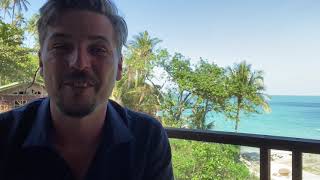
Richard Perkins talks from Thailand about founding Ridgedale farm and its mixed model: pastured poultry, eggmobiles, no-dig gardens at 59°N. He covers labor rhythms, seasonality, and how the farm actually performs financially.
Questions this video answers
Koh Phang Nha, Thailand.
Pastured poultry (meat chickens), pastured eggmobiles (eggs), and a no-dig market garden.
Chapters
So it's a YouTube video with a difference. I had every intention of doing live questions and answers regularly while I'm away. But since this is the first family holiday I've had in seven years, I've decided against it. And I'm going to relax and not do that. I'm sure you understand, but I wanted to just speak about this beautiful island I'm on, Koh Phang nha. I actually came here seven years ago at this time of year. We had just bought the farm that became Ridgedale and we hadn't even moved on to the farm. We were living near Stockholm at the time and we'd only seen the farm for a few hours. And you can read the whole story of how, how that came to be in our book. But I came here to this island to do a farm scale permaculture design course on the natural building site. Now Thailand's full of earth building, natural building using adobe and rammed earth, etc. And it's something that I'm very familiar with. I've built dozens of houses in my life, tiny homes naturally, but a lot of mud building. And I learned a lot of that here in Thailand. And it's a place that I love. I've spent, I spent over three years here in the last 20 years. Starting to come here when I was just 18 and I was very interested in meditation practice in the Theravadan Buddhist School. So I used to come here every year. And I've spent a lot of time in monasteries, in silent retreat here. And I love this country. It's changed dramatically. First time I came here, there was not a single mobile phone. And now life is very different here and the middle class is huge and people are much better off. And I think that's a great thing actually. And it's nice to be back here. So this is actually the island where I met Matt. If you follow our channel, you'll know who Matt is. And interestingly enough on that course, I remember drawing a graphic of the map of the farm and all the things that we were actually planning to do, having not even moved on to the farm. And it's basically what we've done. We 3D printed that design onto the landscape over the last six, seven years. And it was interesting because all of the people or a whole group of the people on that training had been traveling a long time, were very interested in farming. And Matt expressed conviction. He was like, I'm coming to the farm, I'm going to spend next season at your farm. And then he didn't because he had some personal matters to attend to in Canada and nearly everyone else from that group came as part of the first year's internship group and we laid the skeleton of the farm out and it was an amazing year. You can see a video on our YouTube channel of that first year summarized into a short video. It's pretty amazing. And then Matt came in subsequent years and that was perfect. But just nice memories coming back to this island and such a beautiful place. And we're having a great relaxing time here with the family. Today's video I just wanted to share with you a short video made by Farmers Friends that some of you will no doubt have seen. It's on their YouTube channel and Instagram, etc. But they just started a YouTube channel and they went on a big tour around Europe and different farms in America last year and they're releasing their little videos both as short form, really polished videos and longer form interviews. They were only with us for a very short time, but I think Nick, the communications manager has done a fantastic job with the small film and so I asked them if I could stick it on our channel and put links where you can subscribe to their YouTube channel to help them out and also follow their awesome content. And so you can see that in the links below. And we really support Farmers Friends. They're a wonderful company. We use their Quick Cuts Greens Harvester and Quick stand for microgreens nearly every day in the summer. And it's thanks to their spreading of caterpillar tunnels that we actually designed and manufacture our own caterpillar tunnels with a few what I would consider improvement for the European market. So we have vertical sides that give you a lot more headroom and improved ends for tight spaces. So we're proud to announce now I'm working with Jake at Oxygens Organics who we made a video with last year. Jake's an awesome guy and his family are all incredible. And they're going to be acting as colleagues in the UK to enable sales of caterpillar tunnels to the UK due to VAT rules, which are very complicated here in Europe, for example, if someone buys my E book, there are different VAT rates for every European country. And the way VAT regulations work in Europe is triangulated sales where I'm actually selling on behalf of another company who don't want to list that product because it's a risk for their business, which is a risk, I assume I can't sell to the country it's manufactured in. So if you're in the UK you can now get caterpillar tunnels. You can write to me through the Farmer's tools and we can sort you out. In the uk those tunnels have been shipping all over Europe and you can buy them for the Last year or two on the Farmerstools.com thanks so much to everyone that supported our book. We continue to be selling a lot of books. This is a manual that's going out to every single corner of the world. It's already shipped to as many countries as our last book has in the first weeks of publication and it's fantastic to hear all your comments and see posts on Instagram and Facebook as well of those of you that have received them. We've just run a competition to give away three books and ebooks as well. That's happened on Facebook and you can buy the PDF or the hardcover book in the links below. I highly recommend you read our work if you want to stay up to date with what's going on. It's really a manual to inspire a whole new generation of farmers. And if you've read the book, perhaps you can give us your thoughts in the comments below. You can also go on Goodreads as a website reviewing books and you can comment and leave feedback about the book there for the benefit of others too, if you like. So thanks everyone for your support. With that, we've got a great team in Stockholm who are packaging and shipping books and that's really allowing me to turn my mind off and have some real rest. And I can say, I think safely, this is the first couple of months where I've really been able to turn my brain off. When you have a small farm, it's very easy to be consumed by little decisions that need to be made, things that need to be checked day in, day out, night and day, you know, first thing in the morning till late at night. So it's it's been remarkable to actually allow myself breathing space to not be thinking about that. And Johanna is going to be running the farm next season as I go off on the tour trying to document all the awesome farms going on in Europe, particularly past students and anyone else that's worth shining a spotlight on. So stay tuned for that. You can find find more about that in the links below. We are going to be either crowdsourcing some of the funds for that or having a membership service on YouTube or whatever to help fund the cost of that trip because it's going to be quite an expensive venture, but I think it will bring a huge amount of benefit. So Anyway, that's it for me for now and I'd like to leave you with this short film from farmers friends. I hope you enjoy it and leave your comments and feedback below and we'll be in touch. See you in a video soon.
We're a farmer, homesteads as well as farms, but our three primary enterprises here pastured poultry, so meat chickens and we have pastured eggmobiles producing eggs and a no dig market garden. This farm is half forestry and half pasture, so we run market gardens on 1500 square meters. We run about 1200 laying hens typically and 4 or 5000 meat chickens in a year. So a small mixed, diverse farm where we can start to close nutrient cycles and also provide a full human diet, which has been really important to us. Well, I went to agriculture school when I was 18 to study organic horticulture and crop production in the UK at Agriculture School there. And I left there with a lot more questions than answers. So I embarked on a longer global trip looking for people that had different solutions. It took quite some years to find really working examples and I found it very hard to find people willing to share data like numbers and facts and figures. And so that's become a key part of this farm is creating a place that shares the sort of data that I wish I had had access to when I was learning. Starting a farming business is perhaps the hardest thing you could do. A lot of young people coming into this kind of business, they're growing up in a world that missed a bunch from a few generations ago. We really wanted to create a space that was open to people to come and get engaged. So we've tended towards running really long term farmer training and quite hardcore, you know, more like farm boot camp. So we really focus on choosing enterprises here that A are symbiotic, but B are things that people can come and really learn about tangibly here, get enough experience to then confidently go away and set up according to their own context in their own country. So we're farming up here 59 degrees north. So in the summer months the season comes very quickly. Spring and autumn are very short and it quickly transitions from dark cold winter to highest summer and then it's quickly winter again. So frost free dates here would be like 6th of June is safe and 15th of September that frost is coming back and that could move a few weeks either direction. So it's a fast and furious growing season here. So we work long hours in the summer. But we're also complemented with six months of basically me here for one hour A day, you know, collecting eggs, feeding cattle, and that's my workload. We get up at 6 o', clock, got to open their egg mobiles and they start laying eggs at 6 o' clock because the sun's been up since 4. We move the cows and sheep who cut the grass in front of the eggmobiles and we, we time their interactions so that they receive all the fly larvae from the cow manure and follow them around the pasture like that. Then we move all the boiler chickens and that's quite a big job. And then we'll basically spend the rest of the day in the market garden. Market guns take a lot of hours, so that makes up the majority of the workload here. So the guns here are no dig setup. So we put wood chip down between our beds and big load of compost. In the beginning, these beds are built straight on top of pasture with perennial weeds and things. We do no dig because it leads to less weeds, less water. And using this wood chip for pathways, it actually helps us soak up excess water. And what we find is that means you're walking around in a clean garden. It means we minimize washing of veg, like salad mixes that we cut with the greens harvester. We don't need to wash them because there's no dirt bouncing up on the leaves. And anytime we can minimize washing, we're maximizing shelf life. And it's part of a marketing thing too. Like our farm looks beautiful and it's presentable and it's the first thing a customer sees when they come into the farm. We are driving a very high level of economy in a very small space, in a very short growing season in the middle of nowhere. We managed to shift about a quarter of a million euros products in a six month production which we then sell throughout the year, like meat products and eggs. We're able to turn over the value more than the value of the farm and the investments we put in the farm every single six month season that we run. Having a broad product portfolio really helps. Like when we have fresh chickens for sale in the summer, it's much easier to sell vegetables. I remember those words of Joel Salitin. It's much easier to find 100 customers that will spend a thousand dollars with you than to find 1,000 customers that will spend $100. And that's certainly my experience of running a mixed diverse fund. We grow mescaline mix spicy Asian greens and arugula. It's one of the most profitable crops. We grow on a little 10 meter long bed that's 30 inches wide. We're getting 40 kilos in 42 days so that's a net of about €500 on a tiny little bed and that used to be painstaking work. We would cut it with little serrated knives on the hands and knees and that takes 25 minutes to do well and what we found with the greens harvester is that takes about two minutes flat. That's definitely a game changer for anyone growing greens or microgreens at any kind of scale. I really inspired to spend time in nature watching the ecosystem here develop. I'm totally motivated by feeding my family amazing food. That's why I wanted to build a farm. I decided that at about 15 years of age I knew I wanted to bring up kids and raise the family around amazing food. We've become a little island that nature's moving back into because we're not sprayed and we're not bare ground. We're creating a habitat whilst producing amazing, diverse food and that inspires me a lot when I wake up every day. Sam.
More from Richard


A review of short and intensive season on a mixed farm and restaurant/event space in Sweden






Alskade Kyckling Exploring complexities of poultry production in Sweden and what we stand for


