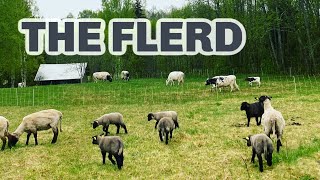
Richard Perkins walks viewers through a morning on his farm: moving sheep to graze alongside cows to acclimate them (creating a 'flerd' — flock+herd), checking frost-damaged paddocks, and preparing grazing plans. He reports egg production timelines and numbers (expect ~500 eggs in ~10 days, rising to ~650 at peak with ~95% lay rate through November), describes an upcoming slaughter inspection and regulatory oversight change, and shows garden activity (asparagus, spinach, walnuts, strawberry replacements). He also readies brooder boxes for a delivery of 500 chicks, emphasising pre-warming water and setting brooder temperature to about 32°C and initial chick water intake procedures. The video mixes practical farm management, animal husbandry tips, and updates on farm operations.
Questions this video answers
Approximately -2°C ("Minus two last night").
About 500 eggs.
About 650 eggs at peak production.
About 95% lay rate.
About 500 birds (one small batch).
Chapters
So nice bit of rain this morning. Good day to take the sheep for a walk. Hey, sheepies. We're going walking now. Never know how this will go. Can be wise to have fencing up. But I thought we'll walk them down. We're gonna put them next to the cows in the paddock, let them get familiar with each other, and then put them together so we can run them all in one go. Hey, Winston, they're so hungry for fresh grass. Come on, then. All right. Going walking around this way. Come on. Come on, then. Walking the sheep. Here they come. Okay, now, it can be that the cows freak out, especially the. Hey, mama. Especially the young white one. She loves chasing anything. Scared. And it's just out of curiosity and play, but obviously the lamb's pretty small, but I expect the lambs are a bit faster. So we'll see how this goes. We're gonna let the cows onto new ground. Cows are over behind us here. And there will be some. Hey, there will be some. Look, here comes the white one now. So he's wondering what's going on. Makes him a bit upset. What do you think about that, sheepies? Time to regroup. Cows are curious. So what do we think about this? Come on, sheepies. Come and say hello. So Alex is putting a little extension to the paddock so we can have the cows on fresh grass. Okay, sheep are in. Cows are on fresh grass. That'll get them to meet each other through the fence before we put them together. Okay. Few hours of getting used to each other, see what happens. What are you gonna say about this? Hey, I got the shademobile down for scratching post. Don't know how this will go. This is the one who is likely to chase the lambs, aren't you, madam? You gonna chase them around? Finally got a flirt again. So flird is a flock and herd. It's way much easier to run these animals together, hey, Winston? But I think the calves will be very happy about this, have something their size to run around with. So this does mean we have to run the animals in nets. But these sheep nets with the plastic uprights, they're very quick to handle and suit our sort of undulating ground and gives us good protection. So a little bit more work than strings, but not really. It's very quick to handle these nets and. And they're very light compared to poultry netting. Hey, you coming to hide behind me, Scratchy? Scratchy? You're very curious about the Winston, aren't you? Oh, Skanson. Skanson's looking in great shape. Hello, big Boy, he's cancing, he's ganson. Oh, you are a beautiful bull. Yeah, that's the spot. Up a bit, back a bit. Yeah. Always good to have a scratch mobile. There's also a shade and rain Bill. And you can see it's a flexible. It's an old logging trailer, maybe 50, 70 years old, but got enough flex in it that they can withstand this extreme force.
It.
A lot of crops out now. It's going to get cold. We've got frost again tonight. Fresh soup, toasted seeds, croutons from the sourdough, fresh bread, butter. It's a bit chilly in the evenings, isn't it?
Yeah.
Sun'S up. Bad frosty morning. Minus two last night. A lot of veg out in the garden now. So our first eggs have been getting laid now. See how eager these are to come out in the morning.
It's.
Two weeks until eggs are up at full production, but we would expect to be having 500 in about 10 days. It's been freezing but the water's got unfrozen water, which is good. And then we'll be up to 650 eggs once they hit peak production. We get about 95% lay all the way through till November now. So good to have fresh egg supply again. I've been missing that. Okay, we have slaughter inspection Friday and then it's time to introduce everyone to the first slaughter. Now these waters do freeze up a little bit. It was minus two. But having a float helps. It's just frozen on the surface. But you need to empty and pour a little into these. There's actually water flowing now as the sun comes up. It just takes an hour or so to get going again. Birds looking good. So cows and sheep have been together for a few days now. The sheep tend to get sent away from the shelter. The cows tend to hog that. Maybe a bit chilly for them at this time. Haven't been shorn, but they seem fine. Sun comes up early. It's light at 4 o' clock in the morning now, so I think they're doing fine. They'll be going out into K2, which is this much bigger field over here soon. We've got to get our grazing plan together now because we wanted to cut silage quite early this year. So once we have a clear date for that, we'll make up a grazing plan. I'll make a video about how we fill that in and the considerations for our season. So we have another inspection of this slaughtery and there's been some slight changes in the regulation stuff, it's hard to explain but we have always been under a self certification program from the local agricultural agency and this year they told us that we were going to be certified by the national authority which is a bit more stringent. However, we just heard back that actually it's going to be under the national scheme but monitored by the local regulators. So it's basically. Hopefully everything will be the same. So it's always been getting this place up and going. Obviously we need the water to not be frozen, but seems like we're going to have a week without frost and we have underground water that we can turn off outside so it's frost free. But basically getting this set up requires a good clean down with sanitizer. Make sure everything's working, we have water testing to do and flush out all the lines, just put it back together and make sure everything's operational basically and it's going to be interesting. Christian has been in slaughter before and everyone else is new to the process. So it's a case of going through and just making sure everything is running. As I said before, we totally sold out of chicken that we had for winter selling very early. So we haven't had chicken to offer for a, quite, quite a long time now. And it's a product that we try and distribute selling evenly throughout the year because particularly in the winter months people like to have roast dinners, etc. So it's going to be great to have fresh chicken back next week and looking forward to some of those birds. They're looking fantastic and seem to have been growing well. So I expect the average weight will be pretty much where we want it. And you can find out all about how we run this. We've put out episodes of running boiler business, layer business as well as how we run what is Europe's cheapest approved slaughter facility. So you can look back at old videos to see more about that and I'm sure I'll make video updates as we get going this season. You can see the frost line where the sun is moving along and you just see 10cm of frost there where the sun has just got to it. But we've got some asparagus popping up in these beds. These are the east beds. Very nice. Some great looking spinach going out next week. First mescaline here. We got a lot of black walnut that I just had stratifying over the winter. Gonna have to find where to pot these up. More English walnut. Got a lot of potting up of trees to do. These are all replacement strawberries that we took as suckers out the field lines last year and put in root trainers to replace any taken out by voles, etc. So new birds coming in today. Got this all warming up. Just another small batch, 500 birds. So just using these two brooder boxes and we'll probably run other batches this year to keep up with demand. I'm not really on broilers, so I have not been checking, but I'm glad I came down because I've come in and lowered the lights and put the water in. Now, that's important because when these birds come, the most critical thing thing is getting water in them. And so you want water to warm up to room temperature. It comes out of the ground very cold here. And so ideally I would have filled them up last night, and also the lights were too high. We need to have that heat down on the ground. It's always a bit of a shock because once the birds are getting bigger, you're trying to cool this space down. But when new birds come in, they need to be up at 32 degrees. So really important to set the brooder up. Right. You want this warming up a couple of days before the birds come. With the lights down low and the water warming up too, it's critical they ingest water more so than food right in the beginning, but that's looking better. Birds should come this afternoon. It's that time. We've got two and a half for.
Each one, so I'll show you how to do the full one and then.
I'll do the half one as we go. So you have to learn to be confident. So rather than handle all these birds, when you get them out of here.
It'S with like a magic carpet trick like that. Okay.
Preferable than handling them all individually.
And you see they all pick up fine. And then we'll do the half drops. Just to get them all started. Introducing the toilet. I've got one more box there to get them.
Drinking.
What I do is I pick him up just with my hand cupping it, and then use the finger to press the back of his head just so deep into water. And if you do that with, say, 1 in 10 or 1 in 20, then they'll teach you each other really quickly. You just got to be really careful.
When walking them out. Now.
Just touch the beak in the water and then they know. But most importantly, right now, they need to get under the lights and get warm.
And so now is a good time.
To start using your senses. Like right now, they're a bit frightened. When they're contented, their cheeping is like less high pitched and less frequent. And what you'll find is when you come in to feed them, you'll startle and they'll all go. But you can tell when they're comfortable they'll be under the lights and making a softer noise. What we don't want is if they're all spread out to the edges, it's obviously too hot. We'd have to lift the lights at the moment it's going to be too cold if anything. So they're going to huddle, but we've got to make sure they don't huddle so densely that they crush each other to death. It'll take them a little while and they'll get into little groups, but it's critical that they get water in this next few hours and they'll have food freely available for four days. But you can listen and you can smell like there's a lot of sensory inputs of how they're doing. Okay, a little colder in here than I would like, but I think they will be fine. I'm going to leave them to settle down. They've got food, they've got water. It's good to just leave them and.
Let them de stress and realize that they're little chickens. Okay, that's all we've got time for today, folks. Thanks so much for watching our videos as always. And don't forget, you can find out a whole bunch more in the links below about our book and online training and getting some great feedback about how much that's helping people in starting up their own business and enterprise on the land. So thanks for all the comments that I get for that. See you in another video soon, folks. Bye for now.