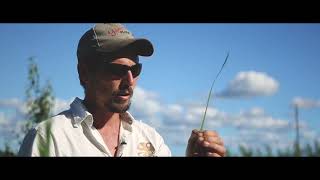
Richard Perkins compares fluid movement in trees and grasses, finding ryegrass roots move water 40 times faster than oak trunks. This speed makes grasses exceptionally efficient at photosynthesis and carbon capture, which he argues supports regenerative grass-based farming for local meat and topsoil building.
Chapters
So we see a great oak tree in the forest and it seems very stationary. Nothing's really happening, but fluid is moving up that trunk at the rate of a meter a minute to be able to supply these hundreds of thousands of leaves with the minute amount of moisture they need for respiration. But what's really surprising to most people is that a rye grass in full photosynthesis liquid can be moving through its roots at the rate of 25 centimeters a second. And it's that movement that makes grasses so potent in their ability to capture sunlight and puts carbon into the topsoil. We have all these belief and intelligent people focused on finding technologies to deal with the excess carbon in our atmosphere when we have food shortages and grasslands that are being subsidized to be cut rather than running animals. And in Sweden, we import meat from all over the world when we could be running very bountiful regenerative enterprises that make good livings for a farmer and build topsoil and serve customers very local, very fresh food.










