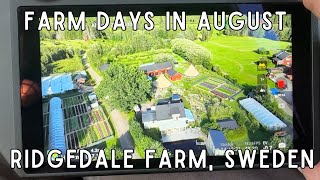
A spoken tour and seasonal update from Richard Perkins at Ridgedale Farm describing the start of a nine-day regenerative agriculture training, a six-week internship, incoming international interns, and a farm inspection (aerial + ground). He reviews livestock management (reducing cow/heifer numbers, grazing on neighbours’ land, pigs to be processed for charcuterie), market garden performance (slow tomato yields, sand garden successes, slug pressure), crop preservation plans (fermenting, freezing padrons, preserving berries), infrastructure/operations (brooder, teepee repairs, costs of winter feed and haylage), and training offerings (pasture poultry and no-dig market gardening masterclasses). He reflects on supply for their restaurant and mentions resources (books, 600+ YouTube videos, online course launching).
Questions this video answers
Nine days
Six weeks
About €40–€50 per bale of haylage
About 7–8 hectares
Planted 7–8 years ago and approaching about 6 metres tall
Chapters
Welcome back to another video, folks. We're just doing some teepee repairs. We've got the nine day regenerative agriculture training and internship program starting today with people from all over the world. So we're back from America.
We had an amazing time in New.
England on Cape Cod and the sea life and the nature there is stunning.
We spent a lot of time making food from the ocean, fishing as well as clamming and squidding and collecting lobsters and amazing food we had there. Really nice break in the middle of the season and really needed after the spring we've had and we've got a smaller team now. There's just a few people during the months between the internship programs that are looking after the farm and just keeping things ticking over. Now we're entering the second half of the season. We're running a six week internship program where people learn everything about farm planning and economics and design and a lot of experiential practice, rotating through all the different enterprises, processing poultry and big animals, making sausages, preserving and fermenting and pickling and developing plans for their own projects too. It's been great to get away and really needed and quite rare I guess, as a farmer in summer. But now I'm really looking forward to the second half of the season. But to start with, it's raining. It's going to be nice weather for a week, so we're lucky. It is cooling off now.
So this is an aerial part of the tour and we'll have a look around as well as look around on the ground.
Well, summer has quickly turned to more autumnal feeling and we've got the cows grazing off farm at the neighbours. We veer out across the landscape. We'll go see them. Hey, monkey. So just along the road here at the neighbours, the cows have been working down and they've been working down here back up. So we can get them along the road for two or three weeks now. And really nice regrowth in this field which hasn't been grazed before for years, I expect. You can see tomorrow's paddock has made up. So they're working way back up and then they're going up into the forest.
They'Re gonna meet the sheep again and.
Then we'll be whizzing back through top field, nut field and front field before going back out there again for a.
Long slow graze as the season starts.
To draw to a close.
So I'm actually looking at selling three.
Or four of the heifers and one.
Of the young mothers partly to Reduce the the numbers. We're going to have lambs again next year and we just don't have enough land even with Silagorden for this many animals. And we do enjoy beef a lot. But we'll have enough for the restaurant as well as the farm and personal needs. With far fewer numbers on the farm and it's a lot to carry over the winter. You've got five months, six months of winter feed here typically. And that's expensive. It costs a lot of money. Even though we're cutting through contractors the land at Silligorden and taking some of our neighbors grass, it still adds up. For Swedish labour and fuel and machine costs you end up paying about 40 to €50 per bale of haylage. So it's quite expensive carrying over such a long winter.
So as we come back onto the farm we can have a closer look at the sand garden here as well as south beds. I've just been cleaning up in there. It's been a little bit neglected. A lot of weed pressure and just cutting the grass after coming back from America. But closing up some of those beds. It's a bit late for additional crops now and we've got a beautiful view.
Of the sand garden.
It's looking fantastic at this time of year. Flying over the north beds here and we've got some transplanting to do soon. Flying now over the windbreak and you see there's good recovery on the grasses. It's been very wet and the hot days before we left for America have come down to like 20 degrees now. A lot of rain while we're away. A nice recovery. You see the hens are working their way down top field to the right of the road there. The boiler pens are empty. There's new birds going out soon. Some really nice growth in nutfields. But there's been a bit of wind damage to some of the trees. I've just been up there pruning some of the branches but nice grass recovery up here. And just two pigs left in the forest patch now and they'll get processed soon. They've been left to grow on larger for making charcuterie. Not sure we'll see them in here now under the thickets. And we've got the sheep up in the forest paddock. Quite overgrown up here. Not sure if we'll see them or not. Let's have a quick fly over. So this is an area made up of several paddocks that can all join together. But this might be very hard to spot them. So there's three Lines of paddocks that you can just make out. Maybe that's the sheep right up at the top here. Looks like it to me. I can zoom in there. There they are. And they're happy up there for several days, just browsing and taking from the trees. Get a better shot there. So they're going to stay in there now for a little while and then we'll bring the cows up for a couple of days. There's not super much forage for the cows. That's the view from the back of the farm. So we have these three strips and a bit of the forestry here where you see the tree house there. As we make our way back down to the farmyard, There's a better view where you see our farm and you can zoom in. You see our cows on the neighbors strip down here.
Pretty impressive.
Zoom on this camera.
I want to give you a little walking tour of the sand garden. It's really come into its own this season. It's the second season since being planted, and particularly on the lower half here, where there's more moisture. You see the rampant growth here.
It's really, really beautiful, buzzing with insect life.
And we've had very little work. There is horsetail coming through that we have to methodically go through and pull out and just try and weaken over time. But that's the only work we do other than cut it back at the end of the year. You see some of the grasses have really grown up this year and it's looking fantastic up at the top where the sand was nearly a meter deep. It's a lot smaller plants. We have our spring flush of bulbs and the lilies and irises. And you see up here, it looks very different, but the colours in here change all the way through the season. Different flowers, different textures and feels really good. But a small tunnel that we often use for lambing is this year put down to shishito and Paduan. And shishito is like a Japanese version that rarely ever gets hot and slightly different profile. But we've got a lot of these. And the intention was to freeze these all down for putting starters in the restaurant next year. But given how much we like eating them, I think these are going to get taken by us. Some lovely padrons coming now and we'll freeze them down. And I actually freeze them whole and then just thaw them out in the refrigerator to keep their texture. And I love to fry them up either with Manchego and like a chili mayonnaise or just lemon and salt. I can eat These every single day. So market gardens have been a challenge this year. We've had very, very slow growth and very slow turnover of crops. There's been some problems with management and it's also just been a challenging year for growing.
Also.
It's a process now reclaiming the gardens and I've just been doing a lot of weeding since I got back and getting the edges sorted, pulling out crops that should have been pulled a while ago and just tidying up beds. A lot of care to crops like the brassicas you see behind me. They need the lower leaves removed and all the ground kept clear to stop slug and snail infestations. It's a quite sluggy year here up in Sweden. It's been very, very wet and so I'm just always working on bed hygiene to not allow those to proliferate. The medium we're growing in compost with compressed wood chip pathways, which the Ridgedale method, you know, if you follow our channel, it doesn't create a good breeding ground for molluscs. So we're lucky in that regard. It's been a lot in the fields and on the roads this year, but we're doing okay in motorhome beds. Something I plan to do for this winter is a lot of preservation and a lot of fermentation. We've got lovely carrots that you can just pull out of this no dig setting.
I'm going to pop that one back for later.
But we're going to do a lot of fermenting. Usually can and preserve things, but this year I want to do a lot more fermentation and just play around and experiment and that's a nice thing to do with the interns and just store a lot of our crops for ourselves this year. Monkey is excited for new visitors. She likes to get cuddles from people from all over the world. Hey, Ragnar. So a lot of patching up to do in here and these are fantastic. Teepees from Tent Teepee have their head office in Sune near us, but they get worn and I've been silicon little patches on, especially in weak points like where the tension on the cloth is quite extreme. I've had to put some patches on because we can't repair these with sewing without taking the whole thing down. But hopefully they'll be good till the end of the season. Now here's our view. We have an outdoor kitchen here for when the interns are cooking. I'm looking out on this beautiful view, so it's been an interesting year. Veg wise We've been reluctant to sell because of not knowing the needs of the restaurant. And so we've been supplying different things for the restaurant, but also selling at rico. When we set up the Ricohs years ago, we made a rule that if everyone on the RICO wasn't selling all their products, then you wouldn't let new members in. And the couple of years I've been away having a break, other people and other students that have trained here have gone on and fulfilled those spaces. So they were not going to let us back on the RICO at all, but they very kindly did. And so we've been selling eggs and chicken and smoked chicken.
There's.
But also not as much veg as we would need to. So that's partly driving the decision to just preserve a lot and put it away. And we can keep those things until.
Next year as well as make really.
Interesting flavours for the restaurant. We're hoping to open the restaurant much more next year and so we'll need a lot more produce. But it's a bit like starting again because we don't know so much about running the restaurant and we certainly haven't been running it at the capacity we wanted to this year for various reasons, but next year we probably will be. So we're playing the game of, you know, redesigning the farm around the changing needs, you could say. So in the brooder now we have the last batch of birds that will be going out shortly and they're due out now, but we wanted to wait until the new team are here.
Given the importance of the brooder in the pasture boiler operation, we want the interns to have a lived sense of that and understand the care and requirements that go on in here. Even with a simple setup like this, the conditions and the well being of the birds for the rest of their lives. This foundation is built here and so.
We'Ll get them out this week with good weather coming up and there's been.
Very, very low mortality.
Nice job.
So we put a thousand birds in the freezer and this is the last.
Batch of the year. So tomato tunnel is going a little slow and one problem and one of the problems of working with people, training and not blaming anyone, but this is how it is. More than half the tomato plants which are indeterminate were growing mostly San Manzano, but they got topped in the pruning and trellising process, which is pretty unfortunate. And so we're probably going to have a much lower yield than we anticipated. But then, as fate has it, we have decided not to run Pizza at the restaurant like we originally planned to, based on our friend's business on the west coast, that we really loved. The Neapolitan pizza and nature wines. And it's just easy fun and pretty easy for Swedish people to eat that kind of food. It's familiar. There's 15 pizzerias in the tiny town near us. And some of the things we're doing are a little bit, you know, pushing the edges of people's culinary curiosity, so that's important too. But we were going to can down a thousand plants of San Manzano for pizza next year, but we don't have that in our plans anymore, so it.
Probably all works out fine.
But we'll take what we can and store it for the winter for ourselves and for next spring, some lush recovery of the grasses. Now, cows and sheep will be coming back on to our farm soon and it's the season now for berry harvesting. These are boysenberries, kind of cross between blackcurrants and gooseberry, but just prolific. And we have thousands of bushes and a lot of fruit to collect and preserve. Now it's fun to look back and see how things have grown. This hedgerow we put in from little saplings and some of the chestnut and birch for the avenue plantings here. There's over 600 free videos, YouTube, detailing all aspects of how we run the farm and going into detail of different enterprises. A lot of information there. If you want to go back and look through that and if you want it in an organized, clear format, then our books, Regenerative Agriculture and the Builds book of how to build all the low cost infrastructure that we have, as well as our farm cookbook, how to preserve and cook all this wonderful producer. They're all available in the links below. We ship all over the world direct from the farm. You can only buy from us directly from the farm and so you can find detailed information there. Good year for nuts this year. These are black walnut that I planted from seed seven or eight years ago and they've approached six meters tall or so. And a lot of nuts forming this year. And they form these lovely keyline silver pasture rows in what we call top field. Then we've got hazel and currants and fruit trees on the other side. Beautiful integration of trees with pastured animals, closed nutrient cycles and ecosystem benefits. On this way. We've got a lot of English walnut, which typically does not do well this far north up at 59 degrees, but we've got English walnuts formed on some of the trees in Nutfield which is fantastic. It's been fantastic having the neighbours field this year. We won't have access to that next year because they promised that to the dairy farm, their old childhood friends. But that's been great because we've had quite a lot of animal numbers. Way too much for this farm. We get some respite putting the cows and sheep up into the forest paddocks.
But their land's been critical this year.
We've taken our winter feed from Siligorden, where we have about 7, 8 hectares of grass there. But we're just going to work out how we do in the future. We're thinking to have the sheep up at Sylgone when they've lambed and maybe reduce the cow numbers and have those based here. But a lot of reflection and thoughts before we make plans for next year. It's been, you know, unprecedented changes this year. Now I'm just getting up to the hens. You see the hazel now is producing a lot this year also, which is fantastic to see a lot of nut clusters.
Birds are doing great.
And you know the drill. Here's an escapee.
Hello.
Finding chestnuts on the floor there. Off you go. Last two pigs at the farm for this year and we will be taking those for farm consumption. Making sausage and charcuterie. And that's a really valuable experience that people gain in their programs here. Learning how to butcher and make use of animals like sheep, pigs, cows, and also working in the sector that we built for plastic chicken and we use that for turkeys and other poultry as well. Really looking forward to the program. There's people coming from North America and.
Australia, South Africa, all over Europe.
And we live in a tight knit.
Community, eating together, playing together, studying together, working together.
And it's such a powerful program.
It changes people's lives, it forms connections that people go on and start businesses together.
And we really enjoy to do that work.
As exhausting as it can be dealing.
With groups of people for long periods of time. But we enjoy the outcomes that are created through such a program. And I think it's quite unique in the world of regenerative agriculture. So we'll keep doing that.
But looking forward to that. If you want to come and join us yourself, then we have a pasture poultry masterclass as well as a no dig market gardening masterclass. Both four day trainings that if you want to learn everything about running your own pasture poultry enterprises, both layers and boilers, as well as a chance to.
Get hands on with the processing and.
Running of a slaughtery facility that's approved at very low cost in Europe.
That's a great course for you and.
Our no Dig Market Gardening training gives.
You everything you need to know to.
Start up with confidence to grow vegetables for sale in the marketplace.
With that, it's time to shift my attention to the group coming and the processes we're entering into. Hopefully meet some of you at Silly Gordon at our restaurant with the concerts. We've got four concerts left this season and maybe at the trainings this summer. It's a pleasure as always to share these videos give you an insight into life and what's going on on farm. If you've got any requests for videos for the rest of the season, just write them in the comments below and I'll see what I can do. You can find out bunch in the links in my bio for my books, our online trainings and our free training. We're going to be running an online training in October November the sales will launch and then running the course in January and that's probably the best value lifetime access intensive training I can offer anyone anywhere in the world and so hopefully meet a bunch of you in there this winter. You can stay subscribed to our newsletter to find out when that is available so you can jump on that if you want to and look forward to making another video for you soon.
More from Richard


A review of short and intensive season on a mixed farm and restaurant/event space in Sweden






Alskade Kyckling Exploring complexities of poultry production in Sweden and what we stand for


