BEAUTIFUL FARM UNDER THE TREES IN LUXEMBOURG
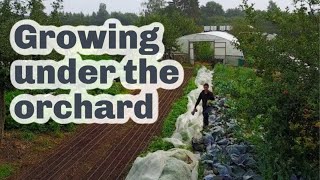
Richard Perkins visits Terra, a Luxembourg agroforestry cooperative founded in 2014 that grows food on 1.5 hectares for 200 CSA members across nine pickup points. They run three tunnels with 350 beds, grow 30 tomato varieties, and use solar power for irrigation.
Questions this video answers
2014
1.5 hectares total; just under 1 hectare in production
About 200 members
Around 350 beds (est.)
About 30 varieties (reduced from ~80 last year)
Chapters
So we're in Luxembourg and we're heading through the back roads to Marco's place. So we're actually right on the outside of the city. Liminal.
Yeah, we're still technically still in the city of Luxembourg.
It's like 10 minutes from the city center, from the city centre. Yeah. Location, location. And we're going through these beautiful beech forests to get up to the site just above the hill from where Marco lives. Nice route to work in the morning. Hairpin turns. They're taking good care now, finding time to talk to a beef. And I think we've got some budgets. So, Marco, what is Terra?
Terra is many things, but mainly a fruit and veg production site.
You got 200 cshf?
Yep, that's right. And we're working off one and a half hectare of land, about just under a hectare that is in production. Growing space for the animals. That's not including trees and bushes. And today's harvest day.
So, Marco, I finally made it here. Marco and I have been friends since.
Over a decade now.
Over a decade we lived together in Brighton and Marco is just an amazing young man, but he's set up this project when? Five years ago, 2014.
So coming into our fourth season now.
Fourth season. And it's, wow, a lot's happened here. But can you give us a nutshell? What is this project about and what are the core tenants of the place?
Yeah, sure. So TED is a cooperative. We have one hectare and a half of lands and we're growing all sorts of different veg and fruits, everything integrated. So we have orchards, space, or the fruit trees are spaced at 10 meters apart. And in between we have all the annual beds and perennial beds as well.
It's a beautiful integration of agroforestry and annual production. Very productive.
And then that produce is distributed to 200 members, mainly around the city of Luxembourg and some other places a bit further up. And as well as the production, we do offer courses and workshops for kids, for adults and other people interested.
It's quite a serious level of production. Now you've got. How many beds have you got now?
I don't know the exact number. Pitt will tell you that, But I think 350, something around that.
And you got three of these big tunnels pumping out tomatoes and you've got. You're growing some amazing tomatoes. Tomatoes. You're normally growing 80 varieties or something.
Last year we had 80 and then narrowed it down to the ones that were like, really good. And we got 30 this year, around 30.
And the social element is really Strong here now, that's a big part of what you're doing.
Since the beginning, one of the aims was creating a new social cohesion around agriculture, something that's really missing in Luxembourg, and giving people the opportunity to be in touch with where the food comes from. So beyond the possibility to come and help out, we also organize open days where we get the community, whether it's the members, whether it's people from the general public that are interested in seeing how this sort of enterprise would work. They come and they help us out and they participate in the different seasonal tasks that we're doing and of course, have a moment of celebration and sharing the harvest.
I know that's really important for you guys and a lot of your members actually really participate in the work.
Amazing. Not only in the harvesting, we have members, for example, helping us out with administration work. We've got members that are offering their houses for hosting some of the volunteers that are coming from abroad. It's amazing to see how much support we're getting from people that are just into this sort of thing.
Can you tell us a little bit about the structure, how you set up?
Definitely. So when we started off, it's important to say that we had nothing. We had a zero budget and we didn't have land. So all we had was the ambition of getting things done and a little set of skills to do that. So for us, it was really important, first of all, kind of doing the number crunching, seeing if this sort of enterprise would even work financially. And once we realized very quickly that that would actually could work, then the next step was seeing if people are ready for it, if there's a market for it out there. So one of the first things we did was send out a questionnaire to the already existing pool of people into all sorts of ecological and transition stuff. And very, very quickly we got a response of people saying, yeah, go for it, we'll be there, we'll help out. You need support with this, you need support with that. And we very quickly built up a core team of people that really had the skills necessary to get one of these projects up and running. That means the admin skills, juridical skills that you need to write your stat, the expertise of knowing what sort of enterprise structure to create, whether it's going to be a standard business or is it going to be in a cooperative, is it going to be a not for profit? And it quickly became clear that the cooperative model was the best because it's a great way of allowing people to invest in something. That's going to be of benefit not only for them as investors, but also for the general community. And in that way, by doing that, by having these shares in the cooperative, in the first month, we managed to gather 40,000, which was what we needed to get things running. And ever since, any further investments that we've needed, we make a call out to the cooperators and usually they're more than happy to. Yeah, Support this. That means we're debt free, which is pretty sweet.
So these guys have got three of these tunnels up. They're growing a lot of heirloom tomatoes and a lot of heirloom veg in general. They harvested 600 kilos of tomatoes out of here just last week. They're growing some beautiful old varieties and huge varieties that weigh in over a kilo each. And I love that focus on heirlooms. This is not something you can buy in the store. So you. You guys are saving seed, right?
Yeah.
You save all your seed or a lot of your seed?
No, just tomatoes. I tried the zucchinis, that didn't work out this year.
No. But you're marking some up for saving here?
Yeah.
You got some amazing varieties now.
Yeah.
You're growing only 30 types this year.
31, yeah. Last year we had double, but I kept only the ones that tasted the best.
Yeah.
And, yeah, this year I do the same. So it's probably going to be only half next year, but I'm going to get some other varieties for next year.
Oh, the greenhouses look amazing. So there's a lot of people coming here, obviously, but who are the core people that founded this?
There's three of us. The founders pit, he's responsible for the vegetable gardens. Sophie, she's doing a lot of the admin work as well as the work with the educational work with kids. And myself, I'm in charge of most of the systems, making sure the infrastructure is working and setting up anything needed.
And to manage all the stuff that people see here. How many people do you think you need as a, you know, as a working group if you didn't have volunteers? We've talked a lot in the past, videos recently about, you know, the dynamics of working with volunteers, working with larger groups. But how many people do you feel you need to really maintain the production at the scale?
So although it's really nice having volunteers around, we make sure that we don't rely on their support because you never know if they're going to be there again tomorrow. And we reckon that a core team of five people is what we would need to make sure that all the different enterprises here are running smoothly and.
All the admin and selling all of it.
Everything. Yeah, it's a lot of production at the moment. We've got, what is it, three pretty much full time and two part time. So if we were to sum all those hours up and we're just about managing to deal with the workflows.
So I've turned up on another packing day. And this is the multifunctional wash station now. So it's a solar powered unit that powers innovative irrigation setup. So water is an issue up here because it's not connected to any mains water or electricity.
It is now not electricity, but mains water. We have that as a backflow.
Okay, but you have to pay for that water.
Yeah, we have to pay for it. We've got a discounted rate. But the idea is to try and be as self sufficient as possible.
So tell us what's going on here.
So we got a pretty funky system where we're catching water on the roof of the greenhouses.
You've integrated gutters into the polytunnels. Just retrofitted it.
Yeah. And that collects all that water in big buckets at the other end of the greenhouses. And from there we can pump it with the solar powered pump up to this part, which is the highest part of the property. And then from here we can manage all the irrigation system purely through gravity. We've got the Poritex leaking tubes. They're not exactly drip irrigation. It's a bit different. We'll be looking at that later. And it's really sweet because we can actually control everything with the click of a few buttons. So what you see here is a switchboard and I can activate the irrigation like that. I can choose whether the water comes in from the pond, from the pump, from the pond, or from the ground greenhouse collection. If we need to, we can fill up with the tap water. So we have the back full of that and we've integrated the compost tea as well. So we prepare our compost tees around here and then pump that straight into.
The main irrigation system.
Yeah, pretty sweet.
They've got an innovative drip system here that Marco can show us around because it's dry for some weeks in the summer and watering is an issue. But they have the benefit that when other farmers are flooding out and abandoning crops here because it rains a lot, they're able to keep up production. So, Pitt, I've heard from Marco, a bit like you guys, all your context are changing since you began and some of your family circumstances, life circumstances are changing that you need to drive more revenue out of the place. But it's been working really well up to now, Noel. And you're now at a point where you're shifting next season a bit to try and drive more economy.
Yeah, we're working on it, like trying to figure out how to get more money without working much more, which is challenging, I guess. But the good thing is that we can do it as a cooperative. We decide what we do and there's no one else telling us, oh, no, you can't. Or we don't have to ask someone like, oh, can I have a waste place? But we can get to raise if we make more money. Right. So it's like the cocktail has been.
Really powerful for you guys.
No, yeah, yeah, it's very good. Like really. It feels like really that we can be really independent because we don't have bank loans or subsidies or so, but therefore we don't have any constraints either. And that's really nice.
But one guy made an app now.
Yeah, my brother.
Yeah, I was your brother. So he made an app where, correct me if I'm wrong, but you can basically, customers that aren't available that week to pick up their box, they have an option to change their schedule a couple of times in the season and it just creates a printout list for you guys. You just have a super streamlined, effective way of doing that.
Yeah, because before we had like, Sophie did everything like by phone and emails and things and people sent messages on private messages on Facebook. I don't know, it was quite a mess. And now it's not really an app. It's more like a homepage where people can change, but it's really much easier.
That's pretty amazing. These guys have got 200 CSA members, so it's a lot to manage.
Yeah, that's what we can manage. I think more wouldn't be fun because then we lose the touch with the people. Like right now we know most of them quite well and then especially the regular members that we've had for like three or four years. And it's really nice.
What percentage would you say have come up here and really sort of checked it out for themselves?
I don't know, I think maybe 70% or so. I mean, some people are like super busy all the time. Just really happy that you can get the vegetables at a convenient time.
But a lot of people really interested in participating.
Yeah, yeah. Like today we're going to have loads of volunteers.
So the volunteers coming they're helping the harvest. But they. Are they members of the csa or are they people that are interested or both? Both. Both.
Yeah. Yeah. It's really. It's really different. It's like we had, like, trainees, volunteers, European volunteers as well, through an association we work with. Yeah. And just people walking up and, hey, can I help you?
Yeah, sure. Something that's really striking about this site that I love very much is the integration of tree crops with annuals. And it's such a blessing to have this perennial cropping up above. And they've started to put in perennial crops in the rows between the trees, which is a really sensible addition to any production, I think. And we've got a few of our past interns who are designing market gardens on this basis. So these guys inherited an old orchard and put in their crops in between. But it's such a good setup. Another thing I really love, what they're doing here is bringing in beauty, but also bringing in beneficial insectary plants. There's a lot of insect activity last night when we arrived here, but it's a really beautiful space here. As you enter the gardens, just for Context, we are 10 minutes from the city center, and as you look out at this aerial, you see the city of Luxembourg, and out beyond that's all the European Commission and other European institution buildings. We're right in the heart of the city, but you'd never know that up here at the site. So you're essentially out here, like, in the city boundaries, and, I mean, there's just a gate and a small fence. Like. You guys have no issues with security?
No. Thankfully, over the last three years that we've been here, we've had maybe one drill stolen and a couple of heads for it. And that's the only thing. No problem with people taking harvests? No problems with people. Just, I think people come in, we invite them nearly to come in and walk through, and they just naturally respect it.
So these guys are using this leaky sort of hose irrigation, and it runs best downhill slightly. So the way they've organized their bed structures is three main sections where the header pipe is always leaning slightly downhill and is controlled by a series of valves. And they've got an interesting way of doing all their row covers. They actually put wires on the side of the bed and take their nets across the other way, something I'm unfamiliar with. But they do that because they're using a light tillage machine to come in and prep beds, but then also all the irrigation. So it's a way of not, you know, crossing over and adding extra work to move all the infrastructure between crafts. So these guys get by mostly with a simple seeder, single row seeder and a teratech weeder that has different attachments. It has root knives and a mounder and then simple harvest gear and simple hand tools. Nothing fancy. Some nice apple baskets for harvesting certain crops that can be linked up with different shoulder arrangements to carry on your side or front. It's very nice. So these guys are putting down a lot of organic matter. When I first met Marco and came to Luxembourg, they would get that for free from the council, but it's not free anymore. But it's low cost and an important part of what they're doing here. This one is quite dry, but it's a woody based material and it's been working really well for them. Something I came up here late last night with Marco and we were discussing about finances and something because the models we've been working on and many people are now working with producing a vast economy. They're doing really great here. But they can improve their economy, I think, by diversifying who they sell to. Adding some restaurant clients is something I would do in my mind. On this size of production, you should be able to turn over €400,000 profit on this many beds in this growing season. They're doing boxes for nine months of the year. And I think the main things that we talked about are crop intensity, looking at spacings and optimizing rotations, etc. They're limited by the irrigation they have to use because sprinklers are not possible here because the amount of water they take. So they need to use this drip line for the soil conditions they have. But it does limit how they work with crops. They have 10, 20 and 30 meter crops. So we talked about standardizing all the beds to perhaps 10 meters, even if they're 30 meters long, and just treating them as three 10 meter beds and then just working out another layer in the planning so that all the crops in that bed, even if they're different, require the same spacing. It's something I would consider just to make their planning more uniform. And it's really the planning end where they can make leverage here because I think they could turn over another 40% of revenue without doing any more work, which is key. I think that's clear for all of them. They don't want to actually do any more work than they do now. One of the beautiful benefits of having the community involved to such a high extent is to all the beautiful, you know, gifts and talents that people bring. These are beautiful books that one of the neighbors who's a photographer puts together every six months, just documenting little details that these guys just, frankly wouldn't have the time to capture the moments. But incredible books like documenting their time through the seasons. So sweet. I love it. Some really nice artistic photos in here. And it's, you know, the community and the social aspect is so strong in this project. And it's, you know, one of their core tenets that they've set up for. And it really shines through here. It's very beautiful. It's a very beautiful place. You really don't feel like you're in the city boundary. And it's amazing to have all these fruit trees. One thing I don't like, Marco's one of my only friends that's not still works on 120 beds is you can't easily get over them. And you know, most of the modern tools that make work really efficient and fast are built for 75cm. But just look at all these apples and they have a lot of plums, stone fruit. It's such an asset. And to be able to retrofit old orchards like this is just such a good way to go. It's amazing work they're doing here. And it's not just potent in the amount of productions, but how important it is embedded in the community. Being the first sort of thing of its kind. It's got a lot of governmental support. They've had meetings with the Prime Minister and all kinds of people in the community are interested and supportive of what they're doing here. So this is the part of the pond system that fills up the roof of the tunnels and is used for irrigation via the network. And the interesting system we've seen up there, they've done a really interesting thing with the tunnels. These are the first tunnels again after visiting Meko yesterday. I should really be getting commission from these guys because I've helped them sell a lot of tunnels. But they've made a nice setup to catch. There's quite a large amount of water from these tunnels. Someone that's focused on, you know, enterprise and business. I see some pros and cons of this sort of social model. I see that it's incredibly beneficial to the local community. It's really powerful and it's very evident here. But the downside I see is the lack of efficiency that also comes alongside working with lots of people and having more to do than you can manage. In a way, I Feel like crop intensity could be improved here and the amount of revenue could be 40% higher with the same crops, just by reducing waste and selling to restaurant customers. They took 600 kilos of tomatoes out the tunnels last week. Well, that's about €8,000 of value, and that's the same equivalent as the boxes that were sold that week, too. So, you guys, you've got a lot of trees, obviously, but you're putting in a lot of perennial herbs, flowers and berry bushes and things. What's your thinking there?
So the idea is to fill up the spaces that are created in between the trees and the annual beds, fill them up with herbs, flowers and bushes. And what we want to do with that is not only add value to baskets and increase our capacity to be able to sell to know restaurants and shops, but also increase the. The beauty and diversity of the ecosystem.
So, Marco, we were talking yesterday a bit about, you know, the ways you're moving forward now, and you've said you feel like you've really sort of worked out, like, what works, what doesn't work, and how you're going to start moving forwards, like the next chapter in this. Do you want to speak a little bit about what that looks like for you?
Yeah. It's important to say. I'm not sure we've worked it out, but we definitely know what direction we want to move in. And now that we're really starting to feel that we got the baskets really nice and all the members are happy, we've kind of mastered that. It's time to kind of start exploring in other directions and maybe working with restaurants or some of the local shops that sell quality goods and see if we can really max the amount of profit we can make from things that are not valued in the basket. So maybe some of the microgreens, some of the flowers as well, just to increase the revenue so that we can really reach the quality of life that we're looking for.
This is where the seedlings are out and they're all just covered with insect net. But they're planning to build another roof on the back of this and have a bit more space for the team to hang out and rest, but also cover up all their seedlings and starts, which are in the tunnels. Earlier in the year, These guys do a lot of their slug control with Indian runner ducks. And these guys are awesome. I love them. They're almost comical, but I'm disturbing them a bit. But they do a lot of slug control and they really don't have problems with slugs here. But quite an intense place in terms of production. Look at these beautiful perennial lanes. It's something that I think is worth integrating everywhere. And then really productive rows in between. Three different bed structures. And they all angle to go slightly downhill. So that's for the irrigation purposes. Here you see a header pipe and the irrigation going downhill from here. And the same on these beds. It's falling slightly downhill here. But isn't that beautiful to have trees integrated between annual crops. All these apples and plums and mirabelles, they all go into lay the boxes. They do boxes till Christmas time. And they, they have a big party to close the year. But such a beautiful resource to have all in between your vegetables. So you guys have got sort of stabilized now. You have set working hours.
Yeah, we do. Take this baby out. Yeah, we all. So we work eight hours a day officially. Of course, we sometimes do more. Not because we have to, because we want to. And then the apprentices, they're two days in school and three days here on the field with us full time. We start at six. In the summer at least the gardeners start at six. And in winter we allow ourselves to take it a bit easier.
You got a nine month season for boxes.
We start in. Depends a little bit on the weather, but usually end of April and it goes all the way to Christmas.
Yeah, very nice. Look at that. Beautiful camels. Yeah.
So most of this is going to be for sauerkraut. Next month in the open Sunday we'll be making sauerkraut. We got families coming up helping us harvest and then have a great time just making loads of it. And then that sauerkraut's gonna be in, in the baskets maybe from like November, December.
Beautiful.
Yeah.
Something we've been talking about a lot is you look like you got your little trophy there. We've been talking a lot about time and motion studies, working efficiently. Like where are you guys at with like workflow stuff, efficient operations, things you see need to change, what goes well, etc.
So we've learned a lot of it through just doing. And we're at the point now where we're clear of what works, what doesn't work, what can work better. And we're harmonizing that so we're all on the same page having strategic meetings where we sit down and kind of clarify all these processes. So how do you prepare a bed? How do you take a net off? How do you put it back in? How do you harvest cabbages? How do you harvest zucchinis? What are the protocols just so that we really, you know, work on making.
These flows more efficient so you're all on the same page that you can direct volunteers in a better way.
Yeah, that's the challenge when you get lots of people coming to help, but if the information is not clearly communicated, it's easy to cause more damage than help.
Yeah, yeah. I think that's a common story.
Yeah.
What would your advice be, Marco, to someone who's looking to start up a veg based enterprise and you know, is about to take that step. Like any words of advice from your experience?
I think I'd say don't do it alone. You need a team. Choose your team. You know, spend time getting the right team and make sure you're passionate about what you're doing and you know exactly what you're doing. Because if you're not, it's a lot of work.
Yeah, yeah. And that work becomes like, it's something we were talking about. It's like work and rest and play becoming the same thing if you're have that passion.
Yeah.
Things like grunt and determination aren't so hard to find when you have a passion.
Exactly. And you're going to need that to set up something like this.
Yeah. And how long do you think it's like we just made a video yesterday in Denmark where they've set up and you know, operating in their first season in the way they want to. Like how long would you say to people to expect to like put in that additional graft and learning curve? Like how long has that been for you folks?
It's still, it's still, you know, we're still in that process. We were already breaking even in the first year, which is. It kind of comes to show that it's, it's feasible, I would say that it probably takes about five years to really make sure things are up and running and start actually consolidating whatever enterprise.
It is you're doing and start to see some of the patterns that, you know, often just seasonal.
Yeah, yeah, yeah. But I'd say five years is when you really start to see that things are really working.
Marco, do you reckon you guys have invested in this site over these last few years?
So we started off with 40,000. That's what we needed to set up and get running at the moment. If I remember correctly, we have about 120,000 maybe in shares invested by the cooperators and we've spent most of that and a big expense has been the truck that's already €30,000, irrigation system and all that installation has been close to €15,000 as well.
All your tunnels, the tunnels there, you.
Know.
All your insect covers, road covers.
Those nets are quite an investment as well. So I would say maybe now in the footsteps season, we're looking at maybe an 80,000 year investment.
But you started on 40 and turning over money straight away. Yeah, that's awesome. And what about the running costs in terms of like compost? Because I remember when we first came to Luxembourg you got free compost, but that's not true anymore.
No, it wasn't. It was luckily for the first year. So when we were starting off we got about, I think it was about 300 cubic meters of compost for free.
That's awesome.
It was amazing. Yeah, that really helped us out. And now it's an issue because we were looking, we suddenly realized, wow, we're spending quite a lot of money on adding compost every year. And that kind of started made us thinking about, you know, maybe putting, directing our energy in producing more ourselves.
You got a bit of space to do that too?
Yeah, definitely. We just need to invest in the machinery and get on with it.
How much do you reckon you need now annually to keep this sort of production up?
How much? What like the running compost? It's hard to say. The figures we're gonna sit down and really try and calculate it per square meter, but I would say that we would be looking at something like 150 cubic meters every year.
Yeah. And so you're running cost, seed replacement of things that are degrading, like covers.
I mean the running costs are salaries, the rest is peanuts. Yeah, the seeds, the plants and little bits and pieces here and there is really not much. Yeah, maybe compost is starting to become more significant, but salaries is the main thing.
Yeah. And you're all on a nice salary for essentially it's a year round job, isn't it? But it's a nine month slog.
No, no, no, the, the work is all year round. Like we do eight hour shifts every day even in winter. There's a lot of work in winter with the planning, with the setting up all the.
Okay, so you meet stuff still formally.
To wear here every day in winter.
Yeah. Okay. It's hard to imagine coming from up north that you could be in the middle of winter.
We're already seeding stuff in January.
I know that's a few months ahead of us. Oh, that's awesome. And what about the seeds? You're buying some plants in? That's unusual for this sort of context of most market gardeners. But you Found it's more economic to buy certain seedlings, certain things.
It certainly is. Yeah. Because we don't have the facilities at the moment to be able to do a, you know, spot on job with, with, with some of these plants so.
Early in the year especially.
Yeah. And, and these guys are just across the border in Germany and they're, they're, you know, you, you're getting quality veg.
You're guaranteed high quality transplants every time.
Yeah, yeah, yeah, yeah, of course. And it's really good quality. You can get a choice. You have to give them the list in advance. And they have every, every second week you get a delivery of whatever it is you ordered already in the beginning of the year. And for us economically makes sense right now because it would be a lot more expensive. The time and the resources you're putting into, like maintaining that, you save it.
Up and it gives you a bit of a break and start to do all your planning.
Yeah. But we are, we are aiming to increase the amount that we're doing ourselves from seed. And it's getting better every year more and more. We're doing ourselves.
These beautiful cabbages, they're going straight into compost. And you're putting, how much would you say you're putting down?
Well, when we're spreading it out, so we did this job in spring, we put a layer of hay underneath and then compost straight on top. And we put about 30cm meter thickness of compost. Yeah.
Okay. That's a lot of compost. But the plants are loving it. Look at these beautiful heads. Very nice. And you've got your dripping under there. So this is the leaky hose. Now where'd you get that? Is that.
It's called Poritex and based in Andorra.
Okay. And it works well for you now?
It does. It takes a little bit of work to install it all, but once it's there, it's really efficient.
And it's, it's not a dripper, so it's giving water equally across the whole bed.
The difference is it doesn't need high pressure. It can work just on the gravity and it can deal with differences in pressures. You get water everywhere.
Yeah, you get water everywhere. So it works for all different crop settings. And their low gravity system up here is like 0.4 of a bar, I guess. Yeah. Nice. Some beautiful aubergines in here going out in the boxes today. So it's very sandy soil here. They've been putting down a lot of organic matter, rolling out silage, bales and then putting on A lot of compost on top to really try and bring up the organic matter here. And it's changed remarkably. It was a Ph 4 and a half, it was an old pine plantation when they moved here and they've radically improved the soil through such large amounts of organic matter, which is also driving this whole food web and really pumping out amazing vegetables. So they're working on very simple hand tools, as is the way for these small intensive gardens. Nice bed marker here. They're doing a kind of no dig setup with a bit of light tillage in places. They treat their beds quite differently actually, in different places according to the requirements. And it's interesting to see, see the different tools that people use always, because there are tools optimized for different jobs and you know, everyone's got to find what works best for them in their particular time, place and circumstance and availability as well. The apprentices you have, they're from agricultural school.
Yep.
So they're on a training but they come to you like three days a week or something?
Yeah, exactly. They're here three days a week and two days at school. School fortunately not the same days. So usually Monday both of them are here, Tuesday, Wednesday one is gone, Thursday, 40 the other ones.
And they work with you over three years. So they get to know the place really well, I guess.
Yeah, yeah, they're very valuable and they're like really well. I mean, we're very lucky as well.
With the people we got.
They're really, really good people. So they work really well and they're really interested in what we're doing and so that's, that's really, really helpful. And a lot of other people that have apprentices have like big issues, but we don't have these issues because we maybe we got lucky by choosing those people.
There's a lot of care goes on into the people side of things here, isn't it?
Yeah, but I mean those people we have, they do an adult apprenticeship, so it's more like a wee training or something and they have their life experience and everything, so you don't have to.
Like start from scratch.
Yeah, exactly, yeah. And Christian, she used to be an investigative journalist and she's. She's a daughter of a winemaker from Schengen and so she can work and she can sing. It's really amazing. And Raoul as well is really good. So.
So the gong just went for lunch. So they have a gong at 11 o' clock and a gong about now at 1, the harvest is pretty much all done and delivery is taking place. Today and tomorrow. And they also do deliveries on Tuesday. It's really nice. They always take the time to drop what they're doing and come and be together for half an hour for a break and then for lunchtime too. And they do that every time they're here. It's really nice. So everything's been harvested and packed. Do you want to tell us about how you distribute the products?
Yeah, definitely. So once everything's harvested, we bring it here, we wash it and then the next step is what we call dispatching. And since we have, what is it, six different pickup points.
Seven.
Seven with begging. Yeah. It means that we kind of have to sort things. We don't make the actual baskets, we don't prepare the baskets, but we still have to separate the amount of goods that go in each place. So we do all the splitting up here. There's a different corner for each different location. And then we load the truck up again with separating depending on where things are going. And the biggest pickup tomorrow is happening in a central location in the city of Luxembourg. And we use the truck as a pickup spot. So we rock up in the square.
Used to have like a little stand you'd put up.
Right.
But you're using the truck.
This is a lot quicker in a way where there's no one loading and loading all the time. We just rock up in the square. We got. I don't know if you want to get a screenshot here of the. Of the board. And basically that tells you the menu for the day. And then members come with their, with their basket or bag or box or whatever.
And they select the products themselves.
Yeah. So they do all of that work and most of it is per piece or bunch. And then there's some things that are by weight.
So like this sprig of herbs. You take one sprig.
Yeah.
And it'll tell you. You can take one pak choy, one radish, one aubergine, two cucumbers. So pretty self explanatory. It's really beautiful produce. You guys have been roughing out and quite minimal work in the prep now. It's like all the prep happening in the field and then any light washing that needs doing for roots etc is happening over here.
That's it.
Yeah. And that model has been working well for you for several years now.
Yeah. We've been refining it and finding ways of getting it done better and I think there's still a bit of work to do, but we're really happy. And this truck really makes a difference as well. And I think it's important to say, like some of the pickup points are self organized by the members. So we'll have members coming and picking up like 10 boxes to deliver to another place so that the other members can help themselves over there.
So if they want that extra convenience, they self organize themselves. And you have deliveries a few today, some tomorrow, and Then Tuesday there's 89.
Baskets for today and tomorrow and on Tuesday there were 112. Yeah, 100. Yeah, something around that and yeah, so that's perfect in terms of the harvest as well. So there's an extra day from today to Tuesday. There's more space for things to grow than there is from Tuesday to Friday. So having a few more people on the Tuesday pickup is very convenient and balances out nicely with how things are growing as well.
It's amazing. These tomatoes are just.
Sees of those from a friend of Marco, from her grandmother from Bulgaria or something like that.
So, lunchtime we started talking a bit about business ideas. These guys are smashing it with their product quality and the community engagement here is awesome. It's a really powerful part of the project. But with their changing life circumstances and the desire to keep one of. Who is it? One of the interns apprentices they want to keep on board. They need to generate another €72,000 of profit. And by my mathematics I reckon they could be turning over 3,20 to €400,000 of revenue with the infrastructure they've got. And that would pay for people a €50,000 wage after tax, all taxes. And the key things I've been thinking about as I walk around here are standardizing the beds. There's currently 10, 20 and 30 meter beds. And standardization doesn't necessarily mean changing anything. It could be splitting 30 metre beds into 10 meter beds, theoretically just for planning purposes. But a big thing I've seen is intensifying spacings. I was looking with Pete at some of their spreadsheets and I reckon they can increase their crop production by 40%. For example, they're growing five rows of carrots on a 120 wide bed. We'd be growing 18 rows of carrots on that same space. And there's a lot less opportunity for things like weeds to get established when you intensify the plant canopy. And I've seen that in a lot of the different crops. And also there's such a wide variety, which is amazing from a CSA standpoint. But some of those crops are not economic if you look at the numbers of it. And so an idea we've been Putting forward is the idea of changing the way sales are presented to the customer because they've lost a few customers who want a bit more autonomy and choice and they've got a massive customer base. But it's a really supportive customer base who are really engaged and supportive of this place. One idea that came to my mind was to ask customers if they're up for continuing CSA shares where they don't get to choose what's in the box or whether they're into this idea of paying for what they want to actually receive. So running in the same kind of way. And it could start fairly risk free. They have the capital to start up each year and they have capital reserves within the cooperative. So I think it could be a risk free strategy to offer people bunches, you know, bunching up produce at certain points, price where you get discounts at higher price. And I would imagine that quite a high percentage of the existing customers would be up for that because it gives them autonomy, they pay for exactly what they get and it gives these guys a chance to get the economy out for the things they're selling. And a few simple tools like a six row cedar greens Havsta bedroller could really optimize the way operations run on the ground. And I think it's very doable and I think these guys are very capable of doing it. And it feels like this potent time now where you guys have got yourself solid, got a really good customer base and now it's about optimization.
That's exactly where we're at.
Yeah, it feels really interesting and I was suggesting, because Pete comes from a more traditional horticultural background and I think it would be really supportive to crowdsource or fund him to go see some of the great market gardening farms in the States and have a bit of a holiday over the winter to see some of these tools and practices in action. Because all the best market gardeners are doing these same things. And there's good reason why. It's like all these kinks have been ironed out somewhere. Some things that could be done are changes to irrigation. Like there's a time factor in having drip irrigation and needing crops with specific drip spacings, particularly if beds shift. We talked about the possibility to shift to smaller beds, because the paths and beds are synonymous, that it wouldn't be a major job other than changing irrigation. And Pete's very excited about the paper pot transplant and that could be relevant here depending on the beginning bed length. But I think just by increasing spacings and changing the way they sell the existing produce, they could really up the revenue. And it's a really exciting prospect because farmers should be getting paid good wages, don't you think?
Certainly that's what keeps us going is the fact that there's always improvements, there's always things you can do, little tweaks and just optimizing the way things run. That's what keeps us going.
Yeah, that learning and thirst, isn't it? But you guys are really smashing it. I mean, I'm loving this integration with perennial crops. And you've got so much food in the ground here. It's amazing. Interesting process talking about trialing some of these ideas, send them after Denmark and eliminating crops that are not so profitable. And that's something that this change of customer sales will give insight into immediately, with products sold showing which crops are more valuable and which ones are less valuable. It's been really cool to come and see this place and hear some of the stories. And it's been really nice to have some input as well with the sort of business thinking. It's something I love to do do, and I think it's come at a good time for them. That's been valuable. It can be quite intense having outside input. So I'm always a bit cautious to give uninvited feedback. But I think they're, you know, I know Marco very well. I think they're very open to ideas and I think it's a really great place they've got here. It's beautiful. No, and it's. It's such an exciting place to be in that refinement stage because only good things can come out of that, for quality of life, for financial sort of prudence and customer satisfaction too. And I think these guys are, you know, an isolated island in this part of Europe and just really doing something amazing. And I really recommend people to come visit if you're curious about it, in the local area. And just for me, one of the biggest takeaways from here is how perfect it is to integrate these perennial systems with our annual productions. It's very nice to have all of this abundance of fruit to go into later boxes and things. It's such a wholesome part of this whole system. And, you know, so many orchards sitting around Europe that could be retrofitted in this way, producing high yield annual outputs as well. But the focus on the diversity and the beauty and keeping that true to some of the ecological sort of principles of how to go past organics, I'm really impressed by. And yeah, I'm amazed that they're Handling all this in such a way with all the people that come here, it's a lot to manage, and I know that from my own experience. But I'm very impressed with the sort of integrity and humility that they approach that with. And I think that rubs off on everyone that comes here. It's a very powerful place. Now, people know that I'm into chickens. I never set out to be a chicken farmer, but it's another little enterprise idea. They're selling 400 eggs, 360 eggs a week, via someone else, and make a little commission on that. But just doing the maths in my head now, if they had 60 hens, they'd make €8,000 a year profit. And 60 hens takes no time at all. That's a nice little could on the side of the musk shirts. And they have space to do that right here. And 60 hens would take no time to move, no time to pack eggs. That's a nice idea to add on the side. So it's another flying visit and super nice to see these guys. You guys doing an awesome job. Love it. It's very beautiful here and we're going back to the city now. But if you really find this place inspiring, then you can get in contact with these guys. They have a lot of people come and see through, so they're often happy to show people around, have helping hands.
Yeah.
And how does that work for you guys?
So you just contact us. The phone numbers are on the website, so www.tera coop lu.
I'm gonna put down the links below and they can follow you on Facebook and see what's going on.
And feel free to contact us. Give us a ring and pop by. There's people always coming around and you're more than welcome to come and see what we're doing and give us a hand.
That's a lot of fun here on Facebook.
It's Terra Luxembourg and Instagram Rapit.
I'll put all them links below. And these guys speak about 19 languages, so it doesn't matter where you live, you can get in touch with them. But I hope you enjoyed the video and see you next time.
Sa.
More from Richard


A review of short and intensive season on a mixed farm and restaurant/event space in Sweden






Alskade Kyckling Exploring complexities of poultry production in Sweden and what we stand for


