BROILERS OUT ON PASTURE, compost bays and vegetables
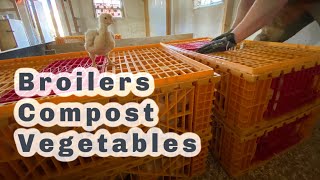
Richard Perkins moves 500 broiler chickens onto pasture, sets up water lines and compost bays, and plants vegetable beds. The birds will yield 1,500 kg of meat at 129 crowns per kilogram sold directly to customers.
Questions this video answers
500 birds
Approximately 1,500 kg of chicken
129 crowns per kilogram
About 8–10 cubic meters
Chapters
What's up, YouTube? Welcome back to another episode. Today we are getting the pastured boilers out in this beautiful spring weather. And we're just using this machine to finish up jobs like loading up the new compost bays and other things like that. Okay, so hour and a half, we've got most of that material out Now. What I was hoping to do actually is leave a thin layer of the bottom of the bedding, which is basically peat moss and chicken manure. But what's happening on the edges, I don't want to get too close to the edge of the tunnel because it's an articulated machine. So it's very hard to get out of the corners. I'm just using a shovel here to pull away material from the bottom wooden ring beam of the tunnel and spreading it back out into the thing. And then I think I'll just come through and board fork and till straight onto there. We're down to subsoil in some places, but there's a lot of compost from previous years. But I want to avoid bringing too much material back in to make the bed. So I think we're gonna work with what we got. Just gonna finish up in here for tonight, and tomorrow I'll start the process of forming beds. Okay, so I didn't get finished, but I've just taken out the far corner now with the nest boxes. And what we'll do now is just tidy up the edge. So you can see here, I've just been exposing the bottom rail again and I'm leaving a bit of this material that I'll just rake out. This is some of the top straw mulch because these will make up the perimeter and end pathways. And it's a bit patchy. Some places we're on good compost from previous beds. Some places we've gone through that to subsoil. So what I want to do is put out a string mark in the middle. We're going to get eight beds in here. So I'll just put up a string in the middle and broad fork along and guesstimate where the beds are. There's no point measuring them out because there's pretty standard fit with a 30 centimeter pathway. And then I'll tilt it all over, I think, and put down a bit more compost. Looks pretty good under here, but we are straight on top of quite a hard clay compacted surface. Here's all the stuff out of here, so it needs a bit of cleaning up. Off to the eggmobiles, but pretty good progress. Next step, broad fork. So I'll take this line as the centre line of the pathway down the middle. Four beds on each side, so we'll go through broad forking, tilt it over, and then I'll actually bring back some more matured compost to just top dress the beds. Okay, testing water system. So this water that goes all around the farm, as you know from previous videos, comes from the cellar of the house, which is round here. It goes down through front field, it goes under the culvert, under the road, and it goes up both sides of nutfield here it goes up into around top field and it actually goes all the way through the forest where the pigs used to have water. So what we do we have the lowest point of this line is conveniently down at the stream, so we have a bleed point there. So winter, we basically open up all the pipes at the ends and put the drain plug, quick release in and just drain the line. So now we're putting the line on to test it because we're getting the birds out tomorrow. But if it freezes again, we have to drain the line. So it's exactly the same process to fill the water lines up. We've basically disconnected the winter chicken water and sheep water, plug this main line back in and we come up with these still open until water flows and then we can shut these all down. So there's one here, one on the other side of nutfield, one in top field, and we've disconnected the forest line and so now it's just a waiting game. You can hear air pushing through and we just wait till the water is flowing and then we all backtrack because on the sides of the field, everywhere where there's a stake, they did have bright orange paint on them. These are water takeoff points. So we have them spaced conveniently to be able to block water for chickens or the layer hens or the cows and sheep, etc. Okay, we've got water here on the other side of nutfield. So we just release that and we'll go and check up here now at the top of top field. Okay, all set. Water's on. Good to go. Okay, very windy. Not the best day to be up on the roof, but time going on. Akosh is down below. He's putting little bays with free timber. Look upside down. So we're gonna, while the machine's here, we're gonna get all this compost in. Nice view from up on the roof. Check that out. Just got some direct seeded carrots in the new north. Anyway, try to get on. Okay, so moving Day for the broilers. You can see they feathered out quite well. It's going to be a few nights of minus one in the next week according to the forecast. And so we decided we'll get them out because space is very limited in here. Because they feathered up quite well, they should be fine. There'll be a lot of huddling at night times, but we can always put straw down as bedding and wrap up the pens to have less wind. It's been quite windy these days, so we're just going to clear the Buddha space of feeders and waterers and then it's a case of getting 40 per chicken crate. That's about what you can fit comfortably. These birds are a bit bigger, so maybe less because we're a few days over when we'd normally take them out. But we'll start loading and take them up to the field. A lot of people pick up birds gently by their feet. Now, a bird relaxes in this position and it's okay to do that. But you'll see in the industry they'll be picking up six at a time in both hands of these young birds. Personally, because we're dealing with smaller numbers, I like to cup them with my hands because I can support the entire body with my fingers and I know it's not causing any discomfort to the bird in that way. So that's my preference. Working with eco. It. Okay, these crates back together nicely, which means they won't move around too much as we head up to the field. So we don't have enough free crates at the moment that we'll take these up, get them in their pens and then we'll come back for the rest of the boat. So we'll close this door up. Quiet now. Always a big day. It's good on moving day, so really think about the weather coming up. We've had the lights off in Nebruda for some days to bring the temperature down significantly. It's still obviously a lot warmer in there than it is outside, but we've got these beautiful sunny days. It's up at 13 degrees. Do have some freezing nights to contend with, but we can deal with that in different ways by either wrapping up the pens a bit at night, putting straw that they can bed up off the ground. And the main issue is going to be practicality for us with water. And we put the field lines on yesterday, but obviously, obviously, if it freezes, we have to drain those up, but we can manually take water out for that. Okay, good to go. Okay, so the basic process is just shuffling the birds and we'll come back and do the feeds. They already have water here, so they've got to get used to this gravity fed water. Put lids on. And you see they're tucking into that corner. That's the most protected against the wind. First time these birds have ever seen grass in the ground. So it's time for them to start exploring and settling into their new home. So at this point, we just shoo the birds out to encourage them to go. How are you getting on, Ragnar? Are they coming out? Yeah, some do on their own. Some are coming on their own. Yep. How do you think you'll help the others get out? You've helped many. Look, they're all coming in here and they look like they're enjoying. Look at these ones, pecking at the ground, exploring. So we'll help the others get out, shall we? What you do is lift them out gently by their supporting their bodies. And then the ones near the door we can shoe out. You must be very gentle. If you pick them up, cradle them really gently underneath as well. That's good. Yeah. And then gently put it down. Perfect, my love. But I only. On the other side here. Yeah. These three things gently push towards the door and they will go. And then we can take this crepe out. Good job, Randall. Don't take a couple more hours. Use two hands and cup it. Here's one. Good job. And you can listen to them. When they make that loud chirp, that means it's a bit uncomfortable for them. If they just make a gentle chirp, it means they're happy. Just a few more. That's perfect. We'll put the lids on and we'll go back and get the other birds. Are you able to get out of there? Good job, my love. You already know how to do. Some of the people watching this video, they're just learning to do some of these things themselves. But you're only three. You're only three. And you know how to raise chickens and make eggs, don't you? And make meat chickens. You've learned. You're learning all the time. Good. How do they stop getting cold in here? They've got their feathers and they can sit close together. But most importantly is that they have this plastic sheet at the corners, so it's like a tent. And we can see they all huddle in to the nice corner. Good boy. The holes are good. They stop foxes coming in. We have never lost a boiler to a fox or any other predator here. So that's testimony to the efficiency of these pen designs. I know what happened. To the other dog. So they take the fox. It. So I just want to show you the wing development on the birds at this point. Now, these birds typically don't fully feather out even until they're seven, eight weeks old, when it's approaching the slaughter time. You can see their remarkably big legs of this time, but they're quite bare on their bellies. That's where they lose a lot of heat against the ground. That's why we might need to put straw for them to bed down upon. That's what it works. So we've got the rest of them loaded up now. What happens in here? We don't have a batch coming in straight away. You'll remember from previous years, we would typically have six batches of boilers in the year. And this afternoon, new day, old chicks will be coming. That's not the case. So we don't actually need to deal with the brooder today. But what we will typically do here now is put down a watering can of water evenly over the whole surface. It's about 10 square meters. And then take a pitchfork and just turn the material, not tig it over, just turn it gently. And the reason we're adding water there is to really facilitate the biological nappy, as it were, that helps keep these birds healthy. Typically, you would expect mortality rate to go down as the brooder starts becoming more biologically active. That's been our experience over the last years. So we would expect higher mortality in the very first batch and that's often down at 2, 3%, which is not a lot. That's where most of the deaths with boilers happen, in this very vulnerable young stage. Now, there will be deaths in the field and that's unavoidable. When you have livestock, you will have dead stock, but it shouldn't be anywhere near the industry, which will typically run at 10, 12% mortality. And they will cull the birds at day 35 due to these birds just eating until they get heart attacks. That's why we do time controlled grazing. I've talked about it many times. I've written about it. We do not believe in free access food except for the first four days of their lives. It's very important to restrict the feed for these birds and get them hungry in between feedings so that they forage and eat greens and bugs. And these are things that don't really save you on your feed bill, but they do translate to more vitamins, minerals, more activity, healthy leg and bone development, which Gives us a high quality bird that is just not comparable to anything you can buy anywhere else in this country. Okay. That loud chirping is distress. Obviously it's a pretty distressing situation being chucked in a box and driven across the land. But they're fine once they get out. Already in the 10 minutes we've been down, I would expect the birds that are up there to be pretty relaxed still. And they'll be huddled together still for a while now just to keep themselves warm. But I expect they'll be fine. So just as they back up, let's have a look. Very relaxed. You can see they're very curious. Grass hasn't really started growing yet, but already they're foraging and investigating. Perfect. All right, next batch to go. It. Okay, lid back on so that stress is over. These birds are going to settle in already. If you listen, you can see the birds are contented and down in these pens they're already scouting around, pecking at whatever's around and they seem utterly relaxed. So that's how we do. That's gonna produce. There's 500 birds. So it's gonna produce 1500 kilos of chicken in about five weeks time. Now that will translate to just over a ton of sellable chicken today. We're gonna eat food today. Not the chickens though. Why they're not ready to eat yet. They've got to grow a lot bigger, don't they? But that's about. We sell for 129 crowns a kilo to private customers. So that's about 12 and a half thousand euros of product in an eight week span with six of these Saladin style pens. And if you're curious about raising your own meatbirds, we have loads of videos featuring how we do that in the past, including a few years ago when we had snow in late. Well, it was in May actually, and we had birds out in heavy snowfall. Hopefully that won't happen again, but you never know. But we should be getting some frost so we will take appropriate action as and when that comes along. Oh, saku wins. So a little development in here. It's a very windy day yesterday, but we got a few roof panels on and Akos is working on these sidings with the free timber. This is all free wood that we picked up last year and we started moving the first piles that you can see from here into there. My aim is to clean this space up, flatten it off and beautify it. It'll be nice to have this up as grass again, but still some work to do. It's a bit heavy stuff for the digger we've got. It can't easily handle heavy wet material, you know, with a full bucket load. Starts tipping the machine. So the aim is just to get all the stuff in here and then I want to level this off by hand and put some old carpet or vinyl material over the top to let that mature down. Can see paper pot chains, they don't break down, but everything else is full of worms and looking good. So a little bit more time maturing and I think that will be fantastic. And then the aim with these slotted bits of wood is that when we want to move material we can take them out and easily access these bays from different sides. The first transplants of the year got some really nice kale to go in. Also got direct seeded carrots as well as the radish gone in. So things starting to come out in the gardens. Finally. It. Okay, so bay one is full now. This represents the more mature material that it still needs a bit more time. It's full of worm activity and it's breaking down nicely. So we will leave this pile for a little while and what I'll do is start just putting the rest of the material that's a bit newer into this one and we'll clean this little area up. Still got a roof to put on, but may as well get it started. Have a look at that. It's a lot of compost. That's maybe 10, yes, 8 or 10 cubic meters stacked in there. Okay, so that's as far as we're gonna get today. Got to get this machine doing all the other work it needs to do before we take it back. So we've got one bin full and half a bin that needs the front putting back on. And this stuff is aging nicely. So we will continue to layer on green and brown material onto this one as we go. Gotta drop this now and get on with other more pressing projects. And I think the roof will wait today as we get on with other things. But super nice to have this facility. I think it's going to be awesome resource and give us much better quality compost to put back on these beautiful beds. I like the sighting of it. It really makes use of this. You know, this is when you first come into the farm and the most precious resource right there in front of you. Beautiful. It's moving day. While we got the machine here, we're gonna clear out some of this junk. We got so many pallets. I gotta go out now, but I realized I didn't have an end screen to the video. And yeah, just a quick update in today's video. Just trying to show you a bit of the processes going on as we tidy up the farm, get it all organized, get things rolling, projects taking a bit longer than they might otherwise just because we're multitasking and lots of new introductions for people into daily processes at the farm. Sort of eat into the workday, but that's the way it is. There's spring coming now and some nice weather and we're excited to be bringing birds and bringing production and life back to the farm. Can't wait to see fields of green pastures. The color of the grass is. I've said it before, it really just wears me down. I can't wait for green grass. I think it's because I grew up in a place where the grass was green year round. Even if it wasn't growing. It really makes a big psychological impact. The color of the landscape around me for me. Anyway, that's it for today folks. So don't forget you can hit subscribe and click the notifications bell if you want to keep up to date with videos that we're putting out. Often there are videos in the past that address many of people's questions. So if you're new to the channel, do check out previous videos. There's a huge amount of data about all kinds of things that we do on the farm if you're willing to look through it. And the best place to find up to date information is in our book Regenerative Agriculture. I nearly said making small farms work. That's how to print. And in our online training, which is still by far the most comprehensive online farm based training out there on the net. So stay tuned. See you in a video soon. Bye for now.
More from Richard


A review of short and intensive season on a mixed farm and restaurant/event space in Sweden






Alskade Kyckling Exploring complexities of poultry production in Sweden and what we stand for


