BUILDING A FARM AND SOLVING GLOBAL ISSUES
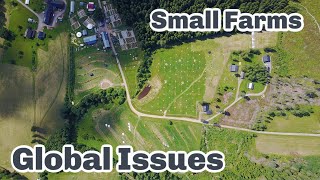
Richard Perkins runs a 10-hectare regenerative farm in Sweden that rebuilds soil through mixed enterprises: market gardens, pasture-raised animals, mushrooms, and agroforestry. He argues conventional farming depletes topsoil and traps farmers in debt, while his model returns cash in the first year through modular businesses and pre-selling farm vouchers.
Chapters
Welcome back to another episode, folks. Today's video is a reposting of an interview I did with Misha Bouch from business podcast Groningen, which is in the Netherlands and it's quite a new channel and I thought Misha did an excellent interview. As an entrepreneur who's not involved with farming, I felt like it was a really good interview and I felt like I enjoyed the conversation with him and so I wanted to repost it here and he's given his permission for us to do that. And I think it's a really good conversation about the wider space around regenerative agriculture and the state of agriculture in the world today and a bit about what we're up to. So some of you may have already seen it because I posted it out on Facebook, but I think it's a great interview. If you've got time spare, then that's for you to check out today. I also want to let you know that tomorrow night, 5 o', clock, Swedish time, I'm starting a live Q and a here on YouTube for the rest of the year. Now I'm putting my attention into the Farm Like a Hero experience. We're releasing two to three long form episodes, 90 minutes each, of the best regenerative farmers in Europe over the next six months and I'll be doing questions and answers weekly in that private space as well as interacting on our private Facebook group. So we really want to put our attention there to the people who are joining us. It's a low cost subscription site and the HERO membership at the low cost with the ebooks that we'll be making throughout the summer of all the Farmers is only available till about this time tomorrow. So sign up now if you want to join us for the rest of the year. I don't think there's anything like it out there in the regenerative ag space, both in Europe and further afield. We've got people from 35 odd countries in there and that's growing all the time. So come and be part of the community and we're going to take you on an incredible journey this summer, so hope to see many more of you in there. And so with no further ado, here's the podcast episode. I hope you gain a lot of benefit and insight from it. And don't forget you can subscribe to Misha's YouTube channel. He's just been starting that up, so lots of interesting entrepreneurial, focused interviews on there, so you can find a link to his channel in the notes below.
Most of the solutions pushed by the Mainstream media for issues such as climate change, desertification and feeding the world involve very high tech innovation and often relocate the problem instead of solving it. My next guest has developed a proven method for tackling the above problems by changing the way we produce our food. Richard Perkins is one of the world's leading experts when it comes to regenerative agriculture and farm scale permaculture design. He's the author of multiple books on this topic and has been a consultant across the world in the agricultural industry. Besides being an expert in his field, Richard is also a successful entrepreneur, having established a highly profitable farm in Sweden which now serves as the lead example for other farms in the industry in Europe. Next to focusing on regenerating the soil and the ecosystem, Richard's farm Richdale is also a training center for aspiring entrepreneurs in the agricultural sector. So without further ado, he here's my next guest, Richard Perkins. Hey Richard, welcome on business podcast Groningen and thank you for being here.
Thanks Mitchell. Nice to join you here.
How are things right now? Is everything going at the farm? Are these busy times or how's it going? Also regarding the situation with COVID 19.
Yeah, it's busy times. This is the big injection of labor to get things up and running. So our season is quite late compared to down where you are. We're just starting the first plantings in the gardens and just had the first chickens arrive at the farm. So it's really this month now that we're putting in a lot of the startup energy for the year. But actually interestingly with the coronavirus it hasn't seemingly changed our lives at all because Sweden pretty notorious for self isolating anyway. And so our life continues on the same. It's we kind of live in a little bubble on the farm. It doesn't really affect our day to day life and the only thing that's impacted is the way we sell produce. But we've preempted that and put systems in place and actually we've seen like many people around the world, that demand for integrity local food is really growing at the moment as more people really see the flaws in the system and the fragility of the food supply.
Right. Yeah. Do you feel more safe yourself being more or less off the grid when it comes to your food supply and being able to grow your own food and of course for a lot of other people as well?
I think so. I think we're unusual as modern farms go in that we grow all of our own food first and then we produce some things for profit. So we Actually have a whole human diet here, so we're pretty self contained, you could say. But really we did an analysis because we have people coming from different countries to, to make the team that year. And one of our employees was in Southeast Asia at the time when this was really, you know, the coronavirus was really kicking off. So we sat down and did a risk assessment of, you know, bringing people here and what that might do to affect our lives. And we figured out that our son being in daycare was actually our biggest risk factor because Sweden hasn't locked down. So, so everything's, you know, people are taking a bit more distance from each other, but other than that, everything's open and operational. So we decided to keep our son at home. And that's been a big change for the work day for Johanna and I. So that's something we've been adjusting to. But other than that, everything remains the same and we feel pretty safe.
Good. Yeah, that must be a good feeling. So in the mainstream media we hear about innovations made in the agriculture industry, such as like more efficient use of fertilizers or reducing the waste in the production chain, et cetera. And these are made in the name of sustainability and environmental protection. But they don't seem like very big game changers when I compare it to your approach and your vision on agriculture. And it doesn't seem they will really solve the major problems of our times. What, in your view are the main problems when it comes to quote unquote, conventional agriculture? Conventional farming. And what, what kind of alternative does regenerative agriculture offer?
Wow. Well, that's a really big question. So I guess let's unpack that. I mean, you know, just on face value, what you're saying, there is, there's a lot of greenwashing going on right now in conventional agriculture. And actually a big part of writing my new book and calling it specifically regenerative agriculture was a concern that Big Ag is starting to adopt regenerative as a word in their nomenclature. And I felt like no one else was going to put out a book about regenerative ag from this space. And so I felt like it was like almost political to do that, to have something, at least in the literature that's defining, you know, a holistic approach to land management, business and life, you know, as it were. But, you know, we've been sold short on the true story of what's going on in conventional agriculture for a very long time. And the trend is increasing sizes of farms run by less and less people, more and more technological and debt based infrastructure, more and more oil based infrastructure, and our capacity to damage soil, which is the fundamental resource of any farming community, has become quicker and quicker. So if you take it back to statistics, it's, you know, you eat about 400, maybe 450 kilos of food per year. But agriculture, modern conventional agriculture, is a rolling 10 tons of topsoil to produce that little meager portion for you. And so what we see is globally, we move more topsoil around every year through agriculture than the last ice age moved in its entirety. So this is catastrophic. And soil is the basis of regeneration. It's the easiest thing to damage, but it's on juxtaposed against that, it's the easiest thing to fix. And we have all the strategies. If we copy how nature works with livestock, if we copy how nature works with tree systems, we can rebuild soil really fast. But we have to say, you know, something that I'm constantly confronted with is people would say, well, can your type of farming feed the world? But I think that is the wrong question because what people don't necessarily understand is that conventional agriculture is not feeding the world currently, you know, most people on this planet are undernourished. And so the problem is actually about how we collect data and how we distribute resources because we actually produce enough calories to support the world population. Up to 10 billion already on actually only about 30% of the world's farmland. But the trouble with big, you know, with meme based thinking that we're in today is the fact that people are looking for sort of clickbait headlines and snapshot sentences. And the problem with it is you can't really compare conventional agriculture to regenerative agriculture. They're not on level playing fields. So something that we see with the farming community is farmers typically have very conditioned ways of doing things. My grandfather did it like this. There's a lot of pride and arrogance of we do it like this because that's how my father did it and this is the way it moves. So in some ways, and certainly my experience going to ag school back when I was a teenager, things haven't moved on very far. And one of the big issues is that there's a lot of pride around, hey, I grow wheat and I grow the most tonnes per hectare in my country and that's like this great achievement. And on one level that's great, but on another level, these are empty calories, so you can't compare them to the mixed calorie outputs of a mixed farm, along with all the ecological benefits that come with that. But the truth of the matter is nearly every farm in Europe is running on subsidies and therefore doesn't work as a business. So that in itself says a lot. We're here demonstrating, you know, on a very small scale, we're a 10 hectare farm, that's 25 acres, which wouldn't be considered a farm in modern context. But we can drive four salaries at Stockholm level out in the country doing meaningful work that's enjoyable and supporting a lot of local families. So there really is a hope for the business. But what's going beyond conventional ag is that we're doing this at very low cost. We're doing this on a human scale where we have an intimate relationship with our customers. And I feel this is the benefit of lots of small farms surrounding a community is that then, then we have food security. Food security is when I look at my customers in the eye and we have a relationship that's food security. And for a long time we've been sitting back complacent with seeing supermarkets full of rows of food, but not really taking it in that that supply chain is very, very fragile and that most of the calories on those shelves are coming from three or four different crops that don't make up a healthy human diet. So we've got an agriculture today that's hell bent on going robotic and more smart chemical or whatever. But these chemicals are debasing the soil resource that we rely upon. It's farming with a credit card. Doesn't matter how smart you do it and how much infrastructure, technologically speaking, you put into it, it's not leading to the solutions that will fulfill humans into the future. Because essentially all the problems we face through farming are biological by nature. And that means they're complex. And you cannot fix complex problems with technology. It's too simplistic. And if we look back at history of every civilization that damaged its soil resources, they're all extinct. And we're heading that way too. Bare soil covering the Earth's surface is the biggest threat to life on Earth. And we make more of that now than we've ever done before, producing pretty empty calories and less and less people employed in the food system. And the social degradation that comes with that too, where people don't know their farmers, they don't know where their food came from. And there's a growing mistrust for corporations and the quality of food coming out. And that's driving the growth of what we could call regenerative agriculture, which is founded on building healthy Topsoil, restoring diversity and creating habitats where things want to thrive, where health is the normal default position, rather than finding disease and creating the disease, because most farming practices are detrimental to the soil. And that's where farmers are just creating their own problems and then using reactive management to deal with the. With the very things that they created. So we take a very different approach. We're looking at hyperlocal inputs and outputs, building soil as the priority and focusing on enterprises that are very cheap to start up and that are profitable from their first year. So this is really important to us because we see most people coming into farming, certainly young people coming into farming. They don't usually have much access to land and they don't usually have much money. So we need very different models that are able to be picked up and run on rented land in modular format or whatever it is. And so a big element of our farm is to educate a new generation of people coming into a very different type of farming with a totally different skill set than existed maybe in the previous generation.
And do you see that as the way to grow regenerative agriculture as an industry? Or do you also think conventional farms would kind of switch or move over to a different way of farming? Or do they need to be completely disintegrated and split up and rebuild it? Or how do you see that? How do you see the industry further developing and growing to an even bigger scale?
I think it's going to require a bit of both, because on one hand you do have a lot of larger conventional farms who just simply can't afford MPK fertilizer anymore. And so they have to look to solutions for practicality for their business. But I think the real driver that I'm seeing is young entrepreneurial folks seeing that they can build a life doing something meaningful. People that are turning away from urban lifestyle with work that they haven't found meaningful or feel contributes to something holistically. And I really see a big future for that. Because the trouble is with our educational institutions is all educational institutions are governed by public opinion, which means they're always behind the leading edge of everything. The best farmers didn't even go to agricultural school. So that says a lot. And that will be the same across many fields. Right. But that's been the mission I'm on, is to educate people coming into farming for the first time. And the reason I that so important is their thinking is malleable. Someone that's grown up on a conventional farm and been through agricultural school is so conditioned into that way of Doing things that it's very hard to break that conditioning down. Whereas someone who's already run a little business or, you know, comes with a more entrepreneurial mindset, it's much more malleable to do things in a different way.
Do you get those type, like conventional farmers? Do you also receive them? Are you a farm for training courses, etc.
Yes, but I would say they make up maybe 25% at the most. And they wouldn't be really big conventional farmers. They would still be considered, you know, a few hundred hectares and often already doing mixed farming and usually organic. So it's. It's not a. It's not industrial farmers that are switching. Right?
It's a small step for them.
Yes, exactly. But this is a. This is where my work's taken a certain track, is that I see that there's no harder pathway than starting farming from scratch. I mean, it's a very complex business, and if you've never run a business before, it makes it really hard. So my educational work is really focused on specifically young people who are coming into this who have got the motivation and passion but need to be taught how to become very disciplined and to run a business, which is usually not how they came into this. You know, it's very easy to romanticize life on a farm, and we've got these beautiful plants and animals we work with and sun is shining, lovely working outside. But, you know, it's hard graft. Of course it is. We can be smart about it, but it's hard work and it's really the back end that makes it work. Like any business, it's all the accounting, the bookkeeping, the decision making and the financial planning that actually makes it work. And a lot of people who are attracted to this lifestyle have overlooked the significance and workload of those things. So we run programs to really discipline people into how to effectively plan and run business. And that's been really successful. And I think it's where I'm putting my focus on an educational perspective. And certainly the books I've written and things are really focused on giving people as much of a recipe to go through because they can't learn that. At agriculture school, I created a place that first and foremost is a functional farm. But then on the side, I wanted to create a place that was the sort of learning environment I wish I had encountered when I was learning, because it just didn't exist. And so we're integrating models from, you know, different pioneers from around the world, all of whom I was just talking the other day about this. All of the greatest people in the field didn't go to agricultural school. They're people that have pioneered and found solutions creatively out in the field that meet their needs.
Needs, yeah, because the solutions probably didn't exist yet when they, when they started out. They had to be developed from scratch also.
Exactly. And, and these are things that are not taught in agriculture school. And, and typically when we see people coming from agriculture school to us, they, you know, they're taught to make business plans that are heavily debt based that lose money for five, 10 years before they even get their investments back. And to me that's bad business. And it's very hard to convince someone to start what is a physically very demanding work if they can't see immediate returns. It's been the backbone of my education. I have to show someone from Stockholm, for example, that they can match their salary by coming out and doing something like this. Otherwise there's no hope to convince people that this is worth doing. But on the flip side, this is the most meaningful and enriching life I could imagine. I mean, I learn more about all disciplines and areas of academia than I could at any institution and I can achieve a good salary and I have a very fulfilling life with a lot of side benefits. You know, we eat food that you can't go out and buy and it's all from within meters of the back door and we get to work with the seasons, we get to be outside and fresh air and those things are really meaningful. I'm a strong believer that hard, meaningful graft is very good for particularly young people who are not growing up with that same sense of discipline and. Well, yeah, discipline that would have existed, you know, in our parents generation say some of those core values that really hold the fabric of our society together, I think they're found in these pursuits.
Yeah, yeah, yeah. You also talk about it in your books. I have the first version of your book here. I also have your new book which is improved and transcending version of this book I think. Regenerative Agriculture. I have the ebook in that latest.
Book.
Regenerative Agriculture A Practical Whole Systems Guide to Making Small Farms Work. You write extensively about the different enterprises that are being operated on your farm in Sweden. And the main revenue drivers are the no dig market garden, pastured broilers and pastured egg mobiles. But you have many others such as the forest raised pigs, agroforestry, pastured turkeys, tree crops and indoor mushrooms to name a few. For the people watching that are maybe less familiar with this concept, could you maybe give a brief explanation on your. Like your cash cows, as you described earlier, you really focus on enterprises that can make money from the first year. And why have these particular enterprises been so successful on your farm, but also people that have been emulating your model?
Well, one of the hardest things in any business is managing cash flow. So one of the first enterprises we set up was passive boilers. And so here's a product that you can grow in eight weeks. It's extremely high value, and we needed enterprises that fit in a small farm. So essentially we're driving about quarter of a million euros revenue in six months off essentially three and a half hectares, because that's the pasture land that we have, and that's very high numbers for a farm in Europe. I mean, it's doing good at high levels of return. But to do that, we need enterprises that are modular and scalable and produce products quickly. Because in farming, most of your investment costs come at the start of the year, and typically you don't start earning money to the middle of the year or to the end of the year. And obviously weather and things that are outside of our control can majorly influence the business. And that makes it extremely hard to run a business. If you think about the simplicity of running a coffee shop where you have coffee beans and milk and you make something, you sell it, you have your standard overheads, it's very simple to run that, and most people could get their heads around that quite quickly. But it's very much more complex to run a farming business even in the best of years, because there are too many complex factors out of your control. And so we knew we needed an enterprise that could balance cash flow straight away. So the first year we were at the farm, we set up a little bit of everything and we started formulating feed ratios and pricings and getting to know the local market and building a customer base and just testing stuff out that we could then scale it up and work much more commercially immediately in the second year. So we planned that into our business to have a year where we had less financial pressure on ourselves, mainly by not getting into a large amount of debt, that we could test out recipes so that we could confidently build up. Because one of the big problems in agriculture is over producing, too. There's no point producing 10,000 meat chickens if you haven't got a market to sell them. Too expensive, because the actual running costs of a lot of these enterprises are up to 40, 50%. So it's quite expensive things to produce. So password boilers These are day old chicks that come to the farm. We raise them up in a brooder to keep them. They're very fragile when they're very young, so they're kept very warm and they grow very quickly. They soon go out onto the grass and they move daily on the grass in pension, in very small flocks to keep stress absolutely minimally. And then in eight weeks, eight weeks, you've got a two and a half kilo bird that's worth 25, €30 at the price. That's. And that's, that's the relative price that we're about one and a half euros cheaper per kilo than an organic mass produced bird in the supermarket.
Oh, really?
So whilst that's an expensive sounding chicken in some countries that's, you know, it's cheaper than the local competition. And so that's a fantastic enterprise. It's extremely profitable and it's scalable. So we actually invented a farm currency the first year we were at the farm. And it was a play, it's called a ridge dollar. So it was a play on the name of the farm and the play on the original Swedish currency, which was a dollar. And we used that as a way to pre sell birds. So you could buy this voucher essentially, and that meant you had one chicken. And we told people you could pick it up on these dates throughout the year, just let us know a week in advance. So in that way we could guarantee to have sold the produce we were going to make. So we didn't need to under or over produce. So that was really helpful. We did the same with our laying hens. So we have two or three flocks of laying hens that have homemade egg mobiles. It's like a big structure where they sleep and lay eggs and they move daily on the pasture following the cows and sheep that we have here. And eggs are a fantastic product because you've got weekly sales. They store quite a long time, so they've got a month's shelf life. And good eggs are a gateway product for all other products because if you have exceptional eggs and the daily move onto pasture means they ingest so many insects and all the greenery on the ground that their eggs are very rich, very dark orangey oaks. They're much more full of vitamins and minerals. There's been extensive testing on those sort of things. And so once somebody tries our eggs, they never go back. And once you've got a customer buying eggs on a weekly basis, it's very easy to sell them a vegetable box or a Meat, chicken or whatever it is. And one of the great pioneers of this type of farming, Joel Salatin, a quote from him that really is true in my experience is it's much easier to find 100 customers that will spend a thousand euros with you than finding a thousand customers that will spend €100 with you. And that's one of the great benefits of mixed farming, is that we have a very broad portfolio of products and we have quite a lot of customers, but relatively few customers. They're buying a bit of everything we do. So it's, it works very well. Yeah, so eggs, we sell on subscription as well. So it's like, hey, we're trying to cultivate the customers that we want to work with. It's like, we've got the best eggs, the best chicken. You can't buy this in the shop. This is the best going. But you got to meet us halfway because we've got to go home again after and feed chickens and do the chores still. So you can buy our eggs, but you have to buy them three months at a time. You can't just. We don't want to have to do the accounting for individual transactions. It's not worth our time. So that's really helps with cash flow too because people were paying us up front. Now, of course, you need to know that you can deliver. And we come from farming experience, so we didn't set up at super high risk. We knew what we could produce and what we could deliver. We did the same with our vegetable boxes. A very common strategy, which is csa, which is community supported agriculture. So people are paying you up for front for the year's boxes and they're going to get a box every week for the whole season. So that way you can get all your investment costs up front and involve your customers in the process. And I think a lot of the people that want this kind of food are very interested. We have big open days at the farm so people can come and see how we do. And that's a big part of our strategy because we are trying to exceed organic certification. We're not organic certified here, but we only use organic feeds and try and excel past organic standards. Because we see a big problem with organics. Just like any other farming, it's a matter of scale. If something is available in the supermarket, it's not being grown in a regenerative way, that's for sure. And there are broad spectrum toxins allowed in organic agriculture. And there's really poor soil management practices that are common in organic agriculture. So we Always wanted to say, hey, well, what goes a step beyond that? And then by inviting customers in and informing them and educating them and investing time in that, we now have highly informed customers who are, you know, we would have to do something really out of character to break that trust and connection. For me, that's the basis of a resilient business and a resilient food supply is people in direct relationship with each other in their community. So those three enterprises have made up the mainstay of what we do. And they can be run by three or four people, six months of production, although the hens run through the winter. So that means we get a long winter break up here in the north, where it's so cold, we get three, four months off, essentially, although we're here on the farm, so we're doing chores for an hour a day. So it's a lifestyle that really suits a lot of people too. To be able to have a long, extended winter break. And that summer activity can generate the revenue to pay for the two people that came for the summer and pay us full time for managing the farm. That's a pretty easeful workload. We're also doing a lot of other things on the side that because of our educational outputs. So it's worth saying if it was just Johanna and I trying to make a living for our family, we would not be doing the broad diversity of things we're doing here because it's, it's far more work than we need to sustain ourselves. So we're doing those as a way to fulfill our secondary objective, which is to educate and inform other people of how to go off and start this for themselves. Because when I was growing up, what I saw was that people would have to go to one place to learn about this thing, then they would go to another farm and learn about this thing. But there were very rarely opportunities to see these things working together as a cohesive, integrated whole. And that has a really big impact on people. So we have people coming here, for example, that are set on being a market gardener. They come and learn for the season about vegetable production, but they come into contact with raising poultry and they fall in love with it and they go away and set up an excellent business doing something very different. So, yeah, that's been really valuable. So we're doing, yeah, as you said, we've got forest raised pigs, we have cows, sheep, we do some turkeys, and we have tree crops up above our field crops. So agroforestry, they're all sideline things and they make up a significant side income, but they're not the sort of bread and butter of the business.
Right, yeah. On page 325 of your book, you write that you may not keep running the pasture broiler enterprise in the future because not all aspects of it are completely in line with your ideals. How do you picture the gravity of the different enterprises? If you look 10 years from now and do you feel there's a permanent gap between sort of the ideal regenerative agriculture and something that's maybe more of a practical situation? Or do you think this is purely a matter of time and until the systems on your farm mature, such as the trees, etc. The perennial crops?
Well, it's a good question. I think that, you know, you could be forgiven if you're not engaged in agriculture by the sort of things that fly by on Facebook, memes, etc. You could be forgiven for thinking that vegetable production, good, sustainable, meat production, bad, unsustainable. And this is an interesting topic because that's true of current industrial modern productions. But actually in a natural farming system, it's a complete opposite. There's nothing more sustainable than turning sunlight to grass to animal flesh. So in a way that would be the pinnacle of, of regenerative agriculture because the only thing we're harvesting is flesh food, essentially, so there's no waste from that system. When we look at vegetable production, it's incredibly input intensive. It's totally reliant on animal production. Nearly all of European vegetables are grown with industrial broiler or chicken manure. So it's really important. Part of teaching people about how farming works is looking at the ecosystems around us. There are no vegetarian ecosystems on the planet. Animals drive fertility systems. That's how it works. And so by having all of these things together on the farm, we can start rebooting the ecological processes. So we wanted a farm that long term is based around grasses and trees and bushes, but they're not things that necessarily immediately pay back. And so if I want to plant a lot of fruit trees and berry bushes, like the fruits and berries we have on our farm, are perhaps worth about €30,000 a year, but that's going to take 10 years to start scaling up the production. So we've got to do something in the meantime to support those long term, more idealized systems. And so we've chosen these very intensive systems to, to pay the bills and pay off our debt very quickly. So this is important because the issue I have with broiler production is we are totally reliant on industry genetics. And that's definitely not regenerative. And so this is a point of contention that does come up in discussion. But it's important to leave some idealism at the door. In face of pragmatism, you need to be producing viable amounts of food to a customer base, producing things that people actually eat and are familiar with before you get to impose your ideals on the food system. Because frankly, no one cares about your opinions about the food system unless you're producing a significant amount of food. It's like you're not really entitled to have an opinion other than as a consumer. So we thought about this very carefully. So what we're managing towards at our farm is a triple bottom line. It must build soil, it must make us money, and it must be producing something for the consumer that's better than they can buy in the store. So right now, if I can use industry genetics to raise a meat bird that's healthier, more nutritious than you can buy in the store, and it builds my pasture to increase the resilience there for the future, makes me money, I'm willing to do it. And it meets those three things perfectly. Right. However, I personally have an issue with it because, yes, it's based on industry genetics for the birds. Because you can't make a business with heirloom old breed chickens. They take too long to grow, they eat too much. Nobody I've seen on this planet is making a viable business other than with industry genetics because they've just been bred to be optimal growers. And that enterprise relies on imported grain. So they're the two flaws. We're using other people's grain to feed those animals. And I'm fine doing that for now because this is a short term cash flow enterprise to kickstart our pastures, which have been growing tremendously. And that's documented in our book. We've built 20, 25 centimeters of topsoil and we can demonstrate that there's not many farms that can show they're building topsoil. They're usually extracting it. And we've made good money and paid off our debts. And that's been important to us because once we are in a position that we're free of debt, we don't need such a big income to have the same needs met. And so always our strategy has been we build up a customer base producing excellent quality, reliable products. And once you now have your foot in the door, it's like, hey, Mrs. Jones, you like those chickens? Have you ever tried a goose right Because a goose lives on grass alone. And if we've improved our grass that much, we don't need any foreign inputs. But let's face it, how many geese have you bought in the last 10 years? Same would be true for meat rabbits. If you want a sustainable meat source, there's not many places you could look further than a meat rabbit. Trouble is, there's no market for that. The sort of people that eat meat rabbits here are the sort of people that grow their own. You know, they're on the fringe of society, as it were. So maybe that's different in other countries where you have it in the cuisine traditionally. But you know, it takes a long time to influence a market like that. It could be five or 10 years. So what we decided to do is take an enterprise that had some flaws but still met our context, pay off debts, generate income to get everything operational, but be flexible in our decision making that we can switch at any time as that education starts changing people's consumption habits. Because we built a slaughtery on our farm. So we built what's Europe's cheapest slaughter facility so we can actually process those birds on the farm, mostly to make the money for the work we did, rather than give it to a middleman. Also to keep nutrients on the farm, because that's an important part of regenerative agriculture, is cycling nutrients on location. But that would also allow us to process geese or rabbits, etc. In the future. So it was an investment made with the future in mind. Now it might still be another five years until we can do that, but I think it's situations like this coronavirus and the long term impacts that's going to have that will start changing people's food choices, A out of necessity and B, out of fear of what the industry is feeding them. And it's interesting, I mean, psychologically, if you look back at history, it's very rare for people to actively choose to do something very differently before a catastrophe. So I can think of two examples. One was in Cuba when they were put under, you know, the embargoes from America or whatever. There's a great film called the Power of Community. And you know, havana was growing 70% of the food within the city limits, which London did in the Second World War. And it's like, we know how to do those things. And then the other one was called Coconut Revolution. These are both great films that maybe your listeners might enjoy. Coconut Revolution was the island of Bougainville and they were put under siege for seven years by Australia, Papua New guinea because the British had mining interests there and the Australians had ex colonial interests there. And they basically blockaded this island for seven years because they had started demolition, blowing up the mine because they didn't really want it on their island. And they became fully self sustaining in medicine, fuel, weapons, in the end, food, everything. And they're the only two instances I can see in modern history where people have actively chosen to positively change what they're doing in the face of the problems around them. So I'm saying that because I feel like people will not choose to change their cultural eating habits until it's most likely they will only change that when they have to. It's worth starting to educate your customers, but that's definitely not a quick process.
Yeah, I can imagine. You mentioned the role of wheat or like grains that you have to feed to the broiler, chickens for example. How do you see the role of staple crops as corn, soy, wheat in general in regenerative agriculture? Do you think that regenerative ag will ever be able to supply those type of products also to make bread, to make pasta, to make, I don't know, rice, things like that?
Well, there's a few interesting avenues to go down with that. So, you know, I guess most people are fairly addicted to these grains now. And yeah, you know, it was only about 10,000 years ago that all of those grains were pretty useless wayside plants with tiny seeds and they've been very specifically bred. Right. And are addictive. Now of course we're going to keep eating those things, but there's a lot to be said for reducing the amount of carbs. You know, and a lot of people are investigating diets and prehistoric diets and looking at the problems that have come since civilization started eating high amounts of grains, especially unprocessed grains. Because certainly in old cultures, and definitely if you read the work of people like Sally Fallon, who wrote Nourishing Traditions, a fantastic dietary book, every single culture on this planet fermented their grains before they consumed them. And a lot of problems that we see, like all cause mortalities connected to grain consumption have come about since people stopped fermenting grains. So there's a lot to be said for lowering our grain consumption. You know, 75% of world food is now just four crops. And even 50 years ago that was 15 crops. So it's empty calories. And you know, people need to self educate about diet and that sort of piece too. So another avenue you could think of is like, well think 10,000 years ago we bred these annual Plants that need to massive amounts of oil based inputs to basically kill soil to be able to grow it. If you grow grain repeatedly year after year, you create essentially a desert devoid of life. Like exposing soil to the air totally kills it. Certainly the fungi first, but then bacteria and things start to diminish as well. And all the carbon in the soil, that's the sort of the savings account you could say is reacting with oxygen in the atmosphere and flying off of CO2. And most of the CO2 in the atmosphere is not coming from burning fossil fuels, it's coming from bad soil management. That's our biggest threat. Grain is obviously staple now, but just imagine if we had spent 10,000 years breeding staple tree crops like sweet chestnut. Castagna is a wonderful example. So that's not nut, it's a grain. It's low in fat and oil and high in starch. But if we'd spent 10,000 years breeding trees for our staple food supply, we would have forested land with no plow agriculture. You would walk around picking up your staple food supply, and if you couldn't be bothered to pick that up, you would send in a load of pigs, finish them on chestnuts and eat the bacon and think about the most expensive food in Europe. It's Iberian ham, finished on tree crops, €400 a kilo. That's real food, storable, dense, nutritious food. So that's a whole other thing. But the trouble with that is that governments and educational institutions do not fund those kind of useful things because they have no gains for big corporations. So the only way that's going to work is through, you know, unusual farmers taking a stand with that. So I can't see that going fast enough, to be honest. Another interesting arm of grains is the development of perennial grains. So there are already perennial ryes, perennial wheats, there's perennial rice. Perennial maize is coming along. It's still a decade away from commercial production and again, it's underfunded because it's not in the interests of great corporations to have a perennial seed supply. That's a very exciting avenue. And the Land Institute over in Arkansas, they're a big part behind that that people could look into. But we will have perennial replacements for all the major grains, which is, that's going to be a game changer.
And that's things grow for five. Sorry to interrupt. That's. That's things that grow for five years, or those are like a bush or a tree that can grow for 20, 30, 40 years. How should I see those?
Yes, they Will have different sort of commercial viability, I guess. And that's not fully known yet. But technically a perennial is anything that grows three years or more. So you have an annual that goes from seed back to seed in a year and then you have a biannual, like an onion that takes two years to seed. And then a perennial is anything that goes on.
Okay.
After that.
Yeah.
And the reason perennials are so important is that you think of an annual plant. It's like a lettuce, it's going from seed back to seed in one season. It's like a spunky teenager. It's just focused on sexual reproduction. That's it. So you can tell an annual plant because you can just pull it out the ground.
Yeah.
And so that plant has very little investment in its root structure. Whereas all perennials focused on. They're like middle aged people focused on rooting and stability and they have massive root systems. So if you took an annual wheat plant, you would see roots going down maybe a meter in a good soil, but you can still pull it straight out the ground. If you looked at perennial wheat, you could have 9 meter deep roots. Now, wherever there's roots in the soil, plants are putting sugars into the soil to feed microbiology. The plants are feeding sugars into the subsoil to activate life. Wherever there's food on this planet, there's life going on. And where that life is happening, it's creating a shift in the soil that's releasing nutrients to the plant. So the plant is feeding itself. So just step back from that. You've got annual wheat plow based agriculture damaging soil worse and worse every year with plants that are not focused on rooting versus perennial counterparts that have nine meter deep topsoils. And so the great plains of Africa and America and the Middle east that are now deserts, they were all grasslands of perennial grasses with 9 meter deep topsoils. And that's where all the carbon in our atmosphere has come from as we've desertified those. Those are human created deserts. There's very few natural deserts.
Yeah, yeah.
Last thing to say about grains is the development of pasture cropping, which has come out of hot dry climates where you have different types of photosynthesis, what's called C3 and C4 photosynthesis. And that's where you have summer and winter active plants so you can grow a grain crop in the winter into a summer active grass and therefore avoid plowing. People are doing that with no till seeders, so they're not having to plow and they're getting months more yields than their competitors because they're not having to plow and then sow grass again. They're just timing those crops. Now we can't do that here in Europe with the climate we've got. But what we can do and people are doing is experimenting with sowing cover crops and then practicing no till with grains into those cover crops. So they're still having to plow, but they only have to plow every three years, say, so it's far less detrimental. And the COVID crops that they're growing are increasing organic matter and that's a much better way to grow a grain crop. So there are big farms doing that already and a lot of data is being created at the moment. And we're lucky here in Europe because we have a huge history of agroforestry research. And that's just putting trees into a pasture or into your arable crop, typically in rows. And that's quite an obvious part of regenerative agriculture. But a lot of farmers like to keep trees away from the pasture or away from the arable crops because they feel like it gets in the way. If they're designed properly, it's not a problem at all. But research shows here in Europe, certainly in the cool temperate zones of Europe, if you put trees in pasture or grain crops at a spacing anywhere between 10 to 24 meters, that's the optimal beneficial interaction between these essentially two different ecosystems. You can maintain soil carbon levels in plow based grain production. So that's pretty significant. And I don't want to encourage anyone to plow, just don't feel like it's necessary. But if you can maintain soil carbon levels through integration of agroforestry, well, if you could combine that with no till into cover crops too, then we would have a good case for sustainable grain production. And if we tied that to, you know, slowly overhauling our society's addiction to refined white flour, then then perhaps one day we would get somewhere that's very sustainable.
That sounds very promising. And that's, what you mentioned is also something that could be operated industrial, right? Like you could have a combine in between those rows of trees to, to harvest the grains if necessary.
Yes, of course, like those sort of things need to be done at scale. It's not efficient otherwise. And there's no reason not to do things at scale. It's more, more important that the practices are focused on building soil primarily because that's the currency of a farm. Essentially. If you're building topsoil, you're probably running a good business. And if you're depleting it, you're probably subsidized and funded by the government to run a bad business. And that's a simple way of saying it, but. Yeah, I lost my thread. Yeah, yeah, yeah. So essentially that you would design those tree systems around the crop, around the machine widths that you're working with.
Yeah.
If you had an 8 meter wide combine, you would perhaps pick 24 meter spacings for those trees. And there's some great examples around Germany, France, probably even in the Netherlands working with those systems.
Awesome. Yeah, different topic. Besides being an expert in your field, you are also, you've. Yeah. You've proven yourself as a very successful entrepreneur and business owner as well. You've talked about that before, that you know, you need to be pragmatic and practical and you, you employ those three P's where one of them is profit. Not only have you built a profitable farming business, but you're also running a successful YouTube channel. You have a training business both offline and online, but you also sell books and tools. Have you as a person always been somebody that has had an eye for business opportunities or kind of a sense of entrepreneurship?
I guess you could say. So I left home very young and so I had to learn to look after myself before I was really truly ready to, I guess. And so I was forced to be entrepreneurial. I don't think I ever really thought about it and I don't think I ever really recognized that term until, you know, quite late into it. I think I was just doing what I had to to survive. But it taught me a lot of things early on about how to run business. And I'm very interested in good business. That to me is a good business is one where everyone's always benefiting. And I meet a lot of young people in the education work I do. I meet a lot of young people that are quite distressed around money, often because they don't have any. But it's interesting, a lot of people push back against business, but it's like, well, hey, there's nothing wrong with earning money. It's hard to earn money. And it's really, we should be celebrating this. It's like farming used to be a noble profession and it now has the highest suicide rate of any profession on earth. And so a big part of what I'm trying to do is put the nobility back into rural stewardship because a lot of young people would see, you know, managing a farm, running a farm, working hard, sometimes covered in Mud and chicken shit or whatever. It's not very glamorous, but it's like, well, hang on a minute, maybe I can show you some things that are glamorous in that. And one bit of that's got to be the financial aspect. It's like, what if farmers are the rock stars in their communities, driving around fancy cars? That would change things, wouldn't it? I thought about this a lot because it's. There's a typical image here in Sweden. The Average farmer is 65, bent over, bad back. And that's a similar image probably in most countries in Europe. But that needs to change. And I think it is changing. Certainly in the niche field of regenerative agriculture, it's a lot of young, very passionate, enthusiastic people who are pursuing really a lifestyle and running good business at the same time. And yeah, so I feel like I've. The part of the reason I've become entrepreneurial is also the creative process, the problem solving aspects of the work we do. I probably would have become a fine artist if you'd asked me when I was 15 what I would be doing.
Yeah.
But I find like all of my creative needs are met here a hundredfold. Like everything is about finding positive solutions all the time. And so it's a very stimulating life as well. And yeah, that's good.
And do you think, let's say, for whatever reason you wouldn't, wouldn't have been able, if you didn't turn out to be a farmer or active within the agricultural industry, do you think you would have shown those same qualities in something else? Would you also been setting up your own business or like you said, you could have been an artist, but do you think you would have had the same drive if you would be in any other field?
I think some of those character traits. Right. I think if you're going to run any business, you need to come with that passion. It's like passion is what creates successful business.
Yeah.
Because really, like in this field, people are buying the why. Also, like our farm customers are interested in the story, they're curious and they're respectful in a way that's very different to buying an anonymous product in a store. You know, they're buying into something a bit more. Maybe it connects to their memory. You know, we have a lot of elderly customers and maybe it connects to the world they want for their kids or whatever. But that same, like all the friends I have outside of agriculture, it's the same. Their businesses are functional if they are passionate. And I think whatever I would have done I would have brought passion to it. But I think those character traits come out. It's what makes a successful entrepreneur. It's someone that's willing to take risk, obviously, but it's someone that's driven in everything they do. And it's really the character traits I've seen of people that have left here from our training and gone on and set up great businesses themselves. They have that same character trait. They're dedicated, disciplined, passionate and bright eyed, bushy tail. They're putting the same into it in their education as they would if it was their money, you know, and I think that's the standard trait that I see is, you know, regardless of life circumstance and another element of that is entering a state where work and rest and play are the same thing.
Yeah.
And that's been really important to me. It's like there is no distinction. It's like we're always kind of at work in one way, but we're always playing and resting at the same time. You know, we're orchestrating a symphony on our pasture and it's a beautiful thing to behold. It's like that's not work.
Yeah.
There's certainly days when we can wake up and feel like, ah, we have to do this today. But you know, it's a lot more beautiful, harmonious moments of communion with nature. You know, we're actively participating in an ecosystem around us. And just a reflection of that is since we've moved here. Like when I first moved here from the uk, I was astounded by the lack of songbirds. Like it was just dead. There was no noise of songbirds. And this year it's been unreal, the amount of birds here and we've actually got three pairs of predator birds, like birds of prey that have actually moved onto our farm.
Yeah, yeah.
And so if you think about that, that's pretty mind blowing because you don't get apex predators moving in unless something very healthy is going on. And a big part of that ecologically is that when you bring a species onto a piece of land, you create the, the niche or the opportunity for seven other species to coexist. And we bought many species here. So we've created this little ecological melting pot where the soil is improving, the habitats improving and life is moving back in because frankly, it's the only island worth landing on because we're surrounded by monoculture forestry or conventional sprayed land. Right. And so to see predators even moving onto our farm in that short of time, it's like, it's really made me think you know, one day we will measure the success of land managers by how fat the predators are. That's. That's the next level of this thinking.
Yeah. And you mentioned a very beautiful word, I wrote it down earlier, a synonym to a land manager. You said the rural stewardship. Steward. Beautiful term. And the last question regarding entrepreneurship, farming, you mentioned you have people working at your farm. There's multiple people being able to make a living from that. I guess there's also internships, but there's definitely also paid jobs at the farm. Do you think it would be possible for somebody to start a farm in, let's say a similar way that you would start a restaurant where you would. And obviously it's a much more complicated business than maybe a restaurant, but where you start the business, you are there very intensively to set up all the processes to get the customer base set up. But then when things become a bit more routine, you could take a step back and have a bit less input into the business and maybe you could focus on your family or set up another business. Do you think such a thing would be a possibility with, with farming and regenerative agriculture in specific?
Yeah, I think definitely. And it's actually, it's interesting you ask that because that's the process I'm actually in where my. It's got to be said, I run another business off the farm, so that's to do with consulting and educating, etc. And I've always worked full time on the farm and I've done that as additional work. But I'm getting a bit older and I can't keep up with that. So actually this year I was planning to drive around Europe filming all the people that have been through our farm and have gone off and started amazing businesses and farms themselves. I'm not sure with the COVID situation if I can do that. So I'm doing digital interviews a bit like this. And I've seen people starting up with €5,000 on rented land and now three years later turning over €150,000. You know, as vegetable growers, I know people that have put in 10 times as much and now have 10 employees. And you know, it's of course that's doable. And it. I would say that the trickiest thing about it and my experience with that is being far from home, as it were, living in Sweden now, it's quite remote and we have personally had a problem finding people long term like that because we've become a hotspot for people. Our farm is like a springboard for people who are just about to set off and start their own enterprise. So all of the best people I would like to employ, of course, they're off to go and do their own thing. So I created a little bit of a flaw in our own model because it's very hard for me to retain the best people on our farm. But that's fulfilling my educational objectives. I'm very happy about it, but I am in that position. And we're now looking more locally for like the interest here in Sweden is growing. I feel like Sweden's a bit behind other parts of Europe. You know, some of these things are much more developed in other parts of Europe and we've had a majority coming from outside the country here. But Swedish interest is growing and so it's becoming easier to get people. Certainly there's a couple of people even within our small rural village who are working for us in the winter when we go away, for example. Right. So I think there's definitely scope for that. But it needs to be people that are trained very specifically in. It's. This type of farming is process driven, it's observational based, it's not manual technician stuff, which is what most of modern farming is, where you sit in a tractor removed from the environment you're managing and you're just. You're a technician. Yeah, we're not technicians, you know, we're orchestrators of a symphony. That's a better description. So it needs people who are highly observational and highly self motivated and disciplined to make it work. So if you can find the people, of course you could offload it within two or three years. But it's a challenge to find people who are already competent and don't need a lot of training because you can't get trained in this other than in places like this. So it's.
Well, hopefully with all the people that you're training right now, besides creating a new generation of farmers, maybe in a few years time, you've also created a workforce for those farmers in Europe by the other people you've trained.
I think just on that note, there's a whole load of business ventures for people who want to be involved in food production and agriculture that don't want the responsibility of owning their own place. Like a brilliant one would be someone who knows enough about this type of farming that could be a traveling farm sitter so that people that are starting these kind of enterprises can go off on their holidays.
Right?
Yes, that would be an exceptional business. There is scope for someone to breed a new type of fast growing meat chicken that's not relying on industry genetics. And I'd pay them the salary for 10 years to do it if I found someone committed to actually doing it or someone saving seed for all the market gardeners to grow locally. People dedicated to saving seed that's specifically good for this region around Amsterdam or whatever. There's so many ways into regenerative business that aren't just farming for a living. It could be supporting people to get products to customers, etc. There's a lot of place where entrepreneurs in this space, I think.
Yeah, yeah. Well, there goes the entrepreneur mind again very quickly. Already created a whole bunch of new jobs. Richard, I want to thank you for doing the interview, but I also want to thank you as an outsider, of course, for what you're doing with your farm, with your education, educational programs. And we've done, we've talked a lot about the entrepreneurial side with the farming. And I think from what I've seen from your videos and reading your books, that you're doing really exceptional work in Europe in this world of combining those two and also showing people that maybe come from a very idealistic background to have a balance between those two and really make it work and in that way to really make a difference in the world. So maybe sounds a bit dramatic, but on behalf of humanity. Well, thank you for your contribution to that.
No, thank you. That's kind words. And thank you for sharing this with another audience and for your passion and desire to contribute in that way.
Yeah, very happy to. And I'm excited to post the interview and bring it out to the world. Is there any place that you would recommend people to go if they want to know more about you, more about Richdale, or want to get more into your works of education, your books or your training programs?
Yeah, we have our book Regenerative Agriculture, that's actually sold through the farm. It's not on any of like Amazon or anything. We wanted that to be direct from the farm to people that wanted to read it. So that's@regenerative Agriculture.org all right. Yeah. Our main farm website is richdale permaculture.com and we have a Facebook page of the same name. And then probably the best way of anyone curious of what we do and what it looks like is to see what we're doing on YouTube and we really document every process that's going on around the farm. So it's a really tangible way for people to have a look through that door, as it were, to see what's going on?
Yeah, we'll put links of all those in the description of this video. Well, everybody, thanks for listening. Watching. Please click on the description and go to the links Richard just described. And Richard, thanks a lot again for the interview today.
You're welcome. Thanks for your time.
More from Richard


A review of short and intensive season on a mixed farm and restaurant/event space in Sweden






Alskade Kyckling Exploring complexities of poultry production in Sweden and what we stand for


