Building my Sandgarden: Start to finish in 30 mins
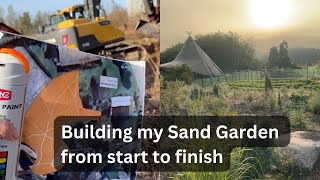
This YouTube video (Richard Perkins) documents building a sand garden from site preparation through planting and finishing. It covers removing 15–20 cm of topsoil, installing edging to stop creeping grasses, building terraces and gravel paths, importing a specific free‑draining sand (target ~20–25 cm depth), and planting ~400 species (high‑density planting with ~11–15 plants/m² plus bulbs). Practical logistics (road for lorries, sand delivery, bare‑root preparation, heavy watering) and aesthetic motivations are also emphasized.
Questions this video answers
15–20 cm
20–25 centimeters (target about 25 cm)
About 400 species
Between 11 and 15 plants per square meter (maximum 15 with bulbs)
59 degrees north
Chapters
I finally managed to put together all the footage from the construction, planting, and the growing out this season of this incredible sand garden. So welcome back to another video, folks. All right, sand garden project bigger in the front yard. Got a bit of a plan, but it's hard to work out. It's a creative process as we go. Got a lot of very fine particular sand to bring in and about 400 species of plants that are going to cover what was east and west beds. So right now the problem process is taking away 15, 20 cm of topsoil to remove weeds, but also to allow, when we put the sand in, to bring it back to ground level. We're going to put a plastic strip, like you see here, along the edge of this cut to stop any creeping grasses. We're collecting stones that we want to put back on top of the ground. There's going to be like a level seating area here and various pathways through the garden made of a different gravel. And then 20, 25 centimeters of a very particular type of sand with a very particular fraction for the planting areas. We're basically in the process of creating two terraces, but we want to then create little lumpy structure in between, in the actual beds, in the pathways between the pathways. It's a big old project, but we're kind of having to work on the fly a bit and troubleshoot as we go. But this is the other limit. We're going to have sand up to the greenhouse here, leaving a gap. We were originally going to include the trees, but we're cutting this in to not damage the trees and to have a grass pathway. I'm just digging out some spring onion, some chives and rhubarb from here that we can make a little perennial bed around the apple here. And then you see the line cuts down along the bottom here, the beginning of the first terrace, there'll be a path, main path leading all the way through. There's going to be crisscrossing paths all over the place. Fun, fun, fun. Now, this is a pretty big project, quite a high budget project. And it's not second thing on the farm, after the natural swimming pool, that I'm doing something for pleasure for myself. It's got no economic value. It's quite a big cost in all the plants and sand. But as my life progresses, I'm wanting to create little symbols of doing things purely for pleasure, for beauty, for aesthetics. And that's a large part of what this project's about, as well as learning a lot. Same with the swimming pond. Well, quick work. So Far things are looking a bit different. First swallows. Yeah. Okay. Day two, we are marking out and refining the path structure. We're using spray mark and we're going to have to redo this as the digger comes backwards and forwards. We want to. After thinking about it yesterday, we're going to shave this bank down. It's a bit too steep. I'm going to have a different gravel like these on the roads for the pathways. But it's a little too steep here. So we're going to shave that off and make this edge a little less uniform. So a little unnatural looking like that. You can see it's a little labyrinth and that's based upon the natural ways. We've always used this landscape to get from different places. And that's the main job today. Except for got to cut down a bit of the oak trees for lorries coming in. And then we've got to put this plastic membrane around which will be to stop creating creeping grasses and things. All right. Starts and we're just taking away the steepest edges here, creating a little bit of undulation, just subtle to make it more natural. And we've got a little moment to play before we have gravel brought in to make a little trackway for the lorries coming with sand. We also want to dig up this old well that we found yesterday and we think it's probably a shallow hand dug well. But it's got quite a lot of nice stones that could be useful in the actual garden. Also got the medlar that I've had on the corner here dug up. And it seems to be okay that that might end up being repositioned eventually in the middle of the garden maybe in one of these small little round beds in the sort of confluence. And it'll help block the view of the tunnel there. This is the old well probably dug and built by hands 100 years ago or something with lots of nice stone that we can use. All right, first steps. Building a road. This is so lorries can back in and drop sand and not get stuck. Make it easier for the machine not to have to dig too much. So a little bit excess soil to be removed first in the sand coming in. Now it's time to get cracking. Pathway gravel. So let's build this little road here so the lorries can come back and dip. And this is what we're using for pathways. And then there's going to be space here to put the sand for the actual beds. Lots more rock we've got out now. That's going to be really nice. So we're just going to have to find a good working methodology now to create the pathway. And we're going to work from this end back in. And we're obviously going to have to reshape all of or respray all the parts as we go, but that's where it is. There's no easier way to do that, I think. So now it begins. Path building is the initial process. We do that by laying out a coarser material like they build the roads out here with. And we're getting them raked out approximately how we want them. You can see it's kind of like a trapezoid shape. And then we're going to use the sand to have a raised bed. And once we've got the sand giving pressure, then we can really compact the pathway. So we don't want to do that too early or it'll just squash them out. So that's how it's going. We're just waiting for sand delivery now. In the sand. Sand is really, really nice to work with. It's going to be lush planting, too. So right now we only have the gravel. So we're putting down new roads, new pathways, and when sand comes, then we fill in the gaps. It works really well like that. Sort of build the top of the path with that batter, and then the sand fills it in and it becomes really stable to walk on. And as it dries out, it's really nice differentiation between the colors. So good progress so far. Very nice. Okay, Relocating the medlar that was up in the top here, we moved this back into the center of the garden, which will help block a bit of view this way. And good progress this morning so far. Got a few more loads, but we're coming up well below the load of gravels that we estimated, and we're reaching the thickness of sand that we want, 25 centimeters. Okay, final stages now to build this platform, we're just playing around with some of the stone from the old well, making little steps. This would be a sitting area. Nice plantings out front. They were just playing around creatively in this pond. And once the figures moved out of here, can't come back in. So last stages. So digger has gone. We've finished the level pad for now. I love it. Two days with the digger, transform the whole front yard. There's our little steps. Turned out pretty nice. And it's kind of just how we pictured this. We've been planning this since last autumn, marking it out in the snow, playing around, testing out pathways. Having used this Space for the last decade and no points of contact and connection. Gonna have a little bench up there for morning coffee. Sand the right depth all the way through. It's been a real breeze. Always a pleasure to work with Eric, the digger driver. We've used his help for all the digging projects on the farm over the years. Very happy with the result. This is south facing, so it's already feeling very hot. Perfect for species we're growing. Chuck's just arrived. Three lot more pallets and then there's one more order still to come. Okay, I've just spent the last hour unpacking this order. Let me show you quickly. It's a bit dark now, but this is one of three orders. These are all potted and so they need to actually be bare rooted. This is a huge task. We have a lot of bare root plants coming, but obviously they're much quicker to plant, but they're very susceptible and need to get planted immediately. Some of the things we wanted couldn't be found bare rooted. Some of the things in sizes we wanted, etc. So we've gone for a mix and it's a blessing and a curse because we're going to have to bear root. All of this in the veg washing station, but lovely condition plants. Very happy about this order and another big order coming tomorrow. And then next week, her final plants. It's a huge amount of plants. You know, we're putting thousands and thousands of plants of 400 species in, so having this buffer of things in pots could turn out to be really useful. But I think you'll agree that's a nice thing to turn up the day we finish constructing the sand garden. I think this is going to be an incredibly beautiful garden, but it's going to be a lot of work cleaning roots. Oh, yeah, yeah, yeah, yeah, yeah, yeah. But very happy with that. Still one more delivery to come. Going to unpack these tomorrow. Now, it's a little colder than where they've come from, but they look in good condition and happy with what we've received so far. So a lot of people asking about the costs for this project. Obviously, big costs are plants and the sand is quite particular. And Simona had to source the particular sizes of sand particles to allow this free draining so that plants survive in the cold winters here. And I've really chosen to hire Simona for this project because her color palettes are very similar to mine in our preferences. And I think this has got the potential to be one of the most beautiful gardens of its kind. Now, obviously I could make money doing tours. I could also make back the investment cost selling plants I can divide. Once you've got a perennial nursery like this, it's very easy to generate plants. And that's where money's made in plants is in plant nurseries. But that's not been my intention behind this project at all. I'm doing this as a symbol of something changing in my life to take more time, to create more beauty. I'm into functional aesthetic farming, but I want a beautiful garden also as just a matter of my own learning and enjoyment. So that's the main reason. 20 degrees up here all week, maybe even 22. So a lot of watering to keep on with because we've got to get these plants super nicely hydrated for the stress they're going to go under to be bare rooted. A lot of people maybe not following all the posts, wondering why we're going to bare root these. It's because when there's peat on the roots it will hold moisture and not drain properly in winter and then plants will rot and die off. We're growing things that do not typically grow at this latitude. We're at 59 degrees north, it's extremely cold, long winter. And so it's important to put the plants in with no nutrition on their roots and make them work for a living. Root down in the sand where they can get water. Ultimately we're not going to be irrigating this garden once it's been watered in. So my job this week is just getting things really well acclimatized, well watered so that we're ready for planting. Getting the bare roots some moisture. Okay. Bare rooting process has begun. Thought you might find this interesting. This is a ornamental hiphy beautiful trees. And here you see the nodules of bacteria fixing nitrogen. Now most of the crops we grow like peas and beans, that's with the Rhizobium bacteria. With trees like this buckthorn or things like alder. It's the Frankia genus of bacteria. So these are nodules of millions and millions of bacteria fixing atmospheric nitrogen in exchange for sugars and minerals from the tree. We like it. Look at those. Some of these are very hard to clean out because of the root structure. These are pot bound grasses but they with a little shake, they're just clean. Amazing. It's hollow root stem. So that's some of the structural plants. I don't think the video will do it justice really. And have a lovely teak bench here. So luxurious planting in Sandra's here from Norway and Ragnar's here. What do you think about from 4 left? What are you doing there right now? Why are you doing that one, which was the worst one yet? Yeah, this one takes it. Yeah, it's taking forever now. You have to do something. Jake and Johanna help in for yesterday a bit. And all day today, we have bare rooted a bunch of stuff. These are all bare roots ready to go in. You see them shooting here. And we've been cleaning roots and stacking them in sort of wet trays here. And because it was 24 degrees today, super hot. And we found out it's way better to just plant after dinner in the late. And you can see a little signs of dryness on some of these. But it's not for lack of water in the sand. It's because they've had their roots sort of barbarically manicured. But lovely doing that last night. So tonight we're going to do a massive load of planting. Okay. Now the heat of the day has gone away. Jumper's back on time. And Simone has been carefully laying out a lot of bare root plants and some of the bigger plants we put out before. And now we're going around planting so very quick in the sand. And what we're doing with the bare roots is marking those with a little circle because some of them will barely show above the ground, some of them not at all even. And so we're just doing a big plant and watering today. But there's still a gigantic amount of plants. It's going to be up to 912 plants per square meter. So it's a lot of washing and planting stuff to do. And a little sneak preview. You can see Simone is throwing out bare root plants. We're just having a quick planting session before it gets too hot because we got the sprinklers set up around. You can see those yellow pipes. We're able to water things in super heavily and didn't get everything planted last night. We decided to call it a night and get some good sleep. We're thinking we might be able to get this planted out by the weekend. My team arrive on Friday and Saturday. So we're shifting gears then and have to turn our attention to the farm. But it's going really good so far. It's really. Yeah. Just this little dream coming alive. Simone has done a great job with getting little plant combos, and we got a huge amount more plants to get in. It's going to be so stunning. If they have roots, they can survive. If they have roots, they can survive. I'm doing here is really viciously watering them in so the sand particles will sit down in the roots. Because it doesn't matter how well you bed them in, you want all those fine particles within the sand mix to get down into the roots. There's a lot of bare root plants that are barely visible. So we water them in heavy like this, just to get the contact with the roots. And then I saturate the whole bed so that there's no wicking of water away from them. Probably tomorrow I'll sprinkle that as well. So we're doing a few of these patches. Best time to plant this now, like in the late night, 10, 11 o' clock, when it's really cool. It's nice to work, but a few mosquitoes. I wonder if we're attracting mosquitoes with our water. This is mission control in the shade, in the veg washing station, getting plant assemblies together. It's evening plant out time working on these beds. These beds. And I've been working on getting a little creative on steps. I want this to fill out pretty quickly. So we've got some beautiful. Look at that. It's gonna be lovely when that fills out and you step in between. And there's lavender and thyme on the edges. Another one here. It's gonna be a seating area here for dinners, things like that, looking over the garden. So I wanted these to fill in quite quickly and be like a little focus. Because I walk down these steps every day to come to breakfast, meet the crew. So that's important. Very nice. Okay, we are getting to it. So a lot of the beds have been fully planted. We're on this large bed now and we've got this bed to do. Then we're done. This is Jake, this is Johanna. They have been legends. Couldn't have done it without them. And it's getting there. A bit of old asparagus coming back here. Simone is happy. Everyone is happy. Tired, exhausted, but nearly, nearly done. Last bed. I'm extremely curious how this is all gonna turn out. It looks amazing. Last bird. How many species have we got in now, do you think? Don't have it in my head. Too many. Too many. And how many plants per square meter are you aiming for here? Somewhere between 11 and 15, depending on sizes. And then we want to have a lot of bulbs. So we'll put the bulbs in the Autumn. Yeah. Maximum 15 with the bulbs. Yeah. All our last been very hot, very dry. Nice for people. Pretty intense for plants that have had their roots disturbed. But we've been keeping it hydrated and I think it looks beautiful. Alrighty. This makes me happy. Very happy. A little bit of thunder and the gardens in the pasture and the sand garden neither bit of rain on our return but it's looking pretty nice in here. Some heavy winds and storms it. Well you can go to Walmart and Casper. No they can survive so they are the perfect. So we are laying our bulbs just in species types and just coordinating different sort of patterns and then we can see everything on the surface so we'll go through and tack them all under A lot of beautiful plants spring and summer. Okay we have put 2000 bulbs down but you can see some of them look like stones in the hard find so we've laid out bulbs about 3 or 4 every square meter on average but you can see they are hard spot so now we have to methodically go put them all down and it's a lot but it's going to be incredibly beautiful. Pay special attention to the edges of pathways Love beautiful task. Sam.
More from Richard


A review of short and intensive season on a mixed farm and restaurant/event space in Sweden






Alskade Kyckling Exploring complexities of poultry production in Sweden and what we stand for


