Can you shave 1000 hours off a Market Garden?
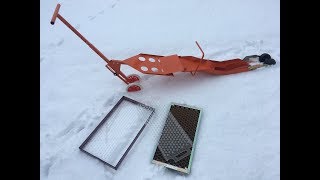
Richard Perkins explains how he plans to cut substantial labour from his market gardening operation by changing sales models, consolidating crop selection and bed layouts, improving irrigation/packing workflows, and adopting a paper pot transplanter system. He describes moving away from CSA boxes toward a RICO-style sales model, dropping low-value crops (onions, leeks, cabbages, tomatoes in his climate) in favour of high-value, quick-rotation crops, and consolidating beds to reduce handling. He details the paper pot transplanter: trays holding 264 paper pots each, available in 5 cm / 10 cm / 15 cm spacings (chain lengths ~14 m, ~27 m, ~40 m), fits two trays per shelf (≈500+ plants), estimated setup cost €1,500–€2,000, and transplanting rates up to ~260 plants per minute for one operator. He notes bed lengths on his site are 10 m and discusses practical workarounds. He also addresses organic-certification concerns (glue/acetone in chains) and contextualizes risk as low in his view. Plans: test the system, document planning and spreadsheets, and sell gear via Farmerstools.com.
Questions this video answers
December 7, 2018.
264 plants per tray.
5 cm (~14 m chain), 10 cm (~27 m), 15 cm (~40 m).
10 meters.
About €1,500–€2,000.
Chapters
Welcome to the snowy north. Now, we all know market gardening is one of the most profitable per square metre enterprises you can run. In fact, I think it's the third most profitable per square meter. Microgreens and tree nurseries being far more profitable per square meter, but less applicable to so many of us because they depend so much on markets, much more so than market gardening. However, market gardening is still the most labor intensive enterprise of any farm enterprise. It takes three times more hours to get the same net profit out of it than our poultry enterprises, for example. And so I'm interested in looking at how we can shave a thousand hours off our market gardening starting next year. So another element of the change of planning is due to the nature of our selling. We started off with market gardening as a CSA box scheme, and with the CSA you're advisable to grow a range of crops that every week you have a decent variety of root crops, cooking vegetables, salad greens, etc. But as we change towards the Ricoh model, if you're not familiar with RICO as a sales model, it's my favorite sales model I've seen anywhere in the world. And that's becoming our predominant sales method. So with that changing how we sell vegetables, I think I'm going to cease doing CSA boxes altogether and just grow for the market, as it were. And so we're going to be shaving off a few more crops, things that aren't profitable in our context, like onions and leeks and cabbages. We'll be growing things like kale still, but all high value crops. And here's a list of what we see as high value crops and then low value crops too. You'll notice tomato's gone on my low value crop. Now, I think for those of you further south in Europe, in warmer climates that might not be so. But up here, unless you're heating a tunnel, it's really not profitable to grow tomatoes compared to some of the other high value quick rotation crops that you could be growing in that same space, the valuable space of a protected environment. Now we're competing with, you know, industrial year round heated greenhouses, so it's just not feasible in that regard. Now, I do like tomatoes and we may well keep growing some just for our own use and for education, etc. But it's just interesting to really look and analyze the crop data that you produce. So one thing I'm going to be doing is shaving off some of the crops and then also changing the planning a bit. Now, Carla, who is an amazing garden manager and was the year before with us too. She's going off to work with Anders and Katrine in Denmark, which I'm super excited about. But she was a bit frustrated this year with some of the bed layout that Matt and I had planned the winter before about a year ago, and we hadn't put certain beds together that would have made sense to consolidate crops and to have all of the newly transplanted crops in one space, for example, so you could just water them all by hand much easier and just, you know, organizing crops that need insect net in one area, etc. So there's little tweaks to the planning. Now it won't always work out in such a clear consolidated way when you're planning your beds and rotations, etc. But I think we can move a little bit closer towards really refined layout for the gardens next year. And then the other thing is putting in permanent water, like we're using aerial spray nozzles and putting. We bought a few extra this year, but having a few more means we can leave the irrigation set up. And then it's just a matter of turning on the pump down at the pond and connecting the different units to water the gardens. So I think shaving off a few crops and consolidating the plan even further will save a lot of time in daily maintenance and putting out beds. Now the vegetable packing station didn't get completed. We're still looking to timber wall the sides of this structure, which doubles up as a car park in the wintertime. You see that the cleaning benches are folded up there. But one thing that we did this year was did custom orders for people on rico. So we have a basic tendency to bunch things at a 30 crown value and then offer 5 and 10 bunches. Whereas if you have buy 10 bunches, you pay 25 crowns per bunch instead of the 30 that you would pay if you buy less. To encourage customers to buy essentially a small veg box. But when you do custom orders, obviously it takes a lot more time in compiling the orders and packing them. So something we'll move towards is just set orders five or ten bunches and they'll be the same for everyone. And that will make packing and the coordination of all the sales much easier. Now, I don't know how that will go, but that's one of the moves that we see will work well and that other people do on Ricoh. And it just makes sense to totally streamline the whole packing and the management of sales, which is a big part that goes on in the background that you don't necessarily see so much in the videos, but we're looking to streamline everything in order to shave off a lot of time from the market garden, particularly now. A trend that I've been noticing this year is the people doing the best numbers per square meter in market gardens are getting smaller and smaller. You remember that beautiful video I made with Jake at Oxton's Organics, running with his parents there, and they actually did €20,000 more sales by halving the space. And he reckons they could do that again just by consolidating and intensifying and improving crop rotation and spacings, etc. And that's something I've seen a lot this year. And so I'm considering even just farming on the north beds and putting the south and east and west beds here down to perennial vegetables and perhaps flowers. I'd like to experiment with that. So I don't see a massive marketplace for us for cut flowers. We're a bit off the road and we're a bit in an isolated rural community that I don't know how that would go, but it's something I would like to do and would be very beautiful and fun to try. So we might consolidate our veg production and just really max it out by using tools like the paper pot transplanter and changing our planning a bit, which I'll document in further videos if we do that. But it's something I see repeatedly. People that are farming vegetables on a larger scale, you know, 5,000 square meters and above, tend to be down on the 10 to 15 to €20 a square meter. Whereas I think the more intensive market gardens I've seen 1,000 to 2,000 square meters, people are doing 40 to 50 to €60 a square meter, which I think the higher end is only achievable further south in Europe, where you get a warmer growing season. Obviously, you need a good market and sales strategy, but I think up in our climates, €40 a square meter is a good target for that and could be improved just by the crop selection, favoring more profitable crops and shaving out some of the others. Obviously, this stuff is very based on time, place and circumstance in your marketplace. I'll be analyzing this over the next weeks as I make a new crop plan and consider whether to bring the paper pot transplanter in as primary tool in our work. So I've just taken a big shipment of the paper pot transplanter and all the associated gear, which I'll show you now from Japan, and we'll be selling these on the Farmerstools.com for people in Europe. There's free shipping on all the items. We have greens harvesters and all kinds of market gardening supplies on there. And if you're in America or Canada, then I recommend the Paper Pot Co. That's Curly Stone and Diego Fuder's channel. They sell all of the paper pop gear and some other bits. This whole system is built around these paper chains. They're stretched out on this metal frame that you see here and put into the special seed trays and then filled with soil and the frame is removed to seed the next tray. And they're really good quality. I'm very happy with the build quality. There's a really nice acrylic dibbler that puts holes for seeding and then they have a drop seeder that you have different plates for. Now there's plenty of videos on YouTube where you can see this in action. And I particularly like these trays. They fit on our racks. If you remember how we start our seeds in the winter, in the spring on the racks we have in our lean to greenhouse. To really minimize the space we have to heat and keep warm. These are really rigid. They'll be great for microgreens which people use the drop seeder, just dropping two or three times to get the right amount of seed in. And so I'm considering a total overhaul of our growing system towards this. Because one of the great advantages I see other than saving time transplanting is also each of the different paper pots fit 264 plants in one tray. And I can fit two of these trays perfectly on my shelves. So it means a lot less space in our nursery plants as are going to be put out in the ground a lot smaller because the cells are smaller so they can't stay in the nursery so long. But that means we'll have a lot less congestion in our lean to greenhouse because on one shelf I'll be able to put over 500 plants. And most of our transplants were going in 64 cells, so you'd only fit 180 on each shelf. So it massively condenses the nursery space, which is great. And then these paper chains come in different lengths so you have 5cm, 10cm and 15cm spacing. But each tray will have 264 plants. These are all for sale on the website, so you can get an idea of the pricing. It is an investment. It costs you maybe €1500, €2000 to get set up, but you're saving a massive amount of labor. One person with this system can transplant 260 plants in a minute or two. So a big consideration for me when I've been considering whether to switch over to this is thinking about how it will crop spacings because you're limited to 5, 10 and 15 centimeter spacings between plants. So looking at which paper chain would be applicable for each crop that we want to transplant and then considering whether to change the length of our bed. The 5 centimeter spacing cells are about 14 meter long chains. Each one of these trays has 264 plants at about 14 meters long. Then the 10 centimeter spacing is about 27 meters long and the 15 centimeter is about 40 meters long. Now, as you'll know from seeing previous videos, our beds are all 10 meters long. So I had considered changing the length of them, which is quite easy in our case because we would essentially pull away the wood chip from the paths between beds and broad fork it and add compost to extend our beds. But I think because it's quite a big change and I'm not sure how I'm going to like this tool, I will keep the beds the same length. Essentially you just need to cut the chain and turn the tool around and start again. Now, it's quite a long tool. It's a couple of meters long. Essentially you've got a tray over here and the last plants are being transplanted about a meter away from the tray. So you will need to pull it over the end of the bed. But I think with a little bit of experimentation, we will find the best way to do that. And you can lever up the tool and turn it on the wheel at the front. So I think it will be quite easy to maneuver. It is a big consideration. And this whole thing will be a bit of an experiment because it is such a different way of doing things. But I think most of the plants that we're looking at on the 10 and 15 centimeters spacing. So we would be using one or two trays per bed. Now, there's some crops that we've been using three or four to six trays per bed of the old trays that we use. So I think the great benefit of this is it will mean that we don't get transplant shock and we consolidate all of the nursery crops, which is a big issue here. When it can be minus 20 and still deep snow outside when we're starting plants, this will mean we don't have to start till much later, you know, a few weeks later in most cases because the Young plants will be going out a little bit later also, as well as not spending so much time in the cell. So it means we have a bigger gap in the spring before we have to start all the major planting. I think there's going to be a great time saving with the drop seeder. I'm really happy about the quality of the tools they're providing alongside the paper pot. It's all really well made. We've had issues with dibble boards for our previous trays where the act would fall off, but this is a solid, rigid construction. I'm really, you know, I see the benefit of high quality Japanese tooling. It's definitely a different tool than the one that is sold by Terratech. They sell some of the original Japanese paper pot gear, but their transplanter is homemade, whereas the original transplanter from Japan is, you know, been doing this 45 years and it's several kilos lighter. And it's just optimized through many years of field experience. Originally for transplanting spring onions, which we'll be doing a lot of putting multiple seeds in cells at close spacing to have pre grown bunches, as it were. But I'm looking forward to the planning aspect and I'll make a video about that as I go. It'll be over the next few weeks. I'm planning, I'm busy writing and doing other things, taking a lot of rest and time with family. But I think this is a really interesting tool that could potentially save us a lot of time combined with the other things I've mentioned to save a lot of time in the market gardens, which I want to, you know, I want to know how do you get a family income out of sensible working hours in a summer only job? Basically. And I think it can be done. It just needs a combination of the right tools and the right planning and intercepting the market in the right way. It's a big topic in my mind at the moment and something I wanted to just talk about. There have been concerns about using the paper chains in organic agriculture. I think the last I heard it's now been approved in a lot more places in America. I made videos in the past about the paper pot chains not being certified organic and that I didn't want to use them. And that's because I was led to believe they had fungicides in them. And I'm not up for putting fungicides in my market garden, especially as a no dig market garden where one of the great benefits of no dig is that fungi proliferate. You don't see masses of mycelial build up and fungi in a tilled market garden because tillage is the thing that will kill fungi the first. But something you see in all no dig. Market gardens is the proliferation of fungi. And I think it's a majorly misunderstood topic and really important. 95% of all plants on earth need an association with fungi to thrive. And so we benefit from working with nature by building soil, by putting organic matter on the top. But the issue with the paper pots, I believe now is that there's acetone in the glue like you find in all cardboards. And so therefore it's not been approved for organics. And I want to talk about that and just contextualize it because am I concerned about that? No, not really. Why? Well, because you're taking the paper chains out afterwards, so a lot of that acetone has not broken down, otherwise it wouldn't be holding the chains together anymore. Acetone does break down naturally with microorganisms in the soil and in water, but it's a tiny amount and I think there's probably far more noxious things you're putting onto your ground by applying compost to your soil. We don't have enough data, but I would say like, you've got to really consider your context. Like an organic certifier probably doesn't even know what this is and probably would never even see it. Now I'm not saying that to be negligent, I think you've got to make these choices yourself. But I would always encourage people to look at the whole picture and consider for themselves. I'm not particularly concerned by a small amount of acetone in glue in cardboard that I'm putting down the ground and taking out again as I change crops over. I'm happy using cardboard as a mulch for tree and vegetable bed formation. So for me, I'm not so concerned. And our veg beds are EU certified organic, so make of that what you will. I'm not promoting people to, you know, what I want people to do is think for themselves. And I think, you know, I'm not concerned by a little bit of aster myself. And I think there's far more toxins coming into our soils through rainwater from chemicals elsewhere in the environment and through the compost we put down. And of course we should be trying to exceed organic standards, etc. But I just think that it's an interesting issue to think about. I'd love to hear some of your thoughts and views on it. Personally, that's where I stand and I'm not opposed to using it. I'm planning to see what it looks like in my plan to transfer my whole system to this. And yeah, I think it's, you know, it's an ongoing debate and there may well be alternative paper chains made in the future. But right now, the way it stands, I update my stance on it because I feel like I'm not concerned by it in any way actually. And I don't think it's a major problem. And I'm glad they're not using fungicides in it because that's not something I would be happy about. Well, that's it today, folks. I just wanted to share a bit of my thoughts with how I'm approaching changing our planning for next year to really buy more time and really dramatically change how we do things. We're restructuring our whole company now to really honor the time commitment that we've put in in the past five years and move straight towards a much more balanced family life and you know, keep doing the amazing educational work we've been doing, but really step into seeing if we can reduce the hours, particularly in market gardening, because it's something that's been on my mind ever since we set up the gardens commercially again. It's why I got out of vegetable growing. I mean, I came into vegetable growing when I was 18, how I got into this whole farming thing and it's something I've always done, but it's something that's always bothered me is it's such a lot of labor in long summer hours, even if you do have a winter off, unlike some of the other animal based enterprises, I still think we need to work to find massive labour reductions and tools like this hopefully can help. So I'll be documenting the planning process. I'll show you some of my spreadsheets and thinking as that goes on. But I just wanted to make this video to share my thought process as it is right now and announce the fact that we have this gear for sale for those of you that want to try this out. And so you can find all that and all the other tools that we're selling on the Farmerstools.com Be in touch there. Thanks so much for watching. Appreciate your views and comments and look forward to hearing what you think about the Paperbot system. Any of you that have experience with it maybe want to share your perspectives. Thanks so much for watching folks. I'll see you in the next video. Don't, don't, don't, don't.
More from Richard


A review of short and intensive season on a mixed farm and restaurant/event space in Sweden






Alskade Kyckling Exploring complexities of poultry production in Sweden and what we stand for


