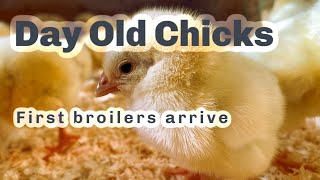
A Richard Perkins farm-vlog showing pickup and initial care of day-old broiler chicks in Sweden (video upload: March 18, 2020). He collects Ross 308 chicks from a large hatchery (boxes of 100), transports them ~3 hours home and places 250 chicks into a prepared brooder. Key husbandry points: prioritize access to clean water (water before food), brooder starting temperature ~32°C (measured on chick backs), pine shavings bedding (avoid slippery surfaces), lighting/cover to allow natural huddling, and a stocking area ~10 m² for 250 birds. Feeding strategy: use organic broiler starter (21% protein) throughout and mix with local grain to reduce cost. Business/economic points: he sells chicken at 129 SEK/kg (organic mass-produced at 139 SEK/kg), cites large national hatchery scale, and emphasizes economics and planning drive breed/supply choices (limited to Ross 308).
Questions this video answers
Ross 308 (Cornish-cross type).
100 chicks per box.
250 chicks.
About 32°C.
Approximately 21% protein.
Chapters
What's up YouTube? Welcome back to another episode. It's very quiet on the streets of Sweden, but we have just arrived on a long day's journey to pick up the first of the boiler tricks for the year. So I'm just waiting to meet them at the door here and then I will drive around the back to actually pick up the birds. Due to the health and safety obviously this is a high hygiene risk place. So I stay outside and they put birds out around the back for me and we'll have a quick peep in there and see the birds going out today. This is the place that produces 56 million chickens a year and that's one of two big hatcheries in Sweden. We're limited to these genetics as I've explained in videos in the past. These are the only hatcheries that supply boilers to all of Sweden basically. So it's a pretty big operation and a lot of birds will be going out all over the country. So our order is just a minuscule one. We're only having a small batch for the first batch. It's quite early for us. We're a bit ahead of schedule and that's because we normally have birds that we keep through the winter in the freezer for sale. Smoked chickens as well as fresh chickens that have just been frozen down. But we've actually totally sold out way ahead of time. So we need some birds in stock as fast as we can. So these will be getting processed around mid May hopefully. Okay, here we go. So you've probably all seen this before.
If you're regulars with our channel. These birds come in boxes of 100. These are hatched this morning. These are Ross 308, so kind of like a Cornish cross. That's the breed we're limited to here. These birds have never drunk or eaten before obviously they've just hatched out today so we got to get them home. They're fine for travel like this. Birds are leaving here on 12 hour journeys right to the north of the country. So we've got about three hour drive to get home now. So we'll set off and they'll be fine without any water. Back at home we've got the Buddha set up and we've got water heating up since yesterday to allow it to get to room temperature. Water at this point is much more critical for young birds and food. We'll give them free access to food for four days, then they go on to a very strict feed regime and that's been critical and key to managing these birds health. As I'VE talked about in so many videos before, as well as our book. So we'll go home now and we'll pick up when we get back to the Buddha and introduce these birds.
Now, I still have some people writing comments on older videos about why it is we choose to use these birds compared to things like Freedom Rangers or any heritage raised heritage meat birds. And the answer is still simple. I've never seen anyone that can run the same numbers. And it has to come down to economics at the end of the day. Not only that, we're very limited in supply. If we want to order batches of up to a thousand birds, you know, with three weeks to then pick up the eggs, we have to use these big companies. Of course you could do, if you were homesteading, then you could definitely raise heritage birds for meat for yourself or, you know, birds that don't grow so quickly like the Freedom Ranges or breasts or anything like that. But the economics of it just don't work out on any time I' looked at it and anyone else I know that's doing it, it just, it never works out good. And so it's too big a risk for, for us to take. And yeah, show me your numbers. If you, you know, if I get convinced, I'm happy to do it, but I just don't believe it's going to happen. Yeah, it's. It's always got to come down to good planning and numbers. And so for us, it's been really important to take a small batch now early in the season to be able to replenish stock for customers who are already looking. You know, it's very unpredictable sales will go. But it does seem like, you know, it could go either way. It could be it gets extremely hard to sell local food or conversely, it could be that it becomes a massive boom. And you would hope it would be that. But I have concern that it will be hard to sell via the Ricoh model, for example, where you need some degree of gathering and personal interaction. Now it's easy to think of ways to innovate, you know, so you don't need any contact at all. But we'll have to see. It's really unpredictable where that will go. I'm just thankful that we don't have so much of our sales through restaurant customers and that could be really troublesome for so many people this year. One of the downsides of having all your eggs in one basket, as it were. Another question that I see popping up in old video comments, which I don't answer now, I Try and incorporate them into new videos. So if you're new to the channel, don't forget to hit subscribe and turn the notifications bell on. But that's the way I like to roll. I don't have time to sit and answer individual question. I try and just take the theme of general questions that pop up on there and weave them into future videos. But a question or a comment that comes up a lot is people wondering about how such a model could apply to them. Because the price of chicken is so high here. So we sell for 129 crowns a kilo, which is about 12 and a half euros or so. But that's bearing in mind we're in Sweden where taxes are extremely high and the cost of feed, etc. Is very high too. It's all kind of relative really. Now if you go to our local shop, an organic mass produced chicken is 139 crowns a kilo. So a whole euro per kilo more expensive. And we're actually considering possibly raising our price slightly this year because I feel like our birds are just exceptional and way beyond the quality of anything you could ever buy in a store. And perhaps it's time to raise the price. We're also going to raise price on eggs this year because we've kind of always set the bar for the price of eg. But people are feeding conventional selling on our Rico ring are charging the same price as us, pretty much. And their feed, or basically their entire enterprise cost is half the price of ours because organic food is literally double the price. So we're thinking to raise the price slightly there. I've talked about that in other videos and in our book, but it seems like the appropriate thing to do now. We're focused on offering good value to people, but it's got to be in line with price increases, with fees, etc. So yeah, that's what's going on. And I just wanted to make a reiteration of that point because a lot of people have commented in the past, yeah, well that only works because people pay €25 for a chicken there. But it's like, yeah, they will, but that's, you know, that's what the country's like now. Even down in Germany, for example, I've seen meat prices are much higher in Germany than they are here and feed costs are lower. So of course that's going to vary across Europe and between different cities, situations and feed availability, etc. But that's the way it is. The point being, as I've always made is you can always design a farm enterprise for your specific time, place and circumstance, for the amount of income you need, the investments you can afford and what you want to actually do with your day. It's all about context and that's what I've spent the last six years just reiterating over and over again. It's, you know, there's nothing magical about what we're doing. We've planned well and we get the rewards of the hard work we do under a holistic plan. And it's taken a lot of work and you can do that, too. Everyone can do that. That's the beauty of the models we're sharing, is we're trying to share everything you need to know through our book, Regenerative Agriculture and online training, etc. There's so much information in there that literally fast tracks you. And the aim is to save you five, 10 years and a bunch of money to just get us, you know, on the ground smart. And yeah, I appreciate all the comments reflecting how many of you that's helped to do. That's what here for. All right, I've literally just got back here to layman.
It's beautiful and sunny, as you can see. I've been driving through rain and wind, but it's actually beautiful day here now.
Birds are happy and content.
They're ready to go in and let's get them in the brooder and I'll talk a little bit about some of the crucial points at this point.
A second.
Hey, little man, come and see what I've got. So many chicks. Come on, Pete, come and have a look. We have to get them in their home pretty quick. Look at all those boots. What are they doing? They're just waiting to get in their new home. They're going to carry them in and then we'll let them out into the thing. Okay? Okay. Exciting. Magna. First things first, we wear dedicated shoes that should be on this side so that we don't cross contaminate between the laying hens and these birds, because you can bring mites or anything here. It's very warm and it's going to get humid over time, so we don't want to be creating the conditions for lice or anything like that that could jump from the laying hens. So it's important to warm this space up and get the water and the lights on well in advance. So they've got a nice warm spot, about 32 degrees. There is water. You did that, didn't you? So you did a good job. Now the important Thing is, get the birds to water. First thing I'm doing is releasing these birds quickly. Now, this looks a bit violent, but rather than lift all these delicate birds up by hand, I'm doing it with a magic trick. It seems like it might hurt the birds, but it's actually way more preferable than handling all the birds individually. As you can see, they're fine. And soon, once we've got them all in this little enclosure, we'll introduce them to water. This is actually a big enough space for 250 young birds. So that's what we're going to put in here today. And the trick is to be confident. It's like the magic tablecloth trick on a table. You see the birds are absolutely fine. Doesn't hurt them in any way. They're landing on very soft bedding. But it's much more preferable than handling every bird individually. So that's 200. We need another 50 birds in here. So I need half of. Okay, that's 250. And then this half of the box will go into this pan.
Okay.
Now you have to be really careful about walking here. Next important thing is to give them water because these little guys have not drunk anything. So the way I do that is hold them and hold the back of the head and introduce some of them to the water. And I don't need to do that to all the birds. Maybe one bird will teach 20. But water is more critical at this time than food. They're going to have open access to food for four days before restricted feed. But water is critical and the quality of the water. So we're in here changing the water several times a day. And the water here is very good. Daddy, that one is drinking already. That one's drinking already. What happens is they can jump in the water. So what we do over time, we have the waterers on wood. They will jump in the waterers in the beginning because they just don't know what's going on. They've just come out an egg. They don't really know what's happening. So the important thing is they can all know where to drink. And as time goes on, the waters will lift up off the bedding. They're sat on wooden platforms to help keep them from spilling. And as the birds start growing and pooping a lot more, they will need more bedding added. At this point in the brooder, it's just raw pine shavings and that's preferable. It's got to be something that can be compacted. They don't like slippery surfaces like newspaper or any. They've got to be able to balance well. And the chick is actually losing most of its body heat from the down. When you think of down as very insulating, but the down on the newborn chick is not very insulating. So I'm going to just introduce a bunch of these birds to water and then do the same in the other pen. So important to make sure the Buddha is the right size for the birds. 10 square meters is enough for 250 birds by organic standards. And you need to have enough lights. And the aim is to set it up so that the birds can huddle naturally as though they're under their mother's wing. And then you want waters and feeders spread around to encourage them to zip out from under the lights to go get food or water. So it's important the brooder's not too drafty. We've got some ventilation, but want to keep the door shut. Do you want to pull the door too, my love? It just sway open. We don't want draughts in here. We've got to keep the temperature up. It starts about 32 degrees on the back of the birds here. And then we'll raise these lights up over time. But right now we just want them to get warm and we'll listen to. And we can hear by their sounds of their chirping if they're stressed, if they're hungry, if they're contented, and we'll just be watching them. We come in typically five times a day when the birds are this young, and that will go down to four, and then three times a day, especially when they're outside, it will go down to two days, two times a day that we feed them. And we typically want to get these birds out in three weeks. Now, at this time of year, when it's so unpredictable with the weather, particularly because we're so far north, the weather can fluctuate, you know, a month each way every year. And so we want the birds out in about three or four weeks, but we have the luxury of not having another batch immediately coming in, that we can keep them in here a few days longer if we need. In the past, when we're doing six batches a year, we would have to get these out in a new batch in that afternoon. And you can see previous videos about how we manage the deep litter. And the deep litter gets better over time. You would expect the highest mortalities in the first batch of the year because there's no residual biology in this dry Bedding. But over time, this becomes a living napp that keeps the birds healthy. Okay, so just coming here, they've literally been in here three minutes or so, and you can see the birds are naturally clustering under the lights. That's a good sign. So we just got to monitor the temperature. We'll use like a handheld laser thermometer to measure the temperature on the back of the birds. And I'll be watching them extra close today. So just make sure they're warm enough. We don't want them too densely huddled that they are in risk of crushing each other other. And obviously if they're too hot, they'll all spread out to the corners. But it's at risk of being too cold if anything. But they've literally just come out of the box. So I expect them to look exactly like this right now and we'll check on them regularly through the evening. So first pen is ready and good. This pen. I need to put some feed down. So we're using organic broiler starter and the way we work is because we have two silos, one for laying feed, laying hen feed, one for broiler feed. We actually use the broiler feed, both for turkeys when they come, because we buy turkeys as poults, six weeks old. And so by that point their protein need has gone down to about 21%, which is what broiler starter feed is. Now, broiler feed has three different levels. Typically the chicks have their special crumbs and you have grower and finisher. What we've done is done extensive feed testing here and worked out how to combine this with local organic wheat and oat to balance a good diet that leads to healthy birds and help save cost. Because feed is the biggest cost of boilers or layer production, and because we've only got two silos and the biggest cost is actually the delivery here in Sweden, it means we can get both silos filled up when we need to at the same time, and then we don't need extra silos for holding other stuff. We have our really low cost handmade grain silo in the barn, but we don't have to buy different batches of food, so it's not more practical for us. So we use this 21% protein starter, organic starter, all the way through their lives and mix it down with grain, which you find on the spreadsheets in our book and on our online trainings, etc. And that's the culmination of a lot of detailed research here to find the cheapest best way to feed these birds. That results in the quickest weight gain of the healthiest birds. And that's a good goal in my mind. So I'm just going to feed these guys walking very carefully through here and then we'll leave them be for a while. One thing that does concern me is the sunlight coming in here, which is coming up from that window obviously late in the day. And that's not something that's preferable because it will cause a lot of heating in this spot and it can create a lot of stress for the birds, especially as they grow bigger. And this space that looks quite big now becomes a lot more full of birds. They're gonna be about eight times the size in three weeks when they leave here. So I might put some shading on the window to make sure that this area stays a bit shaded. Some people have been asking questions about whether you should have natural light and it's not a problem. If it's not direct sunlight, it's probably preferable, but not direct sunlight that will unevenly heat areas that can cause problems, especially with stress later on in the Buddha cycle. So this is how it looks. And I just put a blind over that window partially to make sure that that doesn't happen. Now, birds are a little bit hyped, but that's to be expected. They've just been driven halfway across Sweden and thrown into a new pen together. So we'll let them settle down, they'll come back and visit them. Very. Okay.
So birds are settling in first.
Spring onions are just peeping out.
We've got spinach, kales, tomatoes are doing good.
And so much to be grateful for.
Whatever happens in this strange year that's obviously going to affect all businesses dramatically. I feel really grateful to have made the choices. I have to live in a rural way. I've never lived in cities and I've never had the desire to really even visit cities. And just thinking of the amazing food supply that we have here. We've got eggs, pastured eggs, pastured boilers, turkeys, We've still got forest raised pig meat, we've got beef, we've got lamb and mutton. And it's just amazing the amount of mushrooms and berries and berry fruits from the farm as well as all these beautiful vegetables we're going to have. So feeling really grateful for the choices we've made made to enable us to.
Weather any storm, as it were. So we'll keep an eye on the chicks. I'll make some updates in the coming days as they start growing rampantly and looking forward to hopefully getting the team together in the next couple of weeks and really ramp up the productions for the season. Thanks so much for following our videos folks. Don't forget you can find out plenty more in our book Regenerative Agriculture. People have quoted that as the most.
Comprehensive book on farming ever.
That sounds like a tall order, but it's a pretty awesome book, so that's a great way to support us is buy our book.
You can buy PDFs or hardcover copies.
There shipped from the Farm anywhere in.
The world, as well as details of our online training, etc. See you in a video soon. Bye for now.
More from Richard


A review of short and intensive season on a mixed farm and restaurant/event space in Sweden






Alskade Kyckling Exploring complexities of poultry production in Sweden and what we stand for


