CONE PIT BIOCHAR bees and nut trees S4 ● E82
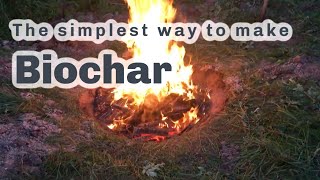
Richard Perkins makes biochar in a cone pit, then hydrates it with water or urine, inoculates it in compost, and adds it to no-dig beds. He also receives bee splits, harvests blackcurrants, and tends nut trees with staking and mulching.
Chapters
Today we're making biochar, receiving bees and sorting our nut trees. So we're making pit cone charcoal. We've lit a fire in the base of this pit which will ignite the wood that we want to actually charcoal to make biochar. So biochar is a bit different from charcoal in that it's been hydrated because charcoal is hydrophobic, it repels water and we want to soak it for two weeks. That could be in water, it could be in urine to make use of the nutrients. And after two weeks, we would put that into finished aerobic compost like the ones we've been making. And we would charge all of the pores within those pores within those pores. Because charcoal is a fractal structure. Those tiny pores on the walls of the pores, inside the pores of the phloem are the perfect size for bacteria to come in and live. Now, if we put manure straight on the ground, it will last in the soil maybe five years maximum. If we put MPK, it's six to eight to 10 months. Manure, five years, maybe. Aerobic compost could last 20 years in the soil. Carbon like this, thousands of years in the soil. It's very stable form. So burning wood is good. If you take the heat out of a good combustion and then bury the carbon, that's the best way you could use wood, actually. So now we've lit the fire, we're going to put on the layer of wood and get that burning to a certain point when the wood is combusted enough that it hasn't started actually burning away. We don't want to see embers on the wood. See how in a campfire you get the white embers building up and there's smoke coming off, it's not combusting fully. Smoke like smoke and off. Gassing is a sign of non full combustion. It's just wood gas that's not being ignited. So it'll always smoke when we add a layer. But when it really gets going, there's no smoke at all. It's just a massive column of heat and it will get to 800 degrees or so in here. That's why we moved it away from the fence, because we melted the fence last time. I mean, it will melt a fence two meters away. It gets very hot. I have a picture from last year. We were toasting marshmallows and we were stood like six meters away with whole willow branches because it gets really hot. And we will keep doing layers until the right level of Combustion. Then we'll add another layer, let that get going. Add another layer and it takes a lot of wood because it's burning down as we go. And then when we get to the top level, we'll end up with a slightly raised dish. Get that burning to the right point and then we'll just douse it with water from the hose pipe, like loads of water to get it out at the bottom. Otherwise it'll slowly burn away. The cone shape is to function to not allow oxygen near the bottom. So we're burning without oxygen. So this is the simplest, cheapest, most reliable way to make charcoal. There's many ways. So let's go for our first layer of wood and we want to evenly space it so that it's filling all the air holes ideally. And it will start to smoke as that wood gets going. And we're trying to take even sized pieces of wood because we want them to all combust equally, as it were. If we put massive logs in, we'll have charcoal on the outside and timber still on the inside, which won't do very well. There's maybe blocked out the air a little bit much. We'll let this one get going and then we'll, we'll just keep adding layers like this. So we're adding more layers. And as you see it adds smoke as you add a new layer. And then as the heat comes up, it takes a couple of minutes to get a raging combustion again with no smoke, it's kind of counterintuitive. Perhaps if you sat around the campfire a lot like you would think, like this will become a big orange glowing mass. You can already see down there. You think that that's just going to burn away. But there's no oxygen being sucked in down to the base of the combustion. So it's not, it's burning very hot and clean underneath there and turning into carbon. And very quickly this will really catch and the smoke will dissipate. So a couple of minutes later this layer is combusting mainly in the middle. But as we go up the cone it will start creeping out to the edges as you see there underneath. And our trick is to look for the white ashes of an incomplete combustion on the logs in the middle there. This is a bit of clay in the soil underneath the topsoil there. So this will be very well baked by the time this is done. It will be very different looking soil under here when it's done. That's alright. This is our trash ground. So at this point we're adding another Layer and just an even layer all over. And it will probably start to smoke again now as we add this. And again a couple of minutes and it will be raging again. So it's quite a time consuming process. Even this pit, it'll give us like a third of a cubic meter of charcoal and it will take quite a lot of wood to get there. And it takes time. It's a good job to do, sitting around singing songs, take a beer, eat a barbecue, cook some sausages, marshmallows. But you really need to watch it. It's not something you can walk away from at any point. You need to keep your eyes on it. Like most things really. We just added another layer and we'll do a little time lapse to see it becoming smokeless. That's good. That's. So it takes exponentially longer as we go up because we've obviously got a much bigger pit to fill. What would you reckon the amount of wood for the size of the hole is? I mean, we haven't got up there yet, but the factor of double or three or four, I would say probably double. We still got quite a long way to go. I'd say we're going to add nearly as much as we already have. Yeah.
I think we need collected with more wood. Let's have grasses.
So we're up to the final layer. How long have we been out here? One hour, an hour and a half. So it takes a little while. Give us, you know, big old couple of sacks of compost. But we put the last layer on now. So this last, last layer is a bit of a sacrificial layer. Some of that might not fully charcoal before the layers below are in jeopardy. So we will. We got the hose pipe over here and we'll just wet the whole thing down. When we feel like time is right, a lot of steam will come up. You'll be able to communicate with our neighbours in Sunnet and then we'll leave it overnight. It's open.
Just walk around in it.
Okay. So we think the charring is done and now it's time to add water. It takes a lot of water to cool this down. Obviously down at the bottom there, still red hot. So do you want to make it more of a jet? You're going to really have to add a lot of water. So it looks like the fire is out. But if you were to just step back from this now, it would just take off again. It's really hot underneath there. You have to be really careful. It's best to fill it with water and leave it overnight and see here the plume of steam coming off. So I would give it a good 3, 4 minutes of water to make sure it's really gone down to the bottom it. So dowsing off. We've got a lot of water in the pile. It's very hot still but it's very nicely charcoal. So we'll leave it overnight. Tomorrow we'll get out and crush it. Probably drive the rhino over it in the tarp. Or you could use a hammer or something. Very nice. Have a little taste. Beautiful. A typical 10:30 at night delivery.
Yes.
Of bees. We've got three of these splits. When would you expect them to have been split?
I don't know. I don't know.
But there's a lot of bees in there. It's not an early split. It's been split for a little while. So these are little polystyrene hives and we gotta get them up there. Well there's condensation from.
But it could be just a few weeks. And he put in a lot of.
Young bees so they're really going for.
They harvest bees and put them in.
Ah, I see.
Yes. From the.
Hmm. But that's. There's a queen in there already, right?
Yes. Everything is okay.
It's not the black bee. No, these are all non.
It's bugfast the English.
And what will the local beekeeper say about that?
I talk to him before I bring them here. And he made his queen on lure in venin now so he didn't make them here but they want you to change queens and I don't know.
How.
The price is if it's 4 or 500 or if it's half the price or if they are free. I didn't.
He wants us to change him immediately.
No, I get queen from him and I help you with that.
But I'm really happy it's a strong hive because it's quite middle of the season I guess. So it's perfect now. So we're going to put these up tonight in the. We put the new flow hive out. So the new. The last of the top bar hives out in bucky field where the hops are. And so we'll put all of these out tonight sitting just by the hive entrance and open them up. And then Tuesday Patrick's coming back to tell us all about bees.
Yes.
We're just opening up these vents for the bees. You see a little bee sticking out and we're sighting them right under the periscope entrance to the top bar. So that's a little periscope and they go up and in there and it has some more vents at the other end. So we're putting the hives all in place and then we leave them to Tuesday when Patrick comes back. Two more vents on this side. So egg team are on blackhunts and look, we're just coming along. These are three year old plants and that's the harvest from two of these little plants and we have hundreds of them all the way along here. We've got a few rows in Topville too. And it's a crop. It's Ben Lommond, the one I've been talking about previously. It just does so well here, so easy and low maintenance that any gaps in our tree names are gonna become blackcome because we make a lot of jam. So we will be freezing this up in bags and then taking it out to make jams later. Perhaps when we have the apple harvest we can make apple concentrate as the sugar source for the jam and pectin also. And so we'll just freeze it down in a couple of kilo bags at a time, eating some fresh and putting some away for next year. So today we put away 20 kilos of blackcurrants and we've got a lot more to pick. These are going in the freezer just before they're fully ripe. So they're perfect for making jams and that's what we're going to do with them, make jams, put away for next year with most of them and then need a bunch fresh too, so the splits seem fine. Here's a B bridge. Herbs are drying so dehydrators on full time. At the moment we've got St. John's Wort and he's his. So these are all our tea supplies for winter and for next summer too. So yeah, what do we think? Nice jar. We're now going to crush this up to increase the surface area. So we're going to put it in the top and drive the ATV over it repeatedly. So we've got to micronize it and then we need to hydrated. So it takes two weeks to soak in water or urine or something like that. We might throw it in an old bathtub and pour daily urine out the compost toilet on there. And then in two weeks we'll put it into our compost pile that we've been making together and that will finish. So we will inoculate the pores within the pores within the pores with little microorganisms that'll be good to spread over some of the no dig beds. We're at a stage now where we can actually start to close the loop with our compost cycling. Obviously making no dig beds. We are putting down a huge amount of material in the beginning, but the maintenance of these beds is going to be minimal now. So we were calculating yesterday the amount of wood needed to make biochar and make good aerobic compost and biochar. It's probably about 10, 15 cubic meters a year that we need. Really maybe double that. Depends on how intensive we want to go with it. But the beauty of that is we could make. We were talking about making our social fire pit into a biochar pit. And anytime you decide you want to light a fire in the evening or something, you have to take responsibility for making sure the fire is managed. And you end up with a few wheelbarrows of bhaja, which sounds like a perfect idea. And it's very nice. Heat thrown off it and no smoke. Often we're sitting around the fireplace and someone's got smoke in their face the whole evening. So I think it could be a pretty good strategy. Yeah. Alright. So we'll just make the pile up and we'll cover it up, smash it with the rhino. So it's not totally powdered, but it's a lot of powder, it's very fine. And so we're going to transfer it to a bathtub and fill it with urine. So like most Swedish farms, we have a compost toilet here that we use as well as one here. So the urine is empty daily. So we're tipping them into these and we will fill these up with you and then leave it for two weeks. So at the bottom of Nutfield, the team have been in here really working on tidying up and feeding the trees, putting the stakes back up. They've been knocked down during grazing. Some really nice trees developing, some nice chestnut developing here. This is a drier, sandy area. So we see some nice trees here, young seedlings. There's another one just down here. This is. If you've been watching our videos for a while, you'll know that this hill has been majorly influenced by. A couple of times we brought chickens over it. You see a very different species assembly here. It's very sandy and drained. Not very fertile soil. Very different flowers that you see coming up in here. So cows and sheep are making their way down and quite a lot of flies out now at this time of year, they often get pretty smart. See how they stand back to back. That's Clove May and her daughter and they help each other out by keeping the flies off each other's faces. Very smart animals. There's one of the calves just resting in here. A lot of willow coming back here. I'll probably as I've talked about before, I might put pocket ponds down this wet strip. See here all the brushes and might let this tree over and probably plant some more useful trees in it. Might leave these up so well and so quick. We're talking a lot today about blocking in land like putting in a lot of hedgerows and windbreaks everywhere. That's where this place is heading with you know, savannah style nut plantings long term with windbreaks on the sides and backs, the riparians up and high and then avenue plantings along the roads. And each little field is just getting more and more protected. And that's really the way to go in a cold climate to influence microclimates. If you. And there's a calf over there, they're getting stronger every day. And we're getting milk. So there's yogurt being made and there's nothing quite like raw milk. Remineralized and well managed grass full of trace elements that help you absorb the vitamins, all the fat, non homogenized, non pasteurized. Then you can in the presence of all those fats digest the proteins properly. And milk is good human food. Contrary to what a lot of people are spoon fed nowadays that meats and dairies are bad for you. Grass fed real food is incredibly important food. Probably one of the only reasons people live this far north. We're looking up at the broilers. They just fit here. We're coming down in a single line because we wanted to take as much grass as we could here with the cows and sheep and it's better to stagger them out so the birds aren't pressed up next to each other which you know, even if they're separated by a wire it still makes them feel like they're in a bigger crowd. But it seems to be working fine. And once they get down here we'll change the formation. Hello, you beauty. Very nice tree. It's really as they've done a really nice job mulching and sorting out the trees. It's just a lot of our tree systems are a little bit neglected because they're secondary systems or the long term systems that are going to take over and they're just not worth anything to harvesting. It's one of the bitten felled apples but Seeing it all neat and tidy again, I just really look forward to seeing this blossom and grow in the future. Different walnuts. It's a white walnut, I think and more up on the hill. But it makes me really, you know, I can really visualize this space as a wide spaced Savannah with about 30% canopy cover. If we cut out half the trees maybe in 20 years time. 30% canopy cover is what you want to go for here if you don't want to lose any yield in your pasture. And so that looking down from above, you'd in one hectare you couldn't have more than 300 square meters of full grown canopy. Turkey's doing really good. Someone asked if we had any predation problems, but not so far, no. I mean these are pretty intimidating birds to come and get engaged with. Take your eyes out if you're not careful. Funny looking birds at this stage, but I really like the mentality of turkeys. They're really nice birds to keep on the farm and might just continue to run this enterprise I really enjoy. Some of the birds are really getting up in size now as always. Thanks so much for watching our videos. We're looking forward to a weekend with the interns looking after. The farm core team are going away on holiday for a little well earned break and I'm just booking holidays myself. I'm gonna go down see Michael in Denmark who was the core team member last year. Amazing man who studied his really nice market garden and eggmobile business in Denmark with two of our good friends that were interns a year before. And then I might fly to Luxembourg, go and see my friend Marco who we featured in yesterday's video, who set up his business. I really want to see them in the growing season which is a really hard time of year for me to get away. So I think I'm gonna. I said I was gonna go this year, so I'm prioritizing a bit of rest and seeing the projects that I'm interested in nearby. Thanks as always for watching, thanks for your time and appreciate your comments, et cetera. And you can find out more in our book Making Small Phones Work. See you next time.
More from Richard


A review of short and intensive season on a mixed farm and restaurant/event space in Sweden






Alskade Kyckling Exploring complexities of poultry production in Sweden and what we stand for


