Richard Perkins walks through late-summer work at Ridgedale Farm: building a walk-in Coolbot chiller, smoking meat, drying herbs, and running permaculture courses. He covers sizing and BTU targets for the cooler, cooking temperatures, and herb-drying methods.
Questions this video answers
24,000 BTU (about 7 kilowatts).
About 12,000 BTU (≈3.5 kilowatts).
50 kilos of ham and 12 kilos of chicken; it had been sitting at about 80°C.
About 62°C (internal temperature).
Structure: a few hundred euros; AC unit: about $700 plus a few hundred dollars shipping.
Chapters
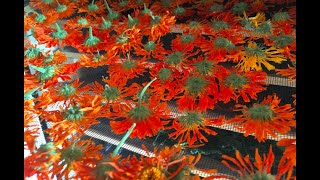
What's up, YouTube? It's now rolling into autumn and the farm is looking beautiful, but the nights and mornings getting chilly. We just had a big influx of people at the farm for the farm scale permaculture course and the start of our second internship program for the year. So just a quick little look at what's going on right now. So autumn is coming upon us, but the show must go on. How are you folks feeling about this week's? FRED shares? Well, actually the numbers are a little down, so things are not today. Today's a little quieter. The restaurants are closing down here after the summer, but we've got the first rocket and Asian greens that don't have any flea beetles, which is a beautiful success. We've had a lot of flea beetle pressure this summer, more so than usual. Still nice beets, golden and red beets coming out. Mixtures of tomatoes, cherry tomatoes in there, different colours. Onions. We've done so many onions this year that we're having to chop off the tops of a lot of plants just because they've gone over. Still taking out a lot of cucumbers. We've got the PDC farm scale permaculture course on right now, so these guys are rocking out on their own. Beautiful Cavaliera chards, more onions, lettuces. It's looking good. And around the back here we have a mock up of a chiller. So we've decided it's time now to build a bigger walk in chiller because we're just maxing out the capacity. So because we get so much free timber, we built this model and we're going to build a Coolbot chiller and we're going to make it as cheap as we can. So there's only one AC unit big enough to power this space. So this is three, I think three meters by two and a half by two tall. We're going to build it up off the ground like a shed basically so we can insulate the floor. The unit is going to be opposite the door. We've got a wide door placed there and we'll have the unit here on the wall. We're going to close the side of the pack station. Now we have a lot of free timber with a door here to get in around the back to the lean to and close this off so that snow is not coming in when we park the cars in there in winter. Basically we've got to insulate this space really well. But we're going to have to ship a window air conditioning unit from America because you need 24,000 BTUs, that's about 7 kilowatts for Europeans to heat a space like this down to 2 degrees. Now whilst vegetables don't need to be 2 degrees to use like the most powerful units In Europe, about 12,000 BTUs or three and a half kilowatts and it's just not powerful enough to bring it down. I was speaking to a friend in Denmark who's got a similar type unit on a slightly bigger chiller and it gets down to 4 degrees in cold times of day in the cooler season, but sits at 7 degrees normally and that's not enough for me. I want a chiller that's over capacity so that it will bring things down to the temperature I want easefully. And bearing in mind that we're going to be opening the door a lot on harvest and packing days. So we want it to be oversized. So we're going to try and import the correct size AC unit for the job. Now you can get all that information on the Coolbot website for those of you in Europe. We're the only seller of Coolbot in Europe so we're going to use that and hook it up to the AC unit because you've got 40% lower running costs and at least half the price up front startup cost to get an AC unit and a cool bot in rather than buying a compressor which you need a certified engineer to plug in. So currently vegetables are in the chiller room where we have freezers and the chiller in here we bring everything to the washing pack station for washing and bunching over here it's going to be a massive time saver to be able to stack produce in here and then bring it out for packing or put it back in the chiller pre packed so delivery crew can just come in. And because we've got enough space, we'll be able to separate different restaurants and different ricos. So you can just pick up whatever the delivery team need without any confusion as which boxes are going where. So it's going to be a major upgrade. I reckon we'll be able to build the structure for a few hundred euros and it'll cost about $700 for the AC unit and probably a few hundred dollars to ship it. But that's going to be much better than using a split system where you need a certified engineer anyway and it's going to make a big difference. Now it's obviously getting cooler at this time of year that we don't need that chiller right now and we've sort of been through the peak of sales where all the restaurants are in full swing. Some beautiful paddy pans here. But, yeah, it's going to be great to be able to start the next season with this area of the farm completed. So things good beans still going out. We've culled all the peas out the garden now. Okay. We have put in 50 kilos of ham and 12 kilos of chicken in here. It's been sitting up at 80 degrees. We want an internal temperature inside the deeper meat at about 62 Celsius to know that it's cooked. So we're going to see how that looks. That is bang on. We like it. So now we turn off the. Sorry. Turn off the thermostat at the back now and all this meat is cooked. It looks awesome. Looks like a breakfast. Yeah, it looks like breakfast to me. Bacon in the back there. So we're going to let this cool down in the smoke because that's when it absorbs a lot of the aroma. It looks very nice. So we're really far behind with herb drying. This is a standard coat drying rack that we got for free in one of the wagons that we bought for €200, like we made the slaughtery out of. And this was just in. In there. And it's a typical unit here, used in schools, workplaces, hospitals, whatever for drying coats and clothing. So you don't put wet clothing on and go back out in minus 30 Celsius. So what we did is just built these racks. You can see they're just bits of timber with kind of mosquito netting, plastic that we can wash down. And we fill this up every 24 hours with different herbs. We got mints and marigold in there. Right now we've got some. These look like black currant leaves for teas, and we do mints, hyssop, all kinds of herbs. But we're a little bit behind schedule, our own schedule this year, but we started to just ramp this up now. And we're drying a lot of marigold and making marigold oil and things like that. Soon it's going to be really nice. So this one has a timer and a thermostat, but you want to do medicinal herbs below 40 degrees, really, to keep their nutrients or nutricidal properties. Some corn flowers here. Oh, it's nice. And it makes the room smell so beautiful. In the next few weeks, we're going to be emptying some of the freezer space to make half a ton of sausage with turkeys, chickens, pork and something. I want to do is bring back some of our beef and make beef jerky and things in here. You could also do that with chicken. So. So I might play around with that. Not for sale to start with, but just for fun. But that's a brilliant way to value add products and it's a lovely way to consume those meats that I really enjoy as well. So I'll let you know when I start experimenting with that. So in the tunnel, it's time to take the tops off the idlis now things are starting to ripen up, although it's delivery day, so you're never really going to see that many ripe tomatoes unless I catch it before they come through harvesting because we're just taking off all the ripe tomatoes before we go out for delivery. Filled this up now with lettuces and so looking forward to getting another flush of lettuces through here. So we started the farm scale permaculture course. Got a really nice group and a new group of interns is here as part of that training. Just checking the cows. They've got enough food after a long day. We've been studying maps, climatic things, all about thinking about asking the right questions for design. Coming through. Past walnuts. Very nice. And I think they're going to be okay there for the night. But yeah, I had some really nice presentations last night from the different participants who are presenting their businesses and projects. One really nice guy from Denmark who's got an amazing business with bees. And it's kind of a cool concept that could be applied to other farm productions too, that he's kind of come here to explore. But he has. They make about 60 tons of honey a year. He's the biggest beekeeper in Denmark, I believe. And they, they've taken the concept from America where they don't sell honey. It seems like there's not very much money in honey, but there's good money in selling bee services. So they basically came up with this idea because his friends do cold calling for, you know, all kinds of industry services. But they basically started calling around bigger businesses and offering to keep, to, to give them a full hive and then to service that hive for a minimum of three years. And so they make really good living doing that. From, I think it's. Can't remember how many hives, but there's hundreds and hundreds of hives that go for corporate, you know, so they have a product like mead or honey. They can choose how they have the honey processed. And they have their own company logo on the hives, which is, you know, sat in the premises of the workplace so the people can see it. They have computer monitoring so they can see like how much honey is being made, how the bees are. And they basically go around all over the country, just three of them in the company that check all the hives and check how they're doing. But it's. It sounds like it's been incredibly successful and he's making a really good business and living out of this program. And it's. It seems to be really cool because it puts bees in places where they wouldn't normally be. I think that's, that's pretty cool. And so we're just talking a lot about the idea of could you do that with other farm products now? I think it would be harder with other farm products because a jar of honey is a stable thing that stores a long time and it's a. It's a pretty cool product. As bees have this symbolic meaning for, you know, for companies that want to be improving their image and doing more green things and that kind of thing. It kind of fits that the CEO can come and give his own label brand honey away to business partners or whatever and, or give me to, you know, business partners that it's cool. I just really was impressed by the model and the company grew from. He was basically a hobby beekeeper with a few hives. Ten years later, he's running a multi million Euro venture that's going to become one of the biggest suppliers of queens in Europe. And they're also going to become one of the biggest suppliers of bumblebees in the future, which are used obviously for tomato production in agriculture. Pretty interesting. And we're having three more presentations tonight. So over the next week we'll be having three presentations every day to finish off the day. And nice to hear other people's projects and plans and see where we can connect people and where we can put focus and attention throughout the course. So it's really exciting times. Really nice group. The weather's turned out to be pretty glorious just up here in top field with these beautiful walnuts growing up over the strawberries and enjoying the sun. It won't be here very long. We're going into autumn mode. It really feels like autumn now. You can see from the aerials of the market garden that are popping up here. It's still looking beautiful. We're pulling out some great produce, but things are starting to go over and it's definitely feeling chilly in the mornings and the evenings. And we're starting to get the mist on the meadow. That's characteristic at this time. But the farm's looking beautiful and it's one of my favorite seasons. It's cooled off so it's not too hot to work and things are in luscious growth, but everything's slowing down again. The season really ramps up until sort of mid late July and then it's the energy tail is off and things just calm down again. But yeah, nice to have a new group here feeling energized. Really nice to meet a new crew and have an influx of energy, as always. So, yeah, nice times. Just as I came in, there was a bird sitting up here on the fence, hopping out. Their birds are getting big. They're due to be out the day after tomorrow. And Christian's done a great job raising this batch up. He was here as an intern and stayed on. And he's particularly interested in running a broiler enterprise in Denmark where they have mobile slaughteries at about two and a half euros per bird. And that's a fantastic enterprise if you can get a bird slaughtered package labelled for 2 and a half euros and don't need to invest in the slaughtery and don't need to deal with waste and all the work involved in slaughtering. And it's an even better business than we can run here. But you see, we've only got one heat lamp on in the back corner where it cools off in the nighttime a little bit more. But you've got to be careful because it's cold outside now. You've got to be really careful bringing the temperature down in time. Now these birds are just about to be serviced, so getting fresh water and they are coming close to the end of their time in here. So it's down to four servicings a day. Starts with five times a day, goes down to four times a day and they will be out and down to three times a day. Look, there's that cheeky little bird. He wants to go and explore already. Healthy chickens. Okay, so super inspiring day. It's really nice to have an influx of people. It always moves in little chapters with different rhythms and flows throughout the year here. Time is really distorted here at Ridgedale because so much happens in a small space of time. I mean, this group's here for the second day, but it feels like they've been here weeks already in some ways. And likewise, just reflecting back with Gustavo, who's been here since April, you know, time has flown by and that's the way it is here. Time warp, that's what the farm is. But if you're excited about what we're up to. We have our online training program in the links below. It's much more content and in time wise and also depth than you'll find even on our two week intensive trainings at the Farm. And plus you can go back to it whenever you like and review information which a lot of people reflect back to. Me is really important to be able to revisit complex topics or deep discussions, etc. There's over 80 hours of footage, loads of spreadsheets, lots of peer support if you want to take use of that. And it's on the monthly rolling subscription that you can cancel at any time, month by month. Up to you. You can do the whole thing in a month. You can stay there for a year. Up to you. But that's in the links below where you find a whole lot of information including where to buy our T shirts. We have hoodies and T shirts if a lot of people wrote to me saying they wanted to have Ridgedale T shirts and I stopped printing them myself a while ago so they're now available on Teespring in the links below and look forward to seeing you in the video soon. Bye for now. Sam.
More from Richard


A review of short and intensive season on a mixed farm and restaurant/event space in Sweden






Alskade Kyckling Exploring complexities of poultry production in Sweden and what we stand for


