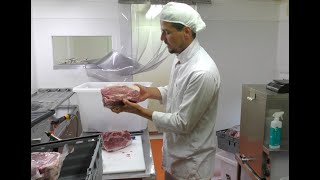
Richard Perkins cures 45 kg of ham in a 6% salt brine with cloves and black pepper, skipping nitrates entirely. He keeps the meat submerged for four days at 3-4°C before smoking, stressing that nitrates matter mainly for commercial storage, not home use.
Questions this video answers
45 kilos
45 litres
About 6%
About 2%
About eight teaspoons (mix of cloves and black pepper)
Chapters
So in today's video, we are brining 45 kilos of hams, this forest raised heritage pig. Lots of beautiful fat on here, but we're brining without the use of nitrates, nitrites, brining in their natural way. So a lot of people cure meats with the use of nitrates, nitrites primarily to kill off bacteria and Clostridium botulinum, which can be fatal in humans. And it's a pretty nasty thing to contend with. However, it's only needed for long term storage of meat. Now, we're going to smoke these hams eventually and they will be sliced for breakfast and things like that, sandwiches or whatever, and we'll be freezing the rest for later use. So we don't actually need nitrates. And nitrates are known carcinogens. Now, the level of nitrate used in preservation of foods is well below that of what is shown to be carcinogenic in laboratory trials. However, it's not the sort of thing we want in our food. We've gone through all the trouble of raising beautiful forest raised pork and so we want to cure this in as simple as way as possible. Now, I'm going to be using salt and not such a strong Salt solution, about 6%. And then I'm also using sugar because I like to have a little sweet touch to the ham. And I'll use about 2% sugar in this case. And then the spices I put in for this mix are cloves, which I really think goes well with ham, black pepper and just about eight teaspoons for this amount, 45 kilos of meat, we're going to make 45 litres of brine and I'm going to leave them in there for about four days so that they meet up with the bacon that you might remember we made the other day. So we should first have a look at the bacon that's been sat here for two days now. So, as we showed in the previous videos, this is the bacon that we made the other day. And you can see liquid is forming on the surface of the meat and at the bottom of the container. So what I want to do now is rub this solution into the meat and turn it all over. Now you want clean hands and just going to rub it all over the meat to make sure all the surfaces are fully covered. And this will be going this way, up this time, but I'm going to put it at the bottom. So I'm going to do the same procedure for each of these cuts. And the ones that were sitting at the bottom will Come to the top here. Now, it's important if you're not using nitrates, etcetera, to keep them in the chiller really cold, about 3 or 4 degrees, to prevent any nasties growing. And it's really important that this is just what I do, not recommending others do the same, but it is important to realize that you don't need nitrates and nitrites if you're storing meat for the short term. Now, one thing that's important to say is the use of those additives also keeps the meat pink. So if you don't use any kind of curing salts, then the meat will turn a little bit grey. But that's fine. It doesn't affect the flavor in any way. It's just the appearance that you might be used to with commercially available hands, etc. Now, it's a big myth that, you know, many people cure without the use of nitrates and nitrites, but a lot of people feel like it's impossible to do, but it's not. You need to work hygienically and you need to think about salt levels and keep things clean and cool and cook them and use them in the right time frame. But we've always done curing with no nitrates or nitrates nitrites. And it's fine. We're all fine. Okay, so the bacon looks fantastic. I'm going to pop that back in the chiller before we start dealing with the ham. I'm timing this so that I can maximize the use of the smoker. So I'm hoping in about four days time we can smoke both the ham and, and the bacon at the same time to minimize wastage with setting up the smoker with not very much stuff in it. Now, this is all for our personal home consumption and we will freeze this and eat this throughout the wintertime. We're not doing this for sale to the public. Now, we don't actually have the license facility to do that right here, but that's no problem. We work with a local farm when we want to make sausages and things for sale, we're actually going to be making hundreds of kilos, maybe half a ton of sausages in the next few weeks. So I hope to make a bunch of videos about using both turkey and chicken as well as pork for making incredible sausages. Now, I'm actually going to cut these hams in half just to make them more sensible sizes for what we actually will defrost at a time. And we'll fit our slicing machine and also so that they are even size and they will take up the brine correctly. Then I'm going to go ahead and place them into a clean container and afterwards I will make up the brine and fill up the containers. So we raise our pigs in the forest where we feed them spent grain from the local brewer. We don't have pigs right now at the farm because we cut the big forestry and we're waiting for the young trees to develop before we put pigs back in. But one thing we might consider doing next year onwards is raising a Yorkshire style pig just as a feeder pig. Buying weaned piglets and raising them on just for six months, because we have enough parts of the farm that are resilient enough in the tree cover to take pigs. You typically don't want pigs in a forest system until it's about seven years old, I found. And even then it's very much about timing of movements. We give the pigs about an acre every few weeks and turn them onto a new paddock. And with the recovery time we get in our growing season, we can have them back on the original paddock that's fully recovered and full of forage again. One thing to say about the seasoning is it's really up to you. A lot of people like to add, you know, caraway and garlic and even whiskey and cinnamon, all kinds of things. Typically for Easter you would make more of an effort like that, but that's up to you. You can do however you like. This is a really simple recipe and the main aim is just to have a nice slicing ham for breakfast, especially as the weather gets cold. It's good to have a bit of fat and protein first thing in the morning. I find. Some people wouldn't like to cut the meat in this way, but it works well for the slicing machine we have, as I said, and it will also help really ensure that the flavours penetrate into the meat. Now, some people like to inject the meat with an injector. Personally, I never bother with that. You can adjust the saltiness and how far it penetrates into the meat just by the timing. So salting and brining is all about strength of the brine, but also the time involved. This is only a 6% brine we're making today. We're typically brining chickens at 10% and often do hams at 10%, but I'm going to leave them in for four days, so I didn't want it to be too salty because it's nice to really work on getting the salt levels perfect. Beautiful. So that's all the meat cut. Just going to clean down a little bit and then it's time to make up the brine. We have simple alcove gel that we use for hand washing regularly. It's always good to wash your hands with soap, hot water and then alcohol down regularly. Whether you're processing chickens or handling meat or whatever it is, keep surfaces clean, etc. So now it's time to make the brine. I need 45 litres of water and I'm going to heat some water up to dissolve the sugar and salt in the first place. As I can fit the meat easily in two containers. I think what I'll do is make up the brine in a single container and then pour it equally over the two buckets as it is. With all curing preparing of meats, the quality of the salt is vital. This is sea salt and you must use sea salt. Whenever I talk about salt on this channel, I'm referring to good, natural sea salt. I'm going to use a bit of hot water to dissolve this, start dissolving it at least, and then fill this up to 45 litres. Using a simple whisk helps get this process started. Now, it's important to restress that botulism is a real risk and it kills a lot of people each year. And it's particularly prevalent in the us, where it's a lot more common to canned foods. But it tends to happen when people are pushing the edges, like canned vegetables and things like tomatoes, especially where people, they're like, not quite sure about their canned vegetables. It's like, oh, my last jar of tomatoes. And that's typically when the problems come, is like stretching it. It's like if you have any doubt about preserved food that you've done yourself, then just don't take the risk in that way. It's very different with fermented foods, where you might have molds on the surface, like on kimchi or something, but you can just scrape them off and as long as they haven't penetrated down into the main body of the food source and it's not a problem typically. But with meats and canned things particularly, it can be an issue. So you got to be careful. And, you know, I'm not saying that you should do it with no nitrates or nitrites. I just. I don't want to eat that in my diet. And you don't need to. And I just hope it encourages some people to consider, like, whether they need to do that. We're going to make up the prime rewarder now, and then we'll pour it onto the meat. Make sure it's pressed down under the water surface. And we're going to put that in the chiller for four days and we can smoke it together with the bacon. Mmm. The smell is really strong of cloves. I use perhaps half black pepper, half cloves to make 8 teaspoons. Cloves have really strong flavor, but it smells divine even just as salty. Water. Okay, the mixture is ready. It's too heavy for me to lift it all at once. I'm just going to start by pouring it over by hand. And that way if there's any sediment at the bottom that's undissolved, at least we'll get it equally. Now, salt is the most important bit because it's very easy to over salt the meat. So I've gone for a lighter brine than I typically use because I'm leaving it for four days. But you need to experiment with that. It's very easy to find recipes online, however, most of them involve cures, but you could just leave the cures out. Most of the curing salts are pink, and that's to. It's mainly just a red dye to distinguish curing salt from table salt because it's not good for you. You certainly shouldn't use pink salt in place of table salt. In fact, it can kill you if you eat enough of it. But that's what we're looking for, fully covered. So using a clean bag. What I'm doing here is just making something that can push the meat down into the liquid. Now, with that bag in place, the meat will be forced under the surface and you could do that with crockery, like clean porcelain plates or, you know, different plastic devices or whatever. But I had a couple of bags on hand, so it's time to get these in the chiller. Just, just turned on behind me, you might hear. And then we wait four days and we'll be ready with the bacon at the same time. And we'll show you the smoking process again in another. Okay, so that's it from me today. Just a quick video showing you how it's totally possible to do your own smoked hands without the use of unneeded chemicals. Thanks so much for watching, folks. You can find out a whole bunch more in our online training, which is the border's furthest reaching training, covering all aspects of everything we do. Holistic management, keyline design, pastured poultry, looking at layers, broilers, turkeys, how to process them, how to run the operations in the field, how to deal with all the legal paperwork. There's spreadsheets there for feeds and working out the business side of the enterprise, looking at grazing and grasses and agroforestry, no dig market gardening, all the spreadsheets for those to get you started in an intelligent and smart way, like hundreds of people all around the world have done, inspired by this small little farm in the middle of nowhere. Thanks so much for watching folks. Don't forget to hit subscribe if you want to keep up to date with our videos. We've also got new T shirts and hoodies that you can find in the merchandise in the link below too, so you can wear the ridgerdale flag wherever you go. See you in the next video. Sam.
More from Richard


A review of short and intensive season on a mixed farm and restaurant/event space in Sweden






Alskade Kyckling Exploring complexities of poultry production in Sweden and what we stand for


