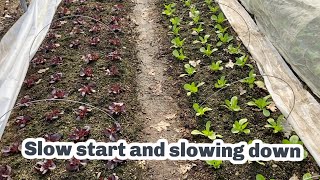
Richard Perkins walks through spring repairs and updates at Ridgedale Farm in Sweden, including a new swimming platform and fixes to the eggmobile that restored clean egg production. He's scaling back trainings this season due to health constraints, cancelling pasture poultry and regenerative ag courses while keeping farm-scale design and market gardening workshops.
Chapters
Welcome back to another video, folks. So, just catching up with things before we wrap up for the weekend. It's a festival here in Sweden, Vaalboj. I think basically you make bonfires and drink beer as far as I understand it. But we're wrapping up for the weekend so I'll just show you a bit what's going on. Spring is coming now in little increments and it just feels like things change so much on a daily basis here. I'll try and capture some of that for you. And we're also letting you know about changes to the schedule this year. We're cancelling a bunch of the courses due to the constraints and limitations of the season. And we're still planning to run some. So I'll let you know about that too. Always fun and games. Just fixing up the tires at the old one. Seems like they're working good. Just making sure everything's good. Wagner's on the tractor. We are repairing the pontoon on the ponds because we used non treated timber back in the day. Now we're putting treated off cuts from the platform so we can have a swimming platform. Ragnar, what did we get? We got a little climbie so we can go in and swim in the pond. That's gonna be awesome. You gonna drive? No. So, eggmobile update. We are now getting clean eggs in number one. Number two. We switched out number three for this one. Number two to fix up the wheels and change. This has all got the automation so we're changing back to the original nest boxes in here. Very good decision. We have got clean eggs straight away back to the original. This is the way to do. Simple, low cost effective. Nice sunny day now in the afternoon so we're just getting random bits of jobs done. Finally we are able to start thinking about making proper car parking. We've got hardcore under all of this. Always been where we get compost delivered. But we're self sufficient on compost now so we don't need any drop offs. So we're going to put hardcore down on here eventually. That we have enough space to park all the vehicles, all the trailers. It's a bit of a jam packed mess in here, especially when you've got an egg mobile in the yard like this. Makes it awkward and we just spend a lot of time moving stuff backwards and forwards. And we'll stick this up at the top of the farm for use for filling in things whenever needed at some point anyway. It's quite nice stuff because it's got a lot of compost mixed in over the years. Okay. Ragnar and I are taking some timber down to ponds. Jani's helping us. We're going to fix it up. You concentrate on holding on Ragnar. And talking about the grazing plan today. And getting everyone up to speed with grass physiology. How we start thinking about filling in the grazing plan. We've got to work out when we want to get on our neighbor's land. To transition them off with haylage. And when we want to get on our land again. And then we've got all the info we need to make our plan. Okay, what is getting clear? So I pulled in the new. You might remember I was clearing the line. But you can see, especially on a sunny day like this, the water has turned itself over very quickly. And it's now super clear in there. You can really see the plants. My job is to get this replaced. Get the climbing platform down. And then get in here and start pulling some of the excess plants. To just free up some space. It's obviously very nice habitat and we want that for the fish. But we want a bit more open space so we can increase the stocking rates. I think Ragnar's been learning about screws, nails and everything. So we are getting involved with woodwork projects. You can do the screws. The trouble is, Ragnar, the wood is more rotten than the nail. So we need a different hammer, claw hammer. But these are nice offcuts from the platforms. I thought, why not stick that on there? And then we can have little swims. We have to use a different hammer to pull the nails out. Jan is getting it and coming back. But this pond is because it's got a GCL geosynthetic clay liner. If you don't know what that is, you can watch previous videos where we show you the whole dam construction process. One of the best materials you could build a pond with. But because it's covered with soil and it's a living system. It's not really ideal to walk in here. And so having a platform with a swimming ladder. Because it's only one and a half meters deep. It means we'll be able to get in, swim, get out again without disturbing the ground, which is ideal. Lots of frogs born. I'm curious to see if our brown trout are still thriving and how big they've got. Because last year I caught one 3 seconds after casting a spinner in here. There were less plants then, and it was definitely double the size of when we put them in. So they must be growing well in here. Alright, I'll take the Weight, you do the controls. Nice work young man. Look at this. Perfect. You're pretty good at that. Does it feel strong? Tomatoes coming on. So irrigation getting set up. Slowly getting warm up here. Nebraska's Kohlrabi again this year. It's very nice getting the irrigation set up in the tunnel. This, these irrigation nozzles all set up on a line that's in the plastic. But over time, especially as this gets hot, it sort of twists with the torsure that was in the pipe in its reel spins around so you see they come out in different directions. So we need to fiddle around with this trying to get the tubing back straight. Getting to the point now where we need to set up irrigation. We've got the pump working well but just watering by hand on the beds that are requiring it. More and more planning going on. So this is the old north. We had a vole attack the brassicas in here. So in a previous video we had been using the rodinator to obliterate the tunnel network in the new north. And Sakura the dog actually found a big vole in the far corner which must have been half shocked by the explosions and was on its way out. Otherwise I don't think Saka would have found it. The cat Macaco has also been, I've seen him I think catch one vole and we think there was another vole that he caught too. You can see down here tunnels between the beds, between the old and new north. They're everywhere this year. It's unbelievable. I was up in the forest and found that there are masses of voles even up in the forestry, in the monocultural spruce. It's just an unbelievable explosion in their population. It's just wild. I haven't seen it like that before. So fleeces everywhere. It's still freezing at night time. We're managing to keep the water system on because it's just light frosts that don't blow up the whole pump and water lengths but. But it's going to be good for these folks to get irrigation going soon to be able to get a proper soaking. But we got a lot of rain forecast for next week also. Being Friday and it's Vol here in Sweden. It's where you make big bonfires and drink beer. I believe that's as far as I understood. We've just dropped a few projects. Eggmobile is sitting up here. This is the one with the automations in. But this is basically how we've been making double wheels, drilling out holes, putting in bolts, putting in a wooden spacer with holes to hold the frames apart and putting the wheels facing opposite directions towards each other. And whilst that's probably ridiculous engineering, it has worked for the time that we've been here. This tire is looking a bit ropey, but the tyres are holding up, they've held pressure. So we're using these lorry extenders to be able to pump them up easily from the outside. But we're going to leave this till next week because we've got the eggmobiles working fine. We're getting really clean eggs now. We've changed the nests so deliveries are starting next week. We've got about 12, €1300 of eggs stacked up and one of the big things about running the egg packery is just getting into workflow and quality control. With two eggmobiles, it's about half an hour to collect eggs and service the eggmobiles and about half an hour to pack and that's to go through checking. Every egg is free of cracks, free of dirt, free of shit, etc. What I like to do is collect into these crates, but with plastic trays in the egg mobile. Always collecting pointy side up. And I'm grading the eggs in the eggmobile. I'll sort out any that are too dirty straight away and don't bring them in here. And then I'm putting every egg pointy side up, ready for flipping and final inspection and feeling with my hands for micro cracks, etc. But people, our customers have been waiting a long time for fresh roots of their legs, so it's going to be nice to start deliveries next week. So we patched up some of the old original style Ridgedale nest boxes and yeah, we've gone immediately to having clean eggs in the right place. The amount of floor eggs has gone down to virtually none and eggs are coming out clean. Still love this work from Green Tools Tech. It's definitely a promising product, Way more affordable than anything you get from the industry, but just not suited to our egg mobiles. Good experiment, but we will drop it there for now and just get the season rolling reliably with our original trusty nests. Now, I had played around with extending these boxes in the winter so that we can only do one egg collection. With these you have to do two egg collections, but just for the sake of one extra trip to collect eggs. It's not a big deal. This is the proven system that works. We're staying with that and I'm happy about it. We've gone to. We're up at 75% lay now and Most of those eggs are clean. Perfect. Straight into the egg packery. No messing around and that's perfect. Hey hens. They're enjoying this spaciousness, that's for sure. So much easier to work in with a bit of space. Hey. Hens are doing okay in the tunnel. It's a bit boring for them. We put in some branches and I think I'll start collecting greens to give them supplemental feed because it must be boring for them at this point. They haven't known any different from their rearing barn. But I think it's about time we start getting them used to pasture and hoping that we'll get them out in a couple of weeks. Day five in the Buddha. These birds, it's good. They're managing it well. Starting to get a little humid in here with warm bedding but they're managing it well. It smells really good. Birds are happy. Expect to have lower mortality in this batch just because we've got a living bedding now that's full of microbes. This is the little way station we use. There's a butterfly in here. Spring is coming slowly, slowly up here at 59 degrees north. It's been the longest winter and the slowest spring that I can remember. So a little update in the tunnel. Birds are doing very well. We've actually the boys have been in here today just making this division wall smaller to open up this corner, open up a bit more space for the birds. And we've kept a little canal that we made because of flooding and heavy rainfall event. But now they've got a lot more space and that's great because the birds are getting really big now. So last time you saw them they probably had 500 grams less body weight. So they're really growing fast now. So some big changes here folks. It's been a really intensive, hard week for Johanna and I. We've been making some big decisions, changing the plans for this year. As we get older, we get tireder and we've been efforting so hard for so many years for the benefit of many other people and not taking our own needs as seriously as we should at times. The start of this year has been very stressful what with bird flu with COVID all the different things that are going on and affecting people all over the world. We've decided to scale down a bit. What's planned for this year? We're canceling some of the trainings. We didn't want to run our pasture poultry training when we haven't even got birds on pasture. And it's Unlikely that the ban will lift in the next two or three weeks. I didn't want to bring people to the farm for a pasture poultry training, which has been one of my favorite trainings we've ever run here. And a high percentage of the people that came on that training started poultry businesses here in Sweden and elsewhere using the models that we've been demonstrating for years here. I didn't feel like we could offer the sort of premium education we can when we've got our operations fully running in the field. Obviously there's a lot people can learn from how we're dealing with the responses, etc. But I just felt like with people pulling out through Covid travel restrictions, the condition of how we're having to raise the birds this year, etc. We just decided to scale back. We are cancelling a bunch of the courses we were going to run this year. The August farm scale design course is on and nearly fully booked and we expect travel regulations will have lifted by then. We are cancelling the June regenerative ag training, the pasture poultry trainings. So right now we're only offering the farm scale design course and we're offering the market gardening course, no dig training. That's a four day training in July and that eases up the pressure a bit. We're just slowing down with the opening up of the camping and all of the structures we need to build in the forest. We're just letting that rest for now, taking some space and time to just not overexert ourselves too early in the year. And that will have implications financially and to the flow of the year that we've been building up to for so long, but feels like the right decision. It's been pretty intense this year and it's cold. It's still a really slow start to the year. We haven't got animals out on pasture and probably won't for a couple of weeks because of the slow start to the year and still freezing at night every night. So that's what we decided to do. Just take it a bit easier and respect the limitations of our bodies and brains a bit as we get a bit older and a bit more tired. And that's. Yeah, I think that's the right to make. So I'm sorry if that disappoints any of you folks who are planning to come here to the farm for those trainings. We are hoping that we can run the others as planned and we will let folks know updates about that as we go. Always funny seeing other farms showing their Instagram accounts, etc. And all the beautiful produce people are getting. But this is life. At 59 degrees north, we've got the first Asian greens putting on nice growth as it warms up here in the tunnels. But it's. It's slow up here, you know, it's. Every year I feel like, how did people survive up here? You know, it would have been a harsh life. Garlic's just popping up irrigations in here, so getting things up and running. And a lot of people are already seeing tomatoes develop and putting out their first boxes and subscription sales. But it'll be a little while yet till we get there with the garden. Probably another month before we start selling any amount of produce. But things are looking good. Selma. Having Selma back this year is a fantastic blessing. Selma was here last year as the garden manager and knows her way around. Takes a lot of weight off us having to, you know, manage all the different projects going on. To have someone that knows how to run the ship and knows the farm is a great benefit. So that's been fantastic. So we're starting to get together with a plan. Hello, little one. We are putting all the sheep back together now, so the one that was having trouble latching on to mama seems to be doing fine. I would like the sheep to go out on Monday up to the old pig paddocks, where we're turning monoculture forestry back to mixed trees with grass underneath. I would like. Then we're going to have a small number of pigs this year. So I'd like the pigs to come in here and start turning over this bedding so we can pull it out and compost it up again. And we're now down to the last few silage bales. I think I would give the sheep one more silage bale up in the forest paddock so they can graze a bit and transition off the silage. And then that gives us about two, maybe three weeks maximum with the cows before we go onto the neighbor's land and do one quick pass over their entire property, which is about 6 hectares. It's over double the size of our land. That would leave our grass enough time to start growing, to get them back onto our land without stunting our grass. And then we will be on daily rotations around our farm, leaving the neighbours land to grow for haylage. And we had a pretty good grass here last year, but we've only just had enough silage. With the amount you want to be on film, you little ones. We only just had enough haylage for the year. I expect People would love to see you if you want to come and bounce around here. Yeah, yeah. We only had enough grass with the growing sort of cow flock that we cow herd that we have. So I think that's, that's good plan. Let the grass grow over there. We'll impact it a bit by grazing through, but we'll be going really quick. So I think that works. We're going to take the big cow off for slaughter in about 10 days. We're all guessing the weight because she's not had babies before. Oh, beautiful, clean water. It's getting warm enough now that I can think about getting in here and pulling some of the plants. But look, there's our new platform. And Yane was finishing that off yesterday. That's a beauty with a little swimming platform. That is perfect. I've been picturing that for a long time now. And Philip saw the brown trout in here. I haven't been able to spot one yet this year, but he saw at 9 o' clock in the evening, rising up, catching insects on the surface. And you come down here on the summer's night and they're feasting up on the surface. It's great to see hope the stocks replenish in the great drought in 2018. I was finding dying trout in the stream in little puddles as the streams dried up. And I put a few in here. I've been watching their growth. Some of them are growing really well. But up in the mill pond in the village where there's a little power station used to go up there on a summer's night and see 20 or 30 rippling on the surface and jumping. And last year I saw zero. So I expect the wild population took a real hammering after that drought. And I'm really going to be looking closely this year to see if the stocks are replenishing because it's a beautiful fish and it's a real symbolic fish because if there's brown trout in the water, then the water is oxygenated and clean. You can pretty much drink the water out the streams. I certainly have drunk the water out the streams here many times. It's coming. You see the green on our land. If I zoom in a bit and you look at the neighbor's land behind, there's a lot of thatch. And it's like that all around the landscape up in Nutfield there, it really starts to peak green now. So it's always a difficult time of year with cows because they know the grass is growing. But I wanted to show you so we have different Options. Cows are itching to get out on the grass. Not much silage left now. But this is Mata and she is ginormous. She's got a special syndrome in that she was a twin and we think she's infertile because of it. And she has got extremely small udders. She's never got pregnant. She is as big as Ganson, it seems. Really wide shoulders and back ends. And so we're thinking we have booked her into this Lauderie. She'll be leaving in 10 days or so, and at the prices of beef in Sweden, she's probably got a sales value of 4 to €5,000. So that's makes up an important part of the economy. So, looking forward to getting the cows out, we're thinking we were going to originally put them up in the forest paddocks, the old pig paddocks, but it's too hard to get silage up there. It's too heavy to take it up with the little machine on such undulating roads. So we think we'll go across to the neighbour's land with a bale and bale, graze them for the next, hopefully two or three weeks until the silage runs out. And then the grass will be picking up enough, won't it? Is that interesting? I think a lot of the viewers like to see these cows. They are beautiful cows. So Fjellcju, the native Swedish mountain cow. Very hardy animals and produce about half as much milk as a modern dairy cow, but very rich in proteins and can yield the same amount of cheese whilst only eating half as many, half as much forage. But they're beautiful natured cows. You remember Skansen, he was very peaceful bull. We've probably got a third of Skansen left. We're eating him on the farm and we've had some absolutely incredible meals and many more to come. So just to give you a comparison, this is just a random part of top field. That's what our grass looks like. It's really just started growing in the last couple of days. But we'll go and look over at the neighbours and see what that looks like. Jane's been fixing that fence. Had a tree down from the riparian on the neighbour's side that's been crushing a few posts and wires. So just fixing that up before we get out and pasture. This, by comparison, is where the neighbour's land is at. So lots sparse grass plants and bit of thatch on top. But growth is behind here, I'd say a couple of weeks behind. And that's where it is here the way we graze. Not only the fertility of the animals and their animal impact with their scratching, etc. The nutrient cycle, the water cycle here. Hey, look, there's a vole hole in the neighbour's land. These things are everywhere. That's a little hole, but yeah, also depending on how the field was left at the end with the, you know, thatch and the ability for the new grass to get forward. But it's always the case. Every year we've been here, the grass is a million miles different. Just look at the blades of grass. I'll pick a few, we'll go back up and see. And you'll see from the blade development, it's just dramatically different. So that's back where we were again. So you see very different sort of blade development. Really short, really stunted. And we've got grasses that are already shown. A few leaves, three true leaves on this, a couple on this. Other species here. There's still thatch here, but a lot more growth. And our pastures, as you've seen over the years, they will be up at waist height while the neighbours are just getting to knee height. Power of chicken. So it's been tragic year with trees, but we've still got things to look forward to. Some of the black walnuts shooting up above my head height now. It's going to be interesting watching how the whole situation progresses over time, but thankfully we've got a lot to be grateful for Now. I can't say for certain, but I've certainly seen birds of prey flying close to the predator poles. And I found an owl pellet full of vole hair under one of them. So that's a good sign, isn't it? We hear owls nearly every day here, but whether they're catching voles at a sufficient rate or not, it's very hard to tell. I mean, the cats are taking some, certainly birds of prey will be. I'm sure snakes are contributing too. Just got to do a bit of everything. We're going to try some sonic testers, we're going to try the castor oil solution, bit of everything and that's all you can ever do. Quite sobering to think it's only two months till the longest day of the year, but things change so fast up here, you know, the daylight length, etc. We don't have such a long period of spring. It suddenly becomes summer and it's typically the later months like July, August, September that are really nice here. I'm looking forward to get out, do a lot of fishing over on the west coast over at Claetta. Make some space and time for finer things in life. Finally taking some of your folks advice and prioritising ourselves a bit more. And I think we'll be doing more and more of that exponentially. How about that? Okay folks, we're signing out. We're taking our weekend seriously. This is going to be a nice celebratory evening. Going to take some downtime. Go fishing this weekend, try and catch some footage for you. I've got lots of videos I can be making in the coming weeks. I'll take you with us on egg packing and poultry things as always, as well as in the market gardens and some of the building projects. But we'll be making more space for downtime too, so I'm not sure how much I'll be posting this year. I had the intention to just post as many times a week as I could and really vlog everything. But we'll see. We've, you know, we've had a great progression in the decisions we've been making to take it easier and take more space and be around for our son more, etc. As always, don't forget to like subscribe. As always, don't forget to like subscribe. Share the videos, etc. Helps with all the algorithm stuff and you can find out a whole bunch more in the links below. Our book Regenerative Agriculture and the forthcoming book Ridgedale Farm Builds that will be out later in the summer. We'll keep you posted with those developments as we know them and I'll see you in a video soon. Have a great weekend folks.
More from Richard


A review of short and intensive season on a mixed farm and restaurant/event space in Sweden






Alskade Kyckling Exploring complexities of poultry production in Sweden and what we stand for


