FARM LIKE A HERO EXPERIENCE: Green Tools Tech, HR
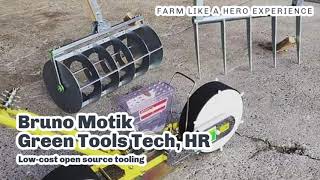
Bruno Motic spent 20 years in permaculture near Zagreb before designing affordable market-garden tools. He moved from hobbyist growing to regenerative agriculture and commercial production, building tools through welding and prototyping while teaching others in a region where permaculture has barely taken hold.
Chapters
Okay. Welcome to a new episode of Farm Like a Hero, folks. I'm Richard Perkins. Today I'm here with Bruno Motic, tool maker, who I met in Croatia on my training over there. Bruno's really engaged in the development of permaculture and education as well as making affordable, innovative market garden tools for delivery around Europe. So, Bruno, thanks so much for taking the time to join us today.
Yeah, thank you for hosting me.
Nice to see you again. And maybe you can start telling us by, start by telling us a bit of your background, how you got into permaculture and agriculture.
Yeah, so, yeah, I come from the world of permaculture and it's been going on for 20 years already. So in the year, by the end of the year of 1999 or 2000, I don't remember anymore, we started, me and my group of friends, we started this permaculture place out here in the countryside in the vicinity of Zagreb. It's 30km from Zagreb in the village of Vukomeric. And we just, you know, we were students, we were kids with no, absolutely no experience in gardening or building or anything. And you know, we were just dreaming of this special place that we are going to be able to live the way that we want to live. And obviously the idea behind it was self sufficiency because lots of people who come into permaculture think about, oh, this is self sustainability. You've grown everything on your own, you build your own houses. And that's exactly, exactly how we started. So, yeah, and I have to say, you know, I'm a bit slow with that. It took me a while to get that self sufficiency is not really an achievable goal. You know, you drive a car, you use gasoline and everything and it's not really self sufficient the moment you walk out to buy some tools for gardening. And also I learned it's not the most efficient way to do things. If I have to do everything on my own, then I'm in danger of becoming jack of all trades and master of none. So that's what's been happening. You know, to be completely honest, that's what has a little bit, bit, a little bit been happening with me. I've been, you know, I've been building stuff, I've been welding stuff, I've designed permaculture projects and educated a lot of people, you know, so, so for this last couple of years I just wanted to, you know, reduce the whole spectrum of what permaculture really is, because it's really a Culture, let's say. And so I've been reducing it and I've come to this point where I have an intersection of the welding and this kind of work where I can build stuff with my hands and permaculture and working with farmers and with the land. So there's this intersection of technology and nature where the green tool stack mission is really, you know.
So your creative work too, right? It's problem solving and designing from scratch and making prototypes?
Yeah, yeah, it's been, yeah, it's real creative work, but it's also. Yeah, at least for me, it's quite demanding because I'm, you know, I'm a one man army. I do everything on my own up until now. So I hope to have associates in the near future. But you know, I've been web designer, an accountant, everything. I guess you're familiar with that kind of work yourself, you know, but it's.
All good skills that go into the formation of a business and developing that and building it in a sensible way. Right, so it's.
Yes, yeah, exactly. Because what permaculture has, has given me and this, this idea to become self sufficient, it gave me just a huge array of skills and I, and some of those I became really good at, you know, so I can use them to, to connect them together. I'm, you know, so, so that has been really, really useful for me.
You know, before we get into tools, Bruno, maybe tell us a bit about the. What's the state of permaculture over there in Croatia? Obviously I came over, I met David at Zanofarm and their family have obviously been quite instrumental in, you know, developing integrated organic businesses, etc. But I'm not so familiar with what's going on over there. And it sounds like you would have been one of the early adopters 20 years ago. Right. So what's your perception of where the permaculture and regenerative ag space is over there?
Yeah, so yeah, we've definitely. I can safely say that me and my group have been pioneering permaculture here in not only Croatia, but the Balkan region. We've done workshops in the neighboring countries for lots of years. You know, since 2010, I have my permaculture diploma. So literally hundreds of people have come through my courses. Not just PDCs, but also different kinds of soil care, composting and I've been teaching a lot of things. So the state of the permaculture is that. Well, I can only be honest with you, Richard, I can only say that for me It's a little bit frustrating because it stays on this hobbyist level, you know, and if you want to have real permaculture projects that can change the world, you know, we have to scale it up. We have to go way beyond, you know, herb spirals and you know, just backyard gardens and we have to have a bigger picture, you know. So that's exactly why I've been moving away from permaculture a little bit and getting into regenerative agriculture. And the way I see it, it's basically the. Well, it's not obviously the same thing, but the principles behind permaculture and regenerative ag are the same. You know, it's. Yeah.
You know, stands on the same foundations.
Yeah. But then the regenerative agriculture has this moment of producing food for the customers, for the market. And that's where I think interesting things start to happen.
Do you get the sense that it's getting traction there now? I've just been passing through Hungary on the tour and it seems like the several people I spoke to there, it feels like they're out on the limb. There's really not much support other than looking to books and the Internet. English. Is that similar in Croatia?
Yeah, it is, it is. I mean we've published some books. We've written quite a thick permaculture guide in Croatian. I've also written with my colleague book about soil care. It's probably the only. Well, I'm not 100% sure, but it's probably the only publication up to date in, in our language that talks about soil biology in the agricultural context. So yeah, we've been doing some work, but it's really, it's marginal, you know, it's not getting anywhere near mainstream. And that is what I would like to see, you know, in the near future.
What is the, what would you say the economic situation is for the sorts of things that we've been promoting of like direct marketed, high quality products locally is. Do you feel like the economy there can support people making full time wages from the sort of.
Yeah, definitely. I've just come from yesterday. I visited, visited one of my former students that runs like an urban farm on I think something like 500 square meters. He just basically grows, you know, Curtis Stone style greens. And he's making, maybe not making a living but financing himself through college, you know, so he's proving that, you know, the stuff that you promote and the other pioneers of this small scale approach is really, it can be feasible in economic ways. And I think that with this Covid situation, it's just become. I was, you know, I was involved in the. One of the first CSAs here, and there's that we had the demand for locally grown foods just skyrocketed. We couldn't keep it up with the demand that people were at. So, yeah, I think the time is right for the change. I think everything is set. You know, there's still some skills that needs to be spread and, yeah, I think it's catching on.
More from Richard


A review of short and intensive season on a mixed farm and restaurant/event space in Sweden






Alskade Kyckling Exploring complexities of poultry production in Sweden and what we stand for


