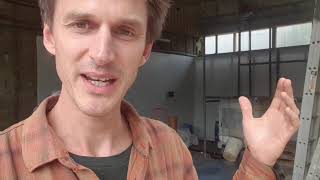
This is a recorded episode of the YouTube series "Farm Like a Hero" (Richard Perkins) featuring Adam Sayner, director of Grow Cycle, a small UK mushroom farm. The chunk contains a farm tour and overview of operations: Grow Cycle produces primarily oyster mushrooms (and some shiitake), makes mail-order mushroom kits (using coffee grounds waste) and larger column-bag crops sold locally. Key process steps described: pasteurising straw in a high-pH water bath, inoculating substrate with spawn, incubating ~2–3 weeks, then moving to a humid, ventilated fruiting container where mushrooms typically take ~7–10 days to reach harvest-ready stage. The farm uses adapted shipping containers for incubation and fruiting and operates on a small-scale, low-cost model with focus on regenerative-agriculture potential.
Questions this video answers
Mainly oyster mushrooms; also some shiitake.
About two to three weeks.
Approximately seven to ten days.
By soaking straw in a high-pH water bath (pasteurisation area/IBC).
Coffee ground waste (mixed into kits).
Chapters
All right, welcome to a new episode of Farm Like a Hero, folks. I'm Richard Perkins. Today I'm here with an old friend, Adam Saner, the director of Grow Cycle. That's a small scale mushroom farm which is now branched out to help many other businesses get started with low cost mushroom production. Oyster, mushroom, shiitake, etc. After reading Paul Stamets how to Grow Gourmet and Medicinal Mushrooms, Adam started up an awesome business that's now developed in many ways since its beginnings a decade ago. Actually filmed Adam when he had started out as a fledgling grower about eight, nine years ago in his site at the Dartington Estates and Totnes in England. And a chapter around growing oyster mushrooms in my book is based primarily around the data and business operations of what he is doing over there in the uk. I think both of us really strongly agree that mushroom cultivation is a totally underutilized element in the regenerative ag space. So I'm super excited to delve deeper into what's often perceived as a mysterious topic. So, Adam, thanks so much for taking the time to join us today.
Thanks a lot, Richard. Yeah, it's a pleasure. Hey there, My name is Adam and I run a company called Grow Cycle. We grow gourmet mushrooms, mainly oyster mushrooms and some shiitake here in the UK in a relatively small farm. We have a couple of shipping containers behind us here, which you can see we've had cladded on this side and then in the front here is kind of a little storage area. So I'm just going to take you around a brief tour of our farm so you can just see what the operation looks like before we get into the interview with Richard. So, first of all, I'll just say we're in the middle of just finishing a few upgrades to the farm at the moment, so you'll see a lot of mess everywhere, but you'll get the general idea. So the whole process of production begins inside here. This is our pasteurisation area and we're just currently filling up the IBC at the moment with high ph water bath. That's where we soak our straw and that pasteurizes the substrate when it comes out of there. We then inoculate it with the mushroom spawn and we make a few different things here. We make mushroom kits which we mix with coffee, ground waste and then we also make larger column bags that we fruit mushrooms to sell in the local area. I'll just show you what our mixing room looks like. This was a flat pack container that arrived on lorry and we built in about four hours or so. So it's a pretty simple building. And as you can see inside, it's a pretty easy setup. We have a big compost tumbler, we have a workbench and a bit of storage material. And it's basically in here that we mix up our substrate, add it to bags before it goes into the incubation room. So the first container here, again, we're just redoing all this at the moment, putting up a load of hooks. But you can see the general idea. These are our column bags that we make, our substrate that we fruit our own mushrooms from. And then you can see on this side here, a load of kits that are just incubating. These are our kits that we make and send out via mail order to customers all around the uk. And then the fruiting stage is inside this shipping container. And the environment in here is a little different. It's a little bit more like autumn. So we're talking about lots of humidity, lots of fresh air, there's some light. And this basically copies the kind of environment you see in autumn, which is where a lot of mushrooms like to grow. In that kind of environment, humidity is important, fresh air is important. And it's around about two to three weeks next door in the incubation phase, and it comes in here, and then usually it's within about seven to 10 days from when they come in here until the point at which they're ready for harvest, which is basically now on these columns here. And we're growing in both columns like this, and also in buckets, which you can probably see some there at the bottom, beginning to fruit. So that's a brief overview of what we do on the farm here, and I'm sure we'll get into a lot of it in a lot more detail in the interview with Richard.