FARM LIKE A HERO EXPERIENCE: Richard Park, UK
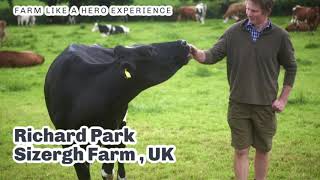
Richard Park runs a 150-hectare mixed farm near Kendal with 170 dairy cows, sheep, and a farm shop that opened in 1990. The family began on National Trust land in 1980 and now employs over 50 people and produces a million liters of milk yearly. A 2017 holistic management course changed how he thinks about soil and business decisions.
Questions this video answers
Around 150 hectares.
About 170 dairy cows.
1980.
1990.
Over one million liters.
Chapters
All right, welcome to a new episode of Farm Like a Hero, folks. I'm Richard Perkins. Today I'm here with Richard park, who's run size of Farm for the last 30 years in Kendal in northern UK. It's a mixed farm around 150 hectares with 170 dairy cows selling raw milk actually available at the farm shop via vending machine, as well as pasted eggmobile and a couple of hundred sheep. The farm's got a bustling, award winning farm shop and cafe and offers camping with proximity to the Lake District and the Yorkshire Dales National Parks. Five members of the family are running the total businesses that make up the size of farm and there's more than 50 local people employed. So lots to talk about today. Richard, thanks so much for taking time out of your busy schedule to join us.
Yeah, hello, Richard, Nice to be here.
Thank you. Yeah, I'd love to hear about the history of the place because as far as I understand, it's been farmed there since the 13th century and would have been supplying food to the, to the castle, is that right?
That's correct, yes. So it's part of the size of estate belonged to the Strickland family, so they inherited it in, like you said, the 13th century. Jumping forward quite a way to the 1950s. It was handed over to the National Trust, which is a UK charity that owns a lot of land and property and we came here in 1980. So my parents took on the tenancy. It's a good tenancy. We've got a three generational successional tenancy. So as long as we meet all the criteria, then I'm the second generation. So it gives us a security that allows us to invest. I mean really, we're just, we treat it as our own.
And so you, you're running quite a complex operation in a way, but you're mainly responsible for the farm operations.
Yeah, that's right. So I, I came back from college, I went to agricultural College in the mid-1980s down in Bedfordshire, which is in southern England. So that was interesting for me. I grew up on a dairy farm not too far away from here and so all I'd ever known was dairy cows and grassland. So I went down there and you know people arable farming and I worked on the Welsh Borders for a year as well, which is actually the only time I ever worked for anybody else. So that was a typical. They had beef and sheep and they grew some crops for their own use. They were very self sufficient, actually. They grew all their own vegetables, they had A cider orchard that sort of exposed me to some really interesting things that I hadn't seen before. And so I came back from college and I was working with my father and we were in the 1980s, we had milk quotas which limited the amount of milk that we could produce. And it sort of upset the plans that my parents had in that they couldn't produce the level of milk that they wanted to do. So we started then looking at diversifying the business. And we converted some buildings into a horse livery. And I did a thesis on pick your own strawberries when I was down in Bedfordshire, because that was quite common down there at the time. And when I came back, that's one of the first things that I got involved with was developing this pick your own strawberry enterprise. And it was that that sort of set us on the route to the having the farm shop. People came onto the farm, we're right next to a busy main road into the English Lake District and sort of suddenly realized that the potential of that road from being a bit of a nuisance sort of farming wise, was actually bringing a lot of passing customers. And on the back of the picky on strawberries, people were asking for ice cream, do we have a toilet? Can they get a cup of tea? And so my parents then started looking at the possibility of opening a farm shop, which they did in 1990, which I guess is when I sort of took over the management, sort of more of a sort of full time management of the, of the farming side of the operation. And so we've done various things over the years. You know, we could talk about that. You know, some been very successful, others have been less so and actually cost us quite a lot of money. But I think that's valuable in, you know, not everything you do works. And you've got to be. You've got to be sort of prepared for that when you, when you launch into something new.
Well, I also know that you're really, you know, it's got to be said you've been farming for more years than a lot of the people coming into this field have been alive.
So I really want to dig back.
To some of that experience and some of the history. I know you're really in touch with the history of how things have changed. And obviously as a commodity farm, I think you're producing over a million liters of milk here. I'd love to go back and hear a bit more about how that's affected things because I think a lot of people coming into this field that don't have farming experience don't really understand how those systems work but I'd like to before that just ask you like as someone with decades of experience and growing up around farming. It was a couple of years ago you came here to a training and you also that year did holistic management training in the UK and you said that was really impactful for you. So I'd love to hear a bit about your journey of rediscovery with things there. Like if you'd tell us a bit about that.
Yes. So that, I mean I've been a really, you know when I was a, when I was a little boy, you know I could never think anything else I wanted to do. I was wanting to farm, you know and had a toy farm stuff and you know that's really all I wanted to do. You know it might be narrow minded but that's what I grew up with. So I've always been really passionate about farming and I came, I came into it and did followed really the. When I, when I was at college it was on the sort of on the back end of what had been huge investment by government into agriculture to increase production. It was very, very focused on increasing production and this was on the back of the sort of rationing during the Second World War and sort of really rampant modernization of agriculture. So a lot of the inputs in terms of fertiliser, a lot of drainage.
A lot of.
Intensification of livestock and those are the systems I learned about. And my dairying really was similar in that we went from keeping cows. We were probably intensive as some but you know we were using a lot of fertilizer. My father was a, an ICI costed farms ICI manufacture fertilizers and as was my grandfather actually not the grandfather, he is on my mother's side and that was sort of during the 1960s and I was sort of on the tail end of that. But we, as I come out of college that sort of all disappeared and agriculture was left to well it's left to its own devices really and struggled in some ways to make, make, you know, to make money. And I was really hit in the mid 2000s or 2014-15 with a crisis in particularly dairying where the milk price just went through the floor. So we had two years where we were losing money. Now dairying is a seven day a week, you know it's a full on activity and to be working as hard as you do and not making any money was really hard. And coming out of that I just wanted to sort of restructure the farm, but wasn't really sure what, which direction to go. And we have actually previously been organic.
And.
There was a letter that came through from the organic cooperative in this country, omsco, saying they were looking for new supplies. And I didn't bin it, I just filed it away. And I got that out and thought, well, I didn't. When I was organic previously, I got myself in a bit of a pickle with the system and found it quite difficult to run and I didn't want to get into the same sort of predicament. And I also started getting quite interested in or more interested in soils and came across. It was a little conference near to here that was run by an organization called 3LM who savoury institute trainers in this part of the UK and me and my sister Alison, who manages the shop went up there and it was entitled Every Family Needs a Farmer. And it was some good speakers and they also offered three days sort of introduction to holistic management. And it was Sister Alison said, oh, we should do this. Well, to be honest, I hadn't really done any sort of anything like that since I was at college. Not sort of sitting down and you had to sort of, you know, look at, looking at goals and context and stuff that I felt, I just felt a little bit uncomfortable with it all really. But you know, the trainers were very good and after we did the initial three days then they said they were, they would, you know, they were offering a full course which we actually took up, me and Ice and did that course and we did it here. So it was near like a one to one and it was over, over a month, not every day, but you know, over the month and really going into the holistic management and how it affects the land and people, the business and really opened up things that I was just not aware of, you know, and then I was, I was looking, it was YouTube. I came across yourself and I was interested in what you were doing, particularly on the business side. You know, I really admired your focus on not just what you're doing but you had to stack up sort of business wise and because I think it was my feeling that some people in that field weren't particularly business focused. So I did a course review and that period that 2017 was quite transformational in my thought process and how I looked at how I sort of look, view things, look at the land, how I can read the land, how I view problem solving and it's take, you know, it's doing so good, you know, it's like sort of, you know, learning, learning again and starting to learn new things again and there's so much to learn and then implementing it into our, into our business that we have here.
Wonderful to hear that. Is that kind of a scary process or is it an exciting process or both?
Yeah, it's both. It's getting my head around the holistic management stuff in particularly how that fits in. Because when I sort of first introduction was, well, yeah, that's fine for a dry, arid environment you can sort of see working there. But how does that fit into the sort of, know, the cool temperate environment that we farm in? And how can some of those principles be adopted? You know, how can I adopt those into what, what I'm doing? I'm a person who's probably, you know, I'm a bit of a crash on sort of a person. I run the business, the farming business. And it was quite a drawback earlier on in that I didn't. I felt I didn't really have anybody to not guide me. But you know, I very much had to make the decisions on my own. And I used a good friend who's a consultant and he sort of helped me with that. But I mean, now, you know, I've got a lot more confidence. But so I'm not particularly good at sort of discussing ideas with people. I just have an idea and then just tend to crash on and try it. So that's a little bit reckless like that. So I'm certainly open for trying new, you know, new things and people. I mean, nobody's ever been critical. And all my farming, none of my farming friends really been critical. I think they're actually really quite interested and they're the sort of critical friends, you know, they'll ask why is that? Why, you know, why are you doing that? Or how does that work? And I did a few talks, I've done quite a few talks over the years explaining holistic management. And the first few I did, I really found it really difficult to put the principles across. But finding that a little bit easier now because I've put them into practice now.
Don't.
More from Richard


A review of short and intensive season on a mixed farm and restaurant/event space in Sweden






Alskade Kyckling Exploring complexities of poultry production in Sweden and what we stand for


