FARM LIKE A HERO EXPERIENCE: William Donnan, IE
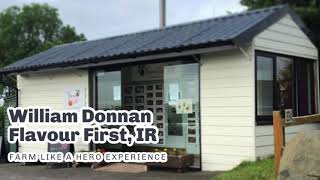
William Donnan left supermarket vegetable supply chains to grow what he calls proper food at his farm in Northern Ireland. He now runs direct sales through vending pods and box schemes, specializing in potatoes and strawberries with permanent market-garden beds instead of chasing the volume and quality compromises of retail contracts.
Chapters
Okay. Welcome to a new episode of Farm Like a Hero, folks. I'm Richard Perkins. Today I'm here with William Dunham of Flavour first, which he's run for the last 12 years with his wife Leanne in Dunacady, east of Belfast on the Irish Sea in Northern Ireland. With a tractor based vegetable production and laying hens. The farm's got a really innovative sales model with an on farm vending machine pod and offers custom vegetable boxes year round as well as ready to cook meal boxes. Super excited by the innovative business model. So, William, thanks so much for taking the time to be with us today.
No problem. Thanks for letting me join in this. It's awesome.
Please tell us a bit of your backstory. You've had a lifelong experience with farming that's looked very different at different times, right?
Yeah. So I grew up on a small vegetable farm. It was vegetable and sheep and sort of, as I was sort of nearly leaving school, a lot of the shops that we were supplying were sort of disappearing as the supermarkets were taking more of a hold. Us being small scale, my dad didn't want to go down the line of all the dealing with the supermarkets. So my older brother changed the farm from a vegetable farm into a dairy farm. And my dad just kept growing a little bit of vegetables for a few customers on the side. So whenever we got the dairy farm up and going, I went and worked on dairy farms in New Zealand, arable farms in Australia. Then after that I got a management job in Romania for an English company and there was 14 and a half thousand hectares of arable crops we were doing out in eastern Romania. And then I did that for about three years and it was very remote so I needed to move. So I ended up in Spain near the beach. And there we. I was part of like a. It was a big management team. It was an English company that were growing about three and a half or 350 acre or hectares of lettuce for the UK supermarket. So I was part of the management team on that and that really opened my eyes as to what it was like working with the supermarkets and really made me decide that someone somewhere must want proper food. So I moved back to our home farm to start growing some proper food and I started a box game and that was sort of. We've been at that since.
Okay, I want to pick back up there, but can you tell us a bit of the inside view of that then? Because I think most people see things passing on Facebook or stories they hear, but have really any insight into what goes on in that industry. Could you tell us a bit like what that's like doing such intensive productions in terms of the actual productions, but then also what it's like working with supermarkets in that way?
Well, I was part of like a. It was a big management team because we were doing. It was a lot of crops and a lot of specialty baby leaf crops and herbs and things. And so there was like, I think it was maybe about that time. At that time was like 30 trucks a week coming from Spain up into England to go. And it was. It was like the types of lettuce you buy, you'd see in the supermarkets and the bags with the different mixes. So where we were in Mercy of Spain was. It was in Europe. It was the least chance of getting frost is why they farmed there. The English farm had a farm in Kent in England as well. And they grew there in the summer and then grew in Spain in the winter. So we picked up all the winter production and it all got shipped back. But whenever you got, for example, Shari heel, it wipes out your lettuce crop and everything that you've been promising. You've got a program to hit. And then sometimes you can sell extra stuff as well. But whenever you get a Shar heel, it wipes everything out. So whenever the guys that are in the factories in England, they have other crops coming from South Africa, Italy, different places all come into that factory to make up this mix of salads. And whenever you ring them up saying that we don't have our part of that mix, it doesn't go down well. And then it was like mostly Moroccan workers that we had. So they only got that six months work to keep their families for the year. So they weren't that impressed whenever there was no letters to harvest either in the middle of their money making season sort of thing, you know. So I sort of got very sort of stuck in a place where for no fault of my own, I was sort of felt like I was in the middle of everybody else's problems sort of thing, you know.
Yeah.
And I sort of got very disheartened. And then just the supermarket's reactions as the. Whenever they don't want to have empty shelves. So they're like wanting you to use massive sort of fertilizer to make get their crop to get their shells filled, you know. And the stuff that we were leaving us then was of very poor quality. I had all that transport and factories to go through and all. And I was just like, this is just not for me. I just can't sort of. I didn't want to put my energy into something that was going to have an end result like that sort of thing, you know.
Yeah.
So. So I sort of was like, right, somebody, if we go some proper food, somebody's going to buy it.
Yeah.
So that was how I end up back at this.
And what is. I mean that's obviously a million miles apart from. From what you're doing now. You've come back to essentially half of the family farm, is that right? Your brother runs the other half.
Yeah, my brother. He started a kid's day nursery with keeping like kids daycare sort of thing, you know. On the other part of the farm, it's on the other side of the road and then I have four fields down here, about 16 acres at this side of the road which I have in a like a crop rotation. So we've always grown potatoes and we've got a good reputation for that. That's a big bit of our market. And strawberries as well. Polytunnel strawberries is another big bit of our market. So I'm sort of trying to carry on with that in the rotation. But we've also got about. There's eight blocks of permanent beds now, eight blocks of six beds, 100 foot beds sort of thing, you know, which I've been trying to get going. But I have. It's been slow getting that going because the rest of the farm's been so busy. So now we have a young guy on and he's just concentrating on getting these beds going for us.
Running quite differently from the field operations. Is that more sort of intensive market garden style?
Yeah, it's very different and we're learning a lot. So we've made a lot of compost after dealing with weeds a lot and finding it takes a lot of compost to save that. We are, yeah. So it sort of has taken us a few years. Like we've been at it, we've been trying to get it going for about four years, but just in the mid season here it's really hard to keep up with it. So we're really. We've got somebody fully concentrating on it now to get it going for us and that will really help us. So my wife came into the business about four and a half years ago full time. She'd always been sort of involved in it, but after our last wee boy was born she didn't go back to work. So we started doing the ready to cook kits and she's developed these like recipe boxes and that's using a lot of our herbs and chards and a lot of the leafy stuff that we would grow, fennel and things. And it's all growing on those beds because we always find it very difficult to grow those on the field scale because it's very difficult to grow out there. Whereas these beds, it lends it easier to grow and more of a choice of things close to each other sort of thing, you know. So, yeah, yeah, definitely the way forward for us. We're real happy with the results of it.
More from Richard


A review of short and intensive season on a mixed farm and restaurant/event space in Sweden






Alskade Kyckling Exploring complexities of poultry production in Sweden and what we stand for


