Farmer Talk: Catching up with the GonneGirls
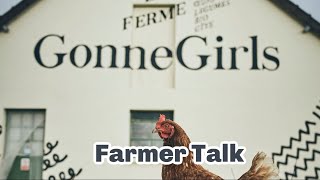
Claire and Gael run a regenerative farm in Normandy on 14 hectares with 1,000 chickens, a market garden, a guest house, and horse boarding. They got €50,000 from an Ecosia incubator in 2019 and are focusing on high-margin services like events and processing instead of scaling production.
Questions this video answers
2019
14 hectares
About 1,000 organic chickens
Approximately 1,500 square metres
€50,000 in 2019
Chapters
Okay, welcome back to another video, folks. In today's interview, I'm catching up with the Gone Girls, Claire and Gail, who attended trainings at our farm and took a startup fund from the Ecosia project that we ran. And they've been doing excellent work in Normandy in France. So great to have them back and hear how things are developing for them.
Clarem Gael, thanks so much for joining us. And maybe you could give us a little overview of what's. Gone Girls is for people who have forgotten or haven't seen you on the channel before.
Okay, so I'm Gael, I'm French, almost 40. And so we started Gone Girls with Claire in. So we had the idea in 2016, moved to Normandy in 2019. I used to work in Impact finance in agriculture investments, but far from the field. And I have two kids now, 8 and 3. And we moved here to start a small, diverse farm focused on regenerative agriculture. We also wanted to demonstrate that you can be two women and have a successful farm. Our objective is to demonstrate that you can regenerate the soil and also be profitable at the same time. And we have now four different activities. So we have 1,000 chickens, organic. We have a market garden that's very small, 1500 square meters. We have a guest house. And we have horses as well. Attention for horses.
And I'm Claire, I'm South African and I am 40. And so I moved to France 12 years ago, so still very South African in my mindset, I think. But now I'm also French. And the farm was part of. We have 14 hectares. It was a farm that was part of my husband's family kind of inheritance that was about to be sold and we bought it from his family.
And people might remember you from the. The Ecosia incubator program thing. So you took funding from that. That was what, to start up the agricultural side of things.
Yeah, that was. So that was 2019. And we got €50,000 to start the business. Actually, the company wasn't even created, so it was great because it's. I mean, no one could have financed us at this point. And we financed the greenhouses, the first chick tractor, first plants and seeds.
So they really allowed us to get going.
Yeah, absolutely.
And now we've just refinanced it with the bank at a much lower interest rate.
Perfect. And it's a bit peculiar in France you have to have gone through basic agricultural training to be able to what, run the farm business?
To own a farm business.
Yeah.
So you have to be European as well, which we found out quite late. So I got my French passport quite quickly. And then you can own land, but it's not necessarily true that you can exploit it is the word. Unless you come from a farming family. So if you come from a farming family, you're fine. But we had to do a year of the equivalent of the final level of school in farming.
Yeah. And that one.
Theoretical.
How did that go for you?
It was interesting. I don't think I learned a lot on the practical side. I mean, we had. We did some internships at farms too, so we learned a bit. But it was a lot about how agriculture works in France, the different institutions.
A lot about the pac, about the European subsidies.
Yeah. And accounting and cash flows. But it's all marketing how to sell your product. So it's stuff that we knew from our previous professional lives. So we didn't learn much on the concrete side, but we learned about how agriculture works in France. It was also interesting to talk to people who were not organic or not regenerative and talk to them about the challenges they face, why they don't really believe in it. It's.
It's gave us a bit of a legitimacy to say, oh, we went. And then they're like, okay, cool.
Yeah. Not being from an agri family, being two women coming from Paris. And we wanted to do this farm with many different activities, like girls. And people thought it was a bit weird. So having this diploma really helped us to definitely have some credibility at the beginning. Yeah.
And where would you describe, like, where's the business at now? Like, you've been ramping up and are you still in the process of expanding and growing, or are you reaching some place where it's starting to level off? Like, how would you describe where you're at right now?
Could you tell us?
You don't know?
No. No, it's not true. No.
I think now it's. We had two years of growth and setting up everything at the same time. We started in the middle of COVID and we had just a table and three salads and some turnips. That was it. And we didn't have staff. We started just the two of us. And so during two years, we had to adjust to the demand, especially for eggs, change a bit our business plan, because some activities here grew more than expected. And now it works, I think, the market garden. Well, all the activities worked quite well. The question is more how do we make it more efficient? How do we really organize ourselves to make sure that we have someone responsible for everything? I think now we'd like to, with Claire, develop new projects linked to the production but not necessarily being, you know.
We'Ve kind of set up this year will be 60% in the fields and 40% on special projects. So it could be renovating another building.
It could be.
Consulting. It could be events like just to have the time to. We've got so many ideas and never. We didn't have any time to. Not time probably energy to be able to take on anything.
You've had quite a lot of renovation work just to be able to live there, I guess. Right. And then you're also building up infrastructure to be able to rent, which you did before, I guess. But it's quite a lot of buildings that you've got responsibility for.
Definitely. And I think also we took the right view in the beginning, especially around the farm stuff is. Everything is very temporary in terms of our infrastructure. So we just have our greenhouses. But even the irrigation, we did it with yellow garden hoses to see kind of where we actually need irrigation and how we use it. And now it's starting to feel like we can actually make proper decisions and start digging pipes in and making life a little bit easier than hauling yellow pipes around the field after the chickens, you know.
Yeah. So there's buildings is something that we're doing step by step because we can't take more loans. I think we're at them at the limits and so we have to do it ourselves now. And we really want to get those buildings done to be able to have space for employees to eat, to stay and also organize some training.
We don't have stuff.
Yeah, we don't have a space to training. So yeah, that's going to be a lot of the work. And we also wanted to work a bit more on the regenerative practices for horses because it's something that has just like it's not very developed in France and we are surrounded by horses so we believe there is demand. So we're building the knowledge from Claire particularly. She's the horse, the horse woman.
It was super interesting.
Tell us, tell us more about that. Because people always ask about what, how you could integrate horses into this kind of thing.
So I mean, so complicated. I think it comes down to the fact that like all the grazing stuff is done for cows and all the grass has been bred to do high sugar grass varieties and horses are the exact opposite of cows. So they are made to eat a lot of poor quality forage and they don't have that rumination at the back. So it goes through. So They've got to eat a huge amount of very, very, very low quality, quality grass in order for them to be, to be good. And if they eat too much high sugar, they can swell up and they can get all kinds of health issues. They also have a different mouth structure, so their teeth can really get down to the short, short, short parts of the grass, which means they land up eating stressed grass a lot compared to a cow, which just can't get down there. So it's really interesting we're in a European work group with the savory guys in Europe around this question because I think that it was. One quarter of all agricultural land in Germany is linked to horse production. Insane.
When you say horse production, just for listeners, that's like people with horses on a couple of acres and.
Or producing feed for horses. So whether it's the lucerne or hay or grain or race courses or, you know, like, it's just, it's a massive amount of land. And the interesting part of that is that most people who have horses aren't farmers. They have land because they have horses.
Yeah.
And so it's actually from the, the people we've been speaking to and the educators around this, they say that it's very easy to change horse people's practices because they're not tied to a system. They just kind of do the best they can. And so we're doing. So we're working with Jane Myers from Equicentral. She's British, but she spent 25 years in Australia. And it's about using holistic grazing, but also having a central parking area, which is not a sacrifice paddock, but more a space where they have cover and the hay is there and the water is there. Because also we land up hauling a lot of water for horses around the property. And so they always come back because horses have to move a lot. So they always come back to the central space. And it's a big enough space that when your grass isn't ready for them, because they need it to be a lot higher than ideally you need it to be that in that high, low starch, high fiber phase. You then let them out into smaller paddocks at night, particularly when the energy has already been stored. So it's super interesting. It's the same stuff but with very different objectives. You're not trying to fatten up your horse like a cow.
Sure, yeah. Is that, is that managed purely through fencing?
Fencing and one central spot of. Of COVID So really what we call terraced, like a, like stabilized land that is not Grass with some sort of wind and shade. So you do need a little bit of. We looked at using movable cover. Movable shade. And the problem is that you just land up in mud because they park themselves underneath.
Right.
And horses need a cover that always has two. I mean, a shed that always has two entrances and exits so that they can avoid each other like a cow. So it's super interesting. We know a lot. We're not really completely sure how it's going to affect our infrastructure yet, but we've got the buildings for it, so it will be fine. We'll probably use our cow barn, adjust some stuff.
Do you have any good resources off the top of your head for people that are interested in.
I'm really enjoying this equicentral course. Jane Myers. It's really not expensive. I think it's a hundred euros or something because she's got. And she's got six books on it as well. So really, really worthwhile looking at that. And then otherwise, as the. As the European Savory Group will start really kind of just writing up our experiences on it. We did. However, I think it's quite important to say we managed to put in the same amount of organic matter into our land with horses as we did with chickens this year.
Oh, great.
We did our tests, so we haven't been doing badly for the soil, but the horses are a little bit too fat, I think.
But hang on, that's quite significant. Right. Because I don't know what those calculations are, but with the chickens, you're importing food. Right? So it's quite significant.
Yeah. And with the horses, we're not even giving them hay when they're on the big pasture.
It just takes more space to have the horses. You need land. And with 14 hectares now we have 11 horses. It's a bit of a stretch.
There are moments in the year where we have too much grass and there are moments when we have not enough. But it's easy to give them a bit of hay or I mean, even to give them additional grain. It's not going to bankrupt you if you need to.
And the context of the horses is you both enjoy horses, but you also. People are putting their horses on your land too, right?
Yeah. We only have one, that is my horse and then the rest are stabling or pin yard clients. And so we have, yeah, 10 at the moment with probably two more coming.
And are they actually in a cycle of grazing with the poultry? Because that's obviously putting a lot of nitrogen in the ground and enriching the grass.
So they only crossed over for a very.
Probably on a hectare. Yeah.
Last year, and when we did the testing on the organic matter in the ground, we didn't take it. We took it from where the chickens hadn't been. So we did it just with horses. But it's very. There are a lot of cross illnesses that can go between. From chickens to horses. So try and really keep them as separate as possible and maybe throw the chickens into the field afterwards.
The regulation for chickens is quite. I don't know how. It's how it is in Sweden, but you really need to have an area dedicated to. To chickens, in fact, so you can't really cross animals too much. So it needs to be really the area for chickens where you change shoes and there's no. Like, the tractor cannot go through the field with horses and then go to the chickens. It has to be quite separate. So, in fact, we can. From one year to another, they can go into the same paddocks, but the process for the same year has to be quite separate.
Okay. Is that because of bad flu and.
Yeah, it's hygiene.
Hygiene and biosecurity. Yeah.
You had. How's it been with bird flu? Because you folks had permission to have your birds outside with netting over the entire structure, right?
Yeah, that was last year. Never again.
Just to describe it, you had a huge, like. Almost like a fruit net. Like you'd have over fruit trees right across the entire.
Onto a paddock. We had a smaller paddock that we put the chickens into and threw them. Because why we did that was because we had a new. We had new chickens arrive in March.
Yeah.
And the bird flu wasn't lifted yet, so we couldn't put them into another greenhouse because we already had the original band in the greenhouse and we had to put them outside and we needed.
It for tomatoes and stuff. Yeah.
So we.
And what was the issue with that? Like, obviously, it's hard to move that.
We didn't move.
Yeah, we didn't move for six weeks, basically until the things lifted and it got really muddy very quickly. I mean, you land up spending your day in chicken crap. It's not really fun at all.
It got muddy. We started having some. Some also some. How do you say? Parasites.
Yeah, parasites.
Parasites. Like, you can see the foamy sheets. And you're like, okay, this is time.
It's time. Time to move.
And it was a bit of a pain to take the nets off as well. Yeah. So we tried something this year. So the bird flu started in, like, November.
Yeah.
And so we tried to put the egg, the eggmobiles in front of the tunnel in front of the greenhouses without taking out the nests. And that didn't work at all because they started laying under the egg mobiles because it was cozy and dark. They were not going really into the nests anymore. So we took the nests out, put them into the greenhouses. So two greenhouses now.
They automated the nest so we didn't have to get up to it.
We automated the nest opening like in the Hill farm. So that worked well. But we had, after a few months here, we had a disease that started and that spread pretty quickly. So this is when we said, okay, they're starting to be nervous. The chickens are stressed. We see some parasites again. So we asked for an authorization to just take them out. So we have to feed them inside and we have to put the water inside. But they can have a grass area around the, the greenhouses that they can, you know, they can use. And that works quite. It was quite well.
Makes a big difference.
Yeah, they're much better since they've been outside and more relaxed. It's. Animals are really not meant to be inside, really. So we also, next year will probably review a bit of grazing plan to make sure that there is a part of the field next to the greenhouses where they can go throughout winter and bird flu. I think that would be the best.
How have you found it? Dealing with the authorities? Because it seems like they've given you some like, flexibility, like with, in terms of, like being able to have the birds outside with nets and in terms of getting exemptions, that can often be really hard to get. But it seems like you've had a good experience with that.
They said no once.
They said no last year for us to give them an outside thing, we improved.
We followed their recommendation, we improved our systems and ticked some boxes. We had Claire with her South African mentality asking why five times until they were saying, I don't know. It's just like that. And so when they couldn't answer our questions, they're like, okay, do it, whatever. And so they said, okay, we have to. In the end, if the result is that there is no disease and we follow five, like general rules, they're fine. We have the, how do you say, obligation de resulta.
Yeah, the obligation of the results rather than the obligation of the method.
Of the method.
Right.
So that worked well. But we had.
And we also, we knew it this last year. We just asked for a derogation. We just said, oh, can you let, can you let Us let our birds out and they were like, no. And this year, the moment we got an autopsy result back saying that there was this bacteria, we were like, quickly ask for the derogation, like, do it now, now, now, now, now. Because at least even if it clears up, yeah, we can say no, no, it's bad for the birds. And there's a lot of press around it at the moment. There's a lot of the. The unions, the agricultural unions, not the big one, but the smaller ones are really fighting to say, how can you say that eggs are free range if for six months of the year they have to be stayed and they have to stay inside? And there's been a lot of kind of striking and writing of stuff that's helped.
And we wrote a letter explaining that in the end the objective of all those rules was just to prevent death. And in the end we had so many issues with the birds inside that they were death anyway. And it had the economic impact on us, which was huge. And on animal welfare as well. And that, yeah, we preferred to let them out. Following again, certain rules.
We live and learn. We figured it, figured it out better this year.
Very good. You've been having that sort of communication with them sense, like it's been fruitful. You said that you're aiming to put 60% on the field and 40% on other projects, like for balance, I guess, and to see other things through. And I wonder, what's the experience for you both being up to this point, like how, how much have you put yourselves through in terms of workload?
A lot. I think we were at 150%.
Maybe just to put it into context, the first year it was just the two of us with a few interns and woofers kind of like spotted in and out because we didn't feel we were able to manage people while we were doing our first year. But we took in certain interns just to say to them, because it's an opportunity also to see a farm in its first year, I think. But it wasn't necessarily the most successful human experience for us. We felt like we got eaten up. And then the second year we employed Nina, who is now with us this year as well, and she's amazing. She's really become a third, a third partner on the farm. And she's really reliable and she thinks the same way we do. So she took a lot of pressure off of us last year. And then this year we have Nina and Karen who are coming. Karen's joining us at the end of Feb. So we'll have two employees and two interns for the season who come through a program of. It's almost like an apprenticeship program. So we know that they will be there. They are signed into this program to do it. So we've got a base team of six for this year. And then we have some interns that are in either in engineering, agricultural, engineering school or in BP into that diploma that we had to do for throughout the year. So we kind of have staffed up, but trying to put in a lot more structure into it.
So that's also what facilitates you folks to have more time to look at other projects as well and.
Exactly.
And also to have. Because the learning was also that always emergencies, unexpected things to manage at the farm. And so we were really spending our time managing emergencies all the time. And so we couldn't spend two hours sitting on a desk to work on the project because someone would always come to ask, oh, there's a chicken run, a thousand chickens outside, come and help us. The horses on the road or water doesn't work or whatever. And so it's better to have a team that's a bit bigger than what we need. But just in case someone is on holiday or after what happened with Claire also last year, you know, if someone has to go for family reasons, we have enough stuff and we can work on those longer term projects that allow us to take the farm where we want it to be because otherwise it's just running around.
Yeah.
Craziness.
Crisis response group. That sounds like really being able to build resiliency in there, which is a nice place to be in, I guess.
Manage tomorrow's emergencies.
How about your, like the partnership between you two, you were obviously close friends before this and how is that now?
Hate each other.
We're still close friends. We still managed to have dinner after a day of farm work.
Yeah, we had dinner last night. It was really nice, just the two of us.
It's been also a process because we were friends before, but we didn't know each other as well as we do now. When Claire was talking about. It's like being in a couple really. So we got to know each other in again, crisis situations where you discover how the other one reacts. But to know, okay, whether our skills or competencies, what we like, what we don't like, what we're really good at, what we're not good at. And so it took us like a good year, I think of talking as well and saying, okay, I see that you're stressed, what's going on? Or you've been shouting a lot last week. Be nice to me. What's wrong with you? And. And then we started splitting the tasks in May last year. We said, okay, there's a lot to do now. Farm is growing. We need to. We can't continue to do everything together. We need to have our areas of responsibility. So that helped. And now I think we know each other quite well. So we are able to identify quite early the signs of when we're tired or.
But I think, yeah, it's quite a. I mean, it's quite a thing to. I'm very pleased that we weren't very close beforehand because I think you come in with a lot of baggage if you do know each other very well. And then, yeah, I think it really is like a crash course in marriage because you have to kind of like, look after this person while looking after yourself, while making sure that you don't take everything too personally, but you take the right things personally. And of course, we have also our husbands with us as well. So there's also this dynamic of a foursome as well. And we live together in the same space. So we all have different relationships with material things, with the way we want to live, with our aspirations. And. And it's quite interesting to kind of understand that. And I read one book about partnerships, the only one I could find where they were saying it is a type of marriage, except that you talk about money all the time and there's no sex, which can be a good thing and a bad thing. Who knows? But you have this weird relationship where you're incredibly close and you're talking about one of the. The subjects, which is highly emotional all the time. And so it's also made us look at our personal relationships to money, to how having less money affects you, having more money affects you. How we want to feel if we want to take a massive loan, how we would feel in terms of independence. And we also have two different, very different family lives. Gail's got two kids. We don't have any. And so we also. Building for different futures. You know.
I guess there's like, obviously pros and cons as opposed to doing that with your husband. You know, like either one of you doing this sort of project with a husband, that I can imagine, though, that that's nice to like. It sounds like it's complex in one way to have that sort of meshing of two families, as it were, but it's. Can you see, like, it would be easier or harder to do that with a life partner as opposed to A friend, partner.
Never do that with my life partner. And I think, same for Clary.
We would maybe do it with each other's husbands, but not with our own.
No, no, Never ever.
Because it's such an interesting thing, Right. Because there's so many young couples start these sort of pumps and it's. It's really tough. That's for sure.
I think we see the benefits that come from being two couples is massive. The real benefit of, like, having a weekend off and both being able to go. Like, each of us being able to go away with our partner and really have time, which is amazing. And not a lot of people get that. And also having people living on the farm, but who are exterior to the farm, who give us input. You know, you say, like, oh, there you said something that would maybe a little bit over, or, no, you need to put down your tools and go to bed, because it's time. It's important to have that external view on what we're doing and support that they give us. But I couldn't do it with. No, I couldn't do it with Xav. And he knows. I mean, he's with us and he helps us a lot, but I think it would ruin our relationship.
Yeah, same for me. Yeah.
What. What do your husbands think of what you're up to? Shame.
They get so upset because everyone just wants to talk about the farm all the time.
No, they're very supportive. Yeah, we're very lucky. They have very different ways of being involved. Claire's husband is very involved. He actually. He's doing the shop at the farm with us. He loves selling, so he likes our clients. And he's always there on Saturday mornings. And he mows the loam.
He does the gardening, which is great.
Because we don't have to do it. My partner is less involved. He does a bit of. He takes care of the bees. He does the honey harvest with my grandfather. But he mostly takes care of the kids, in fact, which is great, because that frees some time for me. But, yeah, he's less involved. He's really more doing the family.
And he has projects, like he wants to do a DVD shop.
He's built a sauna, which is quite nice.
And the dvd, he wants to do this DVD association where people can come back to DVDs instead of using the Amazon servers and stuff. And so that's done. So Seymour has his own projects within the farm, but he's integrated into it. And so, yeah, I think it's interesting.
They're very supportive. I think they like Being at the farm, they like their lives here and they have all the nice size without having all the heavy work. So really great for them.
What about the. Tell us more about the partnership thing with like, you're talking a bit about money and how does that work? Because you're. I mean, you've got a private side where you're. I'm guessing some of the building renovations is to do with your private life in your home and sharing a home. Like, do you share the home equally and then the business, do you two share that equally? How does. How few. Sort of.
So, yeah, so it took us a year to find the right structure and we talked to many different, like lawyers and experts to advise and we considered all the cases. You know, if one of us dies, if we all die, if there is a divorce, if we know we have a fight and everything. So in the end we decided to split the farm in three. There's the part that belongs to the four of us, that we own. The four of us, 25%. Then we have. Simon and I have our own house and part of the field, and Claire and Xavier have their own.
But there is a door. There is a door, yeah, that door.
But the house is next to each other and we can always keep the door open and close it when we want to have privacy. We have separate kitchens, we have separate living room. It's really two separate houses with that little door in between and shared a washing machine and so. And so the farm, yeah, we own the buildings all together, but Gone Girls rents those buildings. So Gone Girls is just the two of us at 50.
50.
So the whole renovation work for the houses, it was for Zav and Claire, their own, you know, money and loan. Same for us. And then for the farm we took a loan from, for the guest house that's on the structure where the four of us are. And then there is also a loan for Gone Girls. But the loan for Gone Girls is really not for the buildings, it's just for the farm, like equipment, tools and.
To pay back Ecosure and to get our treasure, a treasury. And then the building work that we want to do is more linked to the farm Farm. So we've got a lot of opportunity, I think, around having an internal space where people can gather. So we are hosting a ceremony for one of the farming associations. Now they need a space so we can do it in the shop, but if we do it in the shop, we have to move everything out. And so we just want to give one dedicated space to that. And a lot of Transforming of our products into either like, canned stuff or really like catering.
How does it work? I'm still interested in the financial thing because of, like, you have. Have you found out that you have different sort of ways of relating to money? Or do you feel quite comfortable together with the sort of shared economic decisions you need to make? Like, how's that been in terms of planning the farm and then having your separate lives? And obviously you've got children. Gail, it's like you have different contexts in that way.
There is so all the. In the decisions that relate to really the pure farming business we take together and we're pretty. We're aligned. So we never wanted to get, like a big loan to do massive investments. We're really doing it step by step, responding, like testing the market, responding to demand. And when we have a good sense of what people want and need, then we invest. But we start doing ourselves, really. And when it works, and then we go to the next level in terms of revenues. We're paid the same salary since last year. We have the minimum monthly wage, which is €1,300amonth each, which is not a lot. And I mean, we've been doing, the two of us, some consultancy on the side to be able to pay the mortgages. And also for me, the kids, because it's definitely also an expense. Although Claire has two dogs and a horse, which are, I think. I don't think. I don't know. But, yeah, so for me, it's been more stressful. The fact that I have two kids and that's more revenue has been a bit of a stress and more than Claire, probably, because, yeah, it's. They're growing up and the older one is turning eight. And so, yeah, the expenses are also increasing. And so, yeah, I have different, like, another job next to the farm where I'm doing those consultancies. I used to do it at night and now I do it during the day, which is better because I was really. It was really too hard. So that's going to be the question going forward, how we. How we balance it. I'm trying to manage my. My stress around money, but the fact is that today I still have more expenses than revenue. If I only had the farm, I couldn't pay for my expenses. So I still have to have that complementary revenue. And we'll see going forward. I think this year is going to be a bit of a test to see how much the farm can pay us. And if there is still a need to have a complementary revenue, then we'll See, maybe we'll reduce the time on the farm. And that's a discussion, I think, that we. We're both open to have. And same for Claire.
Yeah, totally. I think there's a. Like, we're definitely looking at increasing passive revenue. I mean, the guest house is a dream because it's just in and out and time spent is very, very low. So we're like, we've got buildings. Why aren't we not doing more accommodation? So it's definitely, like, definitely we're looking at things that will now add value either to our products so that we can sell them for more because we pay each other. We pay ourselves minimum wage, but no one told us we had to pay ourselves minimum wage. Right. We just took that number that the government gave us and we gave ourselves that. But there is no reason fundamentally why we aren't getting paid €300 more. The business is running well, but we are being kind of risk adverse. And I think there is. There are definitely different histories, different relationships with money that have. That have influenced the way we. And the different futures that we look at that have influenced our ways. I've always had this thing where I always know I will have enough money. Okay. I know I can also live on nothing. So it also helps, you know.
How. So how are you planning to manage the growth of the farm from here? Are you trying to.
We're going to take 3 million euros and we're going to put robots in. Which you did have a call about, actually. Yeah, it's true.
No, I think also that thing related to money, we could pay ourselves more, but we decided to have more people on the farm because cash flow is also an issue. And instead of paying ourselves €2,000amonth, we said, okay, maybe we want to take it easier and have more people on the farm. And so that's an additional expense. But to take it like.
And that might be the reality of the farm is that it can't actually pay each one of us the equivalent of two minimum wages, but it can pay full salaries.
Yeah, we're very proud of still after two years. And so for the next phase, we don't want to go to increase the number of chickens, so we don't want to increase the size of the market garden.
We might add more horses, but that's also passive income.
Right.
It's very low input. It's a check every morning. When things go badly, they go really badly. But when things go well, which is 90% of the time, it's really low.
Yeah. And it's A good income. And the guest house is really what we want to leverage because it's a nice building, it's in a very touristic area. And we're lucky to have Claire who cooks. She's an amazing cook. We have space to host people, to have dinners, seminars. So we like to leverage a bit the services around the now we have a good visibility, a good brand that people know. So we'd like to focus on activities that generate more margin than the pure production and be able to process it or value it in a different way than just direct selling, basically. So that's. We don't want to grow it necessarily in terms of size, but it's just going to be the activities that are going to change and the. In the margin, basically. Yeah.
And gives you girls like some diversity compared to just doing all the repetitive farm trials all of the time. Like to have employees that can. So you can do other things at the same time.
Exactly. And also focus on improvements. Because when you're. Sometimes when you are doing the chickens, you know, you're just thinking about, okay, I have to collect, I have to feed, I have to sort. But when it's someone else doing and they come with the problem, the fact that you're not involved in the daily operations, it helps you to find easy solutions and be able to fix the problem.
When you do it once a week, when it's your day, okay, that could be better.
It's very easy to get stuck in just doing things the way you've done them because you're so full up with what needs doing that you haven't got time to innovate and fix problems.
Doing manual labor with your hands, it's very hard to get your brain reconnected. For me at least, I find even if we finish at six, I have no energy to start thinking about interesting stuff.
I just wanted to pick up on going back to the horses. You said. I just noticed you said 90% of the time goes well, but if it goes wrong, goes really wrong, like what would that be? Out of curiosity?
We had. Well, we had a horse that got kicked while he was out riding, which then implies that you've got to put them inside into a small box and you've got to do the hospital stuff. So it's injections twice a day and changing dressings and really like veterinary work. We had just. It only happened twice. We have a horse that. It's called wind sucking. He like clamps onto the gate and then sucks back, but he clamps onto the gate and so I Didn't know this. And so I didn't put a chain on our gate, we just had a lock and he unlocked the lock and so all the horses were on the other side. The one morning, you know, you get a guy coming into the farm at six going, oh, your horses are on the road. Which was. Wasn't true. They weren't on the road, but they were free, that's for sure.
Or.
I don't know what else we've had. We had. Yeah, a horse with an abscess. You get a call on a Saturday afternoon saying there's a horse on three legs Saturday afternoon. It's like, okay, come out and start going. So even if the owners are there, in French they call it like a good father of the house, good father of the family. Like that's your responsibility in the contract that you have to look after these animals like they are your own, which is normal. But it means that. And it's always Saturday and Sunday.
Sure.
You can bash down fences and they can hurt themselves.
Yeah, it's mostly disease and horses on the road.
Yeah, fencing and. Fencing and disease. Or get a call and someone's like, I've fallen off, you got to go catch my horse before he crosses the main road. They stop everything, run off, go catch a horse.
So it's kind of. Yeah, it's relatable to any livestock. I guess you've got to be there all the time and when things happen you just got to deal with them whatever time of day or night.
Exactly.
Yeah.
Except they, they are very, they're not rustic. You know, we tend to be very sensitive ponies. So a one little cat can cause a massive problem.
Yeah.
And you can have also. I mean it's also not easy to get people to work with those horses because they are in herd, so they're not in individual paddocks. And when you have to go there and check them, they're all together. Sometimes they, you know, you can start galloping the 10 together. And so you have to be careful not to have injuries or there's also. So now it's really clear looking at them. But we probably.
And when I go away, it's not, it's not the staff on the farm that looks after them. We employ somebody to come and do, to do the checks, you know.
Yeah, yeah. Okay, tell us a bit about. Because I guess for everyone in this field it's a double edged sword in terms of putting yourself like outward in terms of social media and exposing your brand and building up a. A company and exposing Yourself, but then also needing to manage privacy. And it's so typical of these kind of projects to draw people that want to come and see and they want to have a look around on Sunday morning or whatever it is. Tell us a bit about how that's been for you.
Never happens.
Never. I think we had. We had two. Two phases. So the first, when we. When we. We started during COVID we had people coming. So physically knocking at our windows on a Sunday morning while you're having breakfast and you're still in your pajamas. And people say, hi, I want eggs. And you say, oh, sorry, the shop is closed. Can you come back? And they, no, they want their eggs now because they came for it. And so it was a bit of a.
We closed the fence once, and then someone said the fence was closed.
Yeah, you're not supposed to open the fence. So it was a bit. Oh, we were in the middle of something in the garden and people were just coming and because they had seen, like, something on us in the newspaper, and so they just wanted to talk to us and ask questions. And we felt a bit. Yeah, at the beginning it was nice, and we were taking the time to answer questions. So we were giving those eggs on the Sunday morning, and we were giving tours of the farm. And after a while, it just became impossible to manage because it had too many people. And it felt really. Because we have so many windows in our houses, really, we had really those people coming into our space. So we put some signage. We haven't put any fence, but we tried to make it clearer on the farm. What area is private? What area is not private? Where the shop is. This is the guest house. It still happens that you have people coming to our houses, but less than before.
So we're also less likely to jump open. I was always like, oh, there's someone. I'll go and get them before they walk in. But actually, now we just kind of like sit and watch.
We hide under the table.
How desperate are they?
It was nice at the beginning, but now we don't do it anymore. And on social media, we had this thing where people just ask us.
Things.
That could be googled, things that could be Googled and. Or they just say, hi, can you give me your business plan? And we received this, like, 300 times a day or a week. And. And we're like, okay, so at the beginning, we're answering questions saying, okay, this is the type of egg model you need. This is the size a bit. What we did with you when we started.
Yeah, it makes us Feel quite bad.
Honestly, answering all the questions one by one. And then it just became really too much, and people are not happy when we don't answer. Oh. And so now we have an automatic reply where we say, okay, if you. If you're looking for information, information on the farm, we have open farm tours on Saturday, those dates. If you're looking for information on the. On the egg mobiles, you have Richard's book. Here it is. If you are looking for information on the guest house, there is the Airbnb page. And so now we have this kind of automatic reply where we try to address the questions in a different way.
We also try and keep, like, often if somebody calls us and says, okay, I'm a friend of someone that we know, we're more likely to help because there's a sort of social capital that's exchanged. But in general, people who just send us messages because they need something from us, but there's no exchange. We considered saying, like, give a donation to an association if you want our time. At least there would be some sort of a value, because it started feeling like we weren't actually valuable. Like, what we did and all the work that we did and all the training that we did and all the blood, sweat, and tears and the experts that we paid to be able to get here actually has absolutely no value, and we should just give it away. And so we were like, maybe we should get people to do a donation to something so that at least it feels like there's an exchange. And we decided not to do that in the end because we're like, actually, it's more about, like, canalizing those requests and being very clear. And then I think this year, we have managed the emergencies of tomorrow, but we also have boundaries.
Yes.
So when we see a number come up, we're ready. It's like, no, the farm is closed. No, listen to the podcasts, read the book, come to us with very specific questions. We're happy to answer those on a farm tour after a very. Because otherwise we just land up being resentful. And it's not a very nice feeling to be pissed every time you get a question on social media. Because that one person isn't the problem. It's just that, like, constant barrage of. I'm sure you have the same.
Right.
Well, I've developed the ability to be remarkably rude at short notes. No, I know what you mean. It can feel really harsh to, like. Of course, you can put these boundaries, but I've been through a journey of feeling, like, really bad about Having boundaries. And it's like, no, of course. That's like, normal and natural. It's something about this field where people feel entitled to be able. Because it's a farm. And I don't know, maybe it's just the alternative world lacks boundaries. I guess that's the reflection I've had.
I think, when I've been doing a lot of reading about boundaries this year. And I think one of the biggest things that came up was that, like, you need. If you're going to put in a boundary, you also need to feel okay with feeling guilty or okay with feeling uncomfortable. Because better feel uncomfortable than feel resentful or empty or angry. You know, like you can deal with your own guilt or not.
Valued.
Yeah, like, it's much better to sit with that than to sit with feeling, like, abused, basically.
Yeah.
Is that part of. I mean, it sounds like you've been digging into lots of juicy topics. Is that part of also managing, like, privacy and space when you have interns, employees, etc.
Yeah, totally. Totally.
We used to. I mean, the privacy. Now we don't have a space for. To have lunch outside of the farm. So we're having lunch at. Mostly at Claire's house because this is.
Where we have our office and Gail's husband works from home here, and there are no doors, so we can't all come in and out. And.
Yeah, and this has also been a bit of an issue for Claire, particularly because we're all in her house, me working, the rest of the team, you know, taking a cup, having coffee, and then they stay there. And it's a bit. It felt okay for Claire at the beginning to say, okay, we don't have the space. I'm very happy to have people here. I like cooking, so I'm happy to do it. But then you have all the effort of the work. The days are so full. And at the same time, you become like a mother of a group of 10 people that constantly need to be fed and directed. And it's in your place. So you don't have a single space at the farm where you can just be alone for five minutes. There's always someone. And for me, I have the kids in the morning and evening. So it's even worse because from 6 to 9pm it's no moment where I could be alone. So we said, okay, that's really affecting us, our motivation. And we're tired, we're just exhausted. We feel really eaten by the farm and the people who are on the farm, even if we have very nice Moments. Sometimes we have drinks, we sit around the fire at night, and it's great. It's also. They give us a lot of energy to do the work during the day, but we feel drained at the end of the day. And we said, okay. That's why we really need to also tell people, okay, it's better if you have a space outside of the farm where you can stay, and we're building our office that's not in Claire's house and a place where we can have lunch that's not in Claire's house so that people feel a little bit more independent. Yeah.
Also, like, we've always run out, like, our entire adult lives, we run our house as an open house with our friends. Like, we've always had people coming in and out, and everyone always knows where the. Where the glasses are, and if it's dinner, everybody's jumping in. And so I kind of took on the same thing here. But then you realize that you actually got people that you. That aren't your friends, actually. Just random people. Friends of people who are on the farm, and you land up living with people that you haven't actually chosen to give access to your house.
Yeah. Yeah.
That's quite a thing. For me, I was like, oh, okay. I always thought I was an open house kind of person, but actually, I'm an open house kind of person with people that I choose. Fair enough. Right. And so, yeah, it's those. Those types of boundaries are really important. And then I think also between Gail and I, like, also being able to know, I think we've got a lot better, or at least I feel like I've got a lot better. Every time Gail was feeling a little bit down or a little bit upset or something, I automatically thought it was my fault. And so I would try and, like, fix things and stuff. And that's also a boundary thing. Right. It's like, okay, I can ask you how you're feeling. I can feel empathy. You can ask me for help, but I don't have to take it on. And that's. And I think you do the same. Gets better at it to do it that way. But, you know, like, it's also important that that person feels like they can feel their feelings without you jumping into, like, let me make everything okay. So, yeah, it's been a big journey. I think we were talking about it this week, to say, like, the farmers actually brought up a lot of personal development stuff, and it's kind of brought it up in a very intense, short period of time.
Yeah, it really does sound like relationship, like a marriage or something in that way. What's been good? Because you said, Claire, you've been reading a bunch. Like, do you have like resources that you found particularly useful or. Same to you, Gail.
There's a book called say what you mean nonviolent Communication? Because Gail, you had trained already in nonviolent communication at work and so she's always saying it's non violent communication. I'm like, I don't know what that is. So I went and bought a book, very good by a Buddhist guy, Soren, I think. Then a book, Set Boundaries, Find Peace by a psychologist, Glover. Super interesting about all the different types of boundaries. Physical boundaries, emotional boundaries, financial boundaries. Like really, really, really good. Don't know what else. I've been reading tons of other stuff.
That sounds really healthy and productive.
Yeah, we do a lot of. Like when we do our quarterly meetings with. I mean, it is a farm of girls, right? So we let ourselves into the emotions. Like everyone brings their shit to the table, let's be honest. But we often do. We take the list of emotions and stuff. There are emotions that like, are not really emotions. You know, like I feel abandoned. We found out through this book that abandoned isn't emotion. It's. It's a blaming emotion. And that's not part of nonviolent communication. So we like try and find other words for it. Like I feel alone or I feel unstable or I feel I'm capable, like I'm not confident or you know, like those types of things which are. It's super interesting to kind of go through. And we do it with our employees as well. Say, how do you feel this morning? Like, how do you actually feel that.
You take responsibility for your own emotions? Like, I think that's also learning. You don't blame everyone around the table.
Or take on other people's emotions as your fault either.
It's the same part of it, but we. Yeah, we also didn't take enough time for that. We did it sometimes, but not on a regular basis. So the two of us, we do it all the time, but with the rest of the team not as often. And so we said that this year we're going to sit every week to have a bit of a moment to talk to the team about what works, what doesn't, you know, regarding community life at the farm, just to make sure it's otherwise. People accumulate frustration. And we also had last year two people at the farm who really didn't get along well. And it affects everyone. It's a Small team. So wanted to make sure it's.
And no one could pick up the. No one could put on their big girl panties and talk to each other about it.
What's the pros and cons of running the farm as all women?
Well, we don't know because men don't want to come to the farm.
We just had three men coming to the farm and we thought we had found a man as an employee and in the end he decided to go to the Chateau de Chambord, different type of place. So we hired a girl and yeah, we don't know exactly.
It's really nice, honestly. I mean, we make jokes about it all the time, but in fact it's a really. It can be a very joyful place, you know, to have women who feel good.
Yeah, we know that a lot of young girls who are in their twenties feel really comfortable coming here. Like girls who study engineering or agronomists. And they say that when they go to places where they're men in farms or in ag companies, they feel unsafe. There's a lot of, I don't know.
Like, or you can do the tomatoes in your bikini. Weird things that they don't feel safe.
So when they come here, they really feel safe. They feel comfortable. There's no, you know, they just feel it's a safe place for them to work. And we like it. We're happy to offer this environment. Very smart.
Feminists.
And it's nice to be able to offer that space.
But it was, I mean, it's not a. For the two of us, it's. For me it's very important that we're known as a female run farm because we came up against so many different things trying to do this. Just a lot of kind of really, who's going to drive the tractor? And so it's important for me, but that we stay all female is not at all important at all. But I think there are moments on the farm when we do do big construction, we build a chicken caravan. Sometimes you literally have to say, okay, all the tools are in the hands of guys. Everybody put down the tools. And girls pick up the tools because naturally men will come and carry what you're carrying or do something that they feel like is a man, it's not their fault, you know. But unless we say.
Is that a very French thing in terms of like. Well, I noticed in Sweden it's very much more like economists and. Yeah. And I can relate it to my experience of England. You know, it's very stereotypical.
It's Very difficult when you're on a farm and the guys want to take whatever you carrying, but your job is to carry stuff. It's like, it's okay, I can carry this. If I picked it up, I think I can carry it. It's all right, you know, like. And it's, it's, it's. They are being so kind, you know, it's not that they are assholes at all. It's just this, like, by you taking away what I'm carrying, you're telling me that I'm actually weak, that I'm not able to do what I'm doing, and you're telling me I need help and I don't need help on this. But I will ask you for help in carrying something that's incredibly heavy. Like, don't you worry. But there's an uncomfortableness around the physical work that's involved in farming and girls doing it, trying to protect us. It comes from a very kind place. It's not.
That's a deeply ingrained thing too.
It's not that they're being mean at all, but. But it can. At the end of the day, you can be like, well, I just stood around and watched someone else carry stuff. I picked it up, but I didn't carry it. So. No, no, it's a. I think, being. Well, I don't know. We'll see, right? We'll see. In 10 years time, if we're still only girls, we have a. There's clearly a problem recruiting. We don't have a. Even recruitment when we have a response to a recruitment. We have 80% girls and 20% boys.
Interesting.
Yeah. We were hiring for the market garden as well, so we had only interns, men for chickens. Maybe it's a coincidence, but I don't know if next year we change. We'll see. There's a tractor. We'll see if it changes. But I also like. I mean, I like that it's a. It's a place for women. But yeah, as Claire said, we're definitely open to have men.
It's not.
It's not girls only.
Interesting. What about. Tell us a bit about the agroforestry there, because that was a big part of the original planning. I know you planted a lot of trees now and how much is that part of the overall farm? Is that sort of just sitting in the background developing, or is it.
It's pretty much sitting in the background developing. I mean, we planted 300 fruit trees in January 2020.
With EcoJack.
With EcoJacks. Apples, pears.
Cherries.
Cherries. Thank you.
Quince.
Quince.
So very diverse. And now the chickens moving around those trees. We've had the first trees last year, so we'll see how it goes. It's not included in our business plan as a source of revenue, but we know that there is a lot of demand for organic fruits in the area and very few providers. You have a lot of apples, but apart from that.
Strawberries, maybe?
And strawberries, yeah. But we know that it can be actually a great source of revenue. In five years, definitely. But today it's not really included. We just, you know, like, making sure there's not too many weeds. We prune them when we have to.
The chickens do the job for us, to be honest. They do everything.
They do the fertilization, they do the.
Weeding, and then there is a question of agroforestry and horses, because in general, paddocks are just pasture. And now with climate change coming in, we have exceptionally hot summers, which are not usual, so we need natural shade. But we did have exceptionally hot weeks where we had to move horses down into a different paddock where there were trees and stuff. So the region is subsidizing tree planting into horse paddocks, so we're doing that as well. Which I've just come back from South Africa and I spent a lot of time riding while I was there, and. And our paddocks are almost 100% covered in trees. And I'd kind of forgotten. I was like, oh, this is nice, actually, to have horses shade rather than in blazing heat. And I went to go see a guy that I rode with while I was there when I was. When I was a teenager, and he said he. He used to just plant by seed, like acorns or acacia trees. He used to just walk around and just plug them in wherever and whichever ones survived survived. And he planted, like, 30,000 trees in five years. And it's amazing. Like, I think, like, that's something that also we can take off the pressure of, like, oh, you must plant with a cover and a thing. And, like, actually, if you plant enough, you can. It can just do it without. Like, you just walk around, worry about what time it is, Just throw the seeds in. Some of them will survive, and it can make a really beautiful space. So I'd like to see our horses under a lot more trees than they are at the moment.
We planted on three hectares, so we still have seven plus on the other side, so there's still a lot of space to plant trees.
Yeah. Tell us a Bit what's like looking back from where you are now coming into the next season, if you look back at the journey so far, like what would you do differently if you started again, if anything?
I don't. Honestly I don't have a lot of things I think like it would be nice, yeah. To put in a little bit more rules and structure but I honestly don't think it would have been possible. So I'm not going to regret not doing it because. Because I just don't think we were in a space we wouldn't have achieved as much as we did if we had too many rules in place.
Maybe we could have tried to put our tools down a bit earlier.
Yeah.
The first year was really intense. We were just. Because both of us have the tendency to be. When we're in a project and it's new, we get overexcited and so we're really in it. And we burnt a lot of energy the first year. Claire was particularly tired the first winter for me it's this winter. It took me another year but two years.
Gail's got more resilience than me.
But yeah, maybe it would be just taking a bit more time off. The first year we didn't take holiday. Maybe a week.
One week.
One week and that was it. So maybe that last year.
Yeah, probably take more holiday the first year. But the second year we did a lot. This year we're doing a lot as well. We've got a schedule this year.
Yeah.
So we already know which weekends you.
Are off and we're only working five days.
It's amazing. And five days.
Yeah. From anyway.
Yeah, never more outside. Emergency crisis response.
No, no, that's someone else managing it. Somebody else is responsible but one of us is always around.
Yeah.
Five days. And Nina's going to take chickens and Karen's going to take the market garden.
So.
Sounds very reasonable and civilized.
Very civilized.
Yeah, absolutely.
No, I mean for sure. I mean you don't. You don't pay yourself minimum wage and then work all the time. Does that make sense?
Well, I guess we all do in the beginning and then we sort it.
Out at some point in the startup phase. It's exceptional.
And then you sell all your chickens and you decide to just grow your own chicken food. Is that what's waiting for us in three years time?
Who knows? Who knows. Well, it's super nice to chat with you in here about how things are progressing and I still hope to come and visit one day but now it seems like travel opens up again that maybe I Will do more of that this year or two.
Yeah, definitely.
But tell us a bit there. Where can people find out about you? What's the best places to get in touch or to see what you're up to online or. You don't want them to get in.
Touch because we have a website that.
Is the bone of contention.
We just have a landing page. That's it. We've never had time to build the rest of the website, so it's not working. That's planned for this year. Then we have an Instagram page, Facebook and we have a newsletter so you can subscribe on the landing page of the website.
Great. But you got beautiful photos up on your Instagram, so I can link it on there.
I think the important thing about the Instagram to say is that we created it as a capsule, like a memory capsule for us so that we can see what we did when. Because we often use it to say, oh, when did we plant the tomatoes? Because we neither of us very good at writing a garden journal or whatever. So it started with that as the intention. And so whatever Gil is putting up is very much kind of like what's happening today. It's not. It's not like a. It wasn't created actually to become the sales channel, but it has been. But it's really. If you scroll through it, you'll see what happened when and how.
That's perhaps the most interesting thing to follow though, as opposed to super glossy.
Yeah, yeah.
Super nice. Thanks so much for taking the time to talk with me.
Thanks a lot. Thank you. Cheers, Richard. Thanks.
Okay, I hope you enjoyed the video, folks. I'll have more interviews coming up throughout the year speaking to inspiring and well informed farmers and hopefully spread some inspiration as well as insights into the processes of running business, running family, running farms, et cetera. Don't forget you can find out a whole bunch more in the links below. I'll put the girls links in there too, if you want to follow their farm. Excellent work they're doing there. See you in the video soon.
More from Richard


A review of short and intensive season on a mixed farm and restaurant/event space in Sweden






Alskade Kyckling Exploring complexities of poultry production in Sweden and what we stand for


