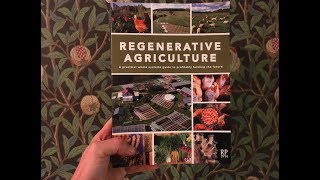
Richard Perkins shows his nearly finished 750-page book on regenerative agriculture, walking through its structure from water and soil to agroforestry and finances. A Kickstarter campaign launches in mid-April with signed copies and worldwide shipping for around €10, delivery expected by early summer.
Questions this video answers
About 750 pages.
Sending to a copy editor in April.
In the first week of April.
About the second week of April.
Approximately €10 to ship the book anywhere in the world.
Chapters
Well, at the risk of boring some of my viewers, I wanted to show you something that I've been building in the workshop this afternoon. I just got the penultimate copy of this printed out and I'm editing on paper because it's much better to look at this after looking at a screen for the last two winters. It's great to be able to look on paper and really get a sense of the layout and just check for errors and inconsistencies. And, you know, I don't want to bore the viewers, but I do want to give you an inside look into what's going on in a bit more detail than the last video. Because this is all that's been on my mind, really, for the last two winters. I've been busy seeding and waiting for the spring to come. We've got a bit of thawing going on and you can see a few of the vegetable beds now. I've been growing mushrooms and we've been planning the season, but this has been consuming me for a very long time. So I thought I'd give you a better look inside. So I've just been getting another copy of the book back. I've just got it pressed in here because I'm going through editing on paper, and it's much better process to edit on real paper in front of you, but it's also an extremely draining process. And so I've been doing this a few times now over the wintertime, and I'm at the stage where I'm nearing completion, so I'm on my penultimate copy. So what I want to do is actually turn this into a book so I can get a feel for the actual whole book because it's just printed on individual sheets. So what I'm doing, I've compressed this together and held it with clamps, and I'm going to use the angle grinders to just roughen up the edge so I can then put some glue on here. And behind us here, we've got this lovely cover that's hopefully scaled to the right thickness for this paper. Obviously, different papers have different weights and thicknesses, so you always have to change the center spine. So I'm just going to rough this up and glue it and see if we can get it to hopefully stick in one piece. This is a process that the book industry would do in perfect bound books, which is what this one will be. I can't make this a hardcover book, however much I'd like to, because it will just be too heavy to be able to ship it. So I'M mimicking the process that a big machine would do very quickly. Don't know if it'll work, but we'll see. Now, it goes without saying you should use safety goggles, typically for a tool like this. I am just scuffing up paper, though, so there's no risk of the blade exploding, whatever. So you can see I've just scuffed up the surface. I don't know if it'll work, but that gives it a lot more surface area to bond onto. I think in the industry this would be a lot choppier process, you know, creating a lot more scars. But we'll have a go and see if it works. It's no problem if it doesn't. So I'm using this mod podge that I had left over from an art project and I'm just going to do a coat, let it dry, do another coat and then we'll see if it sticks together and stick the COVID on and get a good feel for the book. So one thing I've been doing is adding another chapter on pattern, because I personally think that whilst the permaculture world that I've been navigating through for many years has become a little bit too fluffy for my liking, I feel like some of the regenerative ag space is very technically minded and I feel like our role here is orchestrating a symphony on the pasture and in agroforestry systems and even in our market gardens, if we want to really apply ecology to that practice. And I feel like there's a risk of becoming too technical again and I don't want to be a technician now. You know, we are very technically minded and that comes across in our YouTube videos and it's very thoroughly present in the book. It's full of data and facts and figures and I am very technically minded and it's a very important part of farming. But I feel like, you know, the context of it is we're farming ecosystem practices and we're not just technicians. And some of the enterprises, if you were just running them as single enterprises, the way you refine them is just becoming a technician. But that's not why I got into farming. I got into farming for learning and inspiration and I learn more here than any learning institution on the planet could ever teach anyone. And that's what I'm trying to share in this, like, the perspective with which I view all this stuff and then go into the details and technicalities of the whole thing. I feel like proper farming is all about understanding ecological principles and patterns and applying them to your productions, whatever they are. And so that's a big focus within this book. You can see it's about 750 pages. It's a hefty book. Lets take a look inside and see what's in there. So something I've really focused on with this book is having a lot of these beautiful double page spreads because I feel like photos and images are so important to contextualize things and you can glean so much information from a picture. We start with the preface and in the contents there and then go into the context and introduction. And so this is looking about what is regenerative agriculture and some of the key principles that we can apply to our practices. And then it talks a lot about the state of farming and how we've approached coming into this situation and how we've started planning the design of our farm. And then as we move into the second chapter, this is all about pattern and I've got a big passion for anthropology and biology and other sciences within this. So this chapter is really talking about pattern languages in a way that most permaculture sort of minded books are not. And looking at then practical applications. There's still a few images missing here, but looking about how we find solutions to all of our human problems through applying ecological patterns. Then there's a whole chapter dedicated to defining your context and introducing holistic management in a bite sized, easy to understand way. Including ways to get started with that process of writing your context. Because it can be really clunky for people we found in their trainings that we do with holistic management here. And then how to make decisions with that. And then thinking about data to collect if you're looking for a site. And then we move into maps and landform and think about principles of the landscape, talking about drone mapping here, how design process works, and then thinking about principles and attitudes for designing small farms that will work into the future. Then we jump into keyline design and this is basically mimicking the chapter in my previous book, but a little bit more refined and looking at some of the results on the landscape through the years that we've been applying this here. And then we jump into water systems at the farm. That's the first layer we're typically dealing with in design. So we look at all different levels and patterns of water around the farm and look at catchment calculations and how to do ponds and calculate different things, how to install different types of ponds. Then we jump into a big chapter on agroforestry and that's looking at the different patterns of trees in the landscape and how to go about planning and designing those systems. Drawing from some of the best examples in Europe and then looking. It always comes back to what we're doing at our farm and why. That's a big part of the book is addressing the why. Why do we do what we're doing? Because that's a massive part of life satisfaction and flourishing is being super clear, going back to holistic context. Why are we doing this? Because farming still is hard work whichever way you look at it. And so you need to be super clear on why you want to do these things. Then we jump into our summary of an enterprise and all the enterprises are scaled around. How do you get €50,000 out of that enterprise if you're running a farm as a couple, say, or if you've got employees, and it looks at the returns, if you have an employee, to see where your best place to put those resources. Talking about transitioning the farm as we've cut the timber here and different ways to add value to timber and thinking about ancient forms of agroforestry. Then going into how to seed and how to graft and how to take cuttings. Then we look at different species good for this climate. And then we jump into an enterprise looking at making a tree nursery, making these things available to other people, because there's a big lack of useful plants and species available for a lot of us in Europe and further abroad. Then we jump into a chapter about intensive oyster mushrooms, and this is all focused on oyster mushroom. It would apply similar patterns to other enterprises based around indoor mushroom growing. But oysters are some of the easiest way to get engaged with growing mushrooms indoors and can make a really good income from a tiny space, whether in an urban setting or if you're in a more rural setting, in some of the wagons like we use for our slaughtery here. And so that summarizes the enterprise and gives you all the spreadsheets for the data there. Then we jump into forest raised pigs, looking at how we handle pigs in the regeneration of our monocultural spruce. Back to broadleaf agroforestry. And it looks at how to detail pigs into different products and recipes for some of those things and details the enterprise here. And then we look at building up infrastructure. And that's something that I think is really overlooked in the sense that it's, you know, if you're going to buy a property and start a farm similar to ours with different enterprises going on, you don't really want to put more than 40% of your budget into the actual property price, even if the buildings are good condition, because there's so many things that swallow money on a farm. So I'm just going through some. Some of the different structures that we've needed to build or create or buy to be able to run the sort of enterprises that we run here. So it details a little bit of all those. And then some of those are expanded in the specific enterprise sheets. So a bunch of resources in there. And then we jump into fencing on the farm, thinking about different modes and different types of fencing for different situations. And then we go into our enterprises here. So we've got pastured boilers. There's a big enterprise enterprise. And this gives you complete data sheets for running a brooder, for feed sheets. There's complete feed sheets that we use for the optimal feeding regimes that we've come through at our farm, how to build pens of different types, how to manage those in the field, looking at our upscale boiler pens, how to build an on farm slaughter facility, and the regulations that apply to that. And there's all kinds of details to run in this business. There's an excited dog running past there. And then you've got your enterprise summary at the end of the chapter and all your spreadsheets here. And then we look at pastured turkeys as an enterprise. And all of these enterprises I've scaled, even if we're not doing them at this scale, I've scaled them up and thought really long and hard about what it would take to run these at the same sort of income level so that we've got a basis for comparative analysis of what needs to go in how much land you need, minimum. And this has really been a large part of this book is responding to the questions I've been getting over the last decade or so from people, you know, that coming into farming that don't have an intuitive sense of the scale needed to make these enterprises both economically viable and useful, but also to have ecological impact. And so that pattern piece is a big part throughout the book because I feel like that's one of my specialities is understanding mimicking natural patterns and applying them to our production systems. So we summarize pastured turkeys here and you've got enterprise spreadsheets. Then we go into pastured eggmobiles, looking at how to build these structures, different dimensions, different invertebrate studies we've done here at the farm, how to bring a flock to the farm, how to move, how to roll the. Sorry. How to run the Egg packery, different data collection sheets, how to deal with winter, how to deal with the spent flock and all your feed considerations, etc. There's some more survey work that we've done there. And then summarizing that with the enterprise data. Then we go into a chapter on grass and grazing and looking at grass ecology and physiology, looking at some of the survey work we've done, how to fill in grazing plans and considerations for that, how to monitor your ground over time. Then how to deal with cattle. And there's an enterprise for micro dairy here and small scale operation, looking at then pastured lamb, how to run that as a little enterprise with spreadsheets for that. And then we jump into pasture raised beef and focused on grass fed heirloom beef and looking at how much land and how much inputs, etc. Investments you need to run that as a viable enterprise. Then there's a huge chapter on no dig market gardening. It's a really fleshed out chapter, really looking at how we run that, the different tools we use, there's all our crop notes and how we go about seeding and all the little details that make this stuff work. This is designed to be a manual to give you all the answers you need in a concise way in one book that you can just turn in and tune into whatever it is you want to do. And we're sharing with you the best tools and the best techniques and approaches to these to make an economic return that's also good for the land and produces epic quality food. Dealing with polytunnels here and dealing with the winter harvest, storage and packing, how to make a crop plan, loads of example data in here, how we make our season calendars. And then we've got all of our summaries for the enterprises here. And then there's a whole chapter on microgreens, how to run that as an enterprise, all the data you need to get seeding and optimal results with that. Then a chapter on nurturing the soil food web. And then there's a chapter on selling your products. And this looks at selling through CSAs or subscriptions or to chefs in restaurants or to buying clubs. And the Ricoh model, it's our favorite selling model, it's a very efficient model, how to set that up. Then we go into financial planning, which is probably the most important element and it talks about different aspects of financial planning. And then we've got a whole summary here of the entire farm annual financial plan so that you can see how you would construct this as a spreadsheet. And you have to go away and do that for yourself, obviously. Then we have a big chapter about the human element. And this is an anthropological and biological and historical account of how agriculture has affected our society so dramatically in the last 10,000 years, but goes much further back, looking at how environment has affected our brains and bodies since the beginning of time. And then it pulls that together with the work of a few key people to see why that's relevant to today. And then we look at managing people, avoiding burnout, different modes of having people on the farm and how to consider managing that. And then how to clarify your objectives and how to mentor new farmers into the space. So that's an exciting new chapter. And then we have our comparative analysis where we're looking through all of the 12 different enterprise summaries in this book and just comparing them with some basic cross examination. There's not too much to say about that. It's more left so that the reader can determine what fits their context. And then we jump into a chapter looking at small farm case studies, which looks through some of our past course participants. And I've chosen people that I've been to their farms specifically, and people who have very different contexts. So this is the socially minded see CSA transforming an old orchard. And here's farm succession, like somebody taking on the farm from their parents and adapting the business. Here's starting a business in someone else's business to establish a sense of place in that new relationship. And then a very low cost diverse farm startup, really engaging their local community. And then here's an example of integrating boiler enterprise into someone else's existing orchard and tailoring the business for that. And here's an established organic farm that's turning over to regenerative practices. And then here's a beautiful couple in Denmark starting a market garden business as a couple from scratch and how they've dealt with that. And then we've got another example of running a small farm whilst both of the couple are working full time off the farm. So I feel like these contexts are so applicable, you know, across the board and will bring a lot of inspiration and insight that gives a voice to the book that's not just me and I'm really touched by that. Here's a beautiful startup where the context has changed with the acquisition of a new farm. So how that's changing things. So we get in there more resources and books, etc. And we haven't got the index yet that's going to come, but you get the picture, it's getting there and this week now, I'm basically reading through and editing all this. And I've been through page by page several times already. I expect to go through this with a red pen and by the end of the week print out another edition just to finally check it through. And then I'm sending it off. It needs to be seen by different eyes now, so I'm sending it to a copy editor who's going to work on that in April. And I'm also sending it to some of the best farmers and thinkers in the field to get their $0.02, as it were. And then my plans at this point are to start. I'm going to Germany in the first week of April to run an interesting training there, the beautiful farm. But then my intention is to set a crowdsource campaign. I'm going to run a Kickstarter campaign like I did for my previous book. I'm not entirely sure the details yet, but basically you will be able to get signed advance copies of this before it comes out into print. And we'll be selling the ebook version on there, which will be available after the campaign finishes. And we might have a few other things available on there too. But it's going to be an expensive book to print because it's a thick old manual, 750 pages, and I feel like, yeah, this is my offering for years to come and I don't intend to be sitting around on a computer writing anymore anytime soon. So I hope that was interesting for folks. I will announce details of the Kickstarter in about the second week of April, I hope, and hopefully we'll get some insights from some of the greatest thinkers in our field about what they think of the book. And I'm super excited to get it to you as soon as we can. It should be able to reach people by the early summer, which will be amazing. I'm going to make shipping for this book subsidized so that it's essentially €10 to ship this book anywhere in the world. And it will be upgraded to first class shipping because I have to apologize, I've been sending our old book to over 90 countries around the world and the Swedish shipping costs are extremely expensive and the service is not the most reliable. And so I've upgraded to first class shipping and I'm basically taking all that cost back because I want people to be able to get this reliably and to use this as the resource that it is as effectively as possible. So that's all I can tell you for now. There'll be more details when the campaign is released, if you want to help share this book and get it out there, you'll be able to contribute to the crowdsource campaign and get a signed first copy edition. You can also share this on your social media. That will help spread it and we'll get some momentum going as this campaign kicks off. Something I do want to say and make clear at this point is that this book is a labor of love and it's really been thoroughly engaged and emotional process for me and some people in the comments. I really appreciate people's feedback and comments and suggestions there and I want to clarify that I won't be making this available in chapter by chapter sections. I don't feel like that honors the approach or work that I've put into this. This is a complete whole systems thinking approach and so I'm just not up for doing that. I hope people understand that because I feel like I can't think of a good analogy. But it, you know, it's like taking salt and not eating the rest of the meal or. I don't rubbish analogies, but I feel like I'm offering this piece and it's been a creative process. I'm not just writing a script and sending it off to an editor. I'm crafting a book. You know, this is my brain coming out onto paper and I feel really attached to that. And I think on our online course we'll put an overhaul into that and we will release each chapter along with the chapters of the online training. But you know, and that's a super low cost training that a lot of people have been benefiting from. But I think I'm not up for selling it other than a whole book because that's what I've done. I've written a book for you, so I hope you understand that and can dig that. And I know it might disappoint some people, but that's, that's the way I'm rolling. It will be available as an ebook and that will be available as soon as the crowdsourcing campaign hopefully has been successful. So thank you so much for watching. I'm really excited. I am totally exhausted and I start seeing things in the pages as I read through them over and over again. But I think it's getting there and I feel super happy about it and I can't wait to hear what you folks think about it. Thanks so much for watching and we'll catch you soon in another video. It.
More from Richard


A review of short and intensive season on a mixed farm and restaurant/event space in Sweden






Alskade Kyckling Exploring complexities of poultry production in Sweden and what we stand for


