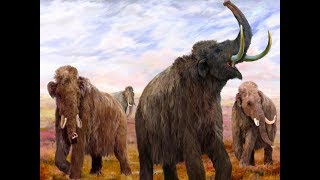
Richard Perkins got his Kickstarter funding for Pleistocene Park, which aims to reintroduce Ice Age herbivores to Siberia to restore steppe ecosystems. His farm runs at 3 tons per hectare for six months, compared to historical densities of one mammoth and ten reindeer per 100 hectares. Using targeted grazing and keyline ploughing, he's built 25 centimeters of new topsoil.
Questions this video answers
November 7, 2017
About 1 ton of animal per 10 hectares (year-round)
Approximately 1 woolly mammoth, 5 bison, 6 horses, and 10 reindeer per 100 hectares (year-round)
About 3 tons per hectare, but only for 6–7 months of the year
Laying hens ~1,400 kg; broilers ~9 tonnes; cows ~3 tonnes (plus a few tons of sheep and pigs)
Chapters
I often get interesting things in the mail, but today I'm super excited. I got my Kickstarter award for Pleistocene Park. I've always wanted to go to Russia, actually, and I'm really intrigued by the country in general. I think there's a lot we don't know. We don't get taught about Russia in school and I think that's the case in many countries in Europe and probably in America too. I don't know, I'm guessing that. But I think I'm going to go and visit this project. We're talking about having a week off and maybe two weekends either end during the middle of the season. So that's a nine day holiday. Summer's the time to go to Siberia, but I'm very curious. I'm always keeping up to date with this project, but I also want to go see them and see if I can help in any way. I think it's really fascinating. Nikolai and his father have such an ambitious project. They're aiming to bring back some of the Pleistocene era animals or equivalents into quite far, remote north Siberia. And I watched a webinar that was on the Sustainable Design masterclass and it's really breathtaking and it's one project I'm super excited about. These guys are scientists and they were looking at fossil records and really understanding how many animals were on the great steppes that would have been a large part of the European, American, Asian ecosystem types. They had amazing fossil records and it was really interesting to hear. Like for every. They reckon there was about 1 ton of animal per 10 hectares all year round. And you know, these are very extreme climates obviously, and per hundred hectares there would have been one woolly mammoth and five bison, six horses and 10 reindeer for every hundred hectares year round. And that's quite breathtaking. I was thinking about that a bit today. We're still grazing out here in early November and I expect it will take us another month to get around the farm. Hopefully we'll get into December with grazing. The grass isn't stockpiled, ideally in the way I wish, because we have to run the laying hens through. But it's quite interesting to think about the numbers of animals that we have on the farm. We run animals at a rate of about 3 tons per hectare, but only for 6, 7 months of the year. In that density, we have laying hens at about 1400 kilos and then 9 tonnes of broilers, about 3 tons if you count all the cows and a few tons of sheep and. And so it's really that biological activity and that density of animals that drives the regeneration of grasslands. Earlier in the year, you might recall, I put a video up of how we've added 25cm to our topsoil. And whilst we used the keyline plow a couple of times to mechanically decompact the ground to allow water and air to flow into the subsoil so that roots could penetrate deeper, because we had a plow pan, a layer of compaction at about 17, 18-20 cm deep, where a horse drawn plough primarily had been pulled for decades, growing wheat here. So we broke up that layer of compaction with the key lime plough and roots can then grow deeper into the ground and secrete sugar. And it's those sugars that allow life to thrive. That's what drives the soil food web. This liquid carbon pathway from these plants and these steppe ecosystems were driven by grasslands. When you have that many large herbivores and other grazers like mammoths, it's really grasses that predominate. And there's been various changes in those ecosystems as there's been glaciations and then the warming of the climate again and then the intervention of man, that's basically wiped out a lot of animals. And you might remember watching Alan Savory's TED Talk, how he estimates 50, 60% of the world's surface is either desert or desertifying, largely due to the impact of taking animals off the landscape. It's so important to have animals turning sunlight via grass into high quality food. When there was that sheer density of animals on those steps, there would have been much greater rates of photosynthesis and nutrient cycling. At the end of the Pleistocene era, Europe, North America and northern Asia was predominantly mammoth steppes. Now, the mammoths didn't really exist in more southerly regions, but the basic patterns were the same. You had large grazing animals like elephants or mammoths, and then lots and lots of herbivores, ruminant animals capable of digesting the grass, which would have been the predominant vegetation due to the selection by those herbivores. And these were very stable systems. The grasses were predominant because they were the only thing that could withstand regular grazing, compared to shrubs and trees, etc. Which would have been trampled out. And these systems evolved over hundreds of thousands of years with similar patterns all over the globe in terms of animal density and the animal components, as it were. It's changes in the climate as well as the movements of man moving with the changes of climate that have led to hundreds of thousands of square kilometres being left without animals and without animals, those landscapes begin to change into woody vegetation and the respiration rate of the plants is much lower because the bio sort of chemical reactions taking place with large amounts of animals that are grazing grasses regularly obviously slows down when those animals aren't there. And so a lot of the land in Siberia turn to wetland or turn back to forest land. Another big impact taking animals away is just the suffocation of grasses, or all the biomass accumulated throughout the summer is then not eaten and the nutrient is taken out of cycle. Like putting money in a bank account, it's just sitting out of the system. There's no energy flow because the rates of decomposition of that litter would also have been low because there would have been low biological activity in the soil due to the lack of animals above ground. To have thriving life in the ground, you need thriving life on the ground. One thing they're trying to do with their project is to increase the areas of original steppe by bringing back some of these animals to landscape, increasing the albedo effect compared to the modern day low nutrition landscapes that cover so many hundreds of thousands of square kilometers. In that region. What's amazing is the process they've had to take to bring animals that far north where no one's really living. They're about 1,000 kilometers up from where other people are in dense populations. I'm going to put a link to their project in the notes here, but it's. Yeah, they were showing how they like bringing animals on ferries, you know, in super harsh conditions, and driving them in the back of Russian army trucks where the windscreen's totally frozen over. They can just peek through a hole in the ice and drive them for, you know, days like this. And then I love to think about whenever we have some hard days here and bad weather, these guys are, you know, to put fence posts in to bring animals back to Pleistocene Park. They've had to get a tank and a steam generator and they have to blow steam to melt the permafrost just to be able to put a fence post up. So, you know, it really puts things into context when we think we've had a hard day of work. So I'm super happy to have supported this project. I don't follow so many different Kickstarters nowadays just because of the sheer number of them, but here Nikita is just sending a note to say, the animals that were funded during the Kickstarter, I think they raised over $100,000, are already in the park playing their role. And there's a nice drone shot of them there. It's a super important project and I'm really excited by it. It's probably one of the most ambitious projects I've seen and of such significance. I mean, if that was taken on at a government level on large scale, that would be huge. And I'm really excited about that. I think, you know, there's so much of our education here at the farm has been getting people to understand the importance of animals in the ecosystem, animals as the drivers of fertility in the ecosystem, and about getting enough numbers. I was recording a webinar the other day and that will be out sometime in the coming weeks. I'll give you more details when that comes out. But we were talking a lot about animal impact and how to get enough animals on the landscape to really produce these effects that we've seen here in building soil and, you know, making our grasslands thrive again. And it really comes down to, you know, on a small farm, as I've said many times, it's really poultry is the answer for us in our case, because of the sheer density of animals that we can have in a small space. You can't do that with animals like cows or sheep, the ruminants, because it's just not economically viable on a small scale. Turns out this year pigs have been pretty good and we're raising heirloom pigs and we could sell also some beef at a good price, but just at such a small scale it's not viable. So I really think, you know, I'm still preaching the case for poultry. It's definitely one way that we can bring up animal numbers to get the impact and nutrient cycling that really drives the basis, the foundation of a healthy ecosystem. So now the chickens are indoors up in the tunnel over here. And we just got the cows and the odd couple of sheep making their way back through the farm. It's going to take them a little while to get through. Here's an example. They've been in this paddock today, flattening this down. They're trampling some and needing a lot of the still remaining nutrition. We're hoping not to feed hay for a while yet. You can see this is timothy that's fully recovered here and there's a meter long here in the first of November. Probably just stopping to grow about now. You see from the last leaf, it's yellowing off. It's a good sign that it's fully recovered. But there's some good vegetation up around the farm that we'll be sending them off up through top field here, then over into nutfield and working our way back up front field before we put them up in the barn and start feeding for the winter. Just hoping to minimize the amount of winter feeding that we do this year. We're grazing this lot through, not taking everything. We want to leave some armour on the soil but we're letting them take what's good nutrition wise. You see some of the grass is yellowing out down at the bottom here. We want to leave some ground cover. We'll have it trampled down by them. But we're letting them take as much good fresh nutrition as they can now before they go on to winter feed. There's always more nutrition in, you know, standing grass and there will be in hay, etc. So looking forward to seeing them go around the farm. They've been off on the neighbor's land for a while and it's nice to have them back close at home. They like our grass a lot more. I think it's obviously a lot more nutritious having had the poultry over it. So they finished up all the work putting in the new electric line and they've still got to take away some pipes. There's a big pipe, welded pipe here that they were going to use to go under the stream but that didn't work. They hit too much rock so they came on the other side in the end. And we've been talking with the road society here in the village about putting up a turning circle. It's going to be half on our land up Reuben's paddock and half on the neighbour's land. And it's a good idea. It's for clearing the forest. We want to try and cut the forest this year. Our neighbour owns from about there onwards and he wants to cut at the same time. And the reason we want to cut it I've explained in many videos now. But we want to clear that so we can start turning it back towards native vegetation and do more of a Lubeck style forestry. We'll be cutting down the pig numbers. We already have some of our piglets this year that will be sold next autumn. And we don't want to have too many pigs because it's, you know, the forest has to be given a bit of rest to allow young trees to get established. We've seen after three, four years it can take the impact of pigs cycling through it for a month at a time or so. But that's something that we need to do. And because the road here is public, it was one of our requirements actually looking for land was to have a road that was public so it would be cleared of snow in the winter because that's a major work. If you live at the end of a road road here on a private road then you have to clear all that snow. So that's going to be something that's subsidized and paid for by the government. And we can't really clear the forest land. You need to have somewhere for them to put the trees. And it's quite a lot of trees all that up there. So it's a good investment. They will have to access the land through our property here around the back of the larch that you see in beautiful golden color there. And yeah, I think it's. It's going to make a mess. But it's important to do it now and get the value out of the timber. Then leave it much longer I think and it will allow us to speed up regeneration a bit quicker. So we're settling into winter style chores. It's nice to still have the cows out but the chickens are in and everything's getting into its rhythm for the winter. A lot slower pace. It's hard to find time still to do the planning. But we're playing with different structures and ideas now looking at all the costs. And we've had visitors and we've got visitors coming. So it's. It's slow progress but nice to have a slower rhythm. I've been exhausted and I'm really ready for a holiday actually. The guys had a good time going to Stockholm and dropped off a lot of podges. Turned out someone had a quarter pig ordered that they didn't actually know they'd ordered. So the guys were stuck outside the shop with quarter of a pig but managed to sell it to the shop owners while we were doing the drop off. So that worked out really well. And then they picked up some industrial stainless steel shelving from our friend's shop who closes shop down in Stockholm and is retired. Don't know what we're going to do with it yet but it's the sort of thing we love getting. This is, you know, expensive heavy duty industrial racking that filled the whole shop. It's quite compacted in its folded upstairs. But one of these free resources that will get put to really good use I'm sure. Chickens seem to be doing good. We give them ventilation during the day, both from the sides but the ends, the doors as well. We're going to put some automated vents up in the top. Some of these vents oil filled so they open at a set temperature, they can be tweaked a bit and they go straight into the polytunnel plastic. So it's a nice investment, but probably one we'll make next spring when we start growing tomatoes in here. There's going to be 1200 tomato plants in here. We still got lots of eggs coming out and it's a bit different in the winter. It's a bit more of a process to have clean eggs. The hens are sleeping on their bedding and they often. If you don't get up early enough and move that bedding around to sort of catch the droppings in some kind of carbon form, we're using peat moss. Then they will pick up a lot of manure on their feet and carry that into the nest boxes. We're doing things a little differently. We're opening the nest boxes at nighttime and then I've got a light on a timer that comes on at half past five in the morning and that enables the first few birds that are sleeping together huddled up, they're not using their roost so much and they're sleeping in different patches on the floor as well as on the roosts. And so, I mean it gets light about 7 o' clock now. So having the light come on early encourages them to get active and start using the box is better. That's working okay. And it's always a bit more management intensive in the winter months because you've got to get in there and manage the bedding to get any, you know, useful compost out. And trying to keep the eggs in tip top shape. But they're off out selling today and we're getting between 86 and 90% still. So that's pretty good for this time in November. And I expect the egg count to drop throughout the winter. It will go down to like 75% or so in the coldest months like February, March time. It's nice. The egg packery must be kept between, I think it's 8 and 16 degrees. So it's always quite refreshing to come in here because it's nice and warm. I'm wearing my thermals every day now. I've got these really nice Danish organic merino wool ones. They're much thinner than the. I've always had organic merino ones. You can wear them for, you know, quite a long time without washing and they just don't smell and I really mean that. They're really cool. But the ones we had previously were much thicker. But these actually keep me just as warm. They're Danish brand That Astrid and let's see if I can pull the label out here. Astrid and Carla got us all into. Don't know if you can see that, but they're really cool. Really highly recommend them. And Danish felted slippers. They're also the best. I've had them for years too. So big up Denmark for your high quality wool products. I'm upside down right now. I'm using my tilting stool quite a lot now. And I got this at the recommendation of one of our YouTubers. I can't remember who it was actually, who left a note about it in the comments, but it's really cool. It's about €150. I would go to the Cairo last winter about three times a week, which cost the same. And my Cairo was awesome and did a really good job actually. But I gotta say, I actually quite like this tool. It's just helps stretch the back out. I find it only really helps me if I go fully upside down. I'm a kind of all or nothing guy, so I guess that's part of it. But I find like if I feel like this little feeling that my back's gonna go in the coming days, if I keep going at it, then I spend a little bit of time on there in the morning and evening and it really helps out. So I gotta say I endorse the product. It's really cool and I've really benefited from it a lot. My back has only gone once this summer. It puts me out of action for a couple of days, but it's been really good. It's, you know, it's the least. It's affected me since I was 14 or something like that. So that's it today, folks. Just a quick update. I was just excited about my new T shirt and excited about the whole concept of this project. You can see the link below and find out more about their project. I really recommend checking that out and thanks as always for watching our videos. You can find out more about how we graze and how we relate to grasses in other videos here on YouTube. Remember to click subscribe if you haven't already, so you can follow updates from the farm. You can find out a lot more in our book Making Small Farms Work. And if you're designing a farm of your own and want some advice from some professional farmers, designers and educators, then see the links below too to our online training. That's coming out very shortly. See you in the next video.
More from Richard


A review of short and intensive season on a mixed farm and restaurant/event space in Sweden






Alskade Kyckling Exploring complexities of poultry production in Sweden and what we stand for


