First an epic city center rooftop farm, and now a Regenerative Ag site too!
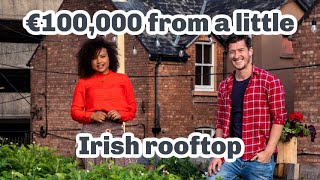
Richard Perkins, Brian, and Tay built a rooftop farm in Cork city center during the pandemic with 60 aeroponic towers growing 4,500 plants, targeting €1,200 to €1,500 weekly revenue. They're now expanding to a regenerative market garden on nearby land, testing sheep's wool to replace rockwool, and planning 400 hens and beekeeping to connect urban customers to rural regenerative farming.
Chapters
Okay. Brian and Tay, thanks so much for joining us today.
Thanks a million.
Thank you for having us.
I'm super inspired by what you've been doing over there and I really wanted, after meeting Brian over at our farm last year, I really wanted to like tell your or allow you to tell your story and share that with people because it's super inspiring and what you've done with your rooftop farm. But then now starting up a whole nother operation. So I'd love to just go from the start and really hear your folks journey and maybe you could tell us a bit what we're looking at. The Cork rooftop farm.
Yeah, yeah. That's a photo taken of the rooftop from day one. So we live in the centre of Cork city. It's in the south of Ireland. And Ty used to live in the little green building you can see in the corner there. And my apartment is adjacent to this building also. And at the start of the pandemic, Ireland had a lockdown at the end of March. And there was a very strict lockdown, so meant I had to close my wholesale flower business. And Ty unfortunately lost her job. So we were both kind of at a loose end.
Nothing to do.
Nothing to do and all day to do it.
And a big roof.
Yeah, exactly. But a lot of people during the pandemic kind of turned to gardening. Like there's been a massive boom in, you know, garden centers and all the rest since this whole pandemic kicked off. And we were no different. We were kind of looking for an outlet outdoors that would be kind of.
You know, enjoy and have a fun.
Yeah. And you know, grow some food for ourselves. And it seemed like a nice thing to do. And there's a little courtyard next to where I live. No bigger than, I'd say kind of 10 meters by 10 meters. You know, you wouldn't, you wouldn't do a whole lot in there. Really be nice for one person to grow some bits. Jump. But Ty was looking out at the rooftop and she saw and she was like, why don't we do it there?
But when I saw this face, I was like, oh my God. I really, really saw like a playground. Like, oh my God. We can, you know, have fun or some bath or have some big beds. And then it's funny because the layout in the beginning was completely different.
Oh yeah.
It changed everything. Every single day. Watching your videos and searching about how the best way to do our beds. Yeah, yeah, it was fun.
We didn't really. So there was also a small, little insignificant matter of there was A For Sale sign at the front of the building as well. So we knew that there was the potential that at any moment the building could be sold and we'd have to move everything off the roof.
So.
We didn't really want to put all this energy into it and then be told a few months later, right, lads, you have to get it off and you have to get rid of everything. So we tried to make it as mobile, what we were doing as possible. So we kind of built everything on pallets. We built raised beds out of pallets and six by ones. And that's kind of how we started, really, was these raised beds. It was simple, it did the job. We got about a. I think it was like 100 meters squared of beds made out of this. And then we got 20 cubic meters of soil dropped up onto the roof.
I think there's a slide of that. Right?
Yeah. So, yeah, that's. That's after we got the soil up. So that was a bit. That was a bit of a crazy day.
It's a whole different level of logistics. Right.
And especially during a pandemic, when you're trying to get a delivery of soil. But.
What's our first letter?
Yeah, so you couldn't. There's basically certain businesses had to close, you couldn't get deliveries, you couldn't travel and. But agriculture was seen as an essential business. So we needed. That meant we registered then as a business, as a farm business. But I remember when we registered first as a farm, you had to put down your address on the company registration office thing. And we put down the address of the farm being in Cork city centre. And they were kind of going, I think there's clerical error here or something, you know.
Are you sure?
Yeah. So they said the back and they were like, no, this isn't correct. You're putting yourself under agriculture.
Like.
No, no, no, that'. It's a farm in the city. And I wonder. I want to.
Brian, can we backtrack a little bit? So whose roof is it and how did you secure access to that?
So the building belongs to my father. It used to be the former premises of the wholesale flower business. So we tried. He, like, we traded out of there up until 2006. And, yeah, we were based. We started trading there in the mid-80s. So it's kind of. Yeah, so it's been there like that for. You know, the building has been like that since the 50s. So it's been around a long time. And it's 6,800 square feet, literally about 14ft off kind of ground level. So it's not too high up that it's inaccessible, but it's just high enough that it's a pain, you know.
But.
And it causes kind of, you know, a few logistical, you know, issues. But it was still manageable. We could get, you know, a grab to drop the bags on the roof.
It wasn't easy.
Yeah, the first day we did it actually, like you can see over near the edge of that photo there where the building with the copper roof, both our paddle trucks like broke down. So at one point we had about.
Brain was going like this and then.
I was going nowhere.
I remember seeing that on Instagram. You. Because the piston wasn't working so you had to keep pumping while you were moving.
It was the most crazy, intense workout you could possibly imagine.
Your. So hang on. I mean this is a scenario that is applicable to people in urban areas all over the world. But how do you, how do you go about knowing the structural integrity of a roof and putting like 30 tons of earth and stuff on top?
Yeah, no, that was like definitely the most pertinent question at the start was can we do this at all? So we got an engineer to review the roof. They took like core samples of the roof structure and they looked at where the columns were, the makeup of them, and they were able to determine then the load that we could, that we could hold over different areas of the roof. So we knew then that we could fit, we could do these raised beds with a certain depth of soil and you had to have them spaced like a meter apart to have the load spread. And so for us that's how we did it. But I mean, there's other ways we could have gone about it. But because we wanted to keep things mobile and kind of self contained and tidy, we put them in these raised beds.
There's a real different set of design constraints to work. Yeah.
And you know, at the time I guess we were like, it has design flaws as well because I mean you have all that heat radiating up from the roof and it just dries out the beds in a blink. So you know, the soil really. We had very warm April, May and June, really good summer in Cork. So we found we didn't have an irrigation system or anything. We were just spending so much time watering things.
Two hours.
Yeah, it was all day for just such a small footprint of beds. But we were like, that was one kind of issue we had. So for this year we're going to get put in irrigation for the summer just to not have that on the rooftop, anyway, not have that issue.
So just as a quick. Because we'll talk about your new farm projects later on. But you'll be running the rooftop as well as that farm.
Sure, yeah. They're linked together. So I think a big thing that we found from having the rooftop farm was, you know, we're in the middle of a city center, but there's a huge proportion of people living in urban areas who would love to be involved in agriculture or any form of growing. They don't have the space. You know, there's, you can see behind those red brick buildings on the right hand side, there's big apartment blocks. There's, you know, hundreds of people living overlooking us. And to have a link between an urban kind of growing setup and a rural regenerative farm, I think can really create a powerful connection that we hope will, you know, get the message across to a larger proportion of people. Because we've got, you know, a lot of farmers. Their problem is they're in isolated areas, they're away from population centers, whereas we're literally smack bang on top of a population center.
Yeah, I can see you can, you can draw people to the rooftop farm that would never come out to the farm initially.
Yeah, no, no. And. And when they, when they come to the rooftop farm, then we can, you know, we. When we're allowed to travel between the two with people, will. I think there'll be a great opportunity there to have, you know, symbiosis between the two farms in terms of education and informing people of why we're doing certain things.
Yeah.
That's why we started to document everything. I mean, taking photos, making videos to create, as we create this relation with the plants, with our fold, to show people they can do this as well on their own, even in big space as we had, or in small space, you know, in the back of the apartments or even in the kitchen, you know, you can do whatever you want. You just need to think a little bit more, you know, and I think.
That'S a good point. I mean, like, even we're doing things from a scale that can be done. Like with the microgreens, we're doing things that people with no garden space can do, but they can do it in their own home, or if they have very limited balcony space, they can maybe draw on some of the ideas that we've done on the rooftop and just maybe, you know, scale them to their scenario, their context, I guess.
Totally. One of the things that really impressed me when you were here, Brian, is we talked about at Our farm, we have this self imposed 50 kilometer selling radius because we live so isolated in a rural setting that people drive 50 kilometers to go to a restaurant for the evening. So that's quite close relatively for us. And then folks that are like colleagues in the UK that sell all their produce within 5km, it sounds like, wow, that so easeful for delivery. And you're like, oh, yeah. All my chefs are like, the stones flow off the roof.
200 meters.
It's been amazing actually, because even the whole way through all this pandemic, they've been closed, an awful lot of them, but they can still come visit our farm and they just have to walk from their restaurant to us. So even while this whole thing has been like, there's been a massive shutdown here in Ireland, like, we've been really building relationships with the restaurant owners around the city. And they come and they, you know, they walk up the stairs and then the doors open and they see this.
And they're like, oh, my God. Yeah, I love to see their face.
Yeah, it's like someone dropped a spaceship on top of a rooftop in the middle of the city or something. It's. And you know, that's invaluable to have that access direct to people. And that's been huge for us.
How did you do that initial outreach work? I'm just going to play some of the slides in the background because I'm not sure the order of them. Yeah, I mean, but comment on them if they're something particular you want to say.
But the one in the middle here. Yeah, you can see this is how we move our beds around. So when we put the glass house, for example, or the greenhouse on the, on the rooftop, that meant we had to move around a lot of the beds because to fit it in and to make proper spacings of the soil and have proper walkways and all the rest of it. So we had that flexibility to do that and we were able to move them over to another side of the, of the roof and then, you know, integrate our railings into the bedding so that, that they were a kind of a waste to hold all our railings down along then. So we didn't have to invest in an expensive railing system. It was just, you know, four by twos and just, you know, slap them onto the side of the, the raised beds. And that was what we used to get our railings around the perimeter bush. In terms of like, getting back to what you were saying there in terms of outreach, I guess Instagram has been our primary channel to communicate our message. We literally, from day one, have been putting out content on Instagram and that's opened unbelievable doors for us. Like, it's. It's incredible how. I mean, we've literally. I don't think we've once contacted a newspaper or radio or a TV show or they've just simply. It's happened organically through putting out our content on Instagram and it's been unbelievable. One thing leads to another leads to another.
And you've been in magazines and TV programs and it's caused a lot of buzz, right?
Yeah, no, it's been phenomenal. So we've had, there'd be, I suppose, one pretty big celebrity gardener here in Ireland called Dear McGavin. He started following us really early days, and that kind of gave us the first kind of boost, I guess. And then some online blogs started to do articles about us locally and local newspapers. And then through Jeremy Gavin, he did a TV show then during the summer about gardening, and he featured different kind of good news stories, I guess, that were happening during the pandemic. And that video then went viral online. It got like nearly 1.3 million views on the BBC Northern Ireland and BBC One Facebook platforms. So that, like, gave us another injection. So these things kind of build and build, and then you Cork celebrities now. Yeah, well, I'm not sure about that.
But it's so funny because I don't feel like, you know, oh, my God, we are celebrities. I feel like some people realizing a dream, you know, like doing something that we love, we really, really want to do for the rest of our lives. Like, I don't see myself doing, for example, I'm a fashion designer and I love that, but I don't see myself coming back for that again. I want to use my skills, you know, to improve our website, our page and Instagram, or put some colors in our garden or, you know. Yeah, that's how I see myself.
Yeah, but it's. I mean, it's same for me, I guess. So, like, I've had my. My past is in fresh flowers, so my family business was fresh flowers. And that business is still running during all this. And it's, it's, you know, just despite the lockdown, is doing very well. And it's given me a lot of context in what a work life situation should be, I guess, because the enjoyment and the fulfillment we get from doing the rooftop farm and doing now what we're doing out in the dairy farm in Coachford is. It's incredible, really. It's very Very rewarding. It just, you know, it doesn't feel like you're working.
I want to ask you, then you were both working in the flower farm, is that right?
No. Well, I was only working in the flowers. Ty wasn't working in the flowers. She was working in a restaurant.
Okay.
Yeah.
Okay. No, I just. When you said you lost your job, it was just because of the lockdown, as opposed to in the flower business. But then did either of you have experience, like. Or did you just start this up?
This is a start.
Yeah.
I think it starts with the worriage and concern about from where the food come from, you know, and how. How they grow food.
There was a genuine. One thing that happened at the start of the pandemic was there was panic buying in supermarkets.
Yeah.
Because. Yeah. Everyone went out and they bought, I don't know, 100 packets of toilet roll and 100 packets of bread.
And this will save my life.
Yeah.
And forgot about food. So that food security thing was in our heads a lot. And we had. No, neither of us had. I suppose my father would have had a homestead growing in our family home. And I grew up. We had three quarters of an acre of glass houses in my back garden where I grew up as well. So we all. I would have had a bit of a link to growing, but definitely not on a rooftop and definitely not on scale. I didn't have a huge amount of knowledge, didn't have any real experience. I was. We were learning everything on the. On the hoof. It was like. But that was what we loved about it, because you were learning kind of all the time. And it was very energizing to be learning all this. Yeah. To be seeing it kind of work out, I guess. I mean, I still remember when, like, Ty sold her first seeds, even. And like, she. I could hear her screaming, and I was like, why is she screaming? And it was just. Just pure excitement. Like, oh, my God, what's that?
And then we have a baby.
That's so fun. But then I guess, like, because I know, Brian, you're working really, you were managing the floral business. Right. It's kind of taken over from your father. So I guess a lot of those skills have been very much transferable to starting up all this and, like, managing people in time, resources, and how to run things. Is that true to say?
Yeah, no, absolutely. And even from a perspective of just simple business operations, just setting up the company when we needed to, for example, get a loan to buy the greenhouse and the grow towers, you know, having those connections and marketing you know, all those things, they're very important and Yeah, I guess but like it's been, it's been nice to apply it to a startup situation because I suppose I came into the flower business and it was well established but it's a different buzz to be start in a startup scenario where every single scent is important, you know. And you know, I think it's probably helped my flower business because you know, maybe in the flower business I wasn't focusing on that, you know, well, not minding that Penny's situation as much because we were so established and I probably brought that nearly in from having the startup experience now into that side of the business and that's been really good and you know, likewise the skills then from the, from my experience in the flower business have definitely been transferable.
Yeah.
Even in terms of hiring and you know, all that kind of stuff.
And now he's teaching me.
That's awesome. Yeah. So you've been doing, I think the slides show this but you've got a whole bunch of different things up there. Bees. And we'll get to the grow towers later but you're doing a lot of micros. Like how are you selling to. Is it going a lot to restaurants or is it to private people too? Like how's that set up?
We were initially selling to mainly to restaurants but since the majority of them are kind of closed at the moment we've since the new year we've pivoted a lot to the public direct.
So reach to tour for it.
Yeah, we went more to retail, direct to consumer and that's been great for a number of reasons. Like we're lucky in that as well as being in the city centre there's actually a farmer's market on our doorstep every Saturday. So like it's. We're on a place called 20 meters.
Outside the back door. Yeah, yeah.
Very convenient.
It's a ready made marketplace. So we have the premises on the ground floor. So we just literally open up the doors, put tables out and just put our produce out there and sell it away and it's been going amazingly well. The profile that we built up through our social media channels has allowed us to basically have customers ready for. They were kind of champing at the bit to be buying for us really.
Yeah. I think the market was very, very important for us because it was nice to have this contact with people through the social media but when they saw us like on person I think the feeling yeah was completely different. And this started, we started to sell more, to produce more because of this stage.
So, yeah, it definitely drove us on.
Amazing.
And it's been great to have that interaction with our customers. And it's not just a digital interaction, I guess, which has been most of what we've had to date with the people that we've been meeting. But you know, and we've been, you know, really pleased with how things like microgreens, which we would have thought would have been more restaurant orientated, have been going incredibly well direct to public. And that's really because it's a, it's a really good product for us to produce on the rooftop. You know, it's, it's, it's, it's so scalable.
Scalable in a small space, isn't it?
Yeah.
Is that the. You. You got that greens harvester office when you were over here, didn't you?
Yeah, I did. That was fun getting that home.
Yeah. I bet. It's a very odd shape package, but it looks like you've made your own Ravel and using the Quick stand, you've made your own little rail system.
Exactly. Yeah. We couldn't, I tried to get it from Terratech but they didn't have them in stock. And there's an agent for the, for Terratech in Ireland, Fruit Hill Farm. But they can't, they couldn't get them. But we have a new order in now with, with them for all our market garden tools. So hopefully we'll get the stand with that. This is a bit tricky because we can't really adjust it too well. And even this morning we were harvesting microgreens and we started using hemp mats as the medium and they're a bit shallow in the tray so you kind of have to lift them up and you're just doing a bit of fiddling and adjusting. But the beauty of the hemp mats for us is we have some restaurants that want to have the microgreens live in their, in their restaurant, self Harvest. So the hemp mat allows us to grow them for them and just hand.
Over that way because there's no soil, they can take it into a kitchen, et cetera. Yeah, that's awesome. How did you go about setting your pricing and like how have you worked with that?
We kind of looked, I guess what was being done on the market itself, on the farmers market, what people were selling at. We could kind of see what the standards were and we could see what signals were from microgreens, you know, what was going. And we kind of, after a few weeks as well, we were kind of like the price we were getting on leafy greens. You know, we're. We're generally doing it at about three euro a bag. We just tried to keep it simple really, to start. Like we did three euro everything and we kind of portioned accordingly. And that was easy for the customer, it was easy for us. And you know, you're not adding up lots of complicated things in your head when you're trying to serve lots of people, you know, and that kind of worked well. We've gone down. We do the punnets now, microgreens at €2.50 a punnett, which is still a great price for, I think, for both people. So. And, but like, if we were to go especially with the leafy greens that we have in our towers now, there's like, there's huge demand from direct to the customers for those leafy greens. But if we were to go to restaurants with those greens, you're cutting our margin in half. And it's very hard to justify at the moment when we're in startup mode. I guess maybe when we, you know, when the market garden maybe broadens out a bit more, we could kind of incorporate that more that offering to the restaurants. But for now we're making nice margin. But, you know, the stuff is harvested like 20 meters away only a few hours before they get it. So it's as. It's a kind of a nice novelty for people in the city, I guess.
What's the population in Cork?
So the greater city, like the city center itself would have about 100,000, but the greater Cork City area would be about 300,000.
Yeah, so it's really, it's an adequate. So customer base that you don't need to wholesale anything, right?
No, no. We've more than a big enough market for direct to the end customer, so. Especially for what the volumes we're producing right now anyway. Now we've kind of cemented that idea that it was going to be more direct to the customer. The produce from the tunnel.
So this is quite an imposing tunnel. Did you have any planning problems with sticking all this stuff on the roof in the middle of the city?
We're still classified as a temporary structure, so there wasn't any need for planning with it. It's. Yeah, no, it doesn't fall under those guidelines, thankfully. I don't think anyone from. Well, we've brought the city council up onto the roof. They've seen what we've done and we brought the city planners up there and they've said nothing to us. So it wasn't really a case of asking for forgiveness. It was just like, here we are. This is what we've done. And it's been pretty. It's been pretty public what we've been doing.
So you think people appreciate it is that. I mean, it's something we've experienced here is because there's so few younger people moving to rural areas to, you know, utilize the countryside or start small businesses, it feels like they've kind of gone out their way to support us. Do you have that kind of feeling that there's a general backing behind you?
Yeah, I think, you know, I think they really want us to, like, allow it to be, you know, integrated maybe into the city, you know, a bit more in terms of interaction with people and stuff. And they're. Especially now, I keep coming back to the pandemic, but there's been. It's been very difficult for businesses to trade and they've done a lot to support businesses in the city center, you know, whether that's a restaurant and in terms of grants for, say, outdoor seating areas or upgrading those kind of areas. So they see definitely anything that positively contributes, I think, to the city and maybe draws people into the city is definitely a bonus, you know, so. And like, even we get text messages and photographs of people living around us, like, thanking us that they are now looking at a, you know, a nice area.
It's an enriched environment, isn't it? I guess.
Yeah, exactly. You know, it's. It's making something out of a disused space.
I wanted to ask you because it. You've talked a bit about some of the pros and cons of. Of the rooftop scenario where obviously there's logistics of getting stuff up there and you're talking about the soil drying up much quicker. But then on the plus side, you've got proximity to where you live and your markets and customers. But also another thing I can see growing in containers here, we're seeing your tomatoes and your raised beds is it must help eliminate a lot of disease problems because you're growing in, like, tomatoes, for example, you're growing in new soil each year. So I imagine there's some benefits in that regard.
Yeah, there's benefits and I suppose, yeah, I mean, we did have pest pressure. We had a lot of trouble with aphids throughout the summer, and that was probably our primary issue. But we've no issue with slugs. Like, they don't exist. There's no, like, rabbits or any. That kind of thing. We don't have voles, but they're definitely bonus situations. But on the Flip side, we can't really build soil biology to the same extent as somebody who have permanent beds, you know, if, you know, changing out those containers all the time. Now on the large containers we're adding compost, but at the same time it's just not the same, you know, so there's that aspect of it that's.
I think we could have more tomatoes. Yeah, well, if we were doing the tomatoes in the field, but because we were doing in a container, you know, their lives, I think.
Yeah, there were, there was definitely issues with probably a bit of.
You know.
They were probably a bit root bound by the end of the summer, to be honest, in some of those limited size of. Yeah, like we probably, if we could have done them again, maybe some sort of air pruning situation would have been good with them. And, but, and you know, we did have issues then with like, even the irrigation system, it didn't work great. Like, to be honest, we probably should have. But then that was just experience on our part. I think we probably was the first. Should have put in probably just drip lines rather than the wicks were kind of problematic, you know.
Where's that water coming from? Are you just piping it up from the building?
Yeah, we have plans this year to harvest the rainwater, so just get IBCs and harvest this. But for now it's just mains water coming up there. So that was one of the first things we got up on the rooftop was access to water. So that was pretty vital, I guess. And yeah, these are our friendly. So we built a little chicken coop on the rooftop, just, you know, have some eggs for ourselves. But also composting was a bit of an issue. You know, we had a little compost station, but literally I think we had it. And within two or three weeks just rats became a big issue. Like.
Yeah, you get no foxes up here, I guess.
No, no issue with foxes.
But.
They'Re doing a great job for us. I mean, they've built some amount of fertile soil for us over the last year.
So what's that we're seeing on the right hand side? Are you putting plant scraps in, letting them turn into compost?
Basically, yeah, exactly. So any off cuts from the garden, we throw them in there. We put in our own home compostable waste and they're all going into them. And whatever doesn't get eaten and turned to manure by the hens is just scratched and burrowed into the, into the, into the compost that's already there. And we keep adding down kind of at this time here where it's very wet, we're kind of adding a lot of carbon material down then to try and keep the keeper from going anaerobic. And that's working pretty well. And yeah, it's, it's really top notch fertile stuff. So we've been adding that then to our beds and it's a closed loop I guess on the roof it's going to be.
I'll ask you later about the. Because I think some of the. I can understand that urge to want to start up in a rural, you know, to start on land and scale things. But at the same time I think there'll be some shocks to the system of like oh, I have to drive my eggs all the way to town and.
Yeah, yeah, definitely. Oh no, the driving issue is already kind of something that's probably, you know, I'm definitely spending a lot of time commuting and it's, it's, it's definitely probably an inefficient use of my time at the moment. But I have to.
How far away is the new farm?
It's a 35 minute drive from the coast.
It's quite fun. Yeah.
So you're talking an hour round trip and you know, it's not a great road really. It's a pretty rural like it's out there in the countryside but it's a beautiful area and like the farmer that we've met is amazing. He's been unbelievable to us really and his whole family have been unbelievable and the people that he has working with him are. I've been.
It's like another family.
It has been. Yeah, yeah.
When we attire something for us as well. So yeah, they're amazing.
Nice. I'm sure it will grow and develop into, you know, as you build more people in the team maybe and you'll have more division then.
Yeah, definitely.
But let's come back to the new farm. I want to keep hearing about this farm. So you've got. I think there's slides of your bees as well. But tell us about this. What's Culture Night and is this being part of the project is to have this as a social space also?
Yeah. So at the end of the summer they relaxed the rules so it meant that you could have gatherings of a certain number of people once socially distanced and sitting at tables and all this kind of stuff. No more than six to a table and anyway all these funny rules. But Culture night was a night is a night that they have every year in Cork where say art galleries and theaters and museums and any kind of cultural building or even pubs and restaurants, they throw concerts and gigs. So we decided we'd have a little traditional Irish concert, Irish music concert on the rooftop. So we got a group to come and play music on the rooftop and we invited some close family friends and friends to attend. And it was a beautiful night. I mean the weather was amazing, the settings was really enjoyable. And it was just. It was a great night for us because we'd all been kind of trapped in lockdown, kind of just frustration for months. And then to have this little bit of normality restored was. Was beautiful. And it really gave us a glimpse of the potential for the rooftop to have as a social space as well, or dinner experience. Yeah, you know, it's something we want to have.
People, people, restaurants and Totally.
Yeah, yeah.
I know you've got other bigger plans than that perhaps, but we. Maybe we'll come to that. But.
So this night was lovely to kind of fulfill that in kind of a small way. It was a really enjoyable night, you know.
And then tell us about this whole thing. So this is in the same tunnel as the tomatoes. Is this an alternating system or is this the finalized system?
This will be finalized now. So we had tomatoes in there before the towers arrived.
So what are these things? Yeah, no digs. Aerial. No dig.
Yeah, no dig.
No soil.
No soil whatsoever. So these. It's an aeroponic system. So basically you see the bottom of these towers, there's a tank at the bottom that water has a nutrient solution in it that's pumped to the top of the tower and the water trickles down and feeds the roots of the plants. So there's a couple of bits of it that we're probably not too happy about personally. And there's a couple of things that are amazing about it. So the good parts of it, you're growing a dense amount of produce in a very confined space and it's a very clean way. You're using probably about 5% of the water that you do in a traditional soil based agriculture.
It's kind of recycling the water around, right?
Correct. Yeah. So we have the pumps on a timer system and it comes on for a few minutes and then turns off again. And they're grown as well under, you know, LEDs. So you're. We're trying to maximize the growth cycle of the plants to have a pretty good output out of a very small space. Now there's the things that we don't particularly like, I guess are the nutrient solution that we're currently using is not organic, but we're trialing organic fertilizers. So when we were starting this system, we kind of, there was templates of it working around the world. So we've taken that and we've run with that just to make sure we're getting a return on our investment. And on the side we're trialing these experimental approaches to using the same systems.
Yeah, yeah, I know someone on, someone's going to comment about you should add a million tilapia and.
Yeah, yeah, yeah, yeah, yeah, I know.
I think at this point it's just, it's two trials. We want to change the rock wall is the support for the plant in the tower. And we want to change the nutrient solution. Nutrient solution.
We're trialing a kind of a seaweed based organic solution. And then there's another one that's, that's been provided to us by a hydroponic grower. And he, he gave us this solution that he's made which is organic as well as. So we're tried in those. And instead of the Rockwell, we're trialing growing in sheep's wood. So as a medium. So that's been quite positive because sheep's wool is absolutely nearly a noose around sheep farmers next these days with the, that have just nosedived, you know, so that's super exciting.
I, I've got a lot of questions about this then. So can you grow year round in Cork using this setup?
Yeah, so we're, we're. I mean it's, it's, there's a few things. It's, it's not a cheap way to grow. You know, it's definitely not a cheap way to grow. We're, we're heating the greenhouse, we're lighting the greenhouse and these towers are not, they're not cheap. You know, so we, when we kind of made a business plan for the farm, it was for the rooftop. It was important that we tried to maximize every square foot of our footprint. Because you know, if you were to say to someone like go away and earn a living on, you know, less than a quarter of an acre of rooftop space growing produce, they kind of grow. It's not possible. So we really had to go vertical to try and maximize the space. So the towers that would be on the right hand side there, they've got kind of micro ports that are more closely spaced and you can fit 176 plants in those towers.
So what does that equate to in terms of a 75 centimeter veg bed? What would A tower like that equate to, would you guess?
Yeah. So we're still trying to figure out sort of certain. In terms of yield, for example, on one of the towers we can get about 3 kilos of, of rocket, for example. And that's, that's, that's not a bad return on that. That's when it's, that's when you're putting in a mature plug and it takes about two and a half weeks then to grow to the point where we harvest it.
Okay, so you've got like two, three week turnaround on.
Yeah.
So it's all focused on high value leafy greens essentially.
It is. And there's, that's where the market we have really is. People's. People want those products from us.
Yeah. And the only alternative I'm guessing is those crappy artificial environment plastic bags coming from Holland or whatever.
Yeah, I mean especially this time of year, you know, there's a few good organic growers around here doing things in tunnels that they're growing nice assortments of leafy greens and Asian greens and things like that. And like Asian greens go really well. Like bok choy and komatsuna are growing really well in the towers.
But it's just a different level of accessibility. Right. Because whilst you've got market growers there, I mean it's. Most people in city center are going to a supermarket and buying packaged salad, right?
Yeah.
So it's, it's a way into a much bigger market, but a market that aren't gonna go out their way to find an organic grower and subscribe to them, whereas they can just come down the road and buy from you. So it's a different context and it makes a lot of sense.
Yeah. I mean like in an ideal world, like we grow in soil and you'd have all the benefits of growing in beautiful, you know, rich nutrient, you know, full of microbe soil. But we don't have that luxury on the rooftop. So we're in the city center and it's part of the food production solution. It's not the solution at all. I mean some people kind of tout it as the way all city centres are going to feed themselves into the future. It has to be kind of part of it, I think, but not the whole, you know.
Tell us a bit about like it's, it's cool. It's like looking into like some alien spaceship or something in a way.
Yeah.
But it's really attractive in some ways. I want to know a bit like are you willing to Talk about the economy of this, like, as a setup, like, it looks expensive. And what's the sort of return on investment you anticipate with that bearing in mind to all the viewers? Like, you set this up just less than a year ago. Right. Everything we're seeing has been happening over the last year. And the new farm that you're setting up as well.
Yeah. So this was funded by a loan. So I put in the deposit on the loan, obviously. And so if you're to break it down, the greenhouse costs, you know, 4,000 plus the VAT. The towers themselves cost just over €30,000. Plus VAT. We don't need to include VAT. And then we recently got lighting, which was around another €5,000, plus electricians coming in and, you know, making the place safe for all these, the pumps and the lighting and all that. So, you know, all in. You're talking the bones of €50,000. It's not a cheap system, as I said. And that's for 60 towers, which can grow about four and a half thousand, have about four and a half thousand plants growing in them at any one stage. And that's in an 80 meter squared space.
So what do you reckon in your sort of marketplace, what could that tunnel yield? You put 60k in.
Yeah.
What could it output in, you know, throughout the year cycle, would you say?
So the goal, what we want to get it up to on a weekly basis is churning out between 1200-€1500 worth of produce. And that's. We're not too far off that at this point.
So potentially 60, €70,000 of product could come out of that every year. Yeah, it seems like a good investment in that way.
Yeah. And I mean. I mean, once it's paid for, it's got a very long product life cycle. I mean, these towers are working in farms in the US and some of the towers are 15 years old.
Yeah. No digging. No digging to do. I reckon you should get on Instagram and hook up Elon Musk's brother. He'll be well into it.
Oh, yes. Yeah. His container growing. Yeah. Yeah, it's awesome.
You guys have been working super, super hard. It reminds me of the silly things I used to do.
So we can put it.
What's the deal with this? Because this, like, as you were saying, the market for sheep's wool is terrible and it's just probably oversaturated. Like, this is an easy resource to get hold of, I guess.
Yeah.
Do you have to treat it or do anything with it, or is it just raw Wool or so.
Yeah. So I guess why we were looking to an alternative is because we're using a medium called Rockwool, which some people might know of because Rockwool is often used as insulation and hoses.
But it's also glass based product.
Yeah, it's basalts born up to a very high heat and they create this kind of foam mesh kind of like. And it's the primary medium used in all the Dutch grow houses for hydroponic tomatoes and lettuces and all this kind of stuff. It's the main way they grow in the Netherlands. And it's not biodegradable. So once you use it once it's going into a skip and it's, it's a problem. And so with, we were kind of like the other alternative is Coco Coir and you know, importing, you know, there's no coconut trees in Ireland, you know, so it doesn't make much sense in my head really to be important Coco Coir to produce it as a, to use it as a medium to grow. To grow. To grow food. So a lady who was interviewing us for a raid yoke, Suzanne Campbell, suggested to us that we try sheep's wood. She said that, you know, that she's seen a lot of people doing different things with it with as fertilizers and as mulches, but it could work for potentially as a growing medium for us in the towers. And I said, oh, that's a great idea. So, so we started trying to figure out how to use the sheep's wool. We put out a call on Instagram and we were literally flooded with people, sheep farmers trying to throw their wool at us. Great. I can empty my barn.
So what's the like in the middle shot? That's a regular grow tray, right? Is it the thing on the right hand side you're using like you would grow aquatic plants in? That's what, what's going into the tower, Correct?
Yeah, that, that we don't use those ones now in the towers. But before when we were trying the whole system out, that's. They're the kind of plug holders, I guess that we were using. And in the middle is just a standard tray. So what we were doing was washing the wool in. We maybe we were giving it like two or three washes and boiling hot water to try and get out some of the, you know, the lanolin, the dirt really that was in that would be in a sheep's wool, you know. And then we, when it was wet and warm, we compacted it down into these trays to try and form it into little cubes that would fit snugly into the tower slots. And this crop that you see here is rocket. And in the middle photo, that's it germinating after about two weeks. So it works perfectly as a medium to germinate the crops. And then really, once it goes into the tower, it's just about holding the root mass together. And the plant then is fed through the water through the tower. And we had first tests, we had a success. Now, what did happen was because there are certain air inside. Yeah. There were certain elements to the sheep's wool that were getting into the water. So the ph of the water kind of fluctuated, but we're able to figure out that now it just needed further cleaning, really. And we did more tests then and that kind of fixed that issue. And so we're doing more trials with that now in the towers with different crops, seeing how it works with different crops. And if we can really, I guess, refine the processing part of the wool, then it could be a viable alternative to us to Rockwool. Because, I mean, Rockwool, for example, is costing us about €130 for 8 kgs of the Rockwool. And at the moment, sheep's wool, I think, is selling for around 20 cent a kilogram to the farm. So it's. It could. It could potentially revive this. This a dying product, I guess, you know. Yeah.
And it's good for your marketing. And just remind me again, the square.
Meters of the tunnel, it's 80 square meters. 16 by 5.
80 square meters. Because I'm just. It's interesting for people to reflect on, like, Ireland's a little bit different from England in that I think that there's better possibility to sell good product for a better price. Like England seems behind the rest of Europe, it feels like, and it's a struggle. But Ireland seems to have a bit more developed scene there and I'm just trying to equate it. So 80 square meter tunnel, you've got the potential there with the 60 grand investment to. To turn over more than that every year on 80 square meters, which is entirely manageable. I imagine you're just on just regular seeding and transplanting and harvesting cycles and deliveries aren't very far away.
Yeah.
How does that compare to market garden in the countryside? I would say you probably compare in that sort of income to like an acre of veg production in the market garden or something like that.
Right, yeah. And the big thing with the towers, I guess, is it's a fraction of the labor input because you just, you know, watering is taken care of, feeding is taken care of.
Mostly self sufficient.
We just have to go in and do light observation every day to be honest, to make sure there's not a failure from a pump or, you know, that there's just, you know, some strange bolting going on or something like that because it gets too, or get, that's too close to LEDs or something like that. They're kind of teething issues that we commonly see.
What's the sort of cycle are you, you're basically pulling out the plug or do you harvest and then come back and pull out the plugs? How do you turn it all around in the sort of standard way?
So crops like say rocket, Mizuna, mustard, we cut and come again. So we cut and we get nearly three cuts out of those. So you're getting probably, you know, six weeks of harvest out of them, out of one plug. And once they're done, then we straight away have a mature plant plug to slot back in. So it's. It. I look at it like there's kind of similarities in a way in the, in the principles of the paper plot system, you know, that you're bringing on your plants to a certain stage of maturity that when they go in they don't need to take that long to get to harvest point, you know, and that's kind of been the case. So. And that's really been the trick for us is to figure out that cycling.
So you're doing those starts in the lean to greenhouse that you have and then you transfer them over here.
Yeah, we were starting that. No, but the microgreens has kind of started to increase. So that's taking over I guess inside there. And we put a few Dutch trolleys now inside in the greenhouse. So we've got layered shelves where we were and we have the lighting inside there. So the plugs are coming along now inside there. And the plan we have then is to kind of incorporate shelving systems into the, into the alleyways at the sides of the tunnel that literally you'll take out your plugs and behind you will be the tray and you just go straight into the tower then. So you'll know that when you empty a tower, your tray is right behind. You can see it coming on and it'll kind of nearly by default you'll know what the next stage is to do, you know.
Sure. So say the system is all up and running, you find out the kinks, everything's groovy like, what's the. Like, how many human hours is it to manage the turnovers, the seeding, the harvesting and walking down the stairs to sell it? Yeah.
So if you break it down, I guess seeding is probably around, you know, three to four hours a week maybe. Now we'll definitely try and cut that down with maybe proper seeding efficiencies there. Observation is probably about two and a half hours a week. And then you've got. Harvesting is taking us the best part of a day to harvest and process the towers. So if you add all for two people, so if you add all that up, you're probably talking 8, 16, you know, the bones are 20 to 25 hours a week to manage.
That sounds all right, doesn't it?
Yeah.
I want to know about the. Well, there's two things. One I could tell you, you know Bruno at Green Tech Tools? Yeah. He's developing these new egg boxes that we've. We're basically funding him to do that so that we can. Very well, if they work, then he'll be up for making them for people and test it out. But they look amazing. But he's making drop seeders and he can make them for whatever trays you have. If you can give him dimensions. He'll just make you like a. Like a paper pot. Drop seeds.
Yeah.
Oh, wow. Yeah. That'll save you loads of time.
Totally. Because, I mean, we're still. Tap, tap, tap, tap, tap, tap.
Yeah. Now you want to get rid of that because there's. So there's such a density of plants and you're cycling them maybe quite a lot at the same time. Right. So you're doing a lot of seeding at the same time. So definitely get a drop cedar.
I give him an email. That sounds cool.
And then I just wanted to. Just because it might be less obvious for people listening in it. So you've got two of these with a path in between, is that right? Like other pumps and things kind of tucked away so that you can access one side at least. Or like, how do you actually move harvest, how to get through when you're harvesting, etc.
We have one center lane, which is a bit clunky because we have these wet boxes for the power sources, I guess. But the plan is to build a kind of a floor above all that. And at the sides we have side alleys that we can fit little kind of hand trolleys nearly. And that's where we. We can go up and down there. And you can. The beauty of the towers is you can kind of spin them round so you can harvest one side, give it a spin around, and then you can harvest the other side. And so from these alleys you can access all the produce to harvest.
You should look at like some of those greenhouse rail systems. So you could have just carts.
That would be classic.
That's super nice.
That would be brilliant.
Super interesting. Yeah.
But it's, it's. Do we definitely need to figure out efficient ways to do the harvest? It's probably taking us a bit too long now. And I think, how are they doing.
It on big, big versions of this? Is it just done by hand cutting or not?
Too dissimilar to what we're doing, to be honest. I've seen some fellas coming out with, you know, like the serrated kind of automatic cutters like that you'd cut a chicken with or something, or roast, you know that they'd come up and kind of.
What about those little battery powered hedge trimmers some people use for microgreens? Only about this wide. Like a haircutter, Like a sheep shearing hair color.
Yeah, It's. I think some sort of like, what we had in mind was something that would like that you could cut it and then you'd have maybe like, you know, when they do say olive trees or something like that, they put a net around the bottom of the tree and just give it. So if we had some kind of.
Umbrella that opens up.
Yeah. And then we didn't have to think then about you just go up and.
You just cutting kebabs or something.
Yeah.
Okay. That sounds like you should connect with Bruno because he's. He's probably very busy, but he's very good at thinking about these things.
That would be. Any efficiency with harvesting would be brilliant because it's, you know, it's. It's still a bit of a clunky situation right now.
Yeah. But it sounds like you will find a solution. I mean, you know, it's. You're going into the second year of it. Right. So it's. And you've got a wildflower meadow and honeybees up there too. Yeah.
So like we. I suppose we wanted the rooftop to look pretty and, you know, there was no biodiversity up there whatsoever. When we were. When we started, it was just builders, waste and rubble and pallets. And as soon as we laid down this meadow, it was just be central, you know. And that was brilliant to see. That was like they just. They just absolutely flooded the place and we got our hive. So there's a couple of like urban beekeepers and we got in touch with one of them, two of them in particular, and they've been helping us to learn about beekeeping, and they helped us get our first hive. And yeah, it's been like, bees are so interesting. Like, it's. It's a fascinating thing. Yeah. And so we're looking forward to our first honey this summer. Yeah, so that's.
That's.
That's really cool.
We have a new house for them as well.
Yeah, we've got. We. I'm kind of. Yeah. One for a boy's toy. So I did get this thing called a flow hive. So it's one of these new generation of beehives, I guess, where the bees don't make the honeycomb. It's kind of this plastic one that they fill in the gap. And then you turn a lever and crack that gap that was filled by the bees, and that allows the honey to just drain down and come out a tube and straight into a jar. So it's. We'll see how that goes. So that'll be. That'll be for this year now. That'll be another. Another tester for us.
Nice. Yeah, it's super nice. So look, you came. I don't know when you set this up, but you came to our course, the sort of farm scale regenerative ag design course last year, and I had the feeling it had quite a big impact on you. Is that anything to say about that?
Definitely, yeah.
Time will attest to that. I mean, it opened my eyes and my mind enormously. I mean, I guess, you know, you dive into, like, you obviously have a lot of material online, and we. We both dived into a lot of that. And then you go up and you see it and you're kind of going, wow. Yeah. And when I came home, I was like, okay, we have the rooftop. But like, we. We have to do something. We just have to. And we were really lucky to, through the rooftop farm to meet a farmer by the name of George Buckley. And he saw what we were doing on the rooftop, and he asked to come and have a look around and see what we were at. And it was literally the week before I traveled to Sweden actually. And he came up and he had a look and, you know, we didn't think much more of it than that, really. You know, we got on well at the.
And.
He was kind of curious about what we were doing and, you know, found it very interesting. And when I got back from Sweden, we stayed in touch and we went out and we visited his farm. And you could See that he was a different kind of farmer. You know, he didn't have the blinkers on. He was very open minded, very humble guy. You know, I could ask him the stupidest question about dairy farming and he wouldn't, you know, he wouldn't mind. He'd answer you sincerely and genuinely. And he wanted to educate us and to help us in our knowledge in agriculture. And that was really, you know, that was hugely positive for both of us. Yeah. And so we kind of built this relationship then, I guess with Ger. And he encouraged me then to go for. To apply for the Nuffield Scholarship, which I did. And he's a Nuffield Scholar himself. And then I was lucky enough to get the Nuffield Scholarship. So something to look forward to.
Tell us, tell us what that is in a nutshell because a lot of listeners won't know from outside the uk.
So the Nuffield Trust is kind of a trust that looks for people who may be future leaders in agriculture, I guess. And there is an interview process you go through to get this scholarship which gives you a bursary to travel to different farms and different places around the world which would tie in with your chosen topic. So the goal of it being to fuel your knowledge and bring it back to your home setting and write a report about what you learned and put it into practice and, you know, inform the Nuffield community and the greater farming community about what you're doing. And so I. My. My chosen topic was, you know, to reconnect people in an urban environment with rural producers through having this kind of urban setting. And so using regenerative agricultural means. So that's kind of what was my interest. And you know, I guess it was a big leap on the part of the Nuffield Trust to choose me because I, you know, not in agriculture, I guess. You know, a wet week, like really. But they could see, I guess, the passion and you know, my drive for what we're doing, I guess.
Yeah. I think. I think the point was this, you know, I sat for Brian once and then I think what make people believe and know is not how many years you are doing something or, you know, I think. Is that your passion, you know? And what is the pot output?
Yeah, yeah, you have to add in.
That, you know, and I think we can see clearly, you know, how good he is in management, you know, and.
I am a. Yeah, no, it was. It was.
I.
To be honest, when I went for it, I was like, there's not a hope in hell, you know, but I'LL give it my best goal because Jura had confidence in me to do it. And in fairness to him, he. He put me in touch with people to prepare well for it. And. And when I got it, I was over the moon. And it's, you know.
That's amazing. Yeah. So congratulations. Yeah, no, it's super cool. And what it. Like. So what is the setting of this farm? Is this a portion of the dairy farm?
This is basically, it's a family farm. It's been in the family for a hundred years or so. And this was the old homestead plot, so they used to grow vegetables here.
What, your family?
No, Jar Buckley's family.
Okay. So it's a part of his estate that they're not using, basically, and correct.
Yeah, it's kind of.
Look, that's how you treat your pallet for your pallet trucks out in Ireland. That's why they don't work.
Yeah, no, it's becoming. It's. It's. It's going back to soil.
Work it out.
Yeah. No, but it's.
What is. How big is it and what's the agreement? Are you got a lease on this or like, what. How big is it? What have you got there to start with?
Yeah, it's about three quarters of an acre and it's a. It's a tidy size for us to start with. And it's. So you can see here in this photo, it's surrounded by trees. These are all kind of landes I seen.
You've been chopping a lot of trees down to get access for light, right?
Yeah, light. And also they weren't in good condition. They were quite unhealthy. A lot of them were falling down and are kind of content still falling down of their own volition. But they were overhanging as well, quite a bit and quite dangerous in places. So we got them cut down. It was a. I think it was a sad enough day for Jar when he saw them coming down, because it had been kind of part of the landscape for quite a while and. But we do fully intend to, you know, to. To. I mean, all the wood chip has gone straight into our market garden. So we were really. We had. It was. It was. It's gone straight back onto that plot, I guess, in another way. But it. It opened up the space massively for us. Yeah, we were. We. I actually. This. This little frame. I saw Mac doing this in Norway when he was setting out his there before Christmas. He made a little wooden frame and we used that. We just used that template. The whole Way along we rolled cardboard out over the whole.
So you're flipping it over and to form a bed that you can fill wood chips in between.
Yeah, exactly. So we don't need to do measuring out every time. We just literally flip it and there's where. Usually where it lands is pretty much dead on where we need to have the space. So we had it down to a bit of a knack by the end. And we got all the. It's a compost from a compost company up in. Near Dublin. They're in County Kildare, I think. But they. Yeah, they were. We went through a lot of compost. A lot. A lot of compost. About 2. Over 200 cubic meters.
How many beds? These are 10 meter beds, right?
Yeah, we've done today's week just. Yeah, about 135. Rash.
Yeah. You guys are crazy. So this is what, this spring, you've been doing this?
Yeah, yeah, we started it. We started it the first weekend of November.
Yeah.
And we had it done pretty much by the first week of January. We were doing it at weekends because I have the flower business obviously going during the week as well. And we have the rooftop farm going. So it was kind of Saturday and Sundays we were doing this and you couldn't really get many people the first weekend. We had a few volunteers out but then they kicked in more restrictions so we couldn't really do that anymore, I.
Think because it was raining as well. And then, you know, some people don't. Don't think it's fun. Don't think it's fun, you know, go out in a piece of rain to take the wheel bottle and. Or some compost, you know.
That doesn't sound very Irish.
Yeah, no, we, we, we got through it. I think it took us about. Yeah, about two months at weekends doing it to get through everything in Woodchip.
But that's a lot of. I mean you've really put it thick and so I saw you had like some docs and stuff coming back through on one of your insta posts. Like, how's that been? Because you're straight on old pasture with perennials and stuff, aren't you?
Yeah, I'd say there's a lot of roof weed roosts still in the soil that are just pretty determined, you know, and there's probably a bit of compaction going down. It was like we were trying our best not to damage the soil layer, but I mean, you can see the weather. It wasn't good. So we were putting wheelbarrows. We were probably walking over lot. So there's probably a bit of compaction going on maybe underneath the, that compost and wood chip layer. So, but look, we'll, we'll get the broad forks out and yeah, get going on that.
And the inside it will change quickly. But that's. I wasn't sure what this is. This a little video?
Yeah, we got a drone video going.
Of the area of the new farm. Okay, cool.
Yeah. So this is his dairy farm. Yes. And this is aerial footage of. So we've added an extra block of beds since. And we've started. Sorry, extra two blocks of beds actually.
And the glass house as well.
Yeah, so we started building a glass house. So Gerard, the farmer, he, he salvaged a glass house from a school nearby and, and he had it in his shed and me being me said, yeah, we'll put that up. Not a butter. Yeah, it's a pretty big job to put up now.
We love challenge.
So the lockdown's been quite productive for you folks, hasn't it? I mean, that's a lot of work.
Yeah, no, it's, I mean, I guess we're fortunate in that it's probably one of the only industries that you can just get stuck into. You know, if we were in any other area of business, I think it would, it would have, it would have put an end to it. But being in farming or agriculture, you can, you can operate, you know, so it's allowed us.
What's this? What's this?
I don't know, some crazy guy designed it. But yeah, so we've, we started building this last week.
We have a new home.
Yeah.
So nearly there.
Is to go on the same land like around the gardens or is there other land you can use there?
Yeah, yeah, it goes just to the land behind of the market garden.
Yeah.
Like an open pasture there. Yeah, yeah.
One of the paddocks that he uses for his dairy herd. So it's a six acre paddock and he's planted mixed swards down there. So it's got a mixed species field. So he, I suppose as he's a conventional dairy farmer and he is putting down inorganic fertilizers on his pastures to, to drive the grass growth and he doesn't want to continue on that road. You can see where it will eventually bring him and he wants.
In come the chickens.
In come the chickens. We're running a trial on that pasture for this year whereby the hens are going to come in and it'll take them about 60 days to go around that. That pasture moved Every day. And.
And you'll probably. Because it's so wet there, you probably have to keep them off the ground in the winter months.
Yeah, we will. Yeah. We have a polytunnel there that we can use. So we'll utilize that probably during the winter. Excuse me, for. For the hens. And so we're gonna. Yeah. So the goal is for this year to use it as a trial. He'll come in there then with his dairy herd twice during that 60 day period as well. It's not following behind, but we can't. It's not really practical on a 200 acre farm to be driving this thing around, but it will do it in a different way, I guess. But I think it'll still have huge impacts on the past. Church.
Yeah. And it's amazing that he's open to this process, you know, and it's this will that will convince him if he sees the results in the grass. Which is just about timing, isn't it, really? Yeah.
There's a few things. I mean, it needs to make sense in that the yield has to be there for the grass in terms of what's available to his dairy herd coming in. And also the output from the milk then needs to be, you know, equally as on a par with the rest of his setup. So, you know, we're also looking at, then trying to diversify what the way he goes to market, potentially that we might sell some of his milk, maybe. We'll see how that goes.
Yeah, yeah, that sounds really good idea. And that's like, you know, it's such a useful endeavor because there's so many farmers in that position that if you find appropriate management, then you can A, scale it if necessary and B, spread that to a lot of other, you know, for young people that want to have access to land that don't have the capital to buy farmland, it's a dream. And for farmers wanting to transition, it's also super beneficial.
Yeah. For us to have this opportunity in year one is unbelievable, you know. I mean.
Yeah, you guys are crazy.
Yeah.
So how are you gonna manage? Are you gonna be. So you got 25 minute drive back and forth. Are you gonna be going to this farm primarily for most of the day and then coming back and checking up on the rooftop?
Yeah. So this, this will definitely be where probably the core of our production will be anyway for the summer months. And it will. I see. Ultimately it'll probably be the main revenue driver for the rooftop farm in terms of produce. And, you know, having those, you know, we're getting 400 hens. Once they arrive within a few weeks we're going to have a nice amount of eggs available to sell. So that'll drive on.
We always speed it up a little bit more our sales.
Yeah.
So there's a market there for them. Like we've literally been selling these.
Will you be bringing them to the rooftop as it were and then using the channel as you've already built up to.
Yeah, we'll definitely, definitely utilize that. And I think we'll have. There'll be you know, the local community I guess. Will I say eventually buy in. It's in a rural area. They don't really know us. They know jar. They don't really know us yet, you know, so. And with the lockdown it's a bit more difficult to kind of interact in that regard in a rural setting. So I think that'll probably take a bit more time to maybe get access to that local market where the market garden is based. But definitely having the ready made market here already in the city center, you know, that's going to allow us to drive on all these enterprises.
Yeah. And you've got your customer base lined up ready. It sounds like you don't need to do really any particularly different marketing or anything like that really.
No, no. So I mean just really kind of keep doing what we're doing and if we're adding, you know, enterprises to the, the whole collective, it's just kind of adding to the revenue stream. So the more layers we have to it, the better channel here we've got. You can see on the right here there's a little photo of Thai standing on top of all the manure produced by the dairy herd. So he's mixing that with the, with straw. So there's literally a shed in his farm with about 250 cubic meters of this material.
Is that something you can then use from now on to as your main bed material?
Definitely it probably it needs more, you know, it needs more turning. It needs more probably care to how we do it, how we process that. But it's. Yeah it's definitely. And even for. For the, for Ger for his pasture to be spreading good compost out in his pasture instead of you know, fertilizer. That's going to be a goal. So we're going to spread compost out in the mix wart this this spring and try and boost the, the biology in the ground and maybe give it a spray with compost tea as well. So we're going to really try and drive that on Using. Using what's available on the farm, you know, and I think that's. That's good because it's like. A lot of farmers look at it as like, oh, crick, you have to get. I have to get this stuff out of here, or, you know, what. What do I do with it? It's nearly a thorn in their side when really it's. It could become the, The, The. The backbone of their, Their farm if they really.
Yeah, yeah, for sure. So what's next? I know you've got other plans. What's this that we're looking at?
Yeah. So because we didn't think we were busy enough, we decided we'd add this layer onto the whole thing. No. So basically, the building on the ground floor of the rooftop farm is also owned by my father. And the front premises lead onto one of the main trading streets in Cork. And it's empty at the moment, so we really wanted to allow public access onto the rooftop. We wanted to make it a place that people can come and visit and see it and interact with and also buy the produce and buy plants and have a coffee. Have a coffee or, you know, if they want to have.
Sounds fantastic.
Yeah. So we got a.
You took another loan?
Yeah, we. Well, this architect. We got an architect to help us out and they're. They're amazing. And they drew up these plans and concepts and like, I don't know when exactly we'll start on these. It's not something I'm gonna rush into now. It's just not possible.
But I think this. The idea to have a cough shop and to have a shop, including to the. The rooftop, was because we were doing tours and then we kind of thought, oh, my God, maybe if we are doing cough shop, you know, and put up our producer.
Totally. Everyone would stop in there.
Yeah, it's a nice space up there. It's like. It's got a nice aspect, so the sun kind of filters around all day long. It's quite nice in that regard. So it's a lovely place to sit and enjoy and relax and.
Yeah. And you can. You can see the other plant. How can I say this?
Help?
Yeah, yeah, you can come through from one door.
Yeah, you come. So it allows us to give access to people up onto the rooftop from this and they can come back through another area.
So it's like a different ambience. Yeah, you go through the rooftop, you kind of see the. They all rooftop and see what we are doing, the techniques and see the towers and you come up from the.
Other yeah, you come down a different way. So, yes, you're a small bit discombobulated going up and coming down, but that's kind of part of it, I guess.
Yeah, it's like a journey through the space.
Yeah.
Yeah. So I think it'll be cool to get.
What's your father say about the whole thing? Is he. He's not selling the building now or is he just not found a buyer?
Well, he's not talking about this.
Well, I've had conversations with him about it. All right. I'm like, yeah, I hope to God he doesn't. But it's not for sale. Really? No, no. But I think he can see how it's changed my life and Ty's life and. And really, you know. Yeah. There's a future there for this building and I don't think, you know, it's going to be going anywhere anytime soon.
Maybe you can buy one day.
Yeah, maybe one day. One day.
Just kind of keep those egg counts high and.
Yeah. Get a mobile in every single one of Jorah's paddocks and make it.
Yeah, super cool. So this is where people can find you. Like where are good places. It's mainly Instagram for people.
Yeah, that's our main channel that we get. We gotta go through. We have Instagram, we have Facebook and websites here.
Cork Roof Farm.
I. Yeah, so we have an E commerce site. So people. So we set up a CSA for the market.
You brush up quite nice, Brian, on the magazine covers when I don't have.
Covid hair going on.
Yeah, that's beautiful.
Big days.
Yeah. So we. Yeah, so it's been good to get. We can market through that, through all these channels. And it's. It's been. It's been how we've opened every. Every door that's been opened by one of these has led to another two or three opening for us. So it's been amazing in that regard.
And then is so beautiful how food connects people. Like thinking about the dinners with your friend, your friends and family and growing your own food and how those people we have meeting, you know, like yours, you as well, and how our brains have. Working. Have been working, you know, through this. Oh, it's amazing. You know, and now feeding another families, you know, with our produce, with our love as well. Because every single seeds is like, oh my God. Yeah, let's think how we can bust them and help them to grow well and. Yeah. It's so beautiful.
So beautiful.
What an amazing story, you folks. This is super inspiring. I'm super glad you came and gave us your time to talk with everyone. I think it'd be great to hear people's comments and reflections in the comments below and go and follow Cork Rooftop Farm. I'm super excited to see your progress this year. I'll be watching as always and be in touch if you need any thoughts or whatever with the new learning curve with your hands, etc. I'm very impressed. It's amazing what you've done in such a short space of time and it's great the attitude that you bring to it. And thanks so much for sharing folks.
Cheers. Thanks Richard.
Thank you and come to visit us.
Well, I hope you folks found that inspiring and I just love what these guys are up to. It's an amazing achievement and such passion and dedication to do all that in such a short space of time. Having built up Ridgedale so quickly, I know what it takes to do that and it's going to be amazing to follow and watch their progress. And all of our listings for our trainings on the farm this year are up on our website@richardalepermaculture.com if you want to come, get inspired, get informed, get ready to start up your own business, then come join us for one of our epic trainings. And if you like this kind of content, we've got over 100 hours of footage recorded on the Farm Like a Hero experience as well as the accompanying ebook where the farmers that we spoke to over 60 farmers around Europe telling similar stories but in their own words in the ebook, then you can see that all at Farm Like a Hero. Catch you in a video soon. Sa.
More from Richard


A review of short and intensive season on a mixed farm and restaurant/event space in Sweden






Alskade Kyckling Exploring complexities of poultry production in Sweden and what we stand for


