FREE TIMBER AND STRAWBERRIES and tree planting S4 ● E47
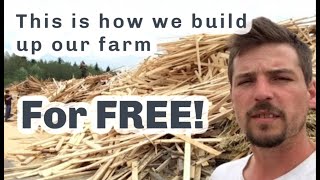
Richard Perkins salvages waste timber from a yard, then shows how he plants trees on his Swedish farm using mycorrhizal inoculant, bone meal, kelp, and molasses. He digs holes 80 cm deep or uses a keyline plough, and replaces trees killed by voles.
Questions this video answers
Approximately €30,000 over the last two years.
About 20 new fruit trees.
€0.40 (40 cents) each as little whips.
About 80 cm deep.
Chapters
This is why we've never invested in a sawmill. We're at a local timber yard, small timber company, but they produce a lot of waste and we love to come and get that waste and build lots of infrastructure with it. Now at times in the past couple of years we've come the wood has all been industrial pallets that have tipped over and they can't pick it up because it's mostly machine based operations here. And it's a bit jumbly today, unsorted, but this kind of dimension building timber is not cheap in Sweden and if you take the time to pick through, we can take, you know, a few thousand euros of timber out a day. We've taken probably €30,000 of timber in the last two years out of this place that would just get chipped and burnt to operate their kilns. So they're happy for us to come and utilize this resource to build a farm up, which is awesome. Here's an example of a pallet of, you know, some mashed up boards, but underneath there's nothing wrong with these and that's, you know, a lot of value of timber in a country like this. That's how we managed to build up infrastructure so cheaply. It's amazing. They let us take away wood. There's a lot of timber here. We've got projects like building rabbit hutches for pastured rabbits. We're starting up now as well as gobbledygo for the turkeys. So some beautiful dimension timber for building structures like that. This has basically been a really important resource for building up the farm on a very low shoestring budget. Today we are tree planting with the team and Timmy T, he's out the kitchen and we're putting in peach, apple, pear, plum, cherry. We're trying a couple of peach trees this year from Finland and excited to see how they go. We haven't been buying trees locally much and we're using root grow, which we always use for fruit tree establishments. Mycorrhizal fungal inoculant put into a clay, expanded clay compound which is known to increase the root zone by about 700 times in a few weeks. This is the brand here. We import this and we'll put about that per fruit tree and water it in with. We're going to put a bit of bone meal for root establishment. When you plant a young tree, you really want to focus on root development as opposed to vegetative growth. So we fill a bucket with water with some kelp extract and some molasses, sugar cane, molasses which acts as a sticky, sugary treat for the tree. We can soak that in there while we prepare the hole. And we're putting sugars and micro trace elements onto the roots of the tree and then putting mycorrhizal fungi right there. So it's creating this instant connection that is what supports and feeds the tree long term. And those mycorrhizal fungi are present in the environment anyway. But because we're working in these bacterial dominated pastures, it can take up to five years for the tree to form those associations naturally, whereas it takes about five minutes. When we come along, we're planting into an old hole where we lost a tree to voles. We had a major outbreak of voles this year. Same with mice. EXPLOSION in Sweden. It was very mild one winter and so we lost a bunch of trees that we're replacing now with mostly apple, pear, plum, cherry and a couple of these beautiful peach trees. Behind me is a great example of digging the right size hole. When planting trees, if you're doing it by hand on a small scale, it's really important to dig a big hole. These are two trees, tilias. There's Tilia platyphylus, there's Tilia cordatum, tilia large and small leafed lime. This was the first tree planted at the farm by a small French guy and he dug a small hole and the tree is doing fine. But then my friend Joe came, he's a big, strong Welsh guy and he dug a huge hole and the difference is remarkable. This was actually planted two months later, exactly the same size when it was put in. I can't reach my hand around that and the foliage is very quick to take off. This tree is a lot smaller and a lot less growth when you compare them side by side. Now, it can be surprising for people. When I used to do. I ran CSAS back when I was in my early 20s and we would plant blueberry in greenhouses and we were putting in 2 meter wide holes a meter deep for a small blueberry bush. But the yield and growth pay for itself. It's really important to get your holes dug deep enough and people always underestimate that. That's why we go to such extreme lengths in our field to prepare the ground with a deep ripping key lime plough. And all the mycorrhizal fungal inoculants we put on. It really pays off in a tree's establishment. You can plant an apple tree in the lawn and it survives, but surviving isn't thriving. Whilst it's good to dig a good hole by hand on a field scale, you need to use a machine. So we came along here with the keyline plough, about 80cm deep as a ripper. What I'm doing here is pulling away last year's bedding from the animals. And underneath that you will find a lot of mycorrhizal fungi. And this is really what we want in a young tree bed. You see it's holding the soil together and they're swapping sugar from the plant from minerals in the ground. And so all of our tree lanes are becoming little fungal islands. And we'll continually then add our bedding each year. Another fungi in this one. This is a plum. A few superficial weeds come back. We're trying to really protect young trees from drying out of roots and grasses out competing their surface feeding roots. But with this mulch on here, this is wood chip we put down a couple of years ago and a lot of fungi development. Worms are breaking this all down, all the bedding that we put back on and we'll just keep adding new bedding each year. But it's really fungi that support the tree systems. And so within this bacterial environment we're creating little lanes of fungal development. So a nice day today, planting out the trees. We've put in about 20 new fruit trees that replacing ones we lost from the voles. This year was very mild winter and there was a massive outbreak of rodents all across Sweden. We had big mouse problems in the barn where we keep chicken food and had to call in the these sort of insect rodent exterminators to set poison traps. And it's, you know, it was a major problem for us especially having chickens indoors. Wherever you have chickens indoors you get a lot of pests. But the voles went out of control in the fields and we've just been up on the neighbor's land where we're grazing the cows and sheep and you know, it's really out of control up there. There's just tremendous amount of voles. So what we've done is we think we got rid of them totally now we've basically collapsed all the tunnel systems which is a bit of a time consuming job. But there's no holes or nests left in the ground in the tunnels now that they can reinfest. We're hoping that they're okay now and that we can just fill back in any plantings. Some of the trees are more valuable. These are hazel bought as hedging plants for 40 cents as little whips each. So we've lost A bunch of them, but it's really no issue. I'll just plant them again one year. But losing fruit trees is a real shame for us because some of these were big trees, well established trees that were starting to fruit and it's always a pain to be kicked back a little. But you know, we have plenty of trees and well, hundreds of trees and so got to accept some losses. It's very normal with this kind of thing. Amelanche is flowering now. First pea nets are going up and we're growing a lot of beds of peas this year. We get great harvests over six to seven weeks and really collect the premium from the restaurants. And we eat a bunch ourselves too. Got insect netting on all the brassicas now and they were getting decimated by flea beetle last year. But everything's looking good so far with the brassicas and pack choys are doing great. They were totally destroyed last year. Beautiful Pak chois. This crop was totally lost last year and we got a good insect net this year that doesn't allow flea beetles through. They're in the ground already. But it seems like we're getting away with crops that were just totally decimated last year. Things have really started to grow with a few days of warm weather, a couple of days of warm weather. Some of the first mescaline beds just coming up, pretty good germination. So still fiddling with the six row cedar, but we're planting two beds at a time. So we'll be doing trials with biochar, compost, tea, biofertilizer and mycorrhizal fungi. And they're germinating much quicker now with a bit of warm weather. So there's two beds, we've got pairs of beds all over the place. This is the oak tree just outside our house, just coming into Leith down in the village, just a kilometer away and about 20 meters lower in elevation. They were in leaf about three weeks ago. It's amazing how quickly these will grow now. And they will have leaves wider than my hand in about 10 days or so, I guess. So the old strawberries are totally recovered and the new strawberries we've run out of root trainers. We've got small root trainers for vegetable here and so we're just trimming the roots off short and putting them in. We don't want to put them in the ground yet because it's one of the projects we scheduled with the interns and we want them to just grow on in protected space for a little while. So I've got hundreds of these to do before dinner. So to make this quick I've chopped the roots off and because they're so large rooted I'm just putting a little bit of potting soil on top of these. They're not going to be in here for long but they will start annual growth and we want to be able to transplant them without disturbing the roots at all. And then I just fold these up and they go into the book. So a quick job that looks after them for the temporary for the time being. Looking forward to a nice relaxed weekend. Thanks so much for watching our videos, taking the time to do that and leaving comments etc. We do actually read comments. We don't always have time to answer anything because we're super busy. So thanks for bearing with us on that. Thanks for watching. Don't forget to click subscribe, share the videos and you can find out a lot more on our website in our book and the links below. See you next time.
More from Richard


A review of short and intensive season on a mixed farm and restaurant/event space in Sweden






Alskade Kyckling Exploring complexities of poultry production in Sweden and what we stand for


