FROM CONVENTIONAL TO REGENERATIVE AG A humble farmers journey
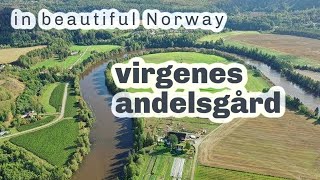
Richard Perkins visits a Norwegian farm transitioning from conventional to regenerative agriculture. The operation runs a 1-hectare no-dig market garden supplying 250 families through a CSA system, raises diverse livestock including pigs and pastured poultry, and shares practical details on bed prep, compost sourcing, and pricing for shares.
Questions this video answers
One hectare area behind the farm (~4,000 square meters of bed space).
250 families.
"A veggie share here cost 4, 400 Euro per year... It's around 150 kilos of veggies."
240 eggs for €100 per year.
About 35 kilos (mixed pork, lamb, cow) for around €500 per year.
Chapters
So I've been driving a lot and I'm down in the south of Norway now and I'm off to see Tor and Jelle who were both on our course last year. And those guys have got a mixed diverse farm with eggmobiles they've just put in this year and they've got cows and pigs and they just made a huge no dig market garden and we've been forecast 100 mil of rain. So I don't know how easy it's going to be to film. It's just stopped raining now. But super excited to see these two and what they're up to because this is a very different part of Norway. There's a lot more tree species and it's still very beautiful. But yeah, let's go see their farm.
Yeah. We are typical Norwichly farm. It's 20 hectare farmland, some forest around here. We are surrounded by a very good salmon river.
The reason I was excited to come here is it's a very diverse farm and I'm excited to hear about your journey transitioning from conventional agriculture to regenerative agriculture.
Yeah, I started 15 years ago here on my farm, took over after my parents. It was typical conventional farm and potato grain that things and I, I did it the same way for some years but I always had a thought to to go organically one day but to have have it organically we need animals in and we got a production of 503 range pigs. So that was when to get fun and a hell lot of work. I had to be a full time farmer and do this much more.
Little.
Bit conventional organically way. But we did also a lot of other production with grain, potatoes and yeah all these things was not easy to sell so we had to find other solutions because that was economically not good. We had two issues on the way to where we are now and that was there was some hole in my organic production and it was not the economically way was not the best. And if figure out that there's other ways to sell our production so we could go to a CSA model and also sell our overproduction to Reko who.
Is the local market that we've made other videos about. So direct relationship with customers through Facebook.
Yeah to do this change, it's a change for the future for us. But it's all these holes in typical organic farming. We put in a system like we have big flood issues here so we can do the grazing with the animals in a good way that we are more ready for floods. And for this dry summer we had this Year. And the market garden is put up with. Yeah. The compost way. And covering all this you're doing.
This is the market garden behind us. You're doing a big no dig setup. It's actually like 4,000 square meters. No.
Yeah. It's one hectare area behind us and.
4,000 square meters of bed space.
So we have 250 families who support us. We have also a meat package included in the, in the csa. So we are producing quite diversity with the pork and lamb and the cow meat. And we also have eggs from our now new chicken coop. Inspired by you. A veggie share here cost 4, 400 Euro per year. That's for 1. 1. That's like a one person share. It's around 150 kilos of veggies. We took a test on the. To compare it on the supermarkets here and the same price was €1600 for the same package. The veggie shares, we have around 250 shareholders now. We can see that maybe that's, that's. Yeah, it's a, it's a lot of job, but it's, it's. We have all these things people want and we also then because we are a little bit on the countryside, it's not close to the cities, so we do a weekly box delivery also in the system that makes us. So we can take the tops when the veggies coming too much out there, then we could just push veggies out. But we also have that classical Norwegian model that people come to the farm and harvest by themselves.
So that's like you call it Andels.
Andels.
Yeah. So like for viewers that's like a csa but in, in traditional Norwegian model, people generally will come to the farm and harvest.
Yeah.
For themselves.
Yeah.
And how is managing that? That must be a bit of a nightmare.
I think you have to not have been a gardener to have this system. Because if you have been a gardener and then you have 1, 200 families on your field that. Yeah, it's. You just have to, to focus on your job sometimes. And yeah, they do a lot of things wrong but it's okay.
It's fun though. It's got a lot of benefits and values to bring kids here and you've built all this facility here for people to sort of hang out and connect as a community and eat food and it's got those other benefits that are really important to your mission as well.
Yeah, it's a whole part of it. And of course I like. Now then we have that. We have the Reiko the market, the marketplace in town. So we can get the extra.
Use.
Of more wasting vegetables so we could sell it before it's too old and have a system that these things works together. That's the fine part of it. We also have the egg share. They got 240 eggs for €100 per year. And they have a meat share that's about 35 kilos. Diversity of pork, lamb, cow. And they get six package for a whole year. And that costs around €500. Yeah, it's quite a good model for us. We can get the meat quick out and it's easy to. To take it back from the butchery and just. Yeah, have a good system of it.
So this is a new feature on the farm?
Yeah, it's been out for 17 days now.
Okay. Nice design. Where'd you get the idea for that?
I don't know. It was the easiest way to build it. That was the case.
So.
That'S the inside. We could not find any steel mesh, so we've just used wooden slats, which in the end was quite nice because it made the coop more structurally sound. And then we used some old tree stumpless roosts and just used the nest boxes that we already had. We were thinking of making a very complicated flip system where we could harvest the eggs from the backside and we could close the nest boxes by pushing out the hens. But in the end, we didn't have the time for that. So we ended up with just putting in this one. And it works, actually surprisingly well. We get Yesterday we had 172 eggs and only six were dirty. The rest was just clayed. And it's currently 189ch. That's what we had left over. And then in November, we'll be getting some new chickens, probably, and we'll see where we put them first, either if it's in a tunnel or in the whole chicken house that we already have. Used the drill to lift the legs and drive it out.
Nice. How much did it cost to build?
Close to €5,000. I would say that's including the trailer, which was about €700. That's also including labor, but without labor, that's pretty much, I would say going down to two and a half, 3,000. So that's okay.
Yeah.
And I mean, the door was something we had laying around. The roofing was. The roosts were just cut from the forest. Also, we were thinking of just using the square beams, but I heard that for the chicken feet, it's not so perfect. So I figured, well, what the heck. I'll just get some wood from the forest.
That's what they evolved.
Yeah, exactly. And then the tractor we still had the only thing just have to do some minor repairs on it every once in a while.
So you guys have gone with white hens?
Yeah. The main reason for that was that we had some white hands from last year.
Because you have a laying barn up at the farm. Like an old conventional stuff?
Not exactly. They used to be out in the summer. In the winter they're inside. And this year we've been trialing with the chicken coop and we're actually considering getting the brown hens for next year.
It's worth for other people to know, like 90% of the eggs on the market are white in this part of the world. But actually customers prefer the brown eggs. Yeah, they want brown eggs. It's got more of a farm fresh.
More nutrition in it or something.
So how are you guys managing grazing?
Well, we made a grazing schedule at the beginning of the year and then by May, we kind of threw it out the door.
Because of the drought.
Yeah.
So these guys have had the same severe drought that we've had.
Yeah, we've actually had, I think, maybe a little bit more rain than you have.
You had something like 87 mil a year.
Yeah, over the year, until last Friday. And then we had the same amount in one weekend. So it's insane. It's been probably around four weeks with above 30 degrees weather. And even though we've been watering like crazy, we have a really big water drum and we've been just watering the grass fields basically because we had to run it to be able to run the market garden. At the same time, the pump is too big to just run the market garden. But yeah, so we've been kind of trying to manage. And the main thing is this year we could not buy any grass for the wintertime. So that's been pretty much 90% of the focus has been, okay, how can we get the most amount of grass poles for the winter? It's really interesting to see how much these chickens spread out the manure because we could see in the control lane, we could see that the manure piles were still there, completely intact. Of course there was insect activity. Been there holes in it and everything, but still it was a lot of capping with the manure and with the chicken. Where the chickens have been, you can see, you know, holes in the dirt and stuff like that from the scratching. But there's no concentrated cow manure anymore. So in my mind that would mean that, for instance, now you can see this spotty grazing here. And that's all because of the. Well, mainly because of the cow shit that's underneath here.
They're avoiding coming back.
Yeah, they're avoiding eating their own feces, which I can understand. I mean, I would try to do that as well. But then if the chickens spread it out, then it's very little amounts everywhere.
Better for the grass.
Better for the grass, better for the cows, and also better for the chickens because they get extra protein. So it's really awesome. On the other side, you can see here there was winterrug last year, so that's winter rye. And besides, that was potatoes last year. So we put that in grass as soon as we could.
Because this is a floodplain, right. The river is running just around the.
Bank here, coming down from there and then running all the way around by the tree line and then going all the way around behind you, all the way back to the sea there.
And you were saying it flooded out here.
Like, don't hold me to that. But I think it's.
It.
It was flooded up to basically that little red house over there. So that's. What is it, like half a kilometer maybe?
You were saying all the pig pens were wash enough down the stream.
Yeah. And I think that was four, four or five years ago. Four years ago, I think.
So this. You were saying you've had as much rain in the last weekend as you've had all summer since spring, basically.
Yeah. So it's been kind of crazy.
The road's not normally like that.
No, normally it's sandy and dusty and you. You don't want to stop because then the whole car fills with dust. But yeah, it's quite extreme at the moment. But the nice thing, it's really good for the grass. And we've been kind of amazed because of the hot weather. I think most of the routes have gone down quite deep. And now, I mean, you can drive with the tractor over the. Even after 87 millimeters of rain in a weekend, or close to that, at least.
How did you guys, like, I know that you. You came here as a woofer, right? Yeah. And then like, did you just make.
A job for himself or like he quit his job.
Okay.
Yeah. And he come here and they make me on. On the track because I'm. I'm quite in the box. I have this conventional background and all people around me, they get in this good.
And you're kind of coming like you're really excited about the whole regenerative Ag piece that you've been kind of bringing like you expressed it like you've been putting the accelerator on and then you apply the brakes at times.
Yeah, yeah. Pretty big there.
But it's rubbish. Compost.
No.
Well, yes and no. Like they have good compost.
We've just been talking about compost manufacture and they got a whole facility right next to them. Yeah. But it's like made of a bark of trees. We met when you came to the farm for. It was like a no dig market garden course. Yeah, yeah.
The first two day intensive with match last year.
And I could see then like you two obviously have like. I could see there's this complementary relationship where you bring different skills. Like you're really into number crunching and spreadsheets and you hate that stuff. So it feels like a really like chance happening that you sort of come together and it's amazing. You work in that.
He also. He asked a lot of questions that I don't like uncomfortable questions. Yeah. He pushing that and yeah it was. Was probably not that stupid question after all. Yeah.
The year before I quit my job as an engineer and then they asked me to stay until March. So that's what I did. And then in March I was. I have a. One of my best friends distance on the Fuhrer, which is 32 kilometers here from. From here. And I wanted to learn about farming. I applied to ag school in the Netherlands and went to Brazil, got the curriculum and found that that was not for me the courses that they were teaching. I was thinking I can learn much more when I'm actually doing it and possibly getting paid to do so.
And actually having some responsibility.
Yeah. As well. So I want to start my own farm. At least that's the plan now. And if you're in ag school and you're working on somebody else's farm with no responsibility, then it's gonna take a lot longer for you to be ready to start your own company.
You're a very humble man to allow other people to come in and just tell you about changing the whole structure. Like it's a big it. You can see. I hope people appreciate also like why it can be so like you're on the open end of the spectrum.
Right.
But then the average farmer is so deeply patent into ways of doing things that they will literally just keep damaging the soil till there is no other option just because of the pride.
But it takes time to change that and but when you.
It's good to.
If I was alone here and tried to figure out all these Things it will take me 10 more years probably. But that's.
So that's been key is having someone to bounce ideas with.
It's been a big job to make the beds this spring.
Wow, this is epic. So you've got 4,000 square meters of beds. So you guys have been hauling a lot of compost now we have 50.
Meters bed, 150 of them. I think it was around 3,000 beer barrels with compost.
And you moved that by hand?
By hand. All of them. 32 degrees weather. It was in a heat wave all day.
So what did you learn from that?
Get a machine to do it for you.
Something that can straddle the beds?
Yeah, exactly. Like we have 40 centimeter pathways and that's fine. But if you go for 45 centimeter pathways, then a lot of like now we can only fit one tractor in here that has the same wheelbase as the, the pathways. But if you take 45, then you can fit 20. So that's, you know, little things. Do some research before you make your final decision design.
So this is, I mean, it's a lot of beds now and you're doing €100,000 of bed sales.
It's.
That's a lot, but you're not. How many people are working, like how many hours is going into it?
Because of the weather, we, we didn't get much help this year. So we, we nearly did it by ourselves. There was some renting help, but.
And in the, in the beginning of the year, a lot of the, like a couple of the shareholders, we were csa, they helped out with making the beds. So the people that always show up, they were really awesome and instrumental in getting all the beds done. I mean, that's just.
That's a pretty epic achievement for just the two of you mainly working on it. And I know you're busy doing other animal chores also. Can you, like, this is all with the. Can you show us the compost down in the beds? Like you. You're not totally happy with it now, but it's.
No, it's here.
This is.
Of course there's some wood chips on it, but I mean, you can see there's a lot of little stones in it. So that's one thing that I'm not really happy about. And it has a lot of sticks and woody material, but apart from that, like the, the roughness is okay. It's just. It's good as a, as a cover, but it's not decomposed enough to really be of really good nutritional value.
It's a Good layer here.
Yeah. But, like, this is the soil that we're dealing with. And it's.
It's very sandy here.
Yeah, it's Sahara.
But that will start to incorporate pretty quickly. You'll get nice.
Yeah. Actually, there's some beds there that have been turned over twice or three times, and they're actually, you know, ready to receive another layer of compost. So you can really see that in the weeds as well. It's quite amazing how much it suppresses the thin.
The good spacing between the beets was big troubles in the heat, especially this one. We tried three times.
Four, actually.
Ah, you mean, like this bed has got big patches? Like, that's from the heat wave we had? Yeah, yeah, yeah.
But you've got a lot of beautiful crops.
We seeded this. We seeded four times, and now actually, the seeds are coming up. Like you can see there. That's the seed that's been seeded in May this year.
The others are already finished, so no digs. Like, quite a big departure from your conventional background, I guess. And you like tractors and big machines also?
No, it's good to get rid of them, but it took a time, and it felt really bad to not do plowing. That will be next year's nightmare. But no, I understand it now, how it works. I'm very happy with that choice. But the good part now is next spring, we are ready so much earlier. And that it's okay.
We had two weeks extra is critical.
In the short going season.
Exactly.
What's this? We're just moving the camera here. And you see they've got blocks on each of these beds. This is 12, three. Like, what's the sort of bed setup you've got here? You've got different blocks that you're rotating or.
Yeah, so basically, one block has one family on it, and every block has its own sprinkler system. And that makes it really easy for people to understand. Okay, hey, this. This is where you get the salad. This is where you get the beets. This is where you get the beans. That. That's the mice.
And so it's partly for your planning and partly for communicating with customers who are coming here.
And also because of organic certification, you have to have a crop rotation. So it makes everything really, really easy.
There's also a little sign on each. On each bed. So, like, here you can pick a little bit. The yellow thing, if it's green, you can pick a lot. So.
So people as your communication tool. Yeah, let's have a look over here. So green means, like, this is ready. Take as much as you want.
No, blue is. Take as much as you want.
Blue is actually extra. You can pick extra.
Okay, so everyone can have as many courgettes as they want.
Exactly.
That's a really neat idea, guys. I like that.
This is an example of your harvesting, how you use it, how you store it. So healthy benefits.
This is like info that you put in boxes.
No, this will stand on. On each bed because people are walking out here and.
And so all the different crops have different info boards.
Yeah, yeah.
Sweet potato.
He has hand, hand, hand, draw it every once.
And that's awesome.
That will be very nice in the garden.
So you guys have got. You're pumping out of the river, right? Yeah, for irrigating. So despite the drought, which has obviously affected crops in some ways, but you've had enough water, which is nice.
Yeah, no, the drought has not affected crops. For us. It's mainly the heat, I think, like the bolting. Bolting and stunting of crops. So every block has its own semi permanent sprinkler system. So it's basically just sticks with the little, little spreaders. They open up and they just sprout out water. And it's about 8 meter radius. And the plan for next year, we have all the automation so we can make it completely automated.
It's gonna be computer controlled, right?
Yeah, computer controlled.
That's awesome.
Yeah, that's gonna save two hours a day easily.
In the height of production.
Yeah, in the height of production. In the height of the summer. Things that haven't been working is some specific carrots.
We have a felt behind here.
Like half the field is just either the heat or carrot flies that have infested it. And it just is terrible. But then again, other things have worked really, really well.
You've got to see one thing here because that's typical Yella. We start in the spring and he put insane much funicle on one place. And I said, this doesn't work, this doesn't work. But it did work.
You've got some really broad insect netting like that. Must be pretty efficient. Now I've seen a lot of people starting to do this where they're netting entire blocks rather than.
Yeah, we were thinking of doing it for every hoop. But first off, these stupid nails, they don't work. At least not with these long beds. Because if it just blows up a little, then the whole thing goes. So if you've been using sandbags, which is much easier, also much faster if you want to take it off, you just lift off the Sandbags. And that's it.
You don't make holes in them.
No. And it's really efficient to. To have these big nettings. So that's. That's really awesome. And we already had them, so, you know, why cut them up in little pieces when that's just going to generate more work and. Yeah.
What's been, like, your best successes crop wise? Like, what have you been super proud of?
Onions. I think onions were like, that big. That was quite awesome. And.
I think we have the celery route.
Celery.
This year. We struggle it.
Yeah, that's the celeriac. They're actually getting quite nice. And also, like the parsnip. No, that's pastnak. So parsnips are also quite nice. Like this bed. We've seeded it twice and we were thinking it was terrible, but it's actually pretty darn okay. So that's. That's also really nice. Stuff like that. Yeah.
We have a test with sweet potato. Nobody has sweet potato in Norway. It's too far up. But we have 1,000 plants, and I think it's pretty okay. Yeah.
Yeah.
When do you think they'll be harvestable?
We could start harvesting now in two, three weeks.
Like, something I always really try and emphasize for people starting up with no dig is to really put enough material down to block out weeds. Like, do you feel like you did that successfully?
The biggest issue is the part where the bed ends and the pathway begins. And we put down the wood chips from pine needle. From needle trees. Pine trees. And that's actually worked surprisingly well.
What we need. Yeah.
Yeah.
But we.
We need to put on more. So that. That was one of the big things.
I mean, you've spent a lot of time this year building up the beds in the beginning, but how much time have you spent weeding? Like, do you see the significance of the difference between.
Well, we. We've weeded the same on this block as we did on the salad block. Like, this block was potatoes and no compost.
So this is just a tillage potato plot.
We never do more potatoes on the garden.
And I mean, it's completely overgrown with weeds. And when you do the same practices with the salads, which was the first block, we didn't do any more weeding there. Actually, probably less.
I think I have 80% less weeds with the system.
And that's the first year. Yeah.
And we, of course, was watering a lot, so we cannot say it was the special summer. Who was the. The main factor of that. But I can see there's much less weeding.
Oh, here's the tool shed that hasn't been built yet, right?
Yeah, exactly.
What's the key tools? Like? Tell us about your bed prep methods. Like the orders that you would use things and which tools you found critical.
I think that these two are the most important for bed prep, actually.
Basically, you're using a broad fork and a rake to prep the bed surface.
Yeah. So you broadfork the bed, then you rake it down. If you need to add a little bit extra compost, you add a little bit extra compost, you rake that down again, use the bed roller either with the pins or without the pins.
So the pins there are for setting your holes.
Yeah, exactly. To just. And they're really easy to remove and to. To clip in. And it's like a dibbler, but super fast. So that's. That's really great for. If you want to mark a row out and you want to have stuff straight, which makes it much easier to use the, the bio disc or what's that? So it's a cutter and a hiller. So it just.
That's a terratech one.
Yeah. Yeah, exactly. So you just roll it around and it cuts on the side of the plant and then it just hills up dirt on the row. So it just does a two in one job.
We will probably use it more with the hook.
Yeah. Like use it as a. Just an oscillating hoe.
Yeah.
And then you've got the three row jang. But you've actually put another. So you got four.
Yeah.
On the three seeder, Jane.
Yeah, exactly. So it's really nice to have an extra cedar, extra hopper in there because you can actually. If you only have a six row cedar, then either you have to do four, like 1, 2 times up, 2 times down to do 12 rows or you have to do. What's that?
It's compost.
Okay. Or you have to do just six rows and if you have four in there, you can do eight rows and it's just fine. So that's really, really nice. And you can also just take one up and not use it. So you still have the three row jang.
You're saying it. It does bunch up with compost a bit by having the fourth.
But that's basically because of the rough structure of the compost. And also if it's wet, if the compost is a little bit wet. So I did some seeding yesterday and that's terrible. So you have to get a dry, relatively fine bed for the. For the jank. But It's, I mean for precision and ease of use. It's so nice because you can just, you know, pop it out. You take out all the seeds and just seeds. So it's like, you know, using a baby stroller. Everybody can do it.
Where would you have bought it from if you knew?
Nice question. This is actually from two bad cats in the US And I prefer this one over the Teratech one because it has double row instead of single row. I think the Teratech one has only a single row, but I'm not really sure. And it is a little bit more flexible. So it's really awesome. If you have a bed of transplanted lettuce or you just do one pass up, one pass down and you've weeded it. You know, it doesn't work for rhizomonous roots, but that's something you have to take out anyways. That's pretty, pretty awesome tool. I really like it. So it makes it weeding much faster.
So that's basically your whole market garden toolkit.
Yeah. Then you also have the flame weeder which is, you know the fun part.
Now is that everything stirs the bed. Yeah, yeah. You glad you went to 75 centimeter beds in the end?
No, it just makes sense.
It makes sense. Tell us about the flame weeder. Like you're using that.
Well, yeah, if we have the.
I think we just should use it harder. It's no problem.
Yeah.
And it's quite an amazing tool.
Yeah. It's so easy to just. If you have a seated bed or you can do stale seat bedding or anything like that. It's just so easy just to walk one times up one time down with the flame weeder and you're done.
But we had the onions last year and you felt very bad when you burning the onions. But it's so easy with onions and just burn them all down nearly. But they coming super after.
Do you find it sets fire to the compost?
Very little. I was thinking it was gonna do much more. I was really afraid about the compost. But it's just very like maybe two or three little things that are burned and in my mind that's not an issue. If you water before you, you burn. That also makes a big difference because you're going to burn the weeds anyways. So it doesn't really matter if you, if you wet the compost down.
We've been talking about like you're doing potato in a conventional way that goes into boxes and forms like a staple basis of the box that has quite a lot of value. More than just selling potato on the market, but also you make grain for milling to sell flour.
Yeah.
And that's. These are both practices that you understand they're soil depleting, but they are anchor stones still for the economy at this point.
Yeah.
So the idea of exploring pastured boilers or whatever is to see if you can really step out of that into a fully.
It's no problem to sell it. It's all about our time.
If we.
If you want to be one person more on the farm or something, it's.
Got to drive a salary that will cover more than one enterprise in time inputs. Like if someone could do boilers at.
A scale, then I think we should have. I don't want to put up one thing just to cover one person's work. We have to have some extra out to it.
That's what we were saying with the boilers. Right. If one person. We were just playing with stats on the board. If one person did 3,000 birds a year, you've got this lovely benefit where you could have them butchered off site, which means you basically move and feed them and the income from that pays a full time salary. That full time person is going to spend one hour a day with boiling. So they could actually be running the.
Layers, the cows, pigs in that position. We could forget the grain and the potato because that's. I don't want to have the small chicken chickens on the flood area. That's. If you need a quick recreation, then that's a stress.
So I'm on the ferry and just about to get off in Denmark. I'm on my way to go and see Anders and Katrine next. But just reflecting back on this trip, it's been so humbling to see Torre's attitude and just the openness and calm manner with which he's facing his major transitions. I mean to let go of your, you know, everything you've built up and know about things to really receive a totally different education, re education and to be open to the input of people who, you know, also learning as a way of just like springboarding ideas and innovating. It was really humbling for me. And I think that's just incredible. And it's interesting to know that these guys are going to possibly. I'm not sure if this is true, but I think they might open up to one or maybe two apprentices next year who want to learn about quality raised pork and grass fed beef and pastured poultry. And they're going to start up pastured broilers it sounds like they have a way that they can butcher them off site and have them packaged, etc. For a few euros a bird. So it's a much better deal for them than to make some kind of processing facility. As well as this funding they've just got for building an on site food processing room for, you know, utilizing the produce from the market garden. So it's a really exciting time to be there and there's a lot of knowledge there to share and glean from. And I think Tory is so humble you wouldn't know. It doesn't come across in the video. He's got 15 years of farming experience having grown up on a farm, so I think there's a lot that you could benefit from joining them. I'm not sure if it's true that they are offering that, but you can stay in touch with them through the links below. But yeah, it was really humbling and it's amazing what they've achieved with limited resources. I'm very impressed and it's a beautiful place. So I hope you enjoyed the video. Thanks so much for showing us around, folks. Yeah, it's epic work. I hope you get some rest time this winter and replan. And yeah, I look forward to seeing where next season goes too. Thanks so much everyone for watching and you can find out a whole bunch.
More on what Facebook, Facebook, Virgines Farm and Instagram Jardarike.
We'll put down the links below. For those of you that don't speak Norwegian, you, thanks so much for your time folks and we'll see you in the next video.
More from Richard


A review of short and intensive season on a mixed farm and restaurant/event space in Sweden






Alskade Kyckling Exploring complexities of poultry production in Sweden and what we stand for


