HOW TO RUN A PROFITABLE PASTURED POULTRY BUSINESS S5 ● E40
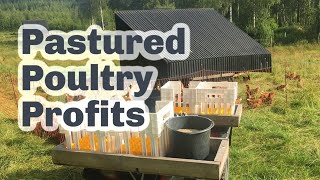
YouTube video (Richard Perkins, May 31 2018) demonstrating day-to-day operations of a small pastured-layer enterprise using mobile 'eggmobiles'. Covers egg collection routines, on-field pre-sorting and packing, nest-box management, mobile waterer and electric-net details, basic recordkeeping and certification requirements, production ramp-up, and rationale for integrating layers with cattle for pasture health and nutrient cycling.
Questions this video answers
About 500–600 eggs per day, expected to double to ~1,150 per day.
Up to about 1,800 volts (varies with grass conditions).
Approximately €1,500 each.
Between 8 and 16 °C.
About four weeks (they organize stock by date; customers receive eggs up to 3–4 weeks old).
Chapters
Sam.
So the cows are back in front of the chickens, which is great. They're doing a great job of taking the tops off and then trampling a load. And that trampling means that the chickens don't have so much impact. The egg collection machine is working very nicely right now because of the building up of eggs. We only need three crates and we can bring up feed on here too. When the eggs reach maximum production, we'll be having two crates per pen. So six of these egg collection crates. So we'll have to deal with feedback with a feed trailer probably. But really loving this march around the pastures now. It's just amazing to see how resilient the pastures become in this high heat and drought conditions. Happy animals. This is how farming should look. Mixed species diversity, multi layered farming and happy, healthy animals respected in their physiology and plants utilized to maximize the fleeting photons as they come flying through in our short production season. So I've just been paying some attention to these mobile waterers. They're all a little bit different, running off the reels you see up at the fence there. But just checking all the plumbing and sealing up some, you get some perishing on these hoses. I mean there's hundred meters of gas hose that would drag around the field every day, but you see working good. And it's a very easeful setup that we have 30 to 45 minutes to move one to two eggmobiles and feed the others. And then egg collection and feeding takes about 30 minutes to do all three twice a day. And that's closing the nest boxes. Now when I've done the second egg collection, right now we're only up at about 5, 600 eggs. That will double up to about 1150 every day, but it's pretty easy. And then at nighttime, that's the downside of this chore is that in these summer months you've got to put a light inside up at about 9 o' clock now and then come back about 11 right now to close them up.
So you have to be awake to do that, but it's no work really.
And then egg packing is much faster now. So I'm going to show you inside the egg pack how my packing and record keeping goes in there. See some of the birds enjoying a little dust bath.
In the sun.
It's the way they keep their feathers clean for mites. And you see as they get up, they'll shake themselves off in the cloud of dust.
Happy birds.
Ideally we would run the cows, you know, four days ahead of when the poultry are Coming, but due to the broilers and the layers and the layers restriction to the three main fields we have doesn't always work out like that. Right now we're just clearing the ground to make it more accessible to put these nets up. But it's. Yeah, the chickens still go through the cow manure. There was a cow pat here this morning. There's a bit of one left here, but there's no insect life. There are some proteins in cow manure that they can get benefit from, but it's really when the fly maggots reaching their peak. That's optimal. About 96 hours in our experience in this time. But it's. Yeah, that's the way it goes. Overall, the principle is still the same. And animals doing work for us, essentially building soil, building beautiful pastures. Yeah, beautiful. To have such intensity in this short sequence behind each other and in such a small space.
Amazing how much life you can fit.
In a small space and how life.
Responds to other life. Someone asked why we close the nest boxes.
Well, we have to keep eggs clean and so what I'm doing in the egg mobile is I'm actually sorting eggs in the field and I'm putting them the right way up in their containers so that I can pack them just by flipping all the clean ones straight into cardboard cartons. But you need to make sure that you keep the nest boxes clean. We have roll away system with ast mat, so you want to close that as soon as the birds have finished laying. That's about 3:30pm for us. So that's when I come up and do the second egg collection and third feeding for the day. And that's when all the eggs have been laid. So I close up the boxes so they're not leaving manure in the boxes. That's really important. It's a critical part of the foundation of having clean eggs. And then once a week we will take out the nest mats and exchange them and wash them well. And if they need it more often, we'll do it more often. You just got to keep everything clean, tidy and it's good to go. Energizer is working well. So working with our electric fence, we use two chicken nets, 50 meters each for each egg mobile. Now it's about perfect for the two days stay that they stay in each place. And yeah, energizer is working well. It puts out up to about 1800 volts. Depends on the grass, obviously. If it's really long grass, then it starts shorting out, but it's enough to keep the birds in and to keep predators out. And we haven't had any issue with predators at all.
So it's working really good. So here in the egg packery, this is where I sort and pack the eggs and keep records of which eggmobiles are laying how many eggs. Now, some important things to consider. We don't use any machinery for packing. It's all done manually and you get very fast at it. Now this year with the new egg crate system, it's even faster. And to do 1100 eggs, not going to take me very long. So this is the eggs today from EggMobile1. And so you can see we've got 3, 6, it's 180, 190 something eggs this day, that these are all already pre selected as good eggs for sale to the customer. Any eggs that are under the eggmobile and you can't reach them easily, we'll just come back and count them when we move the eggmobile. And any that are cracked in the eggmobile we chuck through the floor and leave on the ground, the hens eat them. Some people are concerned that that will encourage hens to peck their own eggs. But we have rollaway nests and so they're not pecking their own eggs. And I think that's a bit of a street myth too. I'm not convinced by that at all. So what we've done is already selected the clean eggs out. Any dirty eggs we already want to select out in the field because we end up eating them. You're not allowed to use water to clean eggs. I know a lot of you in the States or Canada probably you have to clean eggs and they use chlorine and all kinds of nasty stuff. But here you're not allowed to. You can use sandpaper if you want to take off like a little mark. But basically I'm selecting out clean eggs and I'm storing them in the containers. So in the egg mobile I'm laying these out, closing the nest boxes start to collect and I'm storing them pointy side up. Now when the eggs are very new, you can't always tell which side is the pointy side because they're just laying eggs for the very first time. It doesn't always come out like a normal egg, but the reason you want to do that is that ultimately you want to store the eggs round side up because the air pocket in an egg is up here and the egg will store a lot longer. Now you can measure the freshness of an egg with one of these lights and you'll see as an egg gets older, you'll start to see a bigger air sac there. But if I store it pointy side down, it will store longer and the yolk will stay in the middle, it'll be less likely to break and it also receives the stamp. So when you have a certified egg packery, you get a stamp with your production number. And this is basically a rubber stamp that fits very nicely over the end of the egg. Now it's very fast to use, I'll show you that in a moment. But what I want to do is put all my eggs in the eggmobile pointy side up. Because then what I'm doing, this top tray doesn't have a full tray of 30, but then I've got all my egg cartons here. All I need to do to pack these eggs is put a tray on top, flip it over, and because I've already pre sorted them in the field, they're already ready to go and so then I can just stamp them up.
So just to show you how the.
Stamper works, you basically have all your eggs set and they're all facing the right way up. And it's as quick as this, you just bounce over each egg. And part of our inspection for the egg packery is to check how well the stamp comes out. And as long as 80% odd are marked, well that's fine. So those eggs are done. So I'll do six trays at a time and then these get packed back into these crates and we store them and transport them in these crates too. So they head into the back room over here. But it's pretty simple process and it's, you know, it feels a bit overwhelming or a bit scary when you got to have a certified egg packry. But it's pretty simple stuff. You know, you just need to have a clean space that's between 8 and 16 degrees Celsius. It's got to have a mouse trap and some vents and not have insects in there. And you've got to wear clean shoes and keep the space clean and tidy. You know, basic protocol stuff. But that's, you know, anyone can achieve that. In our case, got to have running water for a hot and cold tap, which we get away with with just a hose pipe. So pretty simple stuff, anyone can do that. And by having that egg stamp, the all important egg stamp, it means that you can then sell to restaurants and shops. Whereas if you want to sell eggs to private customers, you can do that without a certified egg packery. So you can do that anyhow you like. But to have a production number, you must have been inspected and your egg packery must have been inspected. But this wagon was swapped for four chickens with some neighbours. So it's cost us very little to start up. We got three egg mobiles now that you can build for €1500, including the Nest boxes. Obviously you need something to move them, but that could be a pickup truck or an old car running around the field or an atv. Really low cost startup. And you know, this is producing a lot of value of eggs a year and really building our soil. If you watch our videos regularly, I've been talking about how the abundance of our grass and how the rapid increase in nutrient cycling is largely down to the layers. More than anything else, their ecosystem services make up for the lower profitability than something like pastured broilers, because they're giving all these extra, additional ecosystem services, which is amazing. So in terms of record keeping, there's not much records going on yet because they're just coming into leh. We're still at half the production that it will sit at till November, December time. But basically I have a sheet here, flock one, flock two, flock three for each month. So it's already got the dates here and I've got already printed out all the sheets for the whole year. And then I write the number of hens, so if I lose any hens, I record that here. So I've got a total of the hens in the eggmobiles and that means I can work out the percentage of lay very easily. We've still got all the birds, so I just haven't written anything here. And then we categorize our eggs. A, B and C A eggs are perfect eggs, good for sale to private customers or restaurants. B eggs are eggs that are, you know, dirty or have a slight crack, but it hasn't broken the sort of membrane, so it's still good to eat. So we eat them ourselves. And then sea eggs are eggs that are broken in the field or eggs that were cracked and not edible. So I've just got a bucket underneath me, I can chuck them in and then that allows me to record the total eggs. And because some get laid or broken in the field, each time we move the egg mobile, we will add that number to the day's eggs, just so we have a running record of all eggs laid. Then we write if we've cleaned the nests and any comments and your initials to see who was dealing with the eggmobiles at that time. So if something unusual happens, we'll make comments. But you'll see. I predicted the first egg on the 20th and we had five eggs that day in Eggmobile 1. And it went 5, 15, 23, 46, 69, 103, 135, 158, 184, 215, 235. So pretty simple records. You don't need so much more than that. The reason it's important to keep this kind of record a is for your regulation. You need to show how many eggs are being produced and the kilos, that's how they measure it here. So you've got to show the kilos of eggs produced per year as part of the egg packery certification. But you also want it so that when you go to change over a flock or increase numbers of hens that you have a good idea when eggs will come and at what rate so that you can arrange pre sales or you know, line up customers for the eggs. So eggs is a great one. You know, to get the same turnover from a market garden takes I reckon three hours for every hour put into the egg enterprise. But the main downside, as I've said in other videos, is that this is a seven day a week, 365 day a year enterprise. That could be different if you had a couple of months break in the winter when sales are typically lower, but it's still seven days a week in the winter. Obviously if the birds are in like in our climate, they have to be, then it's, you know, that obviously cuts down. A lot of times you're not moving things but it's yeah, seven days a week. You can't easily just disappear. You've got to deal with eggs every single day. But I'm okay with that. I like rhythm and structure. Where we live so far north in the winter you've got to light the fire and keep the fire going every day. That's just part of life. So it's, it's not something that bothers me. But if, you know, if you don't want that full time everyday commitment, then don't have livestock. That's the simple answer. Livestock's a full commitment in that way. So with this new style of egg packing where I'm not handling every single egg necessarily because I've already pre handled it in the field, which doesn't actually.
Take very long at all.
It really takes no time to do eggs in a way that I thought it might. Last year we were collecting and every other year we've been collecting eggs in a big basket with all the eggs together in a basket a Bit like this, and that works fine, but it does make a mess if one happens to break in there, like a weak shelled egg. So eggs are obviously very strong, but if there's a weak shelled egg, then it makes a right old mess on a bunch of eggs. And it's also very heavy to carry around. So these new boxes we have are for six trays of eggs. So that's 180 eggs. And that's gonna weigh like, you know, less than 10 kilos. So anyone can pick that up and easily move it around. And plus, you get that extra storage and you get much better transportability. You know, there's no worries to transport them. And it's amazing what you learn about eggs from handing so many eggs. I'm just throwing away some soft shelled ones and I can see which ones are going to have soft shells. Actually, when you've handled hundreds of thousands of eggs, you learn amazing things about eggs that, you know, a consumer would never know because they're just handing a couple of eggs for breakfast, as it were. But, yeah, you learn a lot by handling eggs and, and how they test for little micro cracks in the industry is to use sonic testing. A little thing will hit an egg 16 times a second and can hear the, you know, robot can hear if there's a fissure in the eggshell, but you can literally feel that when you handle so many eggs, your body becomes, you know, your fingers become so sensitive that you can detect micro cracks. I just knew this one had a crack, but actually I picked it up too hard. So I've got a bucket here that I drop them down in and they can go to the pigs or whatever. So there's no wastage in that process. But it's, yeah, it's quite amazing. It's like anything, if you work with it for many years, you learn so much about little micro things that you couldn't really ever explain to anyone. But it's quite fascinating and it's. But yeah, I love it. I love to do this process. It's like the poultry slaughter and packing. You like, you know, I'm really finishing a product ready for the customer and I like to get into. I always love to see, like, how efficiently I can do jobs and what's the optimum placement of things. And, you know, what's my routine going to be to do this daily job really fast. Technically, you're meant to candle every single egg, so you're meant to look through every single egg for cracks. That's, you know, I will take random samplings personally. And I will, you know, I can feel if there's micro cracks, as I said, and that's from experience, and when they come to regulate the egg crackery, they will actually look at the eggs and if there are too many eggs that have been passed is okay, that actually have cracks, then you get your egg pack really shut down. You get your stamp taken away. And when they came to inspect, they didn't find a single egg with micro cracks or anything, which is, you know, testament to the knowledge that you build up in your fingers when you do this so regularly. So it's, you know, 30, 40 minutes to pack probably a thousand eggs, which is you don't need a machine when you can do it like that. You just need the tension and that willingness to always find the optimal routine to do things efficiently. So all done, 650 eggs about today.
And that's about half will be going.
Up to 1150 eggs in probably the next week or so.
But I just put the date on there. I use masking tape. Just really simply.
Eggs have about four weeks shelf life and so we just stacked them up with the date on and then we just organized with how we stack these throughout the week. We've just had all the rest of the eggs cooking out on delivery today. So these are the only eggs in the packery. And you know, we'll typically be getting rid of them within a week. And then the customer has up to three weeks or up to four weeks, but they won't be older than a week while they're here. Actually, interestingly, I was talking about storing the eggs, but you want to have eggs that if you want boiled eggs, you actually want eggs that are a little bit older. As the egg gets older, if you candle it and put light through it, you'll see the air sack gets bigger and that makes it much easier to peel. Our eggs are so fresh that they don't make the best boiled eggs. And that's true of any fresh egg because you can't peel it so well. There's no separation between the shell and the membrane. So if you want good fresh pastured eggs, then great for scrambling, great for baking, great for whatever. But if you want to have good boiled eggs and let your eggs get a bit old at first because they make a much more pleasurable peel. So that's it from me today, folks. I'm gonna clock off. But yeah, I hope that's interesting to see that process a bit. And yeah, good eggs can't beat pastured eggs. And I think, yeah, it's been amazing to see how many people we've inspired to get into Paris layers in eggmobiles. There's quite a few in Sweden now and a bunch in Scandinavia and Europe that we've had direct influence on, which is fantastic. It's such a great enterprise for a small farm. It's one of the best in terms of the overall holistic picture of it. Not just the financial aspect. There's things you can do that are more profitable, but for the ecosystem, services and integration with other enterprises and to have a baseline product that people eat on a day to day basis. It sets up a relationship for customers who will buy other things too. So I think it's a great one. And yeah, I hope some of you enjoy reading about that and making small farms work. Our book, which you can find in the links below and we have our online training link there where you can find out about a lot of detail for all these things, all aspects of the farm. It's the most comprehensive online training out there for small farm design and business setup. So check that out if you're interested and can't make it to any of the trainings at the farm, but you can find out a whole bunch in the links below. Thanks so much for watching. We'll see you in the next video.
More from Richard


A review of short and intensive season on a mixed farm and restaurant/event space in Sweden






Alskade Kyckling Exploring complexities of poultry production in Sweden and what we stand for


