Richard Perkins is clearing his farm for winter after five intense years, processing thousands of broilers and scaling back to just cows. He's building three new projects: a €100,000 fund for regenerative farms, an 80-hour online course, and a tools shop. Winter is for rest and redesign.
Questions this video answers
September 3, 2018
Mavic Pro 2 (1 inch sensor, Hasselblad camera)
€100,000 pot to invest in up to four farms
End of October (leaving only the cows)
Chapters
So some of you are wondering where I've been. I haven't been posting videos much recently and I've been pretty busy doing other stuff and taking some time off the farm. And I'll be taking a bunch more time off the farm in the coming weeks actually. So I thought I'd just make a quick update of what's going through my mind right now and what's going on in my life and what's changing and things I'm thinking about.
So this is the very last bird to pass through the slaughtery this year of one of the turkeys. We left four turkeys growing on to about eight kilos.
See one going through here.
But we have officially finished broiler processing. We have done a few thousand birds.
This year, a bit less than last year.
And now the only poultry remaining at.
The farm are the layers still working their way down. Top field grass is growing again. But this is now going to be the last major clean down of the year. So we're going to do a really nice job to leave it in good.
Condition, ready for next year. So it's goodbye to the drone. The Mavic Pro served us very well and we've made a lot of great footage with it. But it's off to a new owner. Hello, Mavic Pro 2. It's got a 1 inch sensor, Hasselblad camera. So super excited to get my new.
Drone and be able to shoot some.
Brilliant footage with it which I think.
Is gonna be super nice and good.
Deal for someone else. So it's perfect. Look at this little plum tree.
See if they taste anything though. Wow. Are they good? It tastes like crumbs. Very good crumbs. That's amazing.
Just harvested five kilos of Mizuna. Look at that.
And we'll go into. No flea beetles. No flea beetles. Yeah, it's like the radish. No flea beetles.
Ah, flea beetle season is maybe over. Beautiful. No flea beetles, no insect pressure. Very nice, very nice. All the insects are dead kale bunches.
For our veg box today.
Beautiful.
Nice colors. Yeah.
Harvested apples, apples, onions and tomatoes. Lots of green tomatoes. Are they going for chutney?
Yeah, they will be nice.
We're trying to ripen some of them and the rest will be chutney. Beautiful.
So it's been a pretty tough year for me. It's been tough on our relationship with Johanna to put so much energy and attention into this farm over the last five years. It's been been a mammoth task to both manage the farm full time, but also to manage People and education and it's been really intense ride and it's been amazing. I think. You know, I always said that we would leverage these first few years to give juicy learning opportunities to people who are committing their lives to this thing. And I think we've seen some amazing outcomes from that. And this year particularly I'm seeing there are so many places around Europe and particularly in Scandinavia that we're influencing and I actually want to take time off and go and see some of those projects and I've got a few lined up in Denmark and Norway to go and visit and make videos for you lot. Because I think there's some amazing startups happening, people starting out in really smart ways with low budgets and really doing amazing work. And I just had a little trip out now to the coast in Norway.
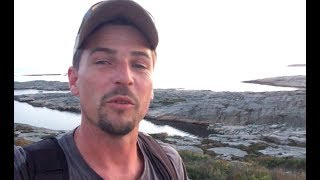
So I've come to Norway to do a little bit of fishing on the coast after mackerel. It's beautiful here. It's a very dramatic landscape. It's amazing freshwater pools, some of them like huge swimming pools hidden in the rocks. A little bit slippery in places. You've got to learn the texture of the rocks for what's slippy, what's not. But I've already had a good start on mackerel and I'm going to fish all evening, see what else there is in here. I got here early in the morning and I've been watching seals all day, which has been rather magical. And a lot of seabirds. There's some ducks that have a breeding ground here and this is where seals raise their pups. But really enjoying this vista. And it was raining all morning, but now in the evening it's got quite nice and sunny. My eyes are not so good and bright light from not wearing sunglasses. Working in the tropics for many years so I have trouble with any amount of sunlight really. But I think I'm gonna head myself onto the point over here, see if there's any mackerel ready. Well, I don't know if the camera.
Can pick up the hues in the.
Sky, but it's incredibly beautiful right now. And I've actually come back.
I've been down fishing off the bridge.
They called the sea trout. It's a little bit small but it got damaged in the take up so I had to take it. But they're one of the most delicious sea fish going. It's in brackish water where the fresh water meets the salt water.
But I've actually come with all my.
Sleeping gear, just a sleeping bag basically. And I think I'm camping out because it's high tide right now and it's high tide again at 8 in the morning. That's the best time for mackerel fishing, which is what seems to be the cards here. Where I've been today, I've just had a few mackerel and I had a bunch jump off using a feather rig. And that's unusual. You don't usually lose them. I think I momentarily relaxed the pressure, but I wanted to see if there's any last takers tonight. And then I'm gonna sleep out here. I haven't slept out under the stars for too long, really. And so I'm going to do that now. And then I'm gonna have a dip in the morning in the beautiful fresh water pools that are at the top of the cliffs and that's gonna be awesome to show you. And then fish again in the morning and fish as much of the day as I can. And I'm heading back to the farm for the nighttime. So, yeah, exciting times. Really peaceful and amazing. I've seen like two people today and that's perfect for me.
It was so nice for me to just totally drop everything for a couple of days. I went to the cliffs and slept out on the rocks and caught mackerel and ate them on the rocks and just, you know, getting back to some of my youthful pleasures, which are just being in nature silently. And it's kind of funny, I live this dichotomy in my life where actually I spend most of my time very quiet, very insular, very connected to the world around me in a nature way. And I'm very happy spending time alone quietly. But then I have this really public Persona in my work and standing in front of people nattering all day. And it's funny because I actually prefer to spend my time quietly and, you know, quite insular in many ways. So it was really nice to get away. And I'm planning a trip now to go and see Anders in Denmark, who's set up a farm with Katrine, his partner, who they were both interns here at our farm and they're doing amazing work. And one of their team was just up here on the no Dig Market Gardening course. And then there's a great farm in Norway. One of the girls that was on the no Dig Market Garden course is just rocking it now. She's tilling, but I'll let her off with that. She's been heavily inspired by Jean Martin, took his online course and is doing an amazing job. And they have a Big farm that's very famous for cheese production. It's her partner's family farm. So I really want to go and see them and just record a bit of what's going on there. And they're really challenging. I think they have two months frost free, so pretty amazing. And then another, another big farm that's got market garden set up this year in Norway. I'm not sure if I've managed to get hold of them yet, but they're also doing pastured eggmobiles. They've got an egg mobile they've mimicked for mouse and they're doing pigs and I think beef as well. So I'd like to go and see them too. So I've got that coming up in the next couple of weeks. Aside from that, the big update is that I'm thinking to totally clear out the farm of livestock this winter to really facilitate rest. And we've just been hard at it for five years now. Just like brains fully on 20 hours a day, basically seven days a week. And it's been, I mean, we've done a lot more than we needed to do. We've been trying to benefit a lot of other people through this process and I think we've achieved that through our book, through YouTube, through people coming to the farm. And it's amazing to see the ripples of that now spreading. And it's, you know, I loved it, I've totally loved it. But it's, it's come at a cost like energy wise and emotionally and in our relationship. And so I really want to clear out now to address my context which is changing and our family context, which is changing. And it's, you know, we've got a young child and I have a child that lives abroad. And it's time to really put focus on, you know, really redesigning what we want to do and where we're going with this. And part of the redesign I talked about a lot last summer was about buying me more time and creating less pressure and less risk on ourselves because the way we've set up this business is very high risk. We do things that you wouldn't do if it's just a family farm. And we do a whole bunch more than we need to do just to meet our own needs. And that's been very strategic to create the sort of learning opportunities that we felt have been missing in particularly Europe. But you know, obviously further afield judging by participants coming here from all corners of the world. But that's started to take its toll. I get tired of each year and get by on pretty limited sleep. And yeah, it's, it's wearing down now. I'm getting older. I'm not old by any stretch, but I feel it in a different way than I did a few years ago. I felt totally invincible until maybe 32, 33. And it's funny, looking at some of my friends, we all started our careers at a similar age and then we're also all aging in the same way that it's, you know, we're getting older and starting to feel things that you didn't feel a couple of years ago. I guess everyone goes through that. But yeah, I'm feeling that and looking forward to a bit of time out. And really I see that to address our context and to really bring about the sort of dramatic changes to the structure of the business that we're looking for, we need to have a prolonged period of time out to just, you know, really brainstorm and let things settle and come back to them and go over it again and again. And that's my thinking. So we're going to cull the hens, all the pigs will be gone because we're cutting the forest to let that regenerate into mixed broadleaf trees. And so basically I want to shut down end of October and there'll be nothing here but the cows. And that's something I'm really looking forward to actually after five years of just non stop daily seven days a week, you know, grind, it's been perfect and amazing, but I think it's time to really invest in where we go next. And I've also got some big projects coming up, so we've put out this design competition with Ecosia that's going to not take up a huge amount of time, but it's something I want to dedicate time to. And if you're not familiar with that, then you should look back at some of the videos. Recently we're generating €100,000 pot to invest in up to four farms to get more regenerative agriculture started. And it's a really exciting thing. But on the side of that, I'm also trying to get my online training together in a subscription basis to basically put out the most comprehensive and information dense training of its kind out there for a price point that literally anyone on this planet can afford. It'll have like a video only tier and then a slightly higher tier monthly fee where it goes out. And you also have peer to peer support. It has monthly questions and answers with myself, it has downloadable spreadsheets and all the bits that you could possibly need. There's over 80 hours of footage now and that's something I want to get out very soon. But it's very complicated because to, to do E commerce in Europe, every country has different VAT rules. So in order, you know, you'd think it's quite simple to have this digital platform and just be able to put it out there that people can sign up. But to make that integrate with your bookkeeping, that you don't have a massive stress on the bookkeeping end is actually very challenging and there's very few solutions that exist that are tailor made. So it's a lot of back end work. I'm spending a lot of time in the office trying to find solutions to get this out. And it means that people will have direct access to this training. We haven't set the pricing yet, but it's basically going to be the cheapest possible way that anyone could have access to such a large amount of resources. It's going to be thousands of euros of training material and spreadsheets and downloads for pocket money, essentially monthly. And whilst it will take a few months to go through that as a full time study, if you're really cash strapped, you have access to all the information straight away. So there's no excuse really, there's no way anyone can turn around and say, hey, well, I can't afford it. I want this to be totally affordable to anyone, anywhere. And I just see that there's potential to bring about my learning objectives and benefit as many people as possible in a way that really extends the work I can do here at the farm. And I think having people at the farm and really getting them engaged with their senses is by far the most productive way to produce new farmers, innovative young farmers. But I just feel like some of the projects that we're putting on now and this tool company, it just means we can really spread the reach of the work we do. And so I'm really excited for that and I need time to put into those things. So there'll be updates coming soon about the online training. That's going to be just awesome to be able to invite anyone anywhere to have access immediately to all that material. And it's as soon as you sign up, the whole training is there. So I also have been stimulated by the fact there's a whole bunch of online trainings coming out now and they're really expensive and a lot of people I meet are like, yeah, I would love to do that, but there's no way I'm going to invest that money in that. And so I wanted to really respond to that kind of general feeling because a lot of people going into this just don't have that money to invest. So I wanted to just put all of our educational material out at a super low monthly fee where, you know, anyone can afford it. But then the tool company is coming on and that's a whole big project in itself. I mean, we've got Caterpillar tunnels already up for sale, we've got cool bots arrived today, we've got greens harvesters and all the gear coming, and we've got paperbot transplanters and all the accessories for that. We've got little pruning scissors for tomato harvesting, We've got all kinds of different stuff. Everything on the Farmerstools.com will be here over the winter ready for sale, ready for next spring. So you can count on it being available if it's on the website already. But there's a whole bunch of back end stuff in setting it up just to be able to have live delivery prices and all this stuff, it requires all these apps and all these integrations to make sure the back end works. So there's another reason why I want to clear out the farm a bit over the winter is just to get that set up nicely so that a lot of people around Europe can benefit from that. Because there's just this massive hole in the marketplace for all of the right tools and there's no one company that just sells all the right gear. And there's certain gear that I think is essential for like, market gardening and poultry and that you just can't buy in Europe. So that's been my intention with setting this up is I don't actually want to run an online shop. I'm hoping if that business grows, I can offload it somehow, because ultimately I'm too busy to be doing that for long. But it's something I just see needed to happen. And it's a cool sort of business because I'm not trying to make loads of money doing it. So I'm setting the price point in a way that's, you know, cheaper than you can get these things on your own if you are importing them and paying customs and the shipping. And so the margins are just set in a way that everyone benefits. And that's how I think business should be done, really. It's like the way it's worked for me always in, you know, the entrepreneurial things I've done. The pace has slowed down at the farm now and we've finished all the broilers and the yurts are coming down and just the last seedings going into the caterpillar tunnels in the market gardens now. And yeah, life is slowing down with the season and taking more rest. It gets dark much earlier. Hens in bed before nine now. So life is slowing down and everyone's taking a bit more time out, which is great to it's big changes and lots on the cars. I don't quite know how we're going to move on from here. What I do see is I want to bring back the longer term education that we've done. I actually missed that a lot this year and whilst that has some things that need to change, it's been an exhausting process. I see that people coming here on a learning basis need to have more of my time on the ground, but that needs to be paid for in an educational context. It's quite a high risk strategy running a farm with people learning. It costs a lot of money every year to the tune of 10 to €20,000 in loss of production through errors that are made from people learning. But I just feel like those learning opportunities are essential but it's got to be factored into the economy somehow because it ultimately just comes out of our pockets currently. And yeah, I see that one of the limits of our business is that we're basically training people to leave. So my whole intention with, with having people here longer term it's very challenging because most of the people coming here are coming from outside Sweden and to move here and be part of the business longer term is, you know, a big commitment that I've never wanted to force. I think that's got to happen organically over time for that to work well. But it's an, it's a really interesting thing to, you know, all the people that I think, yeah, I would employ you, which is quite a limited number, to be totally honest. It's, you know, there aren't so many people that have the skills, dedication and can work consistently at a high speed throughout the short summer. It's half a year and those that really are on that are the exact sort of people that go out and start their own project and smash it. Which is really what makes this joyful for me and is what my learning objectives are. But it's, it does make it challenging to engage people longer term and that's one weak point of our business that I think needs to change. So right now I'm considering scaling down a bit and we're producing way more than we need to. And paying salaries out of that. And so I'm considering how to restructure and possibly scaling down is a good thing now and bringing back our internship program, but in a very different way. I've had loads of inquiries this year about internships with us, and I see that need for longer term, close mentorship on the ground where people get to spend some, you know, really good hours on the theoretical and design side as well as the business and planning side that we just don't have time for in the season when it's full on farming and, you know, scaling up production still. So it's been a big process this year, letting go of my pride, a bit of always wanting to scale this up to see what's the maximum we can push this place to. And I think we're still at half production really. But yeah, seeing the drought this year, you know, makes me like, oh, a little less high risk to try and push that. I've always felt we should push it because we're a demonstration site and someone's got to do that to see where those limits are. But. But it comes at what cost and it's come at, you know, with stress and high risk. And so I think I've got over that finally and I'm prepared to sort of mellow it down a bit and just scale down a bit more. And we did less broilers this year and started the smokery and we did more hens, more eggs this year. But I think, yeah, we're at a point where we might just scale down a little bit and make it easier for ourselves and put back some of the focus on education. Because I see certainly this year as we see more and more farms setting up, influence by us, that it's been so valuable and people reflect that back to me that, yeah, I feel like I want to explore a totally new way to do internship programs that is less stress and time commitment for myself. So I can still increase the amount of time I spend off the farm and with family. And so that's gonna take a lot of planning and that's gonna take the rest of the winter, I think. But that's something that's on my mind right now. So thanks so much for watching as always. I really appreciate your comments and feedback. And don't forget to hit subscribe if you haven't already and share this on social media. It helps to grow the channel and expose more people to regenerative agriculture. Thanks so much, folks. See you in the next video.
More from Richard


A review of short and intensive season on a mixed farm and restaurant/event space in Sweden






Alskade Kyckling Exploring complexities of poultry production in Sweden and what we stand for


