INCREDIBLE COUPLE BUILD PROFITABLE MARKET GARDEN
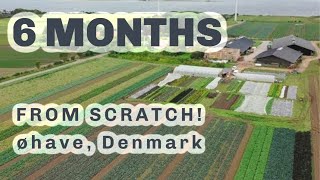
This is a YouTube interview (Richard Perkins) with Anders and Katrine, a couple who started a market garden in Denmark. Six months into their first season they converted rented land into a functioning market garden (approx. 2,500 m2 under production within a 1 ha rented parcel), erected second‑hand polytunnels and a nursery, set up a washing/packing station and chiller, and began selling to Saturday markets, restaurants and a large local school. They faced heavy wet soils at the start, a late spring and a summer drought with pest pressure, but exceeded early sales targets, plan to hire at the ‘magic’ three-person team size next year, and are using detailed Excel budgeting to monitor finances and plan growth.
Questions this video answers
Six months (first season).
About 2,500 square meters in production (within a rented 1 hectare plot).
One tunnel described as ~500 square meters; a 75 m original tunnel referenced with a 28 m section in use here.
All tunnels acquired for €1,500.
Middle of March (with snow outside).
Chapters
The road leads ever on and on a lot of miles. So I crossed over from Norway into Denmark last night on the ferry to save a bunch of driving. It's extremely windy and heavy rains and I camped out on the windswept beach on the rooftop tent which tested it to the extreme, but it was awesome. And I'm a few hours further south now and off to see Anderson Katrine and how it's going. Six months into their startup now, you might remember they were with our friend Mikael setting his farm up last year so they have some good experience in market gardening startups. And once they left our farm, Anders went off to the Rodale Institute in America and then Neversink Farm. And he's one of the most capable, efficient, hard working people I've ever met. If anyone can do it, these two can and they're an amazing couple and so I'm super excited to go see how their market garden startups doing. So it's really amazing to be here. Really good to see you guys. These guys have. They're six months in now of their first season here on 2,500 square meters and they're exceeding their targets. So we want to hear all about it.
This is our first season. We worked with Mikkel at Stutthofte last year and found an opportunity to get started down here at Fun.
So last year when we worked on Suthaftersjorbo together with Mikkel we had this open farm day where two young farmers came and they talked about this place, this place here I'm south M Thun where where this big farm were looking for young people to rent some land to invite young people in. And then we went here and had some meetings and looked at the place and we took the opportunity to rent the land. So when we got here in February it was just like a bare piece of land and was very, very, very wet. So we needed to build all infrastructure so road and water, electricity and we took down some polytunnels from different places and put them up here. So it was like just a bare ground and we had to build everything and starting with the road just to get like big trucks there.
Our neighbor is a very, very big vegetable grower doing 300 hectares, no tillage with GPS and everything. As professional as they can. They focus on approximately two lorries coming every day to pick up produce and they wanted some young people to come in and close the gap between them and the local market. We moved here and I worked helping cutting cabbage all winter at the big farm. Started to plan this part out here.
We live 10km away, and we thought this was a very nice beginning. We didn't have the finance to buy a big farm here, so we rent one hectare land and then. Yeah, it was just a very easy setup.
Yeah.
Very, very easy way to get started.
Yeah. The schedule of the startup was we aimed to be at the market in June and have our produce ready. But the very beginning, this field was so wet that we couldn't get in the ground. And even the fall prior to this was so wet that they couldn't harvest all the potatoes in the field. So half of our market garden has potato weeds. And it has been troublesome, but it's going fine. And from March to June, we were setting up, starting the production. But it has been really tough to both cover infrastructure and getting your market garden up and going. It's like the very, very busy spring combined with setting up a cooling room. I remember turning on the cooling room the day before. We needed it the first day. Like, this is too tight. This is too tight.
So it's basically just you two.
Yep.
Running the farm.
Yeah.
That's pretty crazy.
When we got here and it was soaking wet, the field has a small tilt towards where we're standing, so there was tons of water. We had to wait for the water to dry up before we could dug out. Dug out the road and hit the subsoil and fill it up with gravel, get it ready. And as we were putting in the road, we're waiting for permission to set up our tunnels.
So this is back in March this year. I see. So you took down a bunch of tunnels and then bought them here and put them up.
Yeah, yeah. And we started this one, which is our nursery, and we just needed some area where we could be dry and get started. And the spring came very late. So this is one of our unplanned expenses was to make these heating tables for our nursery. These heating tables are inspired by. Migul did the same setup, but I saw them first time at Never Sync where Connor had made similar setup. So we have electric power from the windmills down there, heating the water, heating the things. And we cover with double layer of. No, we call it fleece.
Yeah. So. So because we didn't. We don't have any buildings at all, we needed somewhere to start our seedlings. So the plan was actually not to have this tunnel, but only the big one and then have seedlings in there. But we just needed to get started. So this was just like, okay, let's take this down and put it up and make heat tables so we can get started with the tomatoes and stuff.
So you. You were seeding in here before there was like anything here?
Yeah. Yes.
There was snow outside.
Yeah.
When was.
Was March. Middle of March, maybe.
Yeah.
And there's still snow on the ground? Yeah.
Outside this was. We set this up as the first one because it's the smaller one. And we thought, okay, we can do this before having permissions. But as soon as we got our permission, we set up the doubles band over here, which we took down ourselves. And the original one was 75 meters long. And here's only like 28 or something. The rest of the. Of the tunnel is over there, so we have enough structure for a second one the same size. And this is 500 square meters.
That's a lot of job. Wow. So you were putting this up, the two of you.
Did you get any help with this?
Yeah, we had some. Your family actually, at your birthday? It was my birthday, so we had a lot of people here at his birthday. And we put all the plastic up while having brunch.
We invited for brunch, but put on the plastic instead. And it was windy, so it was very, very difficult.
But it was actually super easy to put up the structure. It took very short time.
Yeah.
Did you. You got it secondhand, obviously. Was it pretty cheap?
Yeah, we got all thousands square meters for 1500 Euros.
Wow.
Yeah.
That's awesome. Did it have plastic or you bought.
You bought plastic?
Yeah. Great. So that gives you. Are you mainly focused on tomato and cucumbers? Oh, listen, like automated drip?
Yeah. Oh, yeah.
I don't know what you call it in English, but we have. It's. The water is from a well on the farm, so it has lots of ochre. So the timer got stuck and had been running all night. So we had like water standing on the inside of the plastic. It was a swimming pool and had water running to the road out there. It was such a mess. And we have a water meter and we could see we had spent.
You're paying for water?
Yeah, we had spent a few thousand on water that night. That's.
So you had the pants in the ground?
Yeah, yeah, but they made it. The beef steak has been the best this year. Really, really good. But there's not enough natural ventilation in here. So this summer it was too hot and got tons of sunburn and bad ripening.
You guys were basically making beds, finding customers, putting up tunnels, putting up caterpillar tunnels all at the same time. That must have been stressful. Did you get much sleep in the beginning?
No.
It has been a very, very busy spring. And not just busy, but stressful and difficult and tiring.
And it was a heat wave here also heat wave here too.
And you will see when you are only two people and four hands, it's difficult to both build and make beds and put the plants in the soil while you are like. It's difficult to do all in the same time.
And building and making bigger projects, you often need four hands. So whenever you needed some help, you had to interrupt some other work going on. While if you were just three people, two people could take care of something and the other one could be uninterrupted, which is extremely more efficient than just interrupting all the time.
So you were working with Mikkel and you were talking. We were just having coffee. And you were saying three was a really perfect number because of that. Is that the main reason behind that?
Yeah, I think like in the spring when we're setting everything up, we were really missing being three people because last year Mikkel and Anna were building a lot while I could like take care of the plants. But we didn't have that luxury this year. So it's pretty like, annoying because I was like putting planes in and then somebody just to hold a thing. So it was really. Yeah, it's a really good thing, I think, to be. To be free people.
So that's something for next year. You're ahead of your sales targets. And you look like you projected that you can have an employee next year and. And get the magic number three. So this is your packing. Washing. Packing station. And that's the last thing you've actually built, right?
Yeah.
Tell us a bit about it because it looks pretty nicely made actually for workflow.
Yeah.
You're the master of the washing station.
Me?
Yeah.
But my. My father is a carpenter, so I talked a lot with him on the phone while building this. We got some good help from some friends. The vegetables comes in here and then they go like in the water or on this. This is the dirty table. Washing table. And then we either like just rinse it with the blue and the blue spray. And then we put it on this. This is the drying table with the fans. And then we pack it over here and then we put it in the. In the cooler.
You got a cool box.
Absolutely.
That's a pretty big old chiller for a cool butt.
Yeah, it's the National Bank's old cool butts for the. Black.
The ink.
The ink.
The. This is what it's a. It's an old chiller for the ink from the bank.
National bank of Denmark. Okay.
How did you get hold of that?
Somebody had taken it down and got it cheap.
So you've got quite a big old unit in there.
Yeah. I don't remember the BTU, but it's probably like 12,000. I would. Yeah, I would get some biggest I could find and pretty easy to set up. Really easy. It was one day job.
So you've got. It's a really nice, sweet little compact setup you've got with everything where you want it right in the middle of the yard.
When I'm here alone, it's. It's fine. But when we are two people, three people, it's too much.
Gets a bit cluttered.
Yeah.
So you're actually expanding out that way for all your crates and things.
Yeah.
And then it's. What's neat is the road. You put in your delivery vans right here.
Yeah, yeah, exactly.
That's awesome.
It's just small, minor changes. Like when you have this so close to the door, you need to open quite a lot to get in. So if the door was just moved one piece, you didn't need to open so much to get in. And it's easy to understand why farms have barns and spaces because this is both washing station and storage and you just need tons of room. So just expand, expand. And we need more like more second bathtub.
Second bathtub and more drying table. That's definitely the bottleneck. The bottleneck.
Yeah. When we were setting it up, we got too busy harvesting and selling that we didn't manage to get deploying. And as you can see, you don't have a wall over here. We need doors as well. But it's like we're getting into the catch up phase of this year.
So the season, the production season is really slowing down now. And you now can take care of some of the maintenance jobs.
Yeah. And we will do our last market in September because our selection is just narrowing down and I would rather just sell a few products for restaurants than having a lousy market stand.
So you're just for viewers. The typical season runs.
I would say if it wasn't a startup year, you should be started in May.
Start selling in May.
Yeah. Just to be a little easier on yourself. I didn't. I would say June is fine. Like no need to be early on your first season.
So how. How are you guys selling all your products?
We're selling at the market every Saturday and then we have some restaurants in the city and we have a big, big, big school called high school where there comes a lot of like grown up people and stay, sleep at the school and there's 1,000 people for every meal.
So you've got some amazing customer base already in the, in your very first year.
Yeah, yeah.
And it's very, very special because it's super, super local. So people live nearby. We live in the same people in the same town as we sell vegetables in. So we know people, we know people on the street and people know us and they come to visit us and we can come home to our customers. It's very, very close relationship we have with our customers and it's super, super strong.
That's awesome. You're saying your longest Delivery route is.
What, 66km going out, coming back.
Perfect. So what percentage of your sales in the market and what going to restaurants or schools or whatever?
The market is our second largest customer. But I think it's in total, it must be something like one fourth of the sales.
So how did you get. So, I mean that's a pretty amazing achievement to sort it all that out in your first year whilst setting up and growing Vegas and having a drought. Like how did you, how did you secure those sales?
I think it's a similar experience to last year when we were helping Mikko that when we picked up the phone and called in the meetings, people like, thank you for calling, we need your vegetables. And it's the same experience. People really want something different, local and they, I, I experienced, they enjoy the relationship and the variation. We had a chef calling saying, you don't need to tell me what you bring. I love looking through your boxes. We had another chef saying that every time he went into his cooler, he couldn't stop himself snacking from the salad mix. These are the products they wait for all week to get in the driveway. I'm still like, every time I'm turning up to the this kitchen, they already out the door before I'm out the car. It's like they want our produce and it's just lovely to be able to support the customers in such a way.
And we have found some customers who also have the same visions as we have. So we have a very, very good collaboration.
Yeah, yeah, yeah, yeah.
That's awesome.
And they have big kitchens, so that's very good.
The Club Cefo is growing. You've got quite a diversity already.
Yeah. Salad mix, kale mix, tomato, cucumber, squash, a lot of kale.
Radishes, herbs, carrots, all the like, all the normal market gardening. Crops. Microgreens. Yeah.
I think next year we want to focus more for the big schools, more on salads and fresh greens. Kale mix, a lot more of that and more. Less heavy stuff.
You guys have the same rubbish compost with stones and sticks in.
Yes, absolutely.
Who's going to start a compost business?
Not me. Not me. We get it for free.
We need somebody.
Yeah, we could need someone.
So what are you actually going to do with all this kale?
I don't know, but this is. This could be some kind of cooperation between the two businesses. These are, of course, set out with a tractor and brought in plants from Holland. And we could find ways of having some crops with tractor service and some in the market garden.
Because you guys are actually renting a whole hectare, so you actually own half of the field behind you as well, right?
Yeah, yeah, yeah. Our own market garden is not taking up all our land, and we can expand as much as we want in both directions, so we can make a huge production here. But there might be crops which could be interesting to have in larger scale because we have lorries coming picking up vegetables already. So if we could add some to that, that would be cool. But this year we haven't. We said this year we would just focus on our own business, our own crops, and see if we should plan more for next year. Here in Denmark, we have Ostene, which is a very large organic online retail. They do, like, meal boxes, they do weekly vegetable boxes. And for a small farmer, it's sometimes hard to have them come and pick your produce. But they are already here to pick up from our neighbor. So if we could do at least a thousand units of anything, if that follows their menu, we can be a part of it. So a KLS here could be an example of delivering a thousand units during the fall or having zucchinis or. Yeah, a crop which is manageable in a larger scale with. With the infrastructure which we had and maybe a golf cart. I don't. It was bare ground, so we had it harrowed. So it was just easy and ready. But we are not fast enough to have it covered with compost. It was drying up and this soil is extremely heavy. Really, really heavy. So it kept drying up and getting super hard. And yeah, we tried to work the. The beds with compost and keep the layers settled and go. No, we don't have any. We don't have a BCS yet, but I'm not sure I'm gonna. What do you call it? Not the power harrow, but the rototill I'm not so satisfied about rototilling. So we keep the beds and keep them covered and yeah, try to have them in production.
So we simply just started with like marking the beds and just taking down the weeds, taking away the weeds that were there. And then you took the wheelbarrow and we just take 10 wheelbarrows of compost on each bed and just rake them. So basically it was just like one bed at a time. Just going through the fields.
Have you had like seven or seven or six lorries of compost coming here? All put out by wheelbarrow.
And then how are you folks watering with this?
There's a. There's some drills on the walls on the farm. So we buy water from the bigger farm and then we use these ones. We have three, three of these which.
Can cover like eight beds.
Eight beds at the time.
Are your like normal weed strategies? Like what do you. What are you doing for that?
I think we have had a very good. Just recently it hasn't been so bad. We can cultivate a lot with our collinear hose, which I enjoy a lot. And we add new compost which is weed free to the beds. So we weed out tons of stuff and have a very nice clean bed. And it goes pretty well for the most part. And now we've been opening up the bad beds again and we didn't anticipate to do either a false seed bed or blind flaming or anything. So it's troublesome. Again we have tons of seaweed still but I believe we are ready for next season and battle it a little better.
A lot of fall seed beds next.
Yeah, yeah, yeah, yeah.
So using taps talk to.
And I'm gonna put like more bed preparation into the production plan right now. We have just been counting. How many beds do we need next week, next year? I want to know three weeks prior. How many beds do I need in three weeks? And have them ready for a fall seed bait. Water it in, burn it at the right time and even start just more. Yeah. Just on a regular basis. Put down a piece of glass on your direct seeded new crop and have it blind flame before they sprout.
So you don't have any like fencing around the farm. Like you don't have deer and stuff. But do you what's it like with pests and diseases here?
So we have a lot of rabbits. I don't know if you call it rabbits. Yeah.
Like wild hares.
Yeah. And at the time we decided to put a fence up, the soil was too, too hard because of the the heat this summer. So we. We couldn't either, though we wanted to put a fence up, we couldn't. So we have put up a lot of insect net just to make sure the hairs doesn't go in the salads. So we have. Yeah, there's a lot of hairs and we have. Because of the heat, we have been troubling with a lot of pests. Pests this year. And I think also because this is just an open field, there's no woods very close, there's no windbreaks. Windbreaks. So I had had the feeling when it was super, super hot here that we were just very. What do you call it, sensible for pests? Because it was just. There was no.
It's just a bare field. Yeah. Like we had had maybe a few hectares of potatoes on this side, a few hectares of cabbage and many hectares of cabbage on the other side over there. And that's just all the way around. So it's not that we have big ecosystems pumping just next to us, at least not farmed ecosystems. So it's not so diverse where we are at right now. But yeah, we want to set up windbreaks for sure.
I think more bushes and more flowers and more. Yeah, more diversity next year will help the insects pressure. Yeah.
You folks didn't have loads of money to invest in tools. I'm curious what you brought with you and what you've invested in.
We had the bike, which is really good for bringing out residue and when we weed out a bit, we stuck all the.
This is like. Is it a Christiana bike?
It is.
So they make them in Copenhagen. Yeah, it's awesome.
It's an old, old bike from Copenhagen.
And when I harvest, I put all the boxes I can fit in it to it and bring it in here.
This goes.
So you're packing into these crates off the field?
Yeah, we've been borrowing some of these. These are. This is maybe not the best shot because this is not our logo right there. I love the collinear hoe, which is super quick cultivating and yeah, it's my favorite tool.
Very accurate tool.
Yeah.
What's that sort of curvy one stuck in the wall?
Oh, that's the Cobra from Johnny's. It's for the hard hand hand weeding. This is really good to get at the root weeds. If you have any quick rice. I like the wheel harrow a lot. But before I'm testing and like, this is a single wheel setup and I'm using it for the paths. I would like to try the more Advanced before buying one. I haven't, I haven't tried it yet but I really enjoy this one. We of course have the. The big rake for marking the bed. We have the plastic rake for regrowth. When we have been cutting leaves, I'm always just raking whatever is left in the field in the bed out for better regrowth. And I believe I very much want to invest like buy the small tine weeder from it's Terratech who has it. Yeah, the 75 centimeter tine weeder. We of course have a greens harvester which we just. Yeah, it's lovely when you have the best growth in a bed and go out and green harvested it. Wow, that's quick. We have a yang cedar and you want to buy the small sentinel, right?
Yeah, the small salad mix and kale mix. Because I need to go a lot back and forth on this one and I just enjoyed it. We used it last year, the Sapna.
Yeah, just a four road, a simple one. We want to try if we can make a electric salad spinner for next year. Just to have the washing station speeding up. That's really drying the leaves is the very is the bottleneck either on the table. If it's bad weather it takes forever. But if we can spin it a bit more we would be a lot quicker. And then having another bathtub here would give us opportunity to have a very dirty one and a cleaner one and just mix it and have it changed and just to speed up things a bit. I like this one for market. It fits on the table and you never miss a lip. I said the same thing last year. It's still smart.
It seems like it's keeping the cool. Also when you open the lid it seems like it's cooler down here.
Absolutely.
What would you consider investing in if you had the cash right now?
A golf cart. I would really like to have a golf cart just for transport. Even the bike has some kind of cargo load. It's not enough. I really would like to bring around with more stuff more easily and have a quicker harvest. Like we used it as a pickup. So when we harvested at Never Sync people just left the boxes at the end of the bed and the golf cart just went around, picked everything up, brought it to the washing station. So not everyone had to get in. Just kept harvesting. It's super helpful and you can carry heavy stuff.
Yeah. So now we are starting to relax more. It's getting. It's fall now and the vegetable production are getting down. So we are starting to breathe again. And we're making plans for next year. So we're planning on making the washing station bigger and making some roll up sites in the smaller tunnel to get more air in and to make a nice place where we can actually sit and have lunch and not just sit around the field. And then we are a lot of people on the market and our customers are very, very interested in getting out here and getting more integrated in the farm in a way. So we're talking a lot about making it more social so getting more people out here and work our customers and the restaurants that we work with really wants to make pop up restaurants here that where we can invite our customers. So we want to make it like get more people out here and make it more social and connected to the city because we are so close to the city now and it just makes, it's just pulling in that way it makes sense for us to make it more social next year.
Yeah, yeah, yeah and it's a good point. I feel very optimistic like going through this very very difficult drought and spring and stressful startup. It's ah. I love the feeling of thinking about next year because everything is set up. We just need to catch up with minor adjustments and starting to prepare a good season, a longer season and getting more preparation done and being ready. And we now we have some kind of. Yeah, we know that there are customers, we know the market is very steady and we have already good restaurants and people who want to use our produce even more and have more of their crops here. It's very good and we have all.
The buildings so we can just like look forward to have a startup where we can focus on the plants and not build while we are maintaining. So it's just I'm looking very much forward to the spring next year and.
Yeah trusting that this season went so well and if we plan better we can hire help for next year and have a better spring and have a better season and make it more social which gives me a feeling of meaning and yeah, community based farming. I really enjoy it.
I know that one of your big passions and skills is working a lot with spreadsheets and numbers and Anders father is actually an expert in Excel for agriculture.
He is, yeah, yeah.
So you, have you been following in his footsteps?
When I felt the need I really did. He's been helping.
He wrote a book about using Excel for agriculture, lectures about it university. Yeah, can't get a better start than that. But I know you've put a lot of time into the planning and you do the accounting and Economy.
Yeah.
Maybe you can tell us a bit about like how you've set that up. You're talking about. You've made some awesome sheets that integrate your budget with your. Yeah.
Accounting. Yeah. We tried to set out the best budget we could and proceed like foresee three years putting revenue and expenses for the three years and even taxes, which is quite complicated in Denmark. But we made some late changes, which is not a good idea when we tried to mine our expenses. But I didn't keep track of it. And it wasn't until our account was like really asking me to do more monitoring that I felt the need to put up a sheet where I can. At the beginning of a.
This is on Excel.
At the beginning of the year, it's all budget. But as I go through the year, I can say, okay, January is over now and instead of had the budget numbers, I type in in a different place what my accounting says so I can. Exactly. And then I tell the sheet that one month has passed and then I can see the whole year again. Like we see a foresight of the total year, but one month is reality and the rest is budget. So as I'm going through, I get more and more monitoring on where I can compare budget to the numbers and see if we're on track and what's the rest of the year is going to look like.
So you've got all that integrated in one sheet?
Yeah, yeah, yeah, yeah.
Solid. I think Anders been talking about wanting to put together a little online training of how to set up these kind of really complicated sheets. So they're set up properly.
Yeah.
And functionally.
Yeah.
How widely would that be for anyone? Like globally?
Yeah. I'm hoping both to do my production planning sheets as a small course because it's just for people to my production planning. I think it's more a tool for organizing all the information you need and having it available and adjustable and finding. Just finding what you need. And for the accounting, it's just me learning what is valuable and what you really need. Because starting out thinking, oh, we don't spend any money, it's going great. It's not too much. Not too much over there. It's fine.
Not actually a reflection of the business.
No, it's not good. So I really needed to have this sheet.
This guy is very humble and he's a whiz on Excel. So if you're excited about the idea of a mini course in this, then put it in the comments below and that will feed back to Anders, like how many people are interested in this kind of thing. So maybe you could talk a bit about what you've invested so far and what the rent is for this place and like what. What's the numbers look like this year and are you happy with that?
I'm. I'm more surprised that things actually went so well as it is. It didn't take us long before we were behind the production plan because of the drought and. Drought and busyness and it was just like when you get behind, it's like then you're far behind. Yeah. And then we concentrated on catching up on production and we went crazy. So it's been just a little too busy and a little too far. Like we don't have the housing available to have a tons of guests because of the shared housing at home. So it comes as a relief to see. Okay, the season hasn't been bad at all. We are going.
You kind of were looking at your sheets earlier in the year and predicting it was gonna go.
We, we started out like, we started out with a big budget and we did the late changes and didn't do the follow up on the total budget. And then as I thought things were going very bad and crashing. We did a new budget and set lower targets. And I would really recommend to put low targets and have fun while putting in the real numbers. Like, why not make a low budget, low target and say we can manage. If we just reach this point it's okay, but if we do better, it's gonna be more fun putting in the numbers. And that's my experience so far. We had one one which was almost three times the budget. That's fun to type into your sheet. So that's good.
So what do you reckon you put in this year? Like, what have you invested to start up? Would you say?
The most expensive was the car which has been 60,000 kroners. And I think we spent. We both take from our. We have borrowed some money and we both do our own salary and our housing and everything on the loan. So I believe we. £250,000 you borrowed. Yeah, yeah.
But you're saying you're on target to pay that back in the time you set out and take a salary.
Yeah, but it's a minor salary.
It's like minor salary.
Yeah, yeah.
But then next year you're in a position to be able to hire someone and finish paying off those debts.
Basically, yeah. If things go as we can plan it, I think we can manage. But we have the money for three years, so we actually have one more year to play it Safe.
That's awesome.
Yeah.
And you should get. If things continue with the way they've been going, you should have a much better result next year, just for the extra bit of season.
Absolutely.
And the desire of these chefs to want to come and run events, and it's an amazing opportunity.
Yeah. And just thinking, if we had had the production plan on target, we would have had so much more produce, and we're finally having all the equipment that we need, and. Yeah, it's. I believe we can get there very, very well. Yeah.
I've always said, if anyone can please Japan. And I think it's amazing what you've managed to. To build in such a short time just with two people. I mean, having that extra third person I can see will just really drive you forward exponentially.
Yeah.
So, you guys, it's like, I'm super amazed what you've been able to accomplish, and I always knew you would rock it. But I wanted to ask you, too, about, like, relationship and work life balance, like, where, you know, putting so much energy into a startup. Of course, in the beginning of any business, it takes everything you got and long hours. And I want to just hear a bit from you, and I'm sure our viewers would, too, about, like, how do you. Like, where does work end and relationships start? And how do you. How do you deal with that? And are you dealing with that?
I think a very difficult experience has been that we have been so busy that the only time to fight was when we were in our bed at night. When we got home, it's like, oh, you remember? And fights started at bedtime. And that takes time and power and. Yeah. It's not the place to be, I guess, for too long.
No. It's very, very hardcore to set up this business and be partners. And. Yeah, it's. How has it been? It has been. I think we think back at the. At the spring and think a lot about that. We would have made so much more if we were not involved as lovers.
If we're not fighting all the time.
Fighting all the time.
Yeah.
Because it takes a lot of strength to fight, and it's. Yeah, but how have we worked around.
Came to a point when the frustration is too much and you just know this is not the way it should be, but we need to make it work, and we need to make this with each other. And. Yeah, there's a big deciding. For me, at least it's a big deciding factor where you choose to make it work and try to have the energy to keep yourself a little distance from your most bad thoughts and stay with the work and the relationship.
So you guys have been together a long time, haven't you?
Six years.
And do you think you will keep, like, working together in the same way, or do you think that will change immediately as you bring someone in next year and have a different dynamic in that way where it's not like just together 24 7, as it were?
I think for sure that the thing about living together, working together and not having any other people in is definitely very demanding. Very, very demanding. And that's also a part of why we choose to live together with some other people. So when we come home, there's other people in the house that we can talk with. And that definitely takes off a lot of pressure. And then we have had some volunteers here, and each time there are people here, we don't like this. We work a lot more because we don't go to each other's nerves. So I think definitely a part of getting a third person next year is.
Also to balance it up.
To balance and to be at work when we're at work and also to be at home when we're at home. So it's more separated in a way. So we need to make this workspace more.
A workspace more defined in that way. Like, it's something I struggle with constantly and I'm sure any couple working together can relate to.
I think one reason why the spring was so hard was that everything was new and we had to do everything together. As the production has been started and things are settling in, we can start making procedures and having organize herself a bit where Katrina is responsible for parts. I'm a father and we just run our businesses and do our work. And I think that has made a big difference just to get more decisions done. Because in the beginning, it's. Every decision is new and you need to might. You might need to address it together and how and what areas is on who. And just thinking about next year when you're going to do your flowers. And it's not my table, so Katrina can just do the flowers because the rest is already up and running.
So sort of running your own business within the business and having clear, defined responsibilities and management areas.
And if we have something to talk about in the others, like if I want to tell you something about your work, we're starting to make like a list. So I don't interrupt Anders in his work, but I write it down and then we take it at a meeting. So we try not to talk about these things when we work, but we try to gather them and then we talk about it in a professional meeting instead of starting fighting in the middle of the work.
I think a good point is to say that we plan together, but when we have plan, what should be done and it's me responsible for doing, I make the decisions. So if I need to, if I need to make changes, it's within my area and I did it within the plan which we have been making together. So I really like to just think that we plan together, but we manage or we execute individually.
Ever since meeting you folks, I really admire your relationship and the care that you two give each other and I'd be. Thanks for sharing that. And I think I'd be curious to hear any of the viewers like how, how they deal with that because a lot of people work in family farms are probably in the same situation and develop different ways to deal with that. So I'd love to hear people's comments on that. Cool. Thank you so much for showing us around folks. I'm super impressed. I. I have been so excited to follow you folks because since you've been here and then gone on to do other things, these guys are super capable and to go through like the hard year and the setup in challenging conditions without anything here to start with whilst having a relationship and dealing with economy, that's amazing and I'm really glad I've made it through here. I've been wanting to come ever since I heard you setting up your multispan tunnels, but this is a place to watch folks. These two are like the most capable couple I've come across through our farm and I'm really personally very excited to follow you both and come and visit, see how it's going. Yeah, but you've done amazing job so keep it at it and yeah, really excited. Where can the people find out more, follow you, etc.
If they want to, they can follow us on Instagram. Yeah, yeah. And our website.
Yeah, yeah.
We can stick that all in the links below. But yeah, it's amazing to see what can be done in a very short season, even in the most challenging weather conditions that you've had probably for decades. So awesome job for you two.
Thank you so much. Thank you.
Thanks so much folks. Appreciate the likes and views. Leave some comments below if you want to share anything with these two and you can find follow them on the links below. We'll see you in the next video.
More from Richard


A review of short and intensive season on a mixed farm and restaurant/event space in Sweden






Alskade Kyckling Exploring complexities of poultry production in Sweden and what we stand for


