IS REGENERATIVE AGRICULTURE PROFITABLE? (Looking at Return on Investments) S4 ● E5
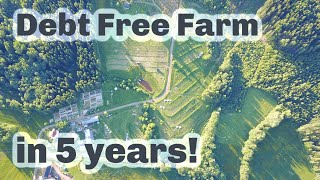
This content was created by Richard Perkins. This content was uploaded by Richard Perkins. This is a YouTube video titled "IS REGENERATIVE AGRICULTURE PROFITABLE? (Looking at Return on Investments) S4 ● E5" created on February 19, 2017. It features Richard Perkins discussing the profitability and return on investment of regenerative agriculture at his farm in Sweden. He provides detailed insights into the costs, production figures, and economic strategies of various farm enterprises, including pastured broilers, eggmobiles, and no-dig market gardens, while also promoting his book and online training course.
Chapters
Is regenerative agriculture profitable? We hear a lot about gross profit from different enterprises in this space, but very little about return on investment and whole farm economy. So I wanted to make a little video to show the levels of production of our main enterprises here at Ridgedale to show you what it looks like to pay back the farm and all our investment costs over five years. So we have a small 10 hectare.
Farm in Sweden, 59 degrees north. We have about four months without frost, very short growing season, low light intensity. This is what the property looked like before we moved in. We transformed the yard into a productive market garden. And upon the fields we've laid out silver pasture and run pastured eggs. Pasture boilers, turkeys, sheep, cows, etc. If you're not familiar with our farm, maybe have a quick look at the video linked above and that gives a short overview of what we do here. But I want to get straight into the figures of the three main enterprises we're using to cash flow the farm as the other more long term enterprises start up. So our pastry boilers, which includes an on farm regulated slaughter facility. It's quite a low cost startup, about $24,000. I've put all the costs here into the US dollars just to make it more universal to the people watching. And so this startup cost covers building the slaughtery and walking cooler, cool boxes for transporting birds, as well as transport crates, building the pens and all the bits of gear associated with that enterprise. We use the space in the barn that the cows are in as our brooder space and then get the birds out in salatin style pens that move through the different fields. We never run the birds over the same space in one ground with the broilers. After they've grown eight weeks or so they come up to our on farm slaughtery that we built one of the lowest cost approved slaughteries in Europe built out of an old working cabin. And so we process the birds on farm and pre sell them up front with our farm currency, the ridge dollar and they go out to restaurants and private customers throughout the season. So they're only produced in the summer and about 18 slaughter sessions, so about over 18 weeks. And then we allow that allows us to only raise birds outside in the short season here. Then we have our pastured eggmobiles. These are very cheap startup. We built our own eggmobiles and we built our own nest boxes and then we just need electric fence and energizers and bits of gear for the egg packery. You need a certified egg packery to sell to shops and restaurants. Here. So quite low startup cost because we did a lot of the groundwork ourselves build the egg mobiles and we run these birds behind our laying behind our sheep and cows about four days behind to make use of the bugs growing in the cow manure. So very low cost startup, very functional, not the most profitable enterprise compared to pastured broilers, but very good enterprise for small farms to build nutrient and water cycling into your pasture really radically impacting the quality of our pasture. We've doubled forage in three short seasons just from the action mainly of these birds and very nice quality eggs. This is the egg packery. We swapped this little cabin for a few broilers and that serves as a certified egg packery. We keep the birds in winter in the greenhouse or in the barn this year because we'll be using it their greenhouse for the market garden which grows cucumber and tomato crops. So then our other main enterprise currently is the no dig market gardens and the startup costs for this are largely inflated by the fact that we needed to build a large pond and pump system for irrigating. We have beautiful quality water in our well, but it's not enough volume to supply the irrigation needed for about 1,500 square meters of beds here. So we run 100 shares, CSA shares like everything we pre sell and sell by subscription to lower and minimize the risk for us. But that covers things. About 22 $23,000 is the polytunnel. Building a greenhouse on the side of the house for the spring start. All the materials to get going, compost and wood chips to build the beds, windbreaks, a walk in chiller crates, all the sort of miscellaneous tools you need. So the big cost was putting in the pond. We put a quarter of a million litre pond in last summer using GCL geosynthetic clay liner as we have quite sandy soil in this part of the farm. That's a spring fed pond that overflows. It's spring fed and stream fed and overflows back to the stream. This was four weeks after the dig and about eight weeks after installation. So that allows us to pump 4 cubic meters of water an hour onto the vegetable beds using aerial spray. We're working with no dig, putting down a lot of well rotted manure and planting straight into that. With maintenance additions yearly after this. And we start all of our plants indoors. This is in our living room, but we've built now a lean to greenhouse where we do the starts which is much better for us. And it's a total no dig Approach, very similar, very inspired by people like Jean Martin Fortier, using the same sort of tools and planning, but with a totally no dig approach. We don't use any cultivation other than the broadfork just to loosen the subsaw, which I doubt we will use in a couple of years time based on our experience working with no dig in the past. So we produce veg boxes for customers for about 20 weeks and we also sell to some restaurants and other clients as well, as well as preserving a lot of food and feeding ourselves throughout the winter as well. So in our case the farm was about $100,000. To purchase the farm we got quite a good deal, but we specifically looked for good value land that we knew we could do what we wanted to achieve here. About half the farm is open land and half the farm is in forestry. So all of our production pretty much is taking place in the open land in three or four hectares. We do have pigs running through the woodland areas, but they're not a significant part of enterprise yet. They will be in the future. And you see we've invested slightly more than that to establish all of the enterprises not included in the startup costs I've just shown you for buying sheep and cows and pigs, buying an atv, for moving egg mobiles and moving stuff around, delivery vehicle planning, all our tree systems and windbreaks, trailers, tools, everything else basically that we've invested in the farm. Some of those things are enterprises that will bring in significant income in the future. And we calculate the basic running costs, about $11,500 for the accounting software, bookkeeping, phones, fuel, electricity, insurance, control fees, vehicle insurance, etc etc. So let's look into the figures. Now I'm basing this upon paying off all of our investment costs, buying the farm, capital investments, enterprise investments, paying everything off in five years whilst paying us a living wage. And what does that look like now? Obviously this looks very different country to country. Our land was relatively cheap and we can sell products relatively expensive perhaps compared to different areas in the globe. But I think it's valuable just to see the whole process of what it looks like in terms of the revenue and how the enterprise is net and then what it looks like at the end of the day. So these are our actual production figures. Although we started smaller and we're scaling up still, we're still in the process of scaling up. So this would be the average production over five years to be able to pay off the farm and all the investments in five years while setting up all the other enterprises that I'll show you shortly me. And also worth bearing in mind here, this is pretty much based on a six month production season which we'll see here when we look at these figures closely. So for the first five years we're looking at 800 laying hens in the two egg mobiles and they run all year round that you see here. So that involves some winter work. So if we go, if we look at the hours, the summer hours here, this is for opening the eggmobiles, feeding, collecting eggs, sorting eggs, packing eggs. The delivery, because we sell all our products in advance and we sell at drop off points where you just turn up with all of our produce and drop it off to customers in a short window, the delivery time is split between these three enterprises. In the summer, we're delivering more in the summer because most of our fresh produce is produced then. But you see in the winter there's quite a lot of delivery, there's quite a large amount of hours. The actual day to day work for the layers is very small, but, but the delivery is all lumped in there. So you need about two and a half hectares to do this many hens in our circumstance. And it brings in about $45,000 of which 25,000 is profit. Now, wages aren't included in this. This is just the running cost of the enterprise. So when we look at the totals and paying things off, we will be paying off a portion of the property from our private income, a portion of the investment costs and all of the enterprise investments will come out of that too. So it will all make sense in the whole picture. So it's not the most profitable enterprise, but it does have the biggest ecosystem impact. It's an incredibly useful tool for a small farm, in my opinion. And then we have our boilers. This is 250 birds a week, which totals four and a half thousand birds annually. And that's in 18 slaughters. So we'll raise batches where we slaughter the birds over a three week period. So we're slaughtering every week for 18 weeks. So that allows us to raise the birds in summer when the conditions are good and it's practical to raise birds outside. We don't raise them in the winter at all. And that's quite a, you know, it's a really nice enterprise in terms of its cash flow. So it brings in a lot of revenue and quite high profit. It takes quite a lot of hours, mainly due to the processing, but no hours in the winter. And about two and a half hectares needed to not run the birds over the same space in the same year. We do however run the layers and other animals over that space, often multiple times in the year. And then we have a market garden. This is based on 100 shares CSA shares for 20 weeks, which brings in a revenue plus a surplus sales to restaurants, etc. There's the revenue and the enterprise profit and it takes a lot of hours. So market gardening is very intensive in terms of the inputs and the outputs. It's very profitable per square meter compared to the extensive enterprises we run. But it takes a lot of hours. That's based on 1500 square meters of beds. So here at below it's totaled up the summer hours. So that's basically a couple based on two people working full time plus two full time employees for six months. Now, a basic living salary here in Sweden would be about $35,000 cost to the company. And this figure will work out about 45 hours a week of work each. However, I would say, you know, due to the nature of farming and things that need fixing, etcetera, you would expect this figure to be higher in the winter. It's very low amount of figures it takes. I do all the winter chores for six months of the year. So that's just a couple of hours a day. It's just every day, seven days a week. So that does leave scope for a partner to take on other work or, or to go away from the farm. Here you see the combined revenue, so about $208,000 of which the profit is about $140,000. And if we take away the running costs and the investment costs, it leaves about this. And for our family we take one and a half salaries, which is enough for us to, to pay off the farm in five years, the house and take a holiday and employ someone to come and look after the farm while we do that and pay two employees full time for the summer, which leaves about $12,000 after salary is paid. So at the same time as this, we're also setting up additional enterprises. And I'd say it's about $75,000 of quite low input. Net profit from these additional enterprises. This silver pasture, a lot of fruit and berry, which will be a pick your own setup. And then we're building up our flock of 40 ewes. So we'll be selling grass fed lamb, we have milk and cows, but that's mainly for our own use for dairy and beef. We're also running turkeys which we're scaling up each year. And we'll start with experiments with rabbits and ducks and geese, things we would like to move towards more truly pastured animals once we've paid off our debts as it were. It doesn't feel like it's a good time to be on debt at the moment, so we're focused on cash flowing the business, paying off debt so we can move towards, you know, building up our pastures so we can move towards truly pastured productions with less pressure economically. We're also raising a lot of pigs, we're starting to sell forest raised pork this year and we have scope to do winter microgreens and rent out tree house for Airbnb experiences. So thanks for watching.
I hope you found that video useful. Please share it and hit subscribe if you did. We're going to be launching our YouTube channel this summer so you can follow the day to day happenings at the Farm. It's a pretty magical place to be in our short production season as so much is going on here at the Farm. You can also find out more in our book Making Small Farms Work. It's available on our website, has both an ebook and a hard book cover and we're also launching our online training specifically for people who have got a piece of land or a small property that they are wanting to set up regenerative enterprises upon. And it's equivalent to a farm scale permaculture design course, but a mentored and structured process so that you can go through your design with a bit of support along the way to get all your economic plans and management strategies in place as well as the actual design work. So you can check that out on our website. Hopefully it'll be out in a few weeks time. Thanks for watching and see you next time.
More from Richard


A review of short and intensive season on a mixed farm and restaurant/event space in Sweden






Alskade Kyckling Exploring complexities of poultry production in Sweden and what we stand for


