Richard Perkins describes spending a month restoring his market garden after it was allowed to run to weed, explaining why early weeding (cotyledon stage) and tidy wood-chip pathways save large amounts of time and reduce future pest/habitat problems. He demonstrates tools and methods (hori hori, spade, hedge loppers, woodchip paths), discusses compost/cover-crop choices and woodchip sourcing, and estimates the remediation as roughly 15–20 times more labour than normal. Early in the video he also mentions informal plans with a colleague Matt to possibly start a long-form podcast about farming, psychology, and current affairs.
Chapters
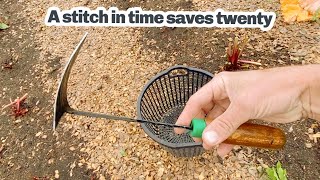
Welcome back to another video, folks. Things got a little bit out of hand this summer in the market garden, so I'm dedicating the next month to just putting things back in order. And I wanted to talk about the poor economy of letting things get out of control and how a stitch in time might save 15 to 20 in the long run. So before we get into it, I've just been talking a bit with Matt, who is my favorite market gardener that we've had here at the farm. Those of you that have followed the channel for a long time will remember the funny, perky Canadian that featured in the video sometimes and in the film Gracie's Backyard. Anyway, I miss Matt a lot, and Matt's someone I can have long conversations with about nuanced intellectual manners as well as I just find him hilarious. And we can have pretty similar humor perspectives on things. And we don't really have a plan yet in any sense of the word, but we've been talking about possibility of doing a podcast and looking at things to do with our lives like farming and hunting and taking care of yourself, but also about areas of our interests in psychology and current affairs and world affairs. And Matt and I listen to a lot of podcasts, probably a few thousand hours a year between us, and we listen to similar podcasts. And so I think we would like to unpack a bunch of things that we hear with the intention of just doing something for our own learning and for joy and for making people laugh as well. It would be quite different to any of the material that you might know from me, but I thought it could be a fun idea. So I'm interested to hear suggestions of names. I really haven't thought this through and Matt and I've just spoken about it very briefly, but I think it could be really fun to look at current affairs, look at the things we're interested in, maybe invite guests in, talk in nuanced ways in long form, discussion about some of the ideas and thoughts that come up for us and you know, questions that come up from us listening to other podcasts, etc. And I think there'll be a fair share of non politically correct humor in there too, which for me will be quite refreshing. And so yeah, if you've got any thoughts, comments about the idea, I'd love to hear them. Stick them in the comments below and let's get into the video. So I'll hear some of you saying, well, hang on, you put out a video about weed free market gardens. What's going on? Why are there weeds well, there's a few factors contributing to the state the gardens are in, and I'll show you what I think about it and how I'm going to remedy it and why some of that's an issue to me. I've always prided ourselves on having the tidiest market garden that I've ever seen, and there is function behind that form, too. Now, some of our homemade compost was definitely weedy with some of the typical annual weeds, and they haven't been taken control of now. There's been less people on the ground here than typical years. That's an element of it. And also, the wood chip in the pathways has broken down in places where there's basically back down to ground level. And so we're seeing a lot of weed come through in the pathway. There's also weed seed blowing in. And last year we saw a lot of the spruce. We had a massive abundance of spruce seedlings after the drought year of 2018. A sort of physiological response to that strength. And that was all that was germinating in the compost on the beds. And a lot of it didn't really see much annuals come in, but this year there's been a lot of annuals. But my big concern is the way this has been managed. I'm just going to show you some of what I got to deal with. Now, I know some of you, as market growers, are going to say, what's the big deal? You've got lots of beautiful veg out here, and why is that an issue? But there are, in my mind, big issues to leaving things to go over. Typically, we want to weed in the cotyledon stage, and of course you're always going to have some degree of weeds in the market garden. But there's big consequences of letting things go out of control, and I don't think it's a smart way to manage things. I'm a bit disappointed with the way this has been managed because firstly, it makes a massive job. Now, in the past, been going around the whole market garden and the edges in about six hours, and I'll do that two, maximum three times a year and keep it squeaky clean. Now, one of the things we're doing is keeping the edges from growing back in. These are the creeping grasses, like couch grass, but they're quite easy to deal with because they're growing into this wood chip. And I'll show you how I'm weeding shortly. But one big problem with weeds is letting them go to seed here at the ends of the tunnel, for example, you can see this is out of control. It breaks my heart really, because I've never seen the garden in this state. But now we've got weeds gone to seed that even if I remove them, are going to drop thousands of seeds in this part of the bed. And that's the case in different parts of the garden. This is actually the worst area of all the gardens and I'm going to get it back to shipshape. But I wanted to show you this. I felt too ashamed to make videos because I just, I've never seen this. We've got tree species and it's a lot of work to put right. So by taking weeds in the cotyledon stage, you save yourself masses of time. As I said before, three lots of six hours maximum and I could keep this place squeaky clean. Now it's going to take me the best part of a month to take out these weeds and put back the wood chip pathways and get things back to the baseline equilibrium that I like them to be at. Another thing is when you're taking out big weeds, they've got big roots and so they're rooting down through the compost that we grow in into the soil. And so when you pull those out, you create a lot of disturbance and that disturbance stimulates new weeds to germinate. What we're trying to do with no dig especially is jump start the successional process where weeds just don't have the stimulation to germinate because we're essentially creating a forest floor and we're also just smothering annual weeds out in the process. But we see a lot of weeds coming back in pathways here. It's like rhizomenal grasses and little things like this are very easy to pull out. But bigger weeds, you're going to have to get a little tool and I'll show you the tool I favour for this. The big issue is the disturbance caused when you've got things that have gone out of control. If I'm pulling out grasses with their roots, you can see what happens there. It's much, much, much more time consuming to do this job. And we've got the downside of weeds seeding into clean beds. And then the third part of that is creating habitat. When you leave crop residues and weeds on the beds, you create these lovely conditions for snails and slugs to breed and lay their eggs. So that even once we've cleaned these beds up, we now have created a problem for next year too with snails and slugs. So to do this overhaul job I'm basically using and this is the only tool I need, along with a bucket and a trailer for wood chip to get everything back on track. So here we are in the west beds and you can see I'm just hacking down the rhubarb and then I'm going through meticulously taking out every weed with a hori hori. Now I'm not raking over the soil to take out little weeds. I'm literally taking out every single little plant by its root and removing it. It's not so bad here that there's not so much to show you here. For example, I'm taking these out and that's where this tool is so useful and it makes it very, very easy. So this is the tool I'll use to clean up all the beds and I'm literally taking every single weed out, no matter the size of it. If it's a tap rooted weed like a dandelion, these tools are very effective at getting down and breaking off the tap roots. And that's what I'm going to do. Things like horsetail, you've got to get the creeping roots and then what I'm doing at the edges is, is I'm just pulling the grass back to the natural edge. And if there's any couch grass growing up, it will naturally allow me to trace it back through the wood chip and I can easily take that out. That's one of the benefits of having these wood chip pathways. So we dug this with a spade to create a sort of V shaped depression and then we fill that with wood chip and it means you can maintain this lovely edge. The reason I pull this because when I mow the grass, it'll just squash some of the grass down onto the chip. So I just pull it by hand. That allows me to trace any of these tap roots back to the edge again. And I only do that once a year just to keep the edges good. Let's go and have a look over here and you can see what I've done to deal with the asparagus. So I've just taken some hedge loppers and pull down the asparagus and then I've just put new wood chip down. You can see the edge comes up beautifully and it's very easy and quick to keep that edge maintained. Up here we've got the perennial flower beds and what I've done there is just chop them in place to allow the seeds to drop onto the bed for self seeding next year. And then just restored the Wood chip pathways. Some people will say, well, why don't you put down cover crops, things like that, to cover the empty areas of beds. Most of the things we're growing are at high density that the bed, like with the rhubarb, for example, it's covered with a layer of leaf and canopy and then the soil is covered by an armoring of compost. It's also the fertility. So I'm not into cover crops. People ask me this all the time, if you want to play around with that, why not? It's fine. But for me, there's no benefit. It just creates a lot of work. You have to find a way to terminate that crop. One thing I always do is leave the roots of plants in the ground. So we've essentially got beds as full with crops as long as possible in the year, and then we're leaving their roots to decay for the rest of the year anyway. But for me, cover crops just aren't part of the system that I use in the Ridgedale style of market gardening that we've made popular with market growers all around the world. Now, taking what I learned from people like Charles Dowding and using wood chips as a pathway. Now even on a rainy day like this, I can walk around in shoes and not get wet feet. I can work on my knees and I'm not getting damp. It makes a beautiful surface to walk on. You're never getting muddy feet. And it's helping suck up water and release it slowly in the drier times of year. And it's just frankly beautiful. I mean, who doesn't want a squeaky clean market garden like this? Last few brassicas in the south beds here, but yeah, that's some of my thoughts. I wanted to just share a bit of the process. We'll go and have a look at the beds that are being cleared on the other side too. But really important to weed at the critical point, which is the cotyledon stage. And don't use tools like collinear hoes and things that just disturb the soil surface. The beauty about no dig and coming through a bed like this and just taking the individual plants out is that I'm not scratching up and disturbing the surface anywhere else. And that's the number one way that you'll wake up new weeds. And I don't want to do that. I've got better things to do with my time than weeding. That's why we market garden like this in the first place. But critical that you take weeds at the right time in their cotyledon. Stage to save you time, to save building up habitat for things like slugs and snails and just to keep morale and the psychology of working in the garden. Immaculate. So I always get a lot of questions about woodchip. This is about 30 cubic meters delivered from local sawmill. Now we use spruce, and that's mainly because 99% of trees in Sweden are spruce now. I actually like it. Some people are concerned in the old days that this would lead to nutrient robbing in the beds. That's not true at all. In my experience. You can see that from old videos. If you look at multi row crops on a bed, there's no, you know, signs of nutrient deficiency on the edges of the bed. These are just used in the pathway. And the benefit of spruce or pine is that it takes a bit longer to break down. I've got many friends and colleagues that use broadleaf trees and they have to replace it much more regularly than I will with spruce. Okay. In the new north, we've still got some crops that are going out, but beds are getting cleared and covered now. And this is a nice way to do. If you put down the covers first and then the wood chip, they will help hold the covers down really well. We just use these little metal pins, but in strong winds these can be uprooted. So that's nice that the chips will go on after. I'm leaving some of the kale here for hunting purposes because down through this forest patch we have deer that will come. And typically in January, February, there will be 10 or 15 roe deer standing, eating on this, coming up through the gates here or up through the path here. And my plan is to sit out here with my neighbor and take some of these. So bits of work to do in here. We've got edges to maintain, wood chips to put on. Some of the beds are going to need a lot more work here. We've got a lot of grasses. This is going to need the Korean hoe to really get in there. One thing that's perhaps an ongoing issue is with bigger root crops. Some of the things like parsnips, carrots, etc. Where you're really disturbing the compost layer when you harvest the crop. So those are beds that typically we would just put down fresh compost to cover that up straight away to cover any weed seeds and keep them clear. We just wanted to use our homemade compost this year, so that's all we've used around the garden. We don't actually have any left. The beds are getting covered up now, but What I'll do next spring in the beds that I plant into is I'll immediately put down some of the cows, chicken manure and peat based compost that I've always bought in. I haven't made much compost this year and I'm not going to be having many animals over the winter time. I'm also not going to be using a lot of these beds next year. I think currently I've got plans to put some of them down to perennial crops, furthering some of the strawberries and some other perennial vegetables more for homesteading. And some of the beds are just going to be left covered up while I figure out what I want to do. Strawberries that have been put into the west beds here have sent off a lot of suckers. So what I'm going to do as I pull these up is any viable suckers I'm going to separate out and store them in the fridge. And I expect I will do the same with strawberries up in top field and radically increase my strawberry production next year. Why not now? It's a really interesting year to compare the economies of the weeding situation because normally, as I said, it's been 12 to 15 hours a year to keep things on the baseline by taking things early. And you can see from previous videos over the years we've kept this garden totally immaculate. But this year I reckon it's basically probably 200 hours going in to fix this. So it's 15, 20 times more expensive. And if you put that into labor cost, then that's obviously very significant. So that's the takeaways from this. Not only are you putting in a massive amount more time, you're disturbing the soil in a way that will make more weeds proliferate. Probably you're creating the conditions for seeds to germinate and cover beds entirely, unfortunately, as well as making habitat for disease and pests like snails and slugs. So that's the takeaway from the video is, you know, a stitch in time saves nine as the old saying goes. So plenty of things to do and we're ending the season in mid October this year. And my job now is just to get everything back how it should be. There's a lot of jobs that didn't get done this year, but on the flip side, I had some fantastic holiday time with my children with which is unforgettable and worth a lot more than getting a house painted and painting the roofs on barns. That can happen next year, I think. Right now I'm thinking next year is going to be very peaceful and relaxed. Just going to be growing food for family, painting buildings, getting things up to scratch, and dealing with some of my other properties and things like that. But a lot to do in the next month, and I'll be sharing clips on Instagram and you can follow us on Instagram in the links below. I put daily posts up there about life and farming and whatever's going on, and I'm cracking onto it and keeping a bit low key this autumn. But I hope you got something from that video and can't wait to show you the gardens back to how you remember them always, and how I like them to be. As always, appreciate your thoughts, comments, etc. And you can find out a whole bunch about our winter online training, as well as both the books that I've published in the links below. So see you in a video soon.
More from Richard


A review of short and intensive season on a mixed farm and restaurant/event space in Sweden






Alskade Kyckling Exploring complexities of poultry production in Sweden and what we stand for


