MAKE A CITY WAGE FROM A SMALL FARM S5 ● E42
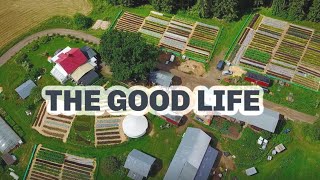
Richard Perkins shows how to make a city wage from 2 to 3.5 hectares using pastured poultry, eggmobiles, and no-dig market gardening. Startup costs run under €20,000 with profitable returns in year one, if you focus on high-turnover enterprises and movable infrastructure.
Questions this video answers
1200 hens; packing takes about 40 minutes (plus two daily collections of ~20–25 minutes).
Approximately €15–€18 profit per bird (before value-adding like smoking).
About 2.5 million Swedish crowns, approximately €250,000, working with four employees.
Sub €20,000 startup investments to start profitable enterprises in the first year.
Their on-farm slaughtery can process 5,000–10,000 birds; he notes 10,000 birds is the regulatory limit in Sweden for the class described.
Chapters
In this video I'm interested in, why aren't more people making a full time living farming on their homesteads? Something that interests me as essentially a homesteader that farms professionally and inspires and teaches other people to farm, is that, you know, the homesteading movement is huge compared to the amount of young people or people generally going into regenerative agriculture.
Or whatever you want to call it.
And I find that really interesting because I've said in other videos about, you know, like, the responsibilities of livestock, etc. Once you have, you know, a flock.
Of chickens, it's not much extra work to have a thousand chickens.
Now, I met a lot of people who have set out to farm on a small scale or homestead and have ended up putting way too much money into a property they couldn't really afford and spending time working off site to.
Pay for their hobby or pay for repairing stuff or, you know, whatever it.
Is, rather than thinking it through and getting clear about the context, like what is it you're trying to do? And I'm saying this because I've met few collectives that have bought places and set out with the idea of farming, but then put all of their money into repairing buildings and dealing with social processes and not ever getting on with the bit that they actually came out to do and then getting frustrated because they're not actually doing what they wanted to do and this sort of downhill spiral from there. And I find that really interesting because if you get started with the sort of enterprises we're showing people how to run here, you can really get started immediately, profitably, like some of our interns in videos I've shared are doing. So today I'm on eggs and packing the eggs from 1200 hens. And it takes me about 40 minutes and it takes about 20 and 25 minutes to do the two egg collections during the day. It takes between 20 and 40 minutes to move them in the morning because we have three eggmobiles. But any of these enterprises that we're running here, pastured boilers here.
We have a thousand birds out on.
The field right now and another thousand in the brooder coming out soon, running through our keyline silver pasture systems that you see on the aerial footage putting in perennial systems that will, you know, one day come into crop and be producing enough to really supersede the more intensive enterprises that we've chosen to kick start the farm, to give us cash flow. For the reasons I've explained in many other videos, you know, you need to be starting with things that make money. One of the Bones I've got with homesteading. I mean, I'm saying this because we are a homestead. We find or produce all of our own food or trade it and we put a lot of energy into harvesting all the wild yields. I'm into fishing. We have beautiful salmon fishing here as well as pike and perch that we get in our local lake just a kilometer to the south of us. And we do a lot of berry and mushroom collection at farm and we put that, we preserve and dry and freeze and put it away for the next year. So we're a farm that produces all its own needs first and then sells through profitable regenerative enterprises, enterprises that can build our soil, develop our resource base for the future, but are profitable from the get go. And I think those of you familiar with our farm, something that's very deep in our philosophy is like showing people, exposing people, particularly young people going into farming enterprises, they can start on sub 20,000 Euro investments and be making profit in their first year paying back expenses. So that's for us, it's pastured boilers, pastured layers, pastured turkeys. It's market gardening. In our case, it's intensive no dig market gardening because we think that that's optimal for soil health and ecosystem balance. Trying to copy nature's way of producing. But it's an interesting thing like I've just mentioned about, you know, to come up and move the boilers, it takes an hour in the morning and servicing the pens three times a day. And obviously the brooder is a bunch of work and slaughtering and processing is a big chunk of work. Now we have our on farm slaughtery up at the farm center. So that's how we extract the value out of those things. But you know, there's one thing like producing 50 chickens to put in your.
Freezer to feed your family.
But producing every chicken we produce is giving us like 15 to $18 in profit after all the expenses are paid. If we smoke that, we can pretty much double that at very low cost. It doesn't cost much to smoke the birds, you know. Likewise in our silver pasture systems, it's very easy to grow enough berries for your family's jam. But you know, think how much jam you can make with these. You know, enough to employ someone to come and manage these things. This farm still turning over like two and a half million crowns of sales in a six month production season. That's about €250,000 working with four employees. And I think it's, I reckon we could double that production if we wanted. We're actually working on cutting our time down and we don't want to work that much. We don't need to do that. Look, the strawberries coming in here, this is a row planted into Mipex with nut trees every four meters just to narrow the gap because up in here in Topfield we've got 18 meter rows between the tree lanes and we wanted to supersede them one day with very slow growing nut trees.
So we've put strawberry in.
But yeah, we've chosen these enterprises all of which could be producing a family income. If we wanted to just homestead and make our living here, that would be pretty easy to do. We're trying to do a bunch more because we're a demonstration site and because we're trying to expose particularly young people going into farming with far more tangible experience than they can get in any other place. Certainly in Europe. Like there isn't anywhere in Europe where you can go and see keyline agroforestry with holistic plant grazing with soil microbiology and working with all of that stuff with holistic financial planning with pastured broilers and on farm slaughtery pastured eggmobiles and forest raised pigs and da da da da da, processing those things and harvesting those things and working full time with educating about those things. So I think, you know, this place has become very special because it's offering people a window into something that gives them a reality check, gives them the ability to say oh yeah, I can see that in my context I might need to scale that one up and I don't like that other bit and I'm going to get rid of that and I can see how I can meet my economic needs, etc by working with that. So that's a big part of our context is to, you know, expose people to that. But I just see that, you know, if I was just trying to make, you know, a decent city wage and not having employees and not having more people around at the farm, it's any one of these enterprises could do it and it could be working part time, it could be working for half the production, well, the full production season, half the year. Or enterprises like laying hens could have year round, many ways to do. But yeah, it just got me thinking like why more people aren't actually doing that. Like in the homestead scene I feel like there's a bunch of people making dribbles of income. But it's like hey, why aren't we making city incomes? Why aren't farmers holding their heads up proud making really good livings And I think it's really important. I've mentioned this in other videos in the past, bringing back the dignity to farming and to rural stewardship, because I feel like there's a whole new generation that need to be inspired. We need many more young, intelligent, clearly informed people getting into farming. And a lot of the people coming into these types of agriculture are entrepreneurial folks who are not coming from farming backgrounds and who need to be exposed to these kind of things. And so this place has become important for that. And there's many places like this in some ways, in different parts of the world. But I want to show you some clips from a talk I did a while ago, just talking about some of the numbers. Some of them are outdated, perhaps, but just to get inspired about how we can integrate all of our highest values, all of the sort of ecosystem and biological things that we want around us and in our lives too, in the midst of profitable regenerative business. Business comes first for me here, but I'm not doing it strictly for money. I'm also building diversity and ecosystems that I want my kids to inherit or their grandkids to inherit or whatever it is. So something I've been sort of known for is getting rid of all the idealism out of the permaculture world and really focusing in on pragmatic solutions. And I'm very interested in that. It's, you know, a big part of my role, I feel like, in my career. But I'm also, you know, know which bits of that are worth holding on to and things like diversity and building soil and not letting go of those things. It's why I've had a lot of bones with market gardening, because I feel like the modern market garden movement is, you know, it's. It's not really advanced in quite a long time. It has in tools and techniques, but some of the practices by the most sort of famous people you'll find on YouTube and on the Net, they're not really new production techniques, a lot of them in America or that part of the world. And they're techniques that have been used in Europe for decades. You know, they're things that I learned when I was a teenager at ag school doing organic crop production. And really there's nothing new going on in many ways, like everyone's, you know, adapting things that are tried and tested by other people. And that's all groovy, it's all good. But I think that, you know, we're also known for our business acumen, and I think that it's it's easy if you're focused on business to just get too focused on business and lose some of the holistic approach. It's important to think in holes and think of, you know, when we write our holistic context, I'm specifically referring to holistic management here, Alan Savory's work. We're describing the future resource base, like, hey, we take the value of life we want to live and we really think about that and we look at what we have to commit to to achieve that and then we get super clear about what, you know, we're actually managing and how we can ensure that that same quality of life will be available to our great grandkids. And that requires this multi generational view of things and understanding of things like ecosystem processes, etc. And it brings a sense of duty with it. And I think if you end up getting too focused on just business, then.
You lose some of that and you.
Lose some of the joy of what this lifestyle and pursuit is about, you know, which is for me is a lot to do with learning more than anything else. But I think business is still fundamental. You can't be sustainable if you're not rocking it in the business front. So, yeah, I wanted you to enjoy these clips and I hope it inspires some of you. I'd love to hear some of your comments. What's stopping you from making a living on your homestead or small farm? And yeah, it's worth noting, we're farming pretty much 2 or 3 hectares of it to produce the amount of revenue that we are. So it's pretty intensive. There aren't so many farms that are running this intensively in this small scale manner that we're doing here. So enjoy the clips and yeah, love to hear your comments and thoughts.
So a big thing we're doing as a cash flow enterprise is pastured meat chickens. They're very profitable on a small scale. You make your own basic infrastructure and they move around daily onto fresh grass. When you move a chicken daily onto fresh grass, it eats way more green stuff. When it eats way more green stuff, it's getting vitamins and minerals. You can't buy chicken like that in a shop. There's two organic chicken suppliers in Sweden. Ours blows theirs out the window for sure. They're raising them in an industrial model. They can't get the same access to nutrition that ours do. And this is very nice for our ground too because what the chickens do, they poop a lot, loads. And so it looks like, can you see where they've been? But what happens is two weeks later, where they've been, it goes and it grows a lot. And that's been a major part of our grass growing. So here you see meat. Birds raised in small groups move daily, move twice daily when they get bigger. And these are egg laying hens that have a bigger run. There's lots more of them in there. And then to get the value out of the meat, like, thinking entrepreneurially, I need to be able to extract the value from these birds I've raised. So I built my own slaughtery. Now, I don't speak Swedish yet and I had a German and Portuguese guy with me. We just built a slaughtery. We looked at the regulations. They don't make any sense. They're written for industrial productions. So no one can help you with how to do this. You have to be a little bit entrepreneurial and go for it. But then that paves the way for the next person to come along and do that. I could tell you very easily how to do this for yourself. And so we bought a €200 cabin that wasn't useful for anyone else and we decked it out and we made one of Europe's cheapest approved slaughteries. It's very nice. This allows us to process five to 10,000 birds on farm. We make 15 to €20 profit per bird. 10,000 birds is the limit in Sweden. It's classed as zero farming. That would make us €120,000 of profit in six months on two, three and a half hectares. Not very much input daily. We started our own currency when we first produced birds, so we would sell them up front like a CSA model. We'd been selling everything up front because cash flow is hard to manage. So, hey, do you want to buy chicken off me? It's not ready for eight weeks, but you can buy this voucher and then pay the difference when you know the exact weight later. Which means I know how many I need to produce. And this is why poultry is such a good enterprise, is I can scale it up and down instantly. Can't do that with vegetables, can't do that with grains, can't do that with anything except chickens. I can turn around in seven, eight weeks. That's why I don't want to be organic certified. I only give them organic feeds. But organic chicken has to be 80 something days old. Who is someone sitting in Brussels writing forms who has no experience raising chicken to tell me how old a chicken has to be before it's one bad day? That's got no relationship to the breed of Chicken. It's just a random arbitrary number. That chicken had a better life than any other chicken in Sweden. So it's up to me when I want to slaughter it. And that's the beauty of flexible management. By not being certified anything. It's customer certified. Hey, come and look at my slaughtering. You can watch me slaughter chickens and see how your food is made, you know, if you want to eat it, right? And so we make very nice chickens and we started with turkeys. They're very profitable enterprise, but harder to sell because there's no market yet. So a lot of people have come to us because we're a permaculture project and said, oh, but these, you know, this is meat chickens. Is this sustainable? But you've got to be realistic. You can't affect the food movement if you're not producing food. Really, farmers have the biggest impact in the food movement. Innovative farmers can totally transform it radically. But you've got to have your foot in the door if you want to play that game, because that's how it works. So we didn't come along just producing 1,000 pastured geese that don't need any grain inputs, because nobody eats well down here. They eat more geese. But in most of Sweden there's no market for geese. But look, this is an enterprise that we started up with €24,000. Currently it turns over €90,000 at 60%. That's really high numbers for agricultural enterprise. It takes 940 hours over six months on just two hectares. You won't find that at ag school, any ag school on this planet. I can guarantee you that for us, in our farm, we could scale that to 10,000 birds still being classed as not farming. Whoever wrote that rule has not stood in front of 10,000 chickens. That would give us €120,000 of profit on three and a half hectares in six months. You can start this on rented land. You don't need to own a farm to do this. You can do it behind someone's beef herd and improve their land for them. This is the beauty of the models we're choosing. They're designed for you to pick it up, go and do it 50km away. We sell all our products currently within 50km because we want you to go pick it up, do it over there. So we do similar with our egg mobiles. These are home built structures. They cost about €1500. They home 4, 400 birds each and they follow four days precisely behind her cows, usually because that's when the maggots, that is the fly Larvae are at their peak and they're just about to hatch and go off and annoy the cows which then farmer fighting symptoms goes and injects drugs into cow. But they are high omega 3 and 6 food for chicken. Chicken spends all day two left feet, two right feet, peck, peck, peck, peck, peck. That's what they want to do. They want to find insects. A chicken is a meat eating bird. It wants insect protein. And what we noticed from our, you know, we spent the first year crawling around in cow pats and after 60 hours all of the. What are they called? Dung beetles, which are very beneficial, they carry the manure down in the ground. They've all gone after 60 hours. So there's this perfect time to bring these animals in and think about it, right? You've all seen probably a picture of a water buffalo in Bali. What's on the back of that water buffalo? Bird. As a bird. What color is that bird? What color is it? White. There's a white bird on the back of that thing. Birds follow herbivores in nature. That's nature's pattern. They are sanitizing our pasture. We don't get pest disease problems. We just don't do pest disease problems. They come from running bad models. If you're getting disease and illnesses, you're doing something wrong. Nature doesn't do disease and illness. It's extremely rare in pristine habitats. It's not rare in our culture because we do some weird things, eat weird things, etc. But nature doesn't do illness. It's a rare occurrence to turn something back into useful nutrients when it does happen. But look, this is all farm ready stuff. Here's an old trailer off block it for €100. Bam, bam, bam. Scrap wood from my local sawmill that are throwing it away. And we've got some movable infrastructure that I can take anywhere. I could leave my farm. I could scale up my farm by renting my neighbor's land and I can just move everything so I don't have any capital locked up. I bought my farm for less than €100,000. I turn over several times every single season in six months. It's crazy to lock your money up in non movable infrastructure in these days. But we don't need to because farming is changing. We swap stuff for chickens. When you got chickens, you got currency. This cost us three chickens. It's an insulated box. It's now an official egg pac. It cost us less than €200. Now we got an official egg packery and we can move it and Here's a simple piece of infrastructure that we can house these chickens in nice conditions in the winter, they can eat through all the weed seeds and fertilize it. And then we can take thousands of euros of tomatoes out there in the summer. And look, this one costs very little to set up. Seven and a half thousand euros to make these two things to get the egg packery together. Currently, it's turning over €80,000 at 55%. Now, that's not as profitable as boilers, but their ecosystem services are really much better. I would have them if they only produce €5,000, because they turn grassland into thriving habitat again, that's the amount that comes out as profit. So they're really high figures for certain businesses on the planet. In certain industries that would be normal. But in farming, that's really quite, very high. You don't see that in like, I've got people at the farm right now who are ag school and they are trained to write business plans that lose money and then they probably get a tick and sent off on. That's just bad business. Whatever way you look at it, you don't want to lose money. You want to be able to start up with very little money and get on with it. It's too old. It's an old model. That's not how it works anymore. If you want it, if you choose it, this takes 700 hours. It's 12 months. It's all year round. On a couple of hectares in our farm, you know, we have three and a half hectares of pasture. That's what I didn't say. Most of our farm's in the forest, so only a small bit of its pasture. In our context, on three and a half hectares, you could do 1600 birds. That's €90,000 profit. It doesn't take a lot of time, but it is seven days a week. You don't get a day off. You can't say, oh, I'm not getting up today, but it doesn't take more than half an hour in the morning to do it. Then we have our market gardens. These are different to most gardens that you see because we just put down compost straight on the lawn that had been lawn for decades. And off we went. They're very beautiful. They're some of the cleanest market gardens I've ever seen anywhere. There's no weeds, there's very little work to do. Our soil is deepening and building because nature's digging it and doing it for us. We don't till the ground. Nature doesn't Till ground. We just got to find ways of growing veg without tilling ground. I've seen some of the most well known organic vegetable producers in Scandinavia and we produce 40 times more vegetables per square meter in them. And the result of that is because it's working on tractor based systems which have to plant carrots at the same spacing. We plant 12 rows of carrots in that wide so we don't have bare ground, so we don't have to weed bare ground. So we don't get demotivated because we don't spend hours and hours weeding, you know, very different. Using things intensively and keeping them tidy and clean and aesthetic to work in, because we all want that too. So this is called no dig. Stands to reason, no. And we've been selling in shares and at markets and again we started this super low cost in our front room of our house. But everything in our garden is standardized. You see, all of our beds are exactly the same size. They're the same length, same width. That's because all the best market gardening tools coming out of America from people like Elliot Coleman, who have been pushing forward small scale regenerative farming and all the best tools are that wide. So you make your beds that wide and you jump on board or you get left behind. And we make them the same length because then crop planning is the same. All of our infrastructural things like row covers and all these things are the same. So everything is always the same. Which makes planning a garden which is complex, easy. We use simple hand tools, a broad fork which is kind of like a hand powered key line plow it decompacts under the ground without breaking the surface. And then we use a rake that's the same width as the bed. And then we roll that to get a little bit of surface compaction. You see, it's got these rings that mark the bed so we know how far apart to transplant it. And then we've got snazzy little seeders. This is a six row seeder so we can plant 12 rows of baby carrots in 15 seconds. Very nice. And then we have simple, nice battery drill powered tools for harvesting. And all these tools that have been coming about in the five, ten years, last five, ten years. Game changers. Taking all of the ball ache, as it were, out of growing vegetables. I grew up as a market gardener. That's what I went to ag school for. And I left it years ago because it was rubbish money, really hard work. I got out of there, but now I got Excited again because these tools make it very efficient and doable and it makes the money doable. This is now where we start the seeds. Because my partner wasn't very happy about turning the living room into a jungle. So we took some bulletproof windows from the Stockholm police station and we built this lean to sunken in greenhouse to reduce the energy needs for starting in the summer. And that allows us to grow microgreens all winter. And microgreens are possibly one of the most profitable per square meter things you could possibly do, other than having a very good tree nursery, I believe. And they can be done all winter. In this one we just take the wood stove and it pumps a bit of hot air into this and we can grow these all winter. And restaurants love that stuff. Lots of nice vegetables. Here's that battery powered harvester you see for salad mixes. Harvesting at walking speed, not sitting on your knees going. And this was a higher start up cost than it would need to be if we had a water supply, because we had to build that pond and that was about €7,8000 to put in a pump and a big water system. But if you had municipal water supply, it would be very little invested. So that pays for like tunnels. We've got a massive tunnel we're putting up right now. All of this wood chip and all.
Of the row covers.
Some of this is very long term investments, but that's turning over a lot of. It's about €40 per square meter, which is 40 times more than the best organic growers I've seen field scale growers here. And I think we can get that up to €75 per square meter in our tiny little five months without frost growing season if we're lucky. So we're just starting with this stuff. But as a wrapper. The contextual bit for me is that you're talking about stories, how to communicate with customers. We're in the business of whole menu farming. We're farming for our own needs first and then producing for a surplus. I think I demonstrated that you can build soil whilst producing good business. You need to do it smart and you need to present it cleverly. But we're not just farming to make money. We're farming to have a quality of life you couldn't buy that you can't get anywhere else. So talking about stories, this is a typical meal we eat. Everything here came from less than 150 meters away outside my back door. This is cheese made from a cow milked in the pasture without any restraint, aged in the cellar under my house. With butter made from the same mountain cow who can live outdoors in the winter. Because it's a hardy breed, it doesn't need to be indoors in a heated barn on homemade bread from the last Sredmuhl miller in Sweden, who's not Swedish. Made on the farm. These are our pastured eggs with lamb ham we've made on the farm with duck liver pate from our pond and pastured broiler and leek soup and homemade pickles. I mean, this is food you can't go out and buy. Restaurants can't even support. This has all come from my back garden. And this is why we're doing it right? This is why we're farming. We want to eat real food, so.
We eat real good.
And that's the name of the game. And then I wanted to just chuck in a few other slides as we wrap up about doing this on a shoestring budget. This has all been done with less money than most people spend buying a house in this country. It's been done on an ultra low budget. And we've done that by supplementing with wild foods this time of year in Sweden. It's just insane. It's pointless farming when you have stuff running around the forest jumping at you. We have some of the best salmon fishing around us and we've harvested a lot of Sweden's waste. Everything we've built has been free because we have a timber yard that doesn't have people. It has machines. And so when they knock over an industrial pallet of wood, they can't pick it up because they don't have fingers. They have a machine with a massive grabber. So we go and pick it up. I calculated driving from my house to fill this trailer, dropping it off again, was the equivalent of getting paid 2 million euros a year. So it's like, why farm this week? Let's go pick up wood. And we've built infrastructure that can have people in it. We've built barns for a few hundred euros. We've built the slaughtery, we've built all of our animal stuff. We've built tree houses that we could rent out for two nights and it would be more profitable than cutting all of that 90 year old forest down on a per meter square basis. We're not going to. It's going to be my office. We've built infrastructure for housing people, washing people. This was a wagon we swapped for another four chickens and turned into a beautiful sauna for people visiting the farm. But you know, that's the benefit of living in a Rich country is people throw away awesome stuff like building this. This was like a 1400 Euro investment to have a winterproof heated greenhouse space.
Beautiful.
So just to sum up here, this is an idea that I haven't developed.
But I can give you the idea of it.
What I want you to see that in the realm of agricultural production, in what I'm telling you about as regenerative agriculture, something I see with my work, educating sort of young entrepreneurial folk that.
I hope will take the reins of.
This stuff, and many are, is that there are certain things you can do depending on how much access to land you have, how much land you got, but you don't even need land. Some of you are interested in urban production. I think you've had talks from urban producers here. But look, microscope microgreens, that little lean to greenhouse on my house, that can make an annual Stockholm salary in a little space like that. It's just whether you want to do it, you know, I'm going to write a little pamphlet of like, hey, if you've got two hectares of land, these are the things you can do. This is how much it costs to get going. This is what you should expect out. This is how much time you need to put in, you know, because people don't get the pattern language of this. I want to do pastured beef. Well, then you need loads of land and you need lots of cows or it's not so profitable, you know, but if you only have a tiny bit of land. Oh, and I put this one here because a lot of people are getting into market gardening now without understanding it's a massive amount of work. It's much more profitable to do things that don't take as much time. So what we do at our farm is keep very detailed time and motion studies. So I know exactly how long it should take to turn over this bed and plant a new crop or how long it should take to move the turkeys and get back to the place so that I know what these things are about. Which one's more profitable. Well, that's a fact of time as well as incomes and inputs, etc. So this is a piece I'm working on and I'm going to write a whole booklet about it because it's a complex one. But I'm looking to formulate recipes to help people get into this because as I said, I don't believe the future lies in traditional farming families. I think it lies in the hands of entrepreneurs. We don't need thousand hectare farm outside the city, we need 110 hectare farms outside the city. We can outproduce industrial farming 50 times over on quality, quantity per square meter, freshness, locality. You can't compete, but we need loads more people farming, that's for sure.
So that's it for today folks. And you can find out a whole bunch more in our book Making Small Farms Work, available only from our farm. We send it out to over 90 countries now.
Amazing.
And you see that in the links below, along with trainings and our website and all the different things we have to offer there. So thanks so much for your time. I appreciate your comments and likes and share the video if you think your friends will benefit from it. And we'll see you in the next video.
More from Richard


A review of short and intensive season on a mixed farm and restaurant/event space in Sweden






Alskade Kyckling Exploring complexities of poultry production in Sweden and what we stand for


