MAKING AWESOME AEROBIC COMPOST - FAST! S4 ● E76
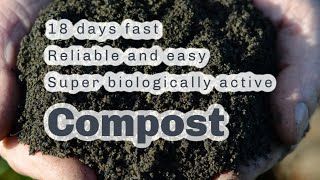
Richard Perkins walks through the Berkeley method for making finished compost in 18 days. You need roughly equal parts greens, browns, and animal manure in a 1 to 1.5 meter pile, kept moist and turned every two days once it hits 55-60°C. Too wet breeds anaerobic rot; too hot means add carbon and turn more often.
Questions this video answers
Berkeley method ("18-day" compost).
Roughly one third green, one third brown (straw), one third manure by mass.
About 55–60°C (expected to heat in ~4 days; peak around day 7–8).
Every couple of days (approximately every 2 days).
Green materials ~18–24:1; cow/horse manure ~14–16:1; straw ~200–250:1.
Chapters
Today we're making Berkeley compost out of green material, brown material, in this case straw. And they're getting manure from the cows the last few days in Kentsfield before they come back to our field. So we had a really great chicken processing day on Monday. Really good flow and worked out at about 250 birds in just less than four hours. And we're thinking about the process, but I processed 135 and the two with me did 115. So there's a. You know, we're here as a learning example too, where people getting to try things out that we're not fully optimized as you would be with a team doing the same role all the time. And so we're thinking about, you know, if we had three, eviscerating that speed, that's nearly 400 an hour. But then that would bring up limitations with the scolding and plucking. And so it would mean maybe having an automatic scolder or someone additional on plucking, so the scalder could be running at full speed. Even then with the setup we've got, that would equate to 200 birds an hour, which is still an improvement, you know, but it's been working very nice. Really good workflow, really smooth, people doing an excellent job and nearly all like 95, averaging about 2 kilos this week. So it's a nice process. And today we've been getting into property assessment for land purchase and also thinking a lot about people's individual farms and projects. Most of the interns have got a farm or a project or wanting to start one. So we're going through doing like almost off the cuff design consultancy, thinking, thinking about business, thinking about practicalities, making sure everyone's on the right track, thinking about the economy, etc. So it's been 48 hours and upon this filling, still got about 35cm to go. That tells us that there's at least 30,000 litres of water in here so far. It's obviously filling up the soil base down until the GCL liner too, but bigger than we thought, perhaps 45,000 liters. Looking good so far. We picked this up at an old barn sale for about 200 crowns, which is €20. So you see the gearing, it runs its own feed roller and we're just thinking how it'd be good for making kimchi. Actually, It's an old saw cutter and we don't need material cutters. Fine, you can do it. Hand. But we got the machine, so why not here we're using nettles and any other green material which is relatively high in nitrogen, probably starting ratio of 20, 24 to 1. And we're using straw as our brown material. This is about 200 to 1, perhaps for wheat straw. This needs a lot of moisture on it. The key to getting good aerobic compost. This is the Berkeley method, an 18 day compost. Everything needs to fill with moisture. Obviously, these plants are mostly made of moisture. We'll need to soak the straw quite well. And we'll add manure, which is mostly water too. And we'll go for about third, a third, a third by mass and water this layer primarily. And we will then make a pile as a layer cake with equal layers of mass of each material. And we'll expect that to heat up to 55 to 60 in four days or so, typically. And then we turn it every couple of days until it's done. That's the basic rule of thumb. Although you need to monitor it with composting thermometer to know what's happening for real. We're gonna make compost. So the whole point of making compost when we're talking about compost is aerobic. When compost piles end up like that one, which you can't see in here, like this one is too wet, it goes anaerobic. The whole point of this is to make. This is a bacterial compost. All quick composts are bacterially based and you can orientate them to fungi more by adding more carbon, like food for fungi, and certainly by inoculating it with things that are rich in fungi, like forest floor leaves, etc. But this is a bacterial compost good for compost teas for our pastures or for our gardens, which is typically where we're using all the compost anyway. So we're mixing different materials. This is relatively high in carbon. We're using green material that's relatively high in nitrogen. And we're going to add animal manure. We've got this cow manure, fresh cow manure and a bit of chicken manure. High in nitrogen too, but also in microbes to kick start the whole thing. We're going to aim for. I've made a circular base with straw just to give us an indication of the size. And we're going to do a layer cake with layers of brown, layers of green, layers of manure. Start again. And we need everything to have a film of moisture. Not wet, but a film of moisture. Like when you take a finished compost like the one here, you would want to squeeze a handful of that. And if a few drops come out or there's a film of water on your hand, that's totally fine. If it's dripping water, it's too wet, it'll be anaerobic and it'll be producing phenol, terpene, alkaloids, alcohol, all this plant toxin stuff. So everything living or dead, it's got carbon and nitrogen in it, but at different ratios. So when you write these down, it's always carbon to nitrogen. So for example, something strong would be a dead animal, like dead fish might be like 7 or 8 to 1. That's relatively very high in nitrogen, even though it has more carbon than nitrogen. Green materials like this are going to be something like 18 to 24 to 1. And cow manure, horse manure we typically use for this kind of Compost is maybe 14 to 16 to 1. That's relatively high in nitrogen. Legume plants like pea family, etc. Would be high in nitrogen, maybe 16, 18 to 1. As soon as we jump up to woody sort of materials or, sorry, dry carbonaceous materials, that changes a lot. Straw here might be 250 to 1. Wood chips may be 500 to 1. It's too carbon rich to lock down the nitrogen. So the whole point of compost is to lock down nitrogen, which is volatile. We know it's needed in high quantities for plants, but it's super volatile and it's trying to fly away as nitrogen gas or as nitrate, which is why chemical fertilizers lock it up to a heavy metal. In the old days, it has a salt based format to lock it down. It's very inconvenient to keep in a sack in a barn. It doesn't want to stay still. Whereas carbon, we know is good for cleaning things like cleaning water, and it's stable and it's solid in the environment. So we're using carbon to lock down nitrogen. The way that we do aerobic compost typically is we need to get a 30 to 1 starting ratio. Now what does that mean? Well, it depends what you put in it. But if you take a third mass of brown material, green material and manure, you're going to end up with about that ratio. And that's with horse or cow manure, which is typically what you find in large quantities. You can use any manure. You could do this without manure at all. You know, using leguminous plants, high nitrogen plants like pea, old pea plants or whatever. But it's easier to get the starting ratio right if you work with Common available materials, like sappy green things, dry brown things, and fresh horse or cow manure. It doesn't have to be fresh like in hot countries like Portugal. You buy it in dry sacks. That's totally fine too. It just needs a lot of hydrating. So if we make this in Portugal with dry straw, dry manure, we have the hose pipe on almost all the time. If we're doing it here, I'll just water the straw layer and that's it. Because the plant is 70% water like you are, manure is mostly water like you are. So it's a lot easier to add water later than to take away water. So our job is like getting the materials in the right mix, shredding them up to give them surface area. You don't need to have done that. You could do it by hand. You could do it lumpy. It will just end up as lumpy compost. It'll still work, but the finer we make it. Now the Beddler compost in its fineness, and then we keep it in a range, it'll heat up over a few days. Typically, like the rule of thumb for this compost, it's called 18 day compost or Berkeley compost, is to get it up to 55, 60 degrees, which typically takes four days or so. And then we monitor it and we keep it in there by turning it every second day. And the process of turning will take the outside layers that are hot, cold, not really done anything, and put them in the middle now and take the hot in a bit, put them on the outside, and that way everything cycles through the pile multiple times. And we need it to a to break down and become like plant available. So anything that's plant available has been through biology, right? And anything that's been through biology is now available to plants. That's how they evolved to uptake it with the carbon material. We could use cardboard, we could use straw. We could use. The best thing would be forest floor leaves because they were super high in ethylene precursor, which promoted that ethylene cycle. If you remember, in the soil food web we were talking about, we don't have many deciduous tree leaves, but in many of your countries, they blow them up from the parks and put them in a storage somewhere. So you could take that. It's even better. It's full of fungi and it's more readily broken down than something like straw. But we don't want woody material in this. It won't break down in time. And what I like to do is build these edges really Straight and make it a nice shape because the piece that gets hot is this central column. So we want the maximum central column, basically to aid breakdown. And if you like organic standards in the UK, I know like anything that's been at 55 Celsius for three days can now be labeled organic. So horse manure with antibiotics and stuff like that, it just gets denatured. So anything you want to put in your garden is best to put through a compost first, whether it's biochar to inoculate that and fill those little pores within pores with microorganisms or rock dust or anything. You just put it through your compost first and then use the compost. So we're making this one now so that we can make compost teas and things. It might be we end up using an old pile and I'd like to sort these old piles out. I thought we'd wait and do it together. These are two piles made and they've had green material added to them after they started, which is not ideal. They can't catch up. And this pile is just really wet and anaerobic and it possibly had too much water put on it or it got rained on or whatever. The pile behind is quite good. It's finished, it's lumpy, but it's good enough to make tea with. We can look at it under a microscope. And so what I propose is we mix this big pile with these little piles and make two new piles. We're aiming for like a meter to a meter and a half cubed at the maximum, because otherwise the we can't manage the thermal mass. Unless you had a big windrow maker, like a tractor powered compost turner, you wouldn't be able to keep it within the heat range. So it's got to get to 55 in the middle. But if it gets above 60 odd, you start killing off microbes. Some of them you'll start burning off nitrogen primarily, and then you'll even start burning carbon. And you can tell when you're doing that because your pile is like half the size when you come the next day. So it might shrink in volume a little bit when cell walls denature, but it shouldn't lose mass. If it weighed 600 kilos when we started, it should weigh 600 kilos when we ended. We're putting a tarp over it to stop evaporation and to stop rain as well, to keep the moisture level in the range that we want it. And based on all that, we then just monitor the Oxygen and the temperature and the water content and that's how we steer it. So if it's too, if nothing's happened in four days, then there was, was there enough moisture? We can feel that, okay, there's enough moisture, therefore there's not enough nitrogen. So we can add something like chicken manure that's concentrated and strong, you know, maybe 12 to 1 carbon to nitrogen. If you just made it with chicken manure, you'd have thin, thin layers between thicker layers of green and brown. It's really strong. You know, you can burn plants with chicken manure, but when you make this 18 day compost, you can't burn plants with it. It's been synthesized through microbiology. So you can't burn a plant by giving it too much. It's impossible. Anything can grow in this material. If it's too hot and it's shrinking rapidly, then we need to slow it down, which we could do by adding carbon or turning it more often to cool it. If it smells weird and anaerobic. You know that pile of anaerobic sludge at the bottom of the garden that maybe you have when you're growing up? That's not compost, that's anaerobic sludge. That compost should be aerobic. It should. In three weeks time, this should be finished, homogenous, dark brown, mulchy, sticky, which is the byproducts of fungi, bacteria, etc. And should smell like forest floor, alive and vibrant. And it will have, you know, if we took 1 centiliter and diluted it in a soil sample and took a drop of that at 400 times microscope, it will have phenomenal amount of bacteria, quite a lot of protozoa. And after that time you'll start to see nematodes and things, green materials covered in protozoa. If you went and just wiped the dew off leaves in the field, you will find lots of protozoa. Obviously manure is full of bacteria and some of the organisms will come later. So it's bacterial focused. If we wanted it fungal, we would take things that are good for fungi development, like rock dust, maybe we would take leaf litter and we would up the carbon content to maybe 40, 45% and not turn it so much because it won't get so hot. So, you know, it's good to master this. We've made these in every climate zone. I've made hundreds and hundreds of these piles and you can't really go wrong as long as you make the ratio right and you make it big enough. Someone sends me Photos of piles like this or like really small and then wonders why they don't work. But it like you just follow this rule. Someone wants to make it quicker by making a basket and turning it into a basket so you don't have to shape the edges. But like in that compost reactor, you can't touch it, you can't smell it, you can't sense like what's going on with it. And that's why we make it out in the open, because then you really know when you're turning it, you know which bits hot because you can feel it. So you put it on the outside and so you know you've done everything. If you try and automate it, you won't make as good compost. The reason I like this compost is that it's the most diverse and life rich compost you could make. Like there's no way of making compost that will have as many species and as many volume of organisms. Half the mass of the finished pile is life. When you really think numbers, you remember we talked about 100 million bison in a herd and you can't possibly picture what that means. Well, likewise, half the mass of this is bacteria. That's intense amount of life we just created. So we're like creating this chemical biological explosion. And then our job is to monitor it by taking the temperature and checking with our hands to feel the moisture level and turning it a lot to reintroduce oxygen. So there's two processes going on. The mesophiles, the ambient temperature organisms are active and they are taking this up to maybe 35, 40 degrees. And then they sort of go sleeping and dopey and the thermophiles wake up and they take it up to. They would take it up to 70, 75 maybe. So we need to stop that process by flipping it, which mixes it all up even more, introduces oxygen and cools it down a bit at the same time. So it goes through its cycle. And I would, if it heats up in four days, I would expect it to reach its peak temperature after about 7, 8 days and then slowly come back to ambient temperature and that's when you'd use it. As soon as it comes back to ambient temperature is when it's most lifeful, you could say. So let's start about this size and we'll go for equal piles of green brown manure. And then we could be watering every time we put a straw layer on. Then we go for a layer of manure now and we just get in a rhythm of People throwing and distributing different materials. And we'll water every straw there. When you get to about halfway up here is the point where you might put in food scraps or you might put in a kicker, which could be made of old compost that's inoculating the pile, or it could be a dead animal. So we've composted dogs and foxes and badgers and owls and rabbits and all kinds of animals. Now you can decompose an entire Labrador in about seven or eight days. Even the bones will disappear. Right. So you can garden and get rid of woofers at the same time. I mean, but it's amazing how quickly like this is what's happening on the forest floor. Just in the perfect recipe, quickly. You know, there's animals shitting, there's dead leaves, there's fresh plants, there's sugars flying around. You know, animals dying. This is just caramel. It's totally fine to put your hands in. It's very good for your skin. I'm gonna get my hands in in a minute. But we want this layer equal all over. But it's equal by mass. Right? It's heavier because it's mostly water. But if you put a kicker in, you always put it in the middle of the pile. Because then when you flip the pile, it's automatically back in the middle because you want to cover it up. Because that flesh will putrefy and it will smell real bad. First couple of times you turn it. And then after a few days, there won't be any flesh. It will be bones. And even the big leg bones of a dog will disappear in seven, eight days. It's pretty amazing to witness. Like, it's, you know, really recalibrates your understanding of microbiology. What are you saying? You make sure that the animal stays in the middle. Yes, because then no rodents would come. Same with kitchen scraps. They count as green, sappy stuff. All the other stuff goes. Any. No, we're making equal layers. It's just we're pulling these layers outwards. Like, I want to form my edge. Like, next time we put straw on. Straw is very textural and lumpy, so it's nice to pull that material out and form a good edge. A lot of people push material in and then their tiles go like this. But then you don't have such a big column of working stuff. So that's why we make it cylindrical. It's the least surface area for the biggest column. This is exactly the sort of material the farmers shoved in my wound when I cut my hand really Heat as an old folk remedy. It's perfectly clean, it's just grass. So don't be shy and let's go for a layer of straw. Now we're going through a third mass so it's quite a thin layer to start with. And the straw needs a watering so we could have someone on water duty. Just. We're going to build up many layers so you don't need to be slow about it. We'll just get into a rhythm. But you see how pulling this material out they can really form the edge. Bit more just to do this edge. And we'll go for like 10, 15 layers of each hopefully. But we want it going up. We need people concentrating on the edges all the way around and that's good for water there. So we just get in the rhythm and build it up like so. It's all about edges like it's like you take your time now. It's a job that's quicker on your own. Like I often have run no dig gardens just with 20 of these going at the same time. You can turn them in an hour on your own. Like it's. It's easier with less because you can just get in there with your hands and not, you know, two is nice, one throws and one piles it up. We got these bags of cow manure and then we got some chicken manure. So we might do one more layer of cow manure and then do a chicken layer. Go for all of that, go for that. Nettles are quite a good inoculator for compost. So we go steady on the manure. You can see all the little dung beetles in here. There's a dung beetle there. So this is, this is probably 40 to 50 hour manure at the most. There's no maggots yet and the dung beetles are still really active. They're typically done by like 60 hours after the cows we've found here. And the manure kills the. The ground hasn't dried. It's only the air. Yeah, yeah. It stays moist. But the dung beetles will suck a lot of moisture out of the cow manure in the end. It's nice process. Now it's like it's hands on. You can smell and feel and touch and it's maybe taste depends on your preferences but you need the engagement with it if you want good compost out. Like it's not a lot of work if you price the value of life we're creating. It's really not a lot of work we're putting in to make. So it's my preferred method. There are other methods, like stationary methods, but they generally don't produce. They're less input, but they don't produce such a high quality of life, which is the thing missing in our soils. We always have enough nutrition. We usually have a lack of life going on. More joby. So it's where we get to be engineers and biologists and chemists all at the same time, as well as physicists. Someone could do some kicking of the edge again, solidify that. If you go all the way around, getting that in nice and tight is good. We could take a shovel full of the finished compost over there and whack that in the middle just to inoculate this with a whole range of organisms. It's not necessary, but certainly wouldn't harm it in any way. So we'll do a layer of this one. This one is covered in actinomycetes. This is a thermophile. It looks like a fungi, but it acts more like a bacteria. It's a sign that it's been hot. It's probably been left since the last turning longer than it needs to have been. It's not a problem in small amounts. In fact, it's totally normal. But if it becomes thick white sheets, it's an issue. You typically see it in things like grass clippings that, you know, if someone makes a pile of grass clippings, it gets very hot. You can use grass clippings. There's no problem in that, like from the lawn cutting or whatever as a green material. But you typically then want to do really thin layers that are mixed up so it doesn't go slimy. Grass goes anaerobic very easily. But you. You know, with the heat in. This is important to understand. The heat is coming from inside the pile. So you can do it in cold temperatures, you can do it in hot temperatures. It really doesn't make any difference. It doesn't go that much quicker in the tropics. It would work in the winter, but you don't have green material typically. So you do it in the spring or whenever you need it most, or do it now and lay your gardens to rest at the end of the season with it or whatever. And then typically what I'll do. So we're about two thirds of the way up here. I would bring it up to here. No dead animal in this one. But then I would water it all around the sides. Just watering the chicken manure in here. And then we'll cover it with the tarpaulin to stop Rain evaporation. So you can measure compost temperatures with your hands. About 60 is, oh, I put my hand in the middle of the pile and then I want to take it away. Now would be hot enough, but it's much better to invest in a compost thermometer. It works as a bimetallic strip, so you've got to be careful. They're long and thin. You don't want to bend them or they stop working. This one's in Celsius. We have another one that runs in Fahrenheit. And you would want to insert this so that the tip is in the middle of the pile. So we will always watch this. We won't leave it four days. Whenever you make some biological reaction, you need to keep your eye on it. So we will keep an eye on this every day now until it gets up to about 60 and we'll turn it when it gets to 60. 65 still acceptable, but you want to turn it between 55 and 60 for optimal reactions to go on. So we've gone with a little bit of water on each brown layer. You don't add too much water. It's very easy to add more water later, very hard to take it away. You do that by adding carbon or flipping it more often, but that's just a bit of a pain. Typically, adding the amount we've seen, we would never have to add any more moisture or have problems with too much. It's the sort of thing that once you've made like 30, 40 of them, then you really know how you can start tweaking it. So I really recommend people to follow the recipe, follow the size and shape. You can't really go wrong. And then once you've done it a bunch, you start to understand different elements of it. You can adapt it as you wish. A good aerobic compost like this, you're creating colloid particles smaller than 15 microns that are then plant available like plants can uptake and eat them as opposed to being force fed them. So we want plant available nutrients that have been, you know, been through biology, as it were. That's how plants evolved to eat nutrients. But we're making compost like this primarily because of the life. The life is more important to me than the nutrition because all that nutrition exists in the soil anyway. It's just usually there are either chemical limitations or life limitations. You know, Elaine Ingham always says if you've got any topsoil at all, you've got plenty of nutrition. You're probably lacking life. So this is why I like this type of compost. It's very easy. You can't really go wrong if you follow the basic instructions and you make a lot of life, like billions and billions of bacterias, as well as hundreds of thousands or millions of protozoa, hundreds of thousands of nematodes. So we're getting up in height. It should be another 30cm tall. And then we call it done and sort out the other parts. So, last couple of layers and then we cover this up with a tarp and in three weeks it will look like this, which is the finished pile from over there. So it's homogenous. You can't really tell what it's made up of. And it smells like earthy forest floor. It's full of life. So we've run out of cow manure. So this is some chicken manure from the winter bedding. It's a bit thin with chicken manure because it's quite strong and we're getting there. It's about a meter tall now, so it's about a cubic meter. It's ideal. We don't want to get less, so we get the right thermal mass and we don't want to go much bigger. So now just typically water the sides a bit. Nothing will really happen. The first thing you'd expect to see is the green material breaking down, but it'll be happening in that central column and we'll just tarp it up and leave it every morning. Now, we'll check the temperature. When it gets up to 55, 60, we'll start turning it and we'll turn it next to itself, keeping the same form and straight edges. We're going to sort these piles out now by combining one of these small piles with half of that lot and make it a nice shape again and layer it up again. Because this pile is a bit wet. These piles have had new material added to them that's just not going to work very well. So nice job done and we can sort this one out too. What do we think? Much better. Just getting there. Nice. We just combined the mushy pile with the two piles that have new garden waste put in and it looks better. They're still quite moist that we'll need to monitor these, but I think it's definitely been a good idea and we can just keep an eye on them and keep steering them the way we want them to go. So here we are at the pond. It's 72 hours after we put the siphon in, so we think that there's at least 45, 50,000 litres in here, which is more than we calculated. But it's the back of an envelope calculation. But you see the overflow there. Ducks have already found their way in. This is all seeded and it's waiting to be planted now. But it's looking good so far. Really happy with the results. It was a nice day's work. It's been a busy few days here, so we haven't been able to make so many videos. Lots of behind the scenes work that's important for our processes here. Aha. Matt's back with the last order of chicks and two geese in the box. I believe we've got all this paint for the barns. There's enough powder here to mix up the red paint that all the barns are painted in Sweden. There's enough for the entire farm. How was your day, man? It was really good. Oh, they're moving. This is the female. She's really pretty and she's had a lot of poop. Matt's picked up the last batch of Borders for the year and two beautiful geese. You've had a long day driving now. We've been up on five packing chickens, 800 chicks. Matt dropped them off in coast out our freezer picked up these two beautiful geese. Really nice farm too. And these chicks have had a long day too. So they're going into the Buddha for the last batch of the year. Hello, mister. Hello. Let's get you out of there. So Lucas is on broilers now and they've put new bedding in, warmed it up with the brooder. Now there's two boxes of 100 chicks in each. So as always we introduce about 1 in 10, 1 in 15 to water. So they start to find it and keep the temperature nice and warm in there. They've got food, lots of fresh clean water. That's all today, folks. I'm going to be getting in here and chopping all the base of the tree lane so we can mulch these this week. It's a bit later than normal. We normally do that in the end of April, May. I think there'll be some benefits to doing it late this year that the mulch will stay through the late season. Thanks as always for watching our videos. Hope you find them useful. Don't forget to share and like the videos and we'll see you next time.
More from Richard


A review of short and intensive season on a mixed farm and restaurant/event space in Sweden






Alskade Kyckling Exploring complexities of poultry production in Sweden and what we stand for


