Natural Swimming Pond, Training Days and Painting Barns...
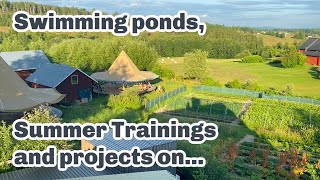
Richard Perkins gives a first-person farm update during a regenerative agriculture design training: he describes guests and trainings on-site, progress on a newly constructed natural swimming pond (lining, planned drainage, decking and estimated volume), ongoing painting and maintenance of barns, pastured poultry and turkey rearing/processing details, and reflections about downsizing or selling the farm. He also documents pasture condition, tree plantings and ecosystem observations, and practical specifics such as liner type and livestock-processing practices.
Chapters
Welcome back to another video, folks. Long time since I made a video. Deep in trainings. I've been out in Ireland, being away from the farm, visiting the west coast. Now we're the third day of the regenerative agricultural design training. It's super nice to have people here in the farm in this way. We've got Elise here with Damien, who we've hired as chefs, friends of Grace and her mother from England, and they're cooking up a storm with farm meats and vegetables. Everything's going fantastic and I'll be just here for a short time before I'm away, off to Wales to teach the same training at Henban Permaculture with Matt, who is a student here. And then we're closing down the season relatively soon after I get back from that. And we've got a lot to process, a lot of livestock to deal with and lots of things changing that I'll tell you about in future videos as well as in the video today. Magna. Where's he gone? What are you looking for right now? Bigger ones. Dung beetles? Yeah. If you just open this up, I found a big one. You find plenty little baby ones too. I'm trying to get that big one. They're quite hard to catch. What have you got right now?
A swallow.
You better let it fly away.
Yeah, I'm gonna.
We're at the macro fishing spot with our own bo.
We've got pre lentils with slow roasted tomatoes, spring onions from the garden and salsa verde. We've got cavalo neuro from the garden, beets from the garden, which look epic green tahini, chickpeas, peas, loads of chili and seeds in various forms. Charred aubergine with a miso glaze, sesame feta, cornflowers, labnet leaves.
Finally some progress. And this is one of the highlights of the year so far to me to get this project rolling on. It's meant to be finished in early June. Things have been kicked back a lot with different projects around the farm this year, but I'm super happy to see and hear this pond filling up. Looking good. So we just wanted to put a bit of water in today to get this weight in the pond to start putting pressure on the liner. It's a little bit brown looking. That's mainly its forest water coming out of our irrigation dam, but it's actually got a layer of bubbles on the floor, so it's actually reflecting a lot of light. This will go quite black. And then next steps is we're putting a wooden wall maybe 45, 50 centimeters high around the top of the concrete wall underneath there. Around that will be perforated drainage pipe with uprights made of just drainage pipe. And then I've got two of these pumps. And these pumps are going to be connected with this clear hose to water stones down inside the vertical pipes. And the bubbles cause enough motion to draw water through the drainage pipes. That will come down through the gravel, through the drainage pipes, cause constant surface motion. And just think this through this will be. This side is very steep, but the decking is coming out here over the water's edge. And I'm going to put lilies in pots floating up on the surface with bubblers. And then probably a row of bubblers on this side, just three or four. Then the gravel will extend all around this side and be planted up. And that decking is going to go all the way along here. I'm going to have to sacrifice these lovely flowers. I'm also taking out this wood here. This will be decking with steps up. And I'm thinking of having like a little barbecue house here. And the decking will continue round the pond. And the Atafal's house is going up here. Looking everything this way. There's quite a big surface area. It's about 80 to 90 cubic meters, maybe even 100 cubic meters. It's 60 cubic meters up to the wall. Well, no, that's a light up a little bit higher than the wall and looking forward to it. It's a really cool process. This is 1 millimeter thick, high quality liner. Most expensive bit of plastic I've ever bought and we haven't secured it down yet. Now that we've got this in place, I'm very confident that this will take up any rain and it's not going to cause any damage now, whatever happens. So this is a really big milestone for me in this project and great to have the regenerative agriculture design course on and lots of excited helping hands to move this project on. That's enough water for now because the pond is not refilling because it's so dry here at the moment, the stream is not refilling the pond. So we're going to turn that water off. And that allows us now a bit of weight in the bottom. There's 20cm there, so it's probably about six or seven tonnes of water that we can pull against that and get this nicely tightened up. Really nice job on the corners of this to make a neat finish. It's going to be beautiful. So this is the underliner that went underneath The Butyl liner, or it's not Butyl, it's the other one, the high quality pond liner. This is what's going back over the top where the gravel sits. And once that's in and the line is fully settled, we'll be putting gravel in the trench we've dug around to hold all this down in place. Then we can start the bigger job of getting this all landscaped and planted. It's going to be awesome. So skylift is here, Painting is going on. We've been painting on the white trims around here and on some of the roofs. Most of the white trims around the farm like you see down here then. And we've got a machine back in this week with good weather to hopefully get all the roofs done. And then I'm not so worried about the red that can be painted when it's a little bit more humidity in the air later on in the year. So time to get the smoke on. Soon we have the pastured poultry training and did an amazing job with the broilers. We've taken out some of the broilers already and they're sitting here defrosting. We're going to brine those and do a batch of smoked chicken. That's going to be great for the winter. Going to pull the meat to freeze that to make it easy for family meals in the winter. Taking another of the sheep today during the course just to show people how that process works. Lots going on. Okay, people, saunae, just give you a quick update of what's going on in here. Just widen the angle. Cucumbers are coming in thick and fast and we've got the first melons. I've definitely seen watermelons and more of the yellow melons coming up. Looking good in here. Tomatoes are going rampant. Enjoying the summer heat. All right, so here in front field, mini eggmobile is doing fine and we've still got 25 birds. Something I predicted in videos early in the season was that with the lack of bird numbers in here, I would anticipate predators taking out chickens. Now, something I've said over the years many times is that we've always had up to 350, 400 birds in 250 meter nets like this. And I think dive bombing predators, three pairs of which have moved back onto our farm. We're going to judge farms of the future by how fat the predators are, but not from eating our livestock, from eating all the species that come onto the farm. When you bring a species into a habitat, you create an ecological niche. For seven more species to coexist there. And we've bought large amounts of animals over the years, as you know. And so we've got a couple of pairs of breeding buzzards. And there's even a sea eagle, a white tailed sea eagle that lives up the back of the farm. These guys are coexisting with all the berry fruits along the silver pasture lanes. And we haven't lost a single bird to a predator which I'm interested in. I've just seen that there's a pine martin family living up here which have moved in this winter and they haven't taken any of the birds yet, which is surprising to me. Just got a new grass cutter, some mulch cutter to go behind the tractor because they just don't have enough animals now. The broilers have gone. We've just got 25 layers and Turkey poults. Turkeys are ready to go. We'll go up and have a look how they're doing. So just coming down to the market garden pump. This has been pumping the swimming pond for closing this off so we don't get backdraft down the hill. But the pond is. The pond is a little bit stagnant now. We've not got inflow of water. You can see the outlet pipes sticking up above the water. Just no river flow at this time. Still haven't managed to get in here and clear out some of the weeds that are just spreading too far into here. What a beautiful scene. It's been a beautiful day today. So I've just been told by the road association. All the trees on the right hand side of the road, this avenue planting, they want me to cut these down because they're too close to the road and they lose the funding potentially if I don't clear them. They've given me the option that I could dig a ditch and that would be okay, or I can cut these trees out. It's a shame. I've grown a lot of these from seed. There's oaks there. They've been here nine years or so and it's quite an important planning for me. These are unutilized spaces. Obviously they could cause damage to the road if they're rooting into the road. So I could pay for a ditch all the way down this side to the corner. And I'm toying with that. It's going to be, you know, a big expense. There is a ditch on this side and so these trees are fine on this side. But I haven't decided. I may well just cut them out. Because I don't want to cause any trouble with the neighbors here. But let's go for a little walk in the fields because we've got turkeys and the cows and sheep remaining here. This is a beautiful time to observe your pastures, to see the life in here. And we've just been up here watering the sheep. We got grasses. Just turn the camera around. This is Timothy up to me eyes, and it's really amazing to see the grass growth in here. This is really the time to come and see the insect life in your pasture. When the light is low and you look across the landscape, you really get to see the amount of life going on. Now up here on this sandy slope, there's a lot of wildflowers. This used to be a lawn. And some of the nut trees are producing nuts. And they've got chestnut going to flower this year, which is a first. Yeah. So we're down to five sheep now and just the two cows. When I get back from Wales, we'll be processing the cows as well as the sheep and clearing out the livestock for the winter. So it's going to be a quiet winter here. And some of these nut trees have just been going off. So you see, the grass has been grazed through already this year, but we just don't have the animal numbers. And so what I'm going to do is use that mulch cover. I'll show you that in another video. I'm going to have to use the machine in place of livestock this year and clearing out the animals to have a rest for winter. It's uncertain what's going on in the next years, and it may be that I try and find the right person to buy this farm and carry it on. Because I think the way my life's changing, I need a lot more time and space. And this year was an experiment to see if I could have a much more relaxed year focused on other things. And a lot of those projects have got pushed back. And to be honest, it's just been about as much work as it normally is for me to maintain a place like this. It's too much for me. And whilst I adore this place and have put so much love and energy into it, I'm never going to run it in the commercial way that it was designed and set up for. So I'm considering that. I'm not sure what I will do. I'll be here over the winter and I'll be here probably next summer, but I will be tarping over the gardens, covering them up, and definitely Having an ease for summer next year. Spending more time on the water and more time doing other things. Beautiful to see the pastures in this way. A lot of species expressing themselves here. But I don't know. That would all depend on finding the right people to take it on. Maybe a family or a group or a research group who could buy the farm and take it on and continue research and data collection for the benefit of the whole. This is Malus seversi, the original Kazakh apple. Standing over 4 meters tall now going from seed here. I love nutfield, this savanna planting. This is designed double planted. So I've taken the full size grown trees up to 30% canopy cover looking down from above. At full grown size we don't get any loss of forage. So this is double planted because I know a lot of these trees won't survive because of the harsh winters. Look at that sweet chestnut, 59 degrees baby. Some beautiful pecans, black walnuts, Chinese walnuts. Great to see. I just found a grass plant taller than my head. I think it was red fescue and I've stapled it to the barn wall as a symbol of the transformation that's happened here when I have a training like this. This is the regenerative agriculture design training. We're talking a lot about the big picture and healing landscapes, holistic management and building topsoil with a key lime plow here and grazing animals of multi species at high density and showing them what neighbours land looks like and what our land used to look like before we started. And it's such an incredible joy to just walk around my farm and see what's happened, to be the conductor of this symphony that's been going on here and just see the incredible ecosystem benefits and the resilience that's been created here that we saw in the 2018 drought and we continue to see now. It's a real joy and I love to have people here in this capacity. It's been amazing to have our market garden no dig market garden training. That was an incredibly important and potent training as well as our pasture poultry training. Getting people familiar with the slaughtery. And now we're here for regenerative agriculture design and having a lot of fun. It's a really great time. Hey turkey burkies. So turkeys are ready to go. We're gonna bring that into our training. It's nice to have some practical things to do in our educational setting. Building the pond when we're talking about water. Hey turkeys always love turkeys. Taken up to 40% of their diet from the grasses and forbs on the pasture. They're really loving these dandelions, but these guys are ready to go. I'm gonna keep a couple to grow big, but these will dress out at five and a half, six kilos. We buy them at six weeks old and raise them another six, seven weeks. And I really enjoy turkeys. Incredible characters and really good to eat. We always brine them 10% brine for 24 hours before roasting. And they've been having a really nice time on their gobbledygo. I might keep this big fella as well as one of the big ladies and just have them around the farmyard for fun. So it feels like at the end of the year, we're just getting into some of the projects that I intended, painting buildings. See some of the hazel on the back of this tree lane here. As well as getting that pond underway. I've got a bunch of decking to build as well as Atfal's house, the little outhouse to put up. I think that's arriving this week. So it's busy days ahead. We've got a few weeks left before people are moving on to their respective lives. And I'm sort of closing down to have a bit of a quiet autumn time here and finish wrapping up and finish painting all the barns, etc. I've got some decking to build on my little house on the other side of town. And time to reflect and pause and think about what's next. Big changes up ahead. And it's a really nice position to take some winter rest and really think about what's best as my daughter goes into high school and to consider options. I really enjoy running these trainings and just, for example, running the pasture, poultry training to be able to bring people into the slaughter facility and teach them from scratch how to run that enterprise. People are desperate for this kind of opportunity because they just don't exist in any place I know of in Europe. And that course was five times over subscribed. And we need places like this where people can come and learn. But I'm thinking of scaling down, doing this on a smaller scale, specifically for family needs, and not feel the overwhelm of having to maintain something that's set up as a commercial operation and still be able to pass on the knowledge and experience that I've gained from working with this whole of my adult life. Well, it's been a big influx of people. And with a big influx of people comes a big influx of food scraps. Doesn't it. So these fellows are doing good. They're enjoying the forest paddock. We've been looking up here, thinking about patchy intermittent disturbances, the pattern of change in ecosystems over time, pigs being a climatic trigger for the forest ecosystem. And there's a hundred oaks in this one hectare of landscape caused by the rooting up of these animals on the constant dig followed by rest. And now you see beautiful pasture under all these trees, much more valuable than the forest. But the species of tree coming up and the species that will be worth something, whatever the world economy is doing in 50 or 80 years time. I just want you to know if I'll be appearing that you'll be getting an email from my agent in an invoice. Look at all this pumpkin. This is just being left to go a bit feral. I'm tired. These training days do take it out of me. Starting early, talking all day. I'm getting older, not as resilient as I used to be, but I'm having a lot of fun and hope you enjoyed a little update. Doing a lot of updates on Instagram. So follow us over there on richardperkins co and you can find out a whole bunch more in the links below in our books and online trainings. A lot of free offerings there. See you in a video soon folks. Bye for now.
More from Richard


A review of short and intensive season on a mixed farm and restaurant/event space in Sweden






Alskade Kyckling Exploring complexities of poultry production in Sweden and what we stand for


