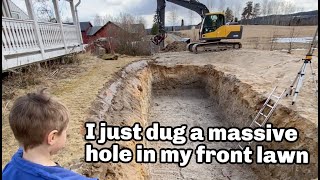
Richard Perkins narrates the initial digging stage of a planned natural swimming pool and surrounding planted pond. He explains the intended dimensions (≈3×10 m), site preparation steps (remove/topsoil stockpile, berming, leveling), encountered ground conditions (sandy with stones, some rocks, an old drainage pipe), and on-the-fly design choices (raising a pad for an outhouse, redirecting rainwater into the pond). The chunk documents excavation progress, equipment and costs, and immediate next steps (pipe connections, backfilling, later concrete wall construction).
Questions this video answers
Approximately 3 m by 10 m (deep swimming area with a planted pond of equal size around it).
About 2.4–2.5 metres (narrator: 'two and a half meters or 2.4 meters').
800 SEK per hour (stated as €80/hour).
Around €500 (narrator: 'that's basically €500 to get to this point').
Chapters
Well, welcome back to another video, folks. It's early in the morning, bit frosty, perfect time to make a mess of my lawn. So regular viewers of the channel will know I've been planning a natural swimming pool build for a couple of years now and now's the time to get on with it. So the build in a nutshell, going to be dig a very deep hole 3 by 10 with a pond equal size around it. We're going to have to berm up this side to get the ground a bit level. Take a bit from here, add a bit from here. First thing, take topsoil off, put it aside for repairing the job, dig. Hopefully we haven't got any massive rocks that we can't deal with. Probably up to about 5 tons we can move. But it seems to be the house is built on sand with lots of smaller stones, certainly from when we dig the lean to greenhouse. That's what we found. And then we're going to have some flat pad where the excavator is standing. We're going to build an outhouse there for extra accommodation for guests. Come in and visit. Come and visit me in Sweden, you lovely people. And we've got to dig a pipey pipe to the lean to greenhouse that's going to house sewage and water and electricity. And we've got to have another pipe that goes all the way to the sewage, the septic chamber for this new house. But we're not going to build a pond just yet. We're just going to dig and make a total mess of the lawn. And then I'll probably start building up the concrete block wall in here so the sides don't subside. It's quite sandy so we might have to dig at an angle so it doesn't collapse in on itself. And then we've got pond liner. Then we've got to put in some subsoil on the edges of the pond for plants to grow in. Cover that all up with gravel, install some pumpy, pumpy things that make the airflow nice to keep it oxygenated. Plant lots of nice stuff around and do some landscaping. And come May, we'll be building a little house here. It's going to be pretty awesome. So let's get straight to it. All right, diggers here. I'm not even ready. Got my trusty laser level, got me spray paint, got my measuring tape. Let's go. Okay, so we begin. That's kind of what we're doing. We want to end up with some nice decking around here to the aterfelshaus. That's like a little mini house and a deep swimming pool by three by ten, maybe two and a half deep, if we can get down that deep. With pond of equal size around. We're going to have to berm up this side first, though. Just taking the tops of the way, putting that to the side. We'll see how it goes. Time to get the coffee on just a normal day on the farm. Only got one way in with the digger, so we've got a backtrack. Basically, we have to dig from this end and leave it complete as we go because the digger can't come back in. Fuel price has gone up. Eric was telling me that €600 to fill the digger. Now that's a couple of days work on the digger. Typically, the fuel price has gone up a lot, as you all know, so we'll see. This is the same digger driver that we had digging our big pond. He's very skilled and with that ankle bucket, can really sculpt the ground here. It's a bit frozen on the top, so we're just digging out frozen topsoil and stockpiling it for now. So this side is going to be underneath the decking. So decking is going to come out straight into the deep bit of the pond. So it's going to be quite a sharp angle on this side, but it'll be hidden away under the deck a bit. Get some plants in there, like lilies, etc. And then we'll have more plants on the far side. So yesterday Grace and I had the idea, if you come out onto the balcony up there, we can have a little Runway you can just jump through, straight in the deep end. What do you think about that? All right, that's the sitting rock. Sit and look at the water. Always hard to see with your eyes, but we have pretty level surface along this edge, which is perfect. But that means basically the rest of the surface is going to be built up. Starting to build up now. It's going to build up probably quite high on this side. We're going to measure that. It's always fun to watch. The digger driver and I spend the entire day just observing, thinking through. You know, you can see into the mind's eye of how he's thinking through the job. And I learn a lot from that process. I've always sat and watched all day when big machines are working because there's a lot of thought and skill goes into a job like this and thinking through workflows, which is something I love to do too. So it's really fun for me. You can see we started building up the far end now. But it's gonna really raise up the garden on the far side. Those bushes there. I want to keep the trees. But those bushes might have to go to level it in and try and make it look a little bit natural. By the end of it getting to the sand now it's frozen in the topsoil. You see that we're lifting the side. I'm curious if we're going to be able to go straight down here because you never know what you might find. But good progress. Only been at it half an hour. So my plan is to possibly just take out these two panels. But maybe take out all these panels and build like an integrated deck that steps down to a flat deck to the edge of the pond. And I've got these roses in all the corners and two on the front here. So I'm just pruning them now and I might have them popping out holes in the deck steps. Could be quite beautiful. I like flowers. Who doesn't like flowers? So Eric's just moving soil downhill. Probably come with a tractor and trailer later. But some of this topsoil is going back on to repair. But we'll have a lot of subsoil to be removed that will get dumped up at the top of the farm. All right, now we're going down. This looks sandy. So far so good. So I've been at it an hour now. But this subsoil looks pretty nice to work with. Let's hope it goes down like that for another two and a half meters. We hit an old drainage pipe that comes from this guttering here to drain away from the roof. But what I might do is intercept this and have it going filling the pond anyway. So no big deal. What I don't want is water draining into this on the outside of the pond liner so that it balloons the liner up through the wall. If you see what I mean. But it's very sandy. It looks very well drained. That's why the house is built up here. So I think what I'll do is put the rainwater straight into the pond and have an overflow to the ditch at the other end. So we're digging this bigger hole so that I can put insulation on the outside of the brick wall. So digging bigger than we need so we end up with a 10 by 3. Love this ankle bucket that all the excavators have here in Sweden. It really turns this big machine into a sculpting machine. Saves A lot of time and a lot of maneuvering, therefore a lot of diesel. And this machine is moving cubic meter every 30, 40 seconds. More rocks. It's going to be a nice thick spot, but it's going down real nice here. That's the second bigger rock we found. Well, I did say it was gonna make a mess of the front lawn. Who has these funny ideas, eh? Still got about 40, 50 centimeters to go. I love this kind of process. It's just creative, super creatively fulfilling to design projects like this and then carry them out. It's always an exciting day when they figure comes and it really starts actually happening. So that's approaching 1.8 meters now. 2 meters. We want to see if we can go down two and a half. All right. Just marking levels. You can see it's quite a lot higher up on this side. This is the lowest corner. Okay. On the fly meeting. So here is the pad for the Atfelshus, but it's going to be down below that wall where you can see my spray marks. So we decided we're going to take all the topsoil this way, stick it down in this growing pile and build this whole land up to put the Aterfelshaus on, which is going to just be way nicer. It's going to be looking over the pond at the same level as the house and it'll be quite a big disturbance. We're going to dig up these bushes and batter this wall with all the soil that we're digging out and just make this quite a steep slope down to the trees. It's going to look quite different in here. That's the way it is. That's what we wanted. I always hated these bushes. So not even going to bother keeping them. Get rid of them. Lump of frozen bushes. Measure this, see how deep it is and then get the drone up in the air. So I think it's a good call to lift up where the Atifast house is too. That's where the digger is. Now. It's going to look a bit weird from the outside because it'll be like a steep bank. But from the inside it's going to be a glorious spot to have that house at the same level. That also gives us more purchase on the sewage. That needs a bit more height to get a good drop to the sewage. But it's going to make this enclosed space with these lind, these lime trees forming like a visual barrier when their leaves are out. And it's going to be a little sun pocket in the evening. It's going to be beautiful. Vision's coming to life. Okay, topsoil's gone from the Etfelshaus pad, so we can build that back up. And now we can use the subsoil. Still got to go down 20, 30 centimeters in the deepest bit, so we'll have plenty of soil to build all that up with. Another rock for the collection. All right. A couple of hours in and we've reached depth. It's two and a half meters or 2.4 meters. That should be plenty. That's enough to dive and see. Seems like we're going to get through all this material. So just thinking ahead, I'm going to take a little strip off here because it's going to be. Imagine I build a brick wall up here, then I'll put the insulation and backfill. But this is going to be a bit too steep, so I want to just shave that off, make the pond wider. And then on this side, he's going to track roll the walls to compress them. But I want a bit of a shelf going up. So by the time I fill the gravel, there's still enough planting area for all the pond plants that are going to go in. But we're getting down now. It's definitely deep enough to dive in. Bit of compression going on on the subsoil here. Now, because the pond is lined, it doesn't need to be exceptionally well track rolled, but it will submerge obviously over time. All right. Shallow in the edge of it. I think that makes sense. There's going to be a lot for me to back fill by hand. Otherwise. That's definitely better. Changing plans on the fly. We got a big rock corner. It's. All right. That was a big one. We can have that here for sitting on. That is a mighty one. All right. I think just communicating to turn it around so it makes a nice sitting rock. Yeah, That's more like it. All right. Okay. A bit of reshaping on the edges. We've hit the water line. This section has cleaned up. So now it's just digging down, digging on. Okay. Just had some breakfast. Now I'm just getting down in here to take some measurements across the this pad. It seems that we're raising up slightly. So quick coffee break and just check that before we carry on digging. Just moving plants. So these rocks are going in to form the back wall of the little house that we're. Okay. I've been shaving a straight edge as best I can down there. And we're just going to finish Digging a vertical wall this end. Then we've got to deal with pipes going to the house and the sewage and then making this pass. It's making quick work of it. Good soil for it. You can see it's going to be really nice to open up the sides here and have the decking down. We're going to get the. All this sunlight reflected off the water. So a couple of thoughts at this point. We're making the pad for the hatfalshuss, but what I notice, I'm obviously interested in a nice straight edge that I can build a wall quite tight up to. This wall is tapering in this side, so we need to do a bit of work on that here. I've just been measuring the water line at the top of the batter and that's perfect. You can see on the far side. So it's going to be, yeah, two and a half meters deep. That's perfect. I think it was a good idea bringing this pad up and it doesn't look too unsightly. If we go down onto the street, it kind of creates a bit more privacy to the garden. I mean, it's quite nice to sort of have this up away from the road feeling with a nice fronting of bushes. So all of these rubus here will grow up as a hedge with the trees joining together. I think it's going to be quite beautiful. And we'll probably put in perennial plantings along the banks here. Getting there, that's, you know, probably a day's work and we'll be mostly done, so pretty cool. It. Okay. So we've laid a string out beyond the neighbors here. We've squared it off. So we've got just over 10, just over three, which means by the time we put the wall, we'll put the brick up to the string line and then we should have enough of a cavity to get some insulation behind there. And then you can see there'll be in place. There's a lot of backfilling to do, and that will allow us to smooth out this edge to accept more gravel for plants. So I'd say that gives me the measurement to now order the concrete blocks to build the wall. I'm probably going to build a wall up to this height and then smooth all this in by hand. Nice. Okay, so this is the pad that the outhouse is going to sit on, and that's where we got to today. Fantastic process. Still got to put in the connections, but we'll deal with that tomorrow morning. Lovely. Oh, done for the day. What do you think, Ragnar? Pretty crazy? No, That's a deep pool. So Eric was saying he's charging 800 crowns an hour now, so that's €80 an hour for his time. The machine and diesel. It used to be 600 an hour when we dug the other pond, but that's basically €500 to get to this point. Tomorrow we're going to finish digging the connections to the greenhouse and to the sewage. And then we'll put topsoil back on the batter on the outside wall. And then we'll at some point start building the concrete wall. There's no rush other than getting the concrete wall in to stop any subsidence. That's it. That's a wrap. Now. Naturally, I'll keep filming the process as we go, but I'm not expecting to get this done until later in the summer. Hope you enjoyed the video. Found that interesting. I love working with Eric. Very skilled driver and it's always a pleasure to see him work. Thanks so much for watching. Don't forget to click subscribe. Check out the links below for details of our books, online trainings, free and paid ones, all the things we offer there. We'll see you in a video soon, folks. Bye for now. Don't, don't, don't.
More from Richard


A review of short and intensive season on a mixed farm and restaurant/event space in Sweden






Alskade Kyckling Exploring complexities of poultry production in Sweden and what we stand for


