No chickens for the first time in 5 years
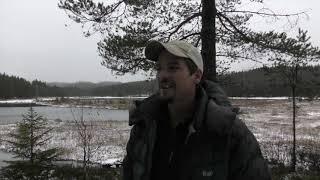
Richard Perkins sold all his chickens for the first time in five years, pausing production until spring after five years of exhausting intensity. He's shifting focus to education through paid internships and online courses, and starting a tool company to make small-farm equipment affordable in Europe.
Questions this video answers
October 30, 2018.
Over 80 hours of footage.
€59/month (video only) and €89/month (full course with downloads, peer support, monthly Q&A).
Two years and four months.
Approximately €400,000 in six to seven months.
Chapters
So for the first time in five years, there's not a single chicken on our farm. So we're really clearing out the farm for the winter and taking a well earned rest. We've been going at it so hard for five years and Johanna and I are both totally exhausted. And so Nicholas and Carla are still here. They're leaving in a couple of days to close the season and they've been doing an amazing job just packing down the gardens and packing down everything and dealing with sales. As I've been away for a few weeks now and you can see on the aerials here, we've had snow today, it's probably going to melt again, but the gardens are all nicely packed away. We've left the caterpillar tunnel frames up just for an early start next year. And then, yeah, eggmobiles are empty. We sold all the hens to other producers and private people and we're really clearing out just to have real rest, a real deep rest like we haven't ever had since moved here. So in today's video I just want to talk a bit about my personal process and what's going on at the farm and what we're envisioning from here. And I've made a few videos like this in the past, just showing my thinking process and what's going on for me because so much happens in the year and each season here is quite different in many ways. A lot of things are the same, but many things are different too. And something that's really come up for me is reviewing our context each year. It's time, it's always time that is lacking. And we've tried to make arrangements to deal with that. You remember last year we talked about the profit share model and the idea of that was to buy me more time and try and encourage longer term participation from people at the farm for their learning process and for the ease of operations too. And I've always been on this mission to scale up the farm and push production as far as we can go to see what's possible on this sort of size. But that's come at great cost. It's exhausted me physically and emotionally and it's strained our relationship and it's been challenging this year, extremely so. And so we've decided to really clear out and take some rest and really vision quest now of where we can go from here. We've got this amazing platform that we've built up and really analyze like what our unique gifts, strengths and talents are and how we can share them best with the world. Many other opportunities are opening up in terms of other projects that further my goals of getting more people started, like the tool company that's hopefully coming online in the next couple of weeks, and this project with the Koja, things like this. And I keep turning down work that actually excites me because I just feel like I'm too busy on the farm and actually I want to take some other things on. So I've been really adamant that I wanted to close the farm down and not open up again till May. So we'll be ceasing productions and just selling on the rest of the frozen meat products that we have in the occasional Rico, but just really calming that down over the winter to have time and rest, too. And our lives are very busy generally. Anyway, I run two other companies outside the farm, and I'm also engaged in a bunch of other projects and some speaking gigs and things like that. And Johanna's real tired, and Ragnar's become quite a handful. He's an amazing young boy. He's two years and four months now, and so he's not a baby anymore. But we want to give more time for that and just really look at where we got to in five years and look back and then look forward at where we want to go next. Now, we set out five years ago with a business plan to clear all our debts and just clear everything within five years, which was ambitious and not something I would imagine most people starting a family farm would. Would do. But we actually got to the point where we could have done that this year. And that's amazing and worth celebrating in its own right. However, I've chosen to actually reallocate that money, and I've invested it in tools and stock to set up the tool company. And so I've put a huge amount of capital into that with the explicit aim to make some of these innovative tools that make small farms work much more affordable and locally accessible to the European market. Because I just see that everyone's importing things from America and Japan and paying, you know, individual shipping and import taxes on those items, and it just doesn't make sense. And to be honest, I really don't want to run a tool company. I'm not excited to run it, but I am excited to get these items to people at a cheaper cost and they can get them elsewhere. And so that thing's ticking along in the background now. It takes some time. And you'd think in today's world, with all the digital wizardry we have, it would be easier to set up than it turns out to be all the back end stuff with taxes. And if you're buying as a business having VAT rates on or off and the online shipping options, it takes time to set these things up. And what's been holding me back with that is the online shipping. So you can see the live shipping price to wherever you are in Europe. It takes some time to get contracts with shipping companies to do that. And so I decided to try out with Bring, who are a big shipping company up in Scandinavia, but they deliver all over Europe and the rest of the world too. So I've just got the contract through with them. So I'm hoping in the next couple of weeks that will all come online and I can start shipping products to you. And yeah, I'm really excited. The Caterpillar tunnels are live and many people have been buying them in different parts of Europe. So super excited to have some of those getting put up before the end of this year's season, which is really cool. So they're available on the farmers tools already and the other products will come online as we know about them. So please don't write to me asking if we'll supply other things. We're going to supply what we choose to supply and basically everything up on the website currently will come online. I have all the products in hand. I just need all the shipping to be working as well as the VAT stuff so that you can buy as a business without paying VAT to do it correctly. So that's coming along and it just takes a bit of time. But yeah, it's, it's a really interesting time for, for us to look back now and just see like we just haven't taken a rest in five years. I've been doing two full time jobs essentially and Johanna's been doing a full time job while raising a child. And it's been a lot and we've sacrificed a lot of ourselves to make this happen. And it was part of the initial plan. In the first few years we knew that there were such juicy learning opportunities for people to be able to come and hey, you want to study keyline design? Here's the classroom. You know, there's a week of studying keyline design and now here's the keyline plow on how it works. And the tractor is coming tomorrow. You guys are laying this out and managing the tractor or building a big dam and you know how to calculate all these things and then run a team to operate the digger and make sure it's all built correctly or install agroforestry systems or run pastured boilers or build a slaughtery and operate that legally. And all these things that we've been leveraging our internships towards in the past few years, but these things have changed for us. We didn't run an internship this year and a couple of things came out of that. A lot of people I've spoken to and have written to me about wanting to do our internship program and also I just feel like there are costs of operating a farm like this with people who are coming to learn. Now. We've always had amazing core team coming, but they're generally, you could say, coming to learn. And so they're not people that have typically grown up farming all their lives. It's why I took Lucas here this year. He was 16 and the youngest person that we've accepted on the farm, but he was a farm kid. So I just knew instinctively there's an inbuilt amount of knowledge and observation and awareness that comes with someone who grew up on a farm. A big shout out to you, Lucas. I don't know if you watch these videos, but I loved having you here. And yeah, it's really exciting to follow what you get up to on your family farm in Canada. But it really made me think a lot this summer of like, yeah, people need education, they want education from me and more detailed sort of mentoring. And each year that we run productions with people who are helping run those productions but are learning, it costs a lot of money and that money ultimately comes from our pockets. I've talked about this in terms of internships and free labour and these kind of topics in other videos because I think unless you're working with these things, you really don't know the costs involved and the risks involved. And we've always had this really high risk business because we're really opening the doors to let people with no experience run things that are highly sensitive and super observational based. And it's a complex business. We have many enterprises on the ground, so it's challenging and it's always been a bit challenging. And I think that's the thing that's always tired me out the most is dealing with people. The physical work is not an issue and it's what we love to do. But it's a lot to manage a group of people at the same time. And so I'm actually considering, I don't know, I want to spend the winter planning this. I'm not going to put anything out online until I'm fully clear about it, but I'M thinking of actually scaling down our production and really leveraging our education. And I'm reaching, you know, I'm approaching 40 and Johanna's turned 40 this year. And we're getting older and not so much energy and not feeling as invincible as I did a few years ago. I think up till about 32, 33, I felt totally invincible. And it's not the case anymore. I get exhausted by running the high paced life that we do. And so I really need to drastically change the way we operate at the farm. And I think Johanna is totally up for that too. So I'm thinking, actually I've always had this thing. I want to scale the farm up to as much as we can, just as a demonstration. And I think we reached about half production. I think with a team of six on the ground, we could double productions and be turning over €400,000 in six, seven months. I think that's achievable. But it comes at a cost emotionally and energetically, and we don't need to do that. I mean, we live a pretty simple life. We don't have much debt and our food needs are met here. So our cost of living is very small. And so we could meet our needs with any one of our enterprises. And we've always taken on this extra stuff to give people the kind of learning opportunities that I was looking for when I was learning and I was thinking about, like, what is the unique stuff that we offer? Well, you know, we offer innovative farming models and it's been amazing this year to see just how many people we've influenced. And I've seen so much stuff on Facebook and YouTube and on the ground in some of the videos I've made of people who have taken our models and run with it and started up really intelligently with low cost and they're just rocking it. And that's amazing. And I think there's many people that could run these enterprises. But what makes us special as a farm and as people is that we have a very key role in educating another generation of farmers. And I think that's the leverage point that we need to work on now. And I keep turning down opportunities to get to more people to encourage them to start farming. And I don't want to do that anymore. And so I'm thinking it took me most of the year to get over my pride with wanting to push productions and see how far we could go, but I'm over that now. And I feel like, look, we've shown what we can do. It's obvious that this can be done. And you know, it's been, I think everyone following us knows, like, it's been a lot of hard work and we've proved our point in that way. And I think now I'm interested in scaling back and scaling down the farm to reduce the pressure and stress in our personal life and to really allow really focused education for those that want it. So I'm thinking of bringing back the internship program as paid internships. And I will consider not having a core team, which is something I've never considered before in my life. And that will allow me the freedom to work very closely with people on the ground, but also give a lot of responsibility to the people coming to learn. So it will be working on the farm, but also sitting in the classroom, but not like before. In the beginning few years we were up at six o' clock in the morning and I would be with participants till 10 at night, and I would do that six months straight. And it's just too much and I don't get compensated for it. And also the productions drop when you're working with people learning. And I'm not saying that it's any criticism, it's vital, it's needed. People need somewhere to learn and there aren't many places you can go and be put in charge of €30,000 of boilers. And if you mess it up, you don't actually have to pay for it. But obviously we can't keep affording to pay for that. And we had a great year. We had a severe drought, as you know, if you follow us, and we steered through that really well. But I think we lost about certainly over 10, maybe €15,000 of production from what I would attribute to people learning. And that's through the layers and also broilers. And it's fine, but it comes out of our pocket. And I feel like people have expressed more need to work closer with me. And for me to do that, I need to not be so focused on the farm. I need other people to be focused and managing responsible for the farm. And I can keep tapping in and keep steering the education and get the time to go into people's personal contexts and their sites and business ideas and really break that open. And yeah, I see that that is the specialism that we have that doesn't exist in Europe. And I don't say that to congratulate ourselves. I say it because it's a really serious thing. You know, my mission is to get more people involved in farming and I see that we're very effective at it. When I look at our past participants and what they're up to and how many are engaged in farming full time, it makes me realize that, yeah, my time is much better spent empowering other people to get on with it than picking eggs or seeding vegetables myself. That's the basic truth of it. My time is much more valuable than that and I love to do those things and I always will do those things. But I, I do see that there is a need for me to be more full time educating. And so one thought that's come up is to run an internship program where the participants are catering for each other and running the enterprises and are in education like a few hours a day in the class and working on the farm the rest of the time, really honing their observation and skills and planning for walking off and, or springboarding off and doing their own thing. And yeah, I don't know, I haven't thought it through, but I just see how the economy works. It's needed that, you know, there is a need for paid education that's comprehensive and long term. There's no one doing long term on farm education. And I keep meeting people who go to agricultural colleges and come out a couple of years later and it just makes me want to smack my head on the wall, like what they're taught and what they're exposed to. It's like you come to our farm for a season and you learn so much more value than you can learn at an ag school. And so, yeah, I think that's one idea on the cards. I don't know and I'm not gonna. I'll release information about it later in the winter. I think we're gonna put out positions for next year much later in the winter. I really want time to let things filter through and really hear Johanna and really just take our time to redesign our lives to meet our context. Because we tried chipping away at it every year and that hasn't worked. It's never brought us to the sort of balance in life that we need now and are looking for. But this time it's like we hit the bottom or we hit the peak. I don't know which way it was, but it must change now. It's like we can't sacrifice ourselves to benefit other people. We need to be fully well to be able to benefit other people. And we know how to do that. And it just requires rejigging the operation and how we run and breaking old patterns and habits of how we operate the place to allow for space for new things. So I'm excited for that. It's always a challenge running a place like us because you're always thinking six to 12 months ahead. If we want to have laying hens in the spring, we need to order them now because it takes them four months to raise them to a point of lay and they need to plan their economy. So it's. Everything's like, you know, it's very easy to get sucked into the next season without taking rest for the previous season. So we're taking a step back and really, you know, waiting to see what's best and, you know, where to put our focus. But I'm excited to just continue my mission to support more people to get started started and I see that I'm able to do that through these bigger projects like with Ecosure or with the Tool company. They all work towards the same end. Yeah, I just need to juggle my life around a bit to fit those things in. I'm going to be making videos over the winter, but I'm going to be putting less material out. I'm really focused on our online course now that we've just released. And yeah, I want to point people towards that and just clarify a few questions for people because I've heard a few comments that people aren't aware, like how long you have to subscribe for or whether you're in control of how long you stay, etc. Yeah, I'll just make that really clear. There are two tiers for subscription. One is video only and the other is the same video, but it contains downloadable spreadsheets and links and peer to peer support and the monthly question and answers with me. And they're both available on a month by month subscription. So you sign up and you have a month's access to all the material, which means you can essentially take the whole thing in a month. It would be hard to do that because there's so much material. It's over 80 hours of footage that you haven't seen here on YouTube. It's been shot on the farm specifically, as if you were with me on the farm or in our educational programs. So you're getting access to thousands of euros of educational trainings as well as thousands of euros of resources there. And you know, it's hard to put a price on those things, but it is by far the most comprehensive online training in the field of regenerative agriculture out there. I've seen all the other offerings and yeah, this is very deep and very broad and it's also the most affordable. I mean, there are two subscriptions. There's €59amonth is the video only for over 80 hours of video. And then €89amonth is the subscription for the whole full course. Now you're in total control of your subscription. You can cancel it whenever you like. You can cancel it the day you buy it. And you still have a month's access. And I would say you want, you know, three to six months is probably ideal for most people to go through all that material and really take it in. But that's, it's totally up to you. You know, I'm not out pushing this, trying to make millions of dollars. I'm trying to make this information accessible to people that anyone can afford it anywhere. And so yeah, you're in, you're in control of that. And so try it out. And you know, if it doesn't work for you, then you can cancel your subscription anytime you like. That's fine with me and I really hope it benefits a lot of people. There's a whole bunch of people from all over the world joined up on that. And so you've got a building peer to peer support network on the full course that you can get involved with. And we have our first question and answer webinar in a couple of weeks time that'll be happening at least every month. It's scheduled for every month so far. But yeah, excited to have that out in a really accessible, affordable way. And yeah, it's a massive amount of information. So get involved if you like our videos and this is a super structured way, it's got ebook chapters followed by between, you know, eight and 30 videos on each subject. You know, 20 hours of market gardening videos, there's 20 hours of pastured poultry videos and it's epic. So do get involved if you want to have a bit more content from me throughout the winter. But that's it for now. Just wanted to give you an update of what's going on in my mind. And I'm not going to be posting material out so often in these next months, but do join us on the online course and share that link with friends if you want to. It helps spread regenerative agriculture. And yeah, I'm going to be putting out a few videos in the next week. So I'll see you then. Stay tuned. See you in the next video.
More from Richard


A review of short and intensive season on a mixed farm and restaurant/event space in Sweden






Alskade Kyckling Exploring complexities of poultry production in Sweden and what we stand for


