No Dig Market Garden update, wind, bacon and other things...
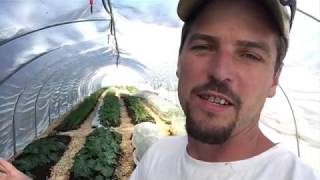
Richard Perkins walks through his no-dig market garden in Sweden, showing how he uses manure slurries and compost tea to boost crop vigor, manages tunnels for tomatoes and cucumbers, and raises chickens, turkeys, sheep and cows. He also smokes his own bacon and trains interns in farm design and keyline planning.
Questions this video answers
75°C (target 65°C mentioned as ideal).
About 87% (expected to increase to ~95% and remain until November).
Approximately 1,600 lettuces potential.
144-cell and 64-cell trays (also paper pot trays).
Chapters
So it's a fantastically windy day today. We've got a hot summer week ahead of us. Relatively hot, up at 20 degrees at least. But I wanted to have a look around. Eclectic mix of clips from around the farm, see how the gardens are doing. Any response to the treatments we've been doing, as well as look at how other things are going on around the farm. What's that? Day five. I think that's day five. So evening time. Inner temperature of bacon. It's good. 65 is an ideal target in Celsius, but this is up at 75. That's cooked. So we're going to turn the thermostat off and let that cool in the smoke overnight. Sunrise. How lovely it seems. Spewing my bacon. Look at that piece of that bacon. Look at that vacuum packer. Time to get the bacon on. So we've been doing manure slurries and things are picking up. There's also the temperature affecting things, but you can see the beets and kales and onions are responding well to the slurry we put on. And we've been cutting a lot of salad out of here, so things are perking up. We've got a lot of beans coming on first. Peas are ready and it's been quite nice to see some beds have responded to the chicken manure slurry that we've been putting on. Like some beds. Still a bit patchy, like you see, but we're doing the best we can. Some nice packed choys coming up here. So the first of all, the peas are coming and we've got quite a lot of beds of peas in at the moment, so we're going to look forward to some regular harvests. Should be in next week's box already. So we went through. We've made quite a lot of compost and compost tea with the interns who've been interested to learn about all the different soil preps we can do. So we took all the row covers off to be able to give the beds individual attention to spots, fertilize and then put compost tea on everything. A lot of nets are bulging out now with the rapid growth with a little bit of heat. Got some beautiful radish and turnips coming out as well as more mescalines and peas. Got some beautiful huge radish under here. This will all go this week. Just got an abundance of radish in there, so things are picking up. A little bit of summer, like weather is really helping with things. We had a really cold start These are some of the worst affected onions and we actually applied the manure slurry at the root zone of these and they basically haven't responded at all. But we're going to look in the south beds because over there I think there's been a marked response. So the eggs have all become regular and we're up at about 87% now. So that will increase to like 95 and stay there till November, hopefully. But we're getting a lot of eggs out of the egg packery now and very happy customers. They're beautiful eggs at this time. So this is our simple freezer space. We have the walk in chiller for veg and then we have different meat freezers and personal freezers. So we have a few chickens that are on farm for local customers. Most of them are freezer space in the city nearby. But here we have a lot of. This is all the bacon that we packed from the smoker the other day. It's amazing bacon. So we have a whole freezer here of sausage, lamb and bacon and a whole other one full of turkey ends, lamb for us. So lots of food. So this is our new intern kitchen. I haven't shown you folks around, it's very simple, but this is a big part of this year was taking the cooking and letting the interns cook with all the farm produce and partly for their own enjoyment and partly to take the workload off us. We've always had chefs and catered heavily for all the people coming here. So in the trainings we cater from our commercial kitchen in the house, but the rest of the time we have the interns cooking. We've been having amazing food and it's something we've done partly for time management and partly from feedback from people in the past. People obviously enjoy cooking and it's really nice to serve each other in that way, but also to cook with meat from the farm and eggs from the farm and vegetables from the farm. It's like top quality live food and being able to make amazing food with stuff that you know you're working with on a day to day basis around, it's really special. And that's been working really well. I think people have been eating fantastically good. So one of the big aims with putting down the slurry and compost tea is to really be able to try and balance out the nutrition in the bed. See the first peas coming here, got a lot of beautiful snap peas and we have about a dozen beds in that are coming into pee. So we're going to Have a lot of pea, but here's some leak. It's probably a bit windy for the microphone, but the leak has really perked up with the application that we put on it. Some of the onions are still patchy, but some of them, you can see, have had a marked shift. And so I'm pretty happy that we're going to do some more slurry application and then use that to try and balance out the deficiency you see in some of the beds. You can see it here, for example, with these squash. Such a big size difference and that's something that it will, you know, it'll hit us with subsequent crops if we don't balance that out now. So we're going to do more slurries and just really keep an eye on crop development to make sure we get even nutrition across the beds. Compost teas going on as well. We've been making up big batches of that. So we've made. We just finished a compost tea batch this morning, actually, that's gone on our experimental beds. We're going to have a look at those. And that's also gone on into the tunnel where we've got the tomatoes and cucumbers. We'll go and see them too. Fence around them now because we realized Mr. P is starting to come in and he's pecked a couple of heads off the cow. So that's no good for the trial. You can see radish is popping up and we put lettuce on the inside of that, then bean, then the kale. So different beds. Compost tea that's gone on this morning. The second application. Bioferts mycorrhiza fungi control biochar. And the mutant bed that's actually been very wet, this gets all the water off the roof. And so we had a torrential downpour the other day that's actually caused a bit of bed erosion. But basically at this point it's too early to tell much because everything busy germinating, first signs of lettuces popping up. So not a lot to say other than we can see some patchy germination up this end where the beds are drier. And so with the dry wheat coming up, we've worked out a watering schedule to make sure everything's treated in the same way at least, but too early to say any useful observation at this point, but we'll keep you posted on that. So we have a bunch of compost on, so two new paths. So we'll have a constant supply of compost tea in there and we're using the excess to come in and water through the tomatoes. So these are all getting strung up and pruned in the lower bases. So we're starting to prune the lower levels and we're going to be replacing these crops with lettuces to come in after the lettuces like you see here. Guys are having a pruning party by the sounds of it. But these lettuces ready to go out now. Really beautiful crispy lettuces. So we're always putting in. There's probably about 1600 lettuces potential along the sides of the tomatoes. And as we prune up these lower branches, we can always have tomato coming in. So we've got drip on both sides of the tomato, which allows us to keep tomato irrigated too. Huge amount of fungi in here, which is very characteristic of no dig beds. So a bit of work going through and pruning and just tidying up old crop residues as we rip these salads out now. So we've been putting in a lot more lettuce to replace what's in the tunnel. And so this room is filling up again. We've gone back to 144 cells and 64 cells, which we do most of the crops and in the past got a lot of micros on the go, but we've pretty much filled this up for the second round of planting. Now we're still using the paper pot for beans, but to eliminate the problems we've had with fertility, we're doing a lot of treatments on the bed and then going back to bigger transplants. These cells being like six or so times bigger than the actual paper pot trays. And so that's just become part of our response mechanism. We found that beans do beautifully, getting really nice tall beans. They transplant really quick, but just to get the optimal transplants to put in the beds and then try and get the beds in optimal balance fertility. Again, it's just one arm of a response. We've had people ask me what I think about the paper. I think it's really great and the seeding mechanism that we've shown you in past videos is really fantastic and it's really quick and easy to use. It needs an attention to detail. It's important, but I really like it. But I think for the first crops in the year, I would definitely use our old trays, just sampling micros. I think it's definitely good in the start of the year to predict to put out bigger plants in such a short growing season like we have that I think I would plan the first sort of month and a half of seeding to be in the old style trays and then, ah, new's good and then go on to paper pot in maybe about this time onwards and then maybe the last crops in the year go back to the old tray. I'm not fully decided. I think I'll discuss this, you know, in different ways at different times and come back to people with my conclusion after this year. It was a bit of a bold move changing everything to paper pop, that's got to be said. But that's part of our role also is, you know, really throwing ourselves into things and letting people know the results and collecting data that we can actually give a really useful, valid opinion. But I felt like I'm really clear how things work with these trays and I just wanted to use this as a fail safe way to make sure we're getting good transplants in the ground whilst we balance out the nutrition in the beds. And that just set us instead, you see from the gardens in the video today, like things are picking up fine and so hopefully we'll recover a bunch of those losses. And we're going into the period of the year where summer really starts. Like July and August is sort of peak season here in Sweden. So things going good and they've picked up a lot since the kind of little crisis we were feeling a couple of weeks ago. And it's been a good response from the team and it feels really good that we've made some progress on that front. So it's a super busy time to just be getting around, keeping my eye on everything. I'm coming out to check the birds and the sheep. You see the turkeys in the distance here. They're doing good. We've had a couple that have had some kind of problem with their leg, which appears to be some kind of bacterial infection or something. It's not something I'm familiar with. We never really had problems with turkeys at all, so we've isolated them for monitoring. But the other birds are in good health and I think it's a good idea that we isolated them. Boilers are going beautifully well and cows and sheep are happy. Although the sheep are still in their own little pen here and we've got a strategy of trying to make friends with them because they're so timid that it feels like spending a bit of time getting used to them and getting them familiar with us. So Luke's up here befriending the sheep and our aim is to basically we're going to extend our grazing plan to have these in this field longer because we've been checking the recovery of the grass up in nutfield where they were, and they're basically going to spend a bit of time in the riparian. Then we're going to put them all up in the forest patch in together, because it's been hard to keep them in the same place. We've just been moving them close together, but with the sheep's in nets. So we want to spend a bit of time with them in the same pen with enough space to get away from each other if they want to. Then they'll be going back into nutfield when it's fully recovered. And we have a thin pit of land at the top of Nutfield where we can pen them all in together very securely because of the perimeter fence, where we have the tall mesh net like this, so it's a lot easier to keep them in there. So we feel like that's a good method to get them used to each other, that we can then start moving them as one unit in standard sheep netting. So we'll see how that goes. But they're getting tamer and friendlier and spending a bit of time with them to build that trust and sort of relationship with humans is going to be really important in these next couple of weeks. So we've got the Shadow Beel up and running and the cows really enjoy that. There's a scratching post. We're pretty much down at the bottom here of top field now and we've got a couple of days grazing down here before we send them off up to the top again. But we think Skansen's been doing his job. We hope so. He seems to have been quite active, but he's a very relaxed bull. Very happy to have such a relaxed ram and bull. He's Canson. Hey, Skeleton. Hey. He's a beautiful chap. Hey, Scratchy. Scratchy. There's so many flies. Oh, yeah, yeah. Tomorrow the other eggmobile will be coming through and it's going to be a little bit complicated grazing through here. This. This is the impact the broilers have been having. So it always looks pretty pronounced where they've been, but this pops up as the greenest flush of all once they've gone through. Birds are doing great. Had no mortalities outside the brooder and people seem really doing well with the monitoring of the birds. Keeping water levels up in the hot weather and having no troubles with moving the pens. So it's going really well for boiler teams. Everyone Here is cycling on a two week cycle through different enterprises to really learn the inside out, how these enterprises work and all the nuances that you can only pick up by doing this and then communicating with each other about it over time. So you can really, you know, see changes over time, even if it's not your area of management at that time. And so a lot of jobs around the farm, our aim with the interns is to go through them together so that we, you know, go through a whole learning process in detail that people can take away the details of how to run these things for themselves. That's always been the attention of the internship, which has been highly successful in getting a lot of young, new, young farmers going. And we've seen that in some of our other videos in the proliferation of eggmobiles such as this popping up around locally and across Europe and America and Canada. And it's, yeah, it's a really rich experience for the people. We're in Keyline Design week this week, so we're learning how to apply keyline patterning to different farms and then applying the scale of permanence as a design organizing framework for permaculture design at a farm scale. And already just on the first day of the week, people are putting together some impressive work. Everyone's working with real time landscape architect in Google Earth Pro and I'm giving them increasingly complex tasks through the week to basically learn about horse system design in different contexts, different climates, and then applying it to their own land and going through meticulously as a group to learn how to draft farm plans for, you know, different scales and different types of operations and how to build bills of quantities and how to plan enterprises with spreadsheets. And the aim of the internship is a fully comprehensive hands on immersion into what it takes to run this kind of place. But then also all the back end bones of planning, decision making, marketing and economic planning that's so fundamental to the whole thing. And so diligent. Students have the opportunity to basically do several years study in 10 weeks. And it's pretty intensive. We're pretty tired already because we're, you know, we do a lot in a day around here. But it's, it's fun to have that program back on because I know how many people have benefited from it and we've had such a high level of requests for it because there's no similar such program that we've seen anywhere else. So it's been a joy, it's tiring and I'm certainly not as sparky as I used to be a few years ago. But we're. We're getting through a bunch of great stuff, and it's a beautiful group of people that we have here. Really focused on amazing things. So that's such a pleasure. All right, so that's all we've got time for today. It's Ragnar's birthday, and he wants to go camping tonight. So we're gonna take away and go camping up near a lake in the forest somewhere. Thanks so much for watching our videos, folks. Hope you enjoy the content. Don't forget to click, subscribe, share the video if you find it beneficial, and we'll see you in the next video. Bye for. Don't.
More from Richard


A review of short and intensive season on a mixed farm and restaurant/event space in Sweden






Alskade Kyckling Exploring complexities of poultry production in Sweden and what we stand for


