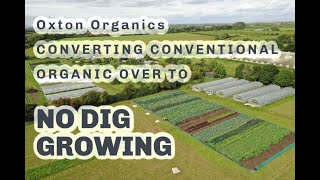
This content was created by Richard Perkins. This content was uploaded by Richard Perkins. This is a YouTube video titled "OXTONS ORGANICS UK- GOING NO DIG" created on September 16, 2018, featuring a conversation between Richard Perkins and Jake Oxton. They discuss the operations and history of Oxton Organics, a small, diverse, and profitable farm in Worcestershire, UK. The conversation covers topics such as the farm's no-dig practices, crop management, and the integration of permaculture principles.
Chapters
So I made it to the UK and I'm in Worcestershire up at Fladbury. This is the Fladbury Mill on the River Avon that runs all the way to my hometown. But I'm really excited about today's video. It's to meet with Jake Oxton at Oxton Organics and it's one of the few small, diverse, profitable farms in the uk. I met Jake in online training during the wintertime, and I'm super excited to meet him and go see around his farm. Good to be with you, D. It's.
Great to have you here.
Nice to meet you. I'm super excited to be here. And, yeah, maybe you can just tell the viewers, like, in a nutshell, what this. How big's the farm and what's going on here?
Okay, yeah, sure. So we're 12 acres. We're in.
That's about five hectares.
About five hectares, yeah, more or less. And we're in the Vale of Evesham in the uk, which is in Worcestershire. We're about an hour's drive away from Birmingham. This whole area used to be market gardens and plum orchards. Traditionally, we used to be like the market garden for Birmingham, which is the second biggest city in the uk, but that kind of died out after the Second World War when, like, agriculture changed. But my folks set up when they went to agriculture college in my local town, they met there and they said they picked up this land for quite cheap. We own five acres and we rent seven acres off the council. So they were one of the first vegetable box schemes in the UK.
Pioneers, I think they're number 17 as a registered organic business. Right?
Yeah, yeah. One of the first members of a soil association. And they were one of, like, they set up a website and a shop which could deal with kind of bespoke orders of vegetable boxes way back in 1999, which was, like, must have been one of the first. It was before all the kind of the big nationwide box schemes were set up. So they've managed to kind of compete with the kind of rise of the supermarkets and stay profitable and stay competitive. And I grew up here. I wasn't actually interested in agriculture at all. It looked like a lot of work for not much money. I was into design and art and I studied illustration and then I kind of. I was traveling a bit and I got really into ecology and I kind of started to value what my upbringing on the farm. And I realized that, yeah, actually I was very interested in agriculture as a way of supporting kind of ecological integrity. I'd been living in A community in Spain where I'd done a permaculture design course. And, you know, I was kind of all inspired to get into agriculture. I was inspired by like the work of people like Martin Crawford, using a lot of perennial crops. And I kind of thought, but naively thought I could just come back and plant a food forest and everything was going to be cool when my parents already had this really like viable, diverse business.
Yeah, really established.
Yeah. And like, I didn't even realize how privileged I was to have that. I kind of thought I was going to come back and we were going to stop doing veg boxes and just grow like, you know, like hawthorn berries or something. I didn't know what I was going to do, but I came back and I kind of got. And I think because I studied design, I got really inspired by like, I found your work and I found a work of like Curtis Stone and people like that. And I got actually, really into market gardening and started to value the productivity of production farming basically. And I'm still really passionate about integrating with permaculture stuff into it. Like, you know, we've got a lot of agroforestry plans that we're working on at the moment and we're going to start planting this winter. So I want to bring the perennial the best aspects of permaculture, much like your work, and integrate it into what I'm so privileged to have. And because I've already got access to this awesome business and amazing farm and a huge wealth of knowledge, you know, my folks have been growing veg for fear 30 years. You know, I'm really privileged in that I can just, you know, come and step in and like really, really get the, get the agroforestry going and just optimize the growing a bit, you know. So my parents, they. We've got quite a famous agricultural college in the town called Pershaw Agriculture College. And it's. My parents had both gone there to study. My mum was studying perennial nursery crops and my dad was studying veg production and they met there and they had a kid, my sister, and they decided that they wanted to get land. My dad was working for other growers in the area and just finding it frustrating. People who were basically pretending to be organic and they were quite passionate about setting up their own farm. So they found this plot of land which was a 5 acre rhubarb farm or had been a rhubarb farm and they came and they bought it and we moved into the land in caravans where we lived for 13 years in Caravans before we built the house. And then we had the opportunity to rent this parcel and. Which is 7 acres from a council. It's like a county vision. And yeah, so they kind of. They came into farming when there was still quite a big wholesale market where you could still just make a living off selling like a big crop of runner beans and stuff like that, you know. But that kind of changed. Even just within the first year years of them farming, they were struggling to access wholesale markets and get a good price. So they read a, a newspaper article about someone setting up a box scheme, which was actually Guy Singh Watson from Riverford Farms. I mean, the way that Jane, my mother, describes it is that, you know, it just clicked. But they knew that that was the future of the sales model for the business. So it was kind of going into the unknown a little bit. But they went to the local village Fate and they set up a stall and they got had like, you know, a piece, just a little spreadsheet that they'd drawn up with pen and paper and they got people to sign up and within two years they had a waiting list. Like it just took off totally. And they used to deliver within about 20 miles. We're a bit smaller delivery radius now, but they used to deliver to Cheltenham and Worcester and into some of the Cotswolds. But we're fairly high population density compared to Sweden and so we can keep a very local customer base. And yeah, I mean, they were part of a kind of first wave of organic farmers, I guess, in the UK when it really took off. And as I said before, they're like one of the first members of the Soil association and it's just grown from there, really. They struggled when, you know, before. I've got a friend who I've worked with here for the past three years or so, he came, he got into growing when we were traveling together and he came when my parents were really starting to struggle. Like, my dad had just had some serious ankle surgery and he was, you know, the physical side of farming he was really struggling with. And so the business had contracted quite a lot to be able to deal with that. And my mother was really struggling, she was just working stupid amounts. And my friend Rakesh came into the business and he kind of. He basically like increased the capacity so they could, they could make a living again, basically. And he was, he's a. He's a grafter. He's like super hard working and he really kind of saved them really. And then, you know, like, what I was Saying I'd done that pdc and I was like, awesome. My parents have got a farm I can play with. So I came back as well. And you know, it's been since that point of coming back to the farm, the learning curve has just been like a right angle. It's been huge and I've learned a huge amount these past couple of years and that's kind of where we're at now. I guess the business model that I'm working with is pretty much the same thing that they set up. It's not changed a huge amount. I've taken on a bit more wholesale custom, which I just do all through online spreadsheets, which has kind of been something that I've set up separate to the existing business and. But you know, I think I mentioned this already, but I'm just hugely privileged to have access to this. Like, I've watched some of the videos that Richard's put out of other pharmaceutical startups and I know it's all that establishing the market and bringing the production in and building the infrastructure is something that I had landed on my doorstep, like literally. So, yeah, I'm, I'm hugely grateful for that and totally in awe of the people who are starting up from scratch. I mean, the amount of labor it takes just to maintain this business and farm, let alone start a business from scratch is epic. Really. So. Yeah. Yeah. Nice guys.
It looks beautiful, Jake. Like, how many square meters have you got here?
2,800 square meters of bed space outdoors, plus another 600 of protected cropping and polytunnels.
Wow. And two of you managing that?
Basically most of the outdoor stuff is just for two of us and then. Yeah, my mother tends to deal with polytunnels, but it's been mostly three people in the team couple of years and.
You'Re doing totally no dig.
Yeah, totally no dig.
Awesome.
Yeah, this, this perch has been no dig for a couple of years. This was the original trial plot. And then some of the polytunnels have been no dig for, for three years and they'd already done gone no digging the polytunnels even before I came back, which is just a total no brainer. Like poly tilling in polytunnels is crazy.
If you ask me, but you've been quite instrumental with bringing this no dig to the sort of more field scale.
No, totally. Yeah.
This is your sort of your first step into taking over a bit.
Yeah, sure. So yeah, I mean I've managed to systematize the mulching and the crop management in a way that works with the no dig because there are jobs which have been created by going no dig, which we hadn't wouldn't have done before. Before we were using a system of herbal lays and tillage to manage fertility.
So that's for viewers. They were like shifting their cultivation so putting it back to pasture for a couple of years.
Yeah, exactly. So we would, after growing crops on an area for a couple of years, we'd seed it with a diverse mix of clovers and mineral accumulating crops and that would bring the fertility back to the ground. And then you would plow that ending plant into that on a rotation.
It's a major departure from how your folks are used to doing things now.
Yeah, it has been. How's that been emotionally? I think there was a bit of tension in the team. I think my dad, especially Julian, he was a bit apprehensive about the amount of work we would be taking on to bring it into production especially. And I think he had his. You know, he was kind of skeptical about whether the system could work on. On this scale.
But it's looking super clean, Jake. I mean it's. I mean it looks really good.
It's. It's good. It's nice. I mean this stuff, this has been a bit harder to manage this year because it's not had the heavier mulch but some of the more recent reds have had.
But come on. I mean, for two of you on this scale, I'd say it's the cleanest garden I've seen. Except for ours.
That's good to hear, man.
It looks beautiful, dude.
Yeah, it's. I mean, yeah. Weed management has been a. It's. I mean we're, we're weeding like we're definitely weeding but I mean we're actually achieving. Yeah.
On top of it, totally.
Like a nice clean beds which are just really nice to work with. And there's a total different quality of weeding than we. Than weeding through tilled stuff. I mean when you're kind of. When you're going through a bed and. And like looking for a weed and picking it out here and here and there, it's more like. I mean, I love foraging mushrooms and it feels like the same, I get the same satisfaction weeding these days because I'm kind of in there like just looking for weeds. I enjoy weeding now, which I didn't used to enjoy.
And then you've got. You're using tarps also.
Yeah. So we used tarps when we brought the beds in. We laid the compost and then we tarped it. We did two different. There's two different areas. The next one we'll see in a minute. And this area, we laid the compost first. We tarped it for about four months. This was a herbal lay. And so we had a lot of clovers. Not clovers, sorry, chicory and other deep rooting plants which kind of opened up the soil a lot. So we didn't actually broadcast in a lot of these beds. But it's something I'm going to be doing a lot more of this year because some of the soil is definitely quite tight.
But what's the soil like generally that you're farming on here?
Sandy clay loam. It's pretty good. We're on floodplain here. We're on like a kind of higher tier floodplain, so we get very occasional floods. The last One was in 2007, I think.
Wow, look at this. The brassicas look awesome.
Yeah, they've. They've seemed to really like this system. And this on this patch we had put a much heavier mulch on and weed management has been quite a lot easier here. Definitely. But the one problem we have had is that we've had huge amounts of wind blow because it's right next to where we had our tilled veg replacement previous year. So there's a huge amount of. There has been a huge amount of flowering weeds and a lot of weed seed and especially thistle. We've had a lot of sow thistle and other species.
Awesome.
Yeah.
But this is like, how are you selling this? Like, how many customers are you selling to?
So we have between, like, our box scheme is between about 60 and 90. It's. It can go up to like almost 100, but it fluctuates throughout the year. We tend to. Orders drop off a lot in the summer holidays.
You do it as a month by month basis where people aren't committing for the whole season.
They pay week by week by week. Yeah. So they just pay as they get a box, basically. And we have. It's probably a higher administrative burden than like traditional CSAs, but it means you're not locking anyone in. And I think because of that it's much easier to sign people up, but because they can just try a box. And it works quite well for us. And because we're already, you know, we don't have any debts on the land and, you know, we don't. I think a lot of the CSA models which work well for other people, you know, are not. Maybe not so Necessary for us. And it's kind of nice that we can just grow and sell what we have and not have, like a kind of obligation to people in that way. So last year we did about. Turnover was about 6,70,000 pounds on. On the veg boxes. But last year that included stuff that was bought in and sold. This year we should be doing about 80,000 pound in veg. Just what we've grown, like, just for sales from the stuff that we're growing. That's awesome. It's good. It's like.
It's really nice quality stuff as well. Look at these beauties.
Yeah, we've had a lot of kale. Like, it always seems, I think at this time of year, you've always got way too much kale. But then the winter comes and because we're cropping all the way through winter. Yeah, I mean, having a lot of kale can be really. I mean, this is just rabbit protection, basically.
You have a lot of rabbit pressure here.
We do have heaps of rabbit pressure here. And. And this is what I'm using because it's what I had available. Like, my folks have been. Because they're moving. Because they've been moving the veg around the farm. They've always used this because it was mobile and they could set it up on any patch. It was really versatile.
It's not even electric, though.
It's not actually set up because unit started working, like stopped working a couple of days ago. So I've just ordered a new one.
But you would normally have.
It's usually electric. And we use my packs, like as a mulch mat around the outside of a bed, just to give a buffer against the grasses and perennial weeds. If you're ever doing this to manage rabbits in veg, then you should never leave it set up and not be on, because what happens is rabbits will chew through it. If it's not. If they're not getting a shock, they will chew for it and they'll make holes. And this is really old and it's full of holes. When we were going totally no dig, it's easy to see. And how it could seem unachievable, you know, because it was a huge. It is a huge amount of work and a huge. And a lot of materials as well.
But you've come up with some pretty crafty ways to move.
Yeah.
Let's go have a look at that. But first I want to see how's your compost? What do you think about it?
It's okay. It's like this is municipal Green waste. And from what I've seen of the guys over in Scandinavia, it's better than the green waste compost that they can. But it still can. It's still quite low for. It doesn't have. It doesn't. You know, it's not like a manure based compost. It's basically kind of hedge clippings and. But it's. The thing is it's quite. The texture is good. It's really easy to move. It's not like clumpy or.
You know, you've had a really dry summer here too, right?
Yeah. Really one of the driest. It's the driest I've ever remembered.
But it's been a drought everywhere. So how are you irrigating this whole lot?
So we have quite a high capacity pump coming from a spring fed pond. I mean my folks put in an irrigation system which can do our whole 12 acres pretty much. So now I'm only irrigating like one acre. It's easy. I can run four lines at once. We use just like simple risers with a stake and I get these from access irrigation. And we use quite a simple sprinkler head which has two. It has two outlets. So it has a long distance one and a short distance one. And because of the way it's set up, I can. It's like the Radius is like 24 meters. You know, it's. I can, I can put a lot of water down over quite a large space quite quickly. And because of the way we've got the garden arranged, I don't really need to do sectoring or anything like that. I just move them around. I mean once you get, once you get practiced at moving hose pipe, it's quite quick. You know, it's not a huge amount of work.
We didn't ask how long are the actual beds?
24 meters. I think that's a really great size because if you get rolls of material, they come on 100 meter rolls.
So you get four cuts.
So you can just fold it in half twice and cut it. It's really quick. And it's the same. If you were to do like 12 meter beds, you could just fold it again and cut it. I mean we've had this bed of spring onions. Like usually before when we were using tillage you would have like one. We kind of do our spring onions in clumps and like one in three would be a write off because of white rot. And, and I've. And I've cropped out half of this bed and I'VE not seen a single instance of white rot.
That is awesome, dude.
It's cool. Yeah, and I think that's just because of, you know, the more fungal diversity in the soil. Basically. That's my theory.
But like, with limited, like people resources, you've been using machines a bit as well to make beds, right?
Yeah. So I think what is like, tell.
Us your bed prep methods.
Okay, so we've, I've marked out all the beds and what I did is I've measured on the left hand side of each bed, I put in a peg and it's on the same place at both sides at both ends of a bed. And what I do is I have a piece of string with just a bungee cord on it which I can, I can attach to each peg and that will give me like a perfect straight line where the edge of each bed is. And then what we do is we use the tractor and we've got old. Like one of my tractors is like 55 years old. Probably go another 55 years. You know, it's just what I have around views and we use a link box and we've just bought a hydraulic link box. And what this does, essentially it's like a bit like what you get on a digger, you know, or on like a dumper truck. You can drive it, you can reverse into a compost heap and you can pick up a big load of compost and you can basically, you know, you.
Can drive fits over the bed.
It fits over the bed and then you dump it in piles where you want it and you just come back and make it.
So on your own you can.
How long does it take to make a bed? Like half an hour. You know, it's nothing awesome. You know, probably, I don't know, maybe less. I've never timed it, but before we were just using this old link box.
Made your own thing?
Yeah, it was like. This is the link box we used to move veg around when it's too wet to use the van.
Yeah. That looks like a very good investment you made then.
It's good. It's really good. I can't remember how much it was. It was about a thousand pounds. It wasn't that much.
That's not a lot.
It's not a lot. And you can use it with tiny tractors. I mean, you can. I've seen them used with like tiny little compact tractors. Yeah, which would be great because these are, you know, these are a bit big to be taken on now. Dave, There is some signs of compaction around the Edge of the bed.
You're talking about the old Ford here.
Yeah, this is a Ford. What is it? Fordson 3000 I think.
But it's got the right wheelbase for the beds. You got.
Yeah. I mean because we've been using a meter beds because we thought it would integrate well with the tractors. But what's been happening is that around the edge of the beds there has been compaction like you can see with beetroot and stuff. Especially where it's planted right up to the edge. The outside ones are definitely growing slower. But what I'm going to do is I'm just going to reduce the size of the beds and have bigger wheelings because at the moment the wheelings are only 40 centimeters. Oh man.
If you keep on top of putting that material down this is going to be totally weed free in a couple of years. It's beautiful, man. Yeah. What is this machine for?
So this is. We brought this up. I think it was from a golf course. But this was something that was already here when we went. No dig. I can't remember my. Yeah. Jane had bought because she wanted to start taking cuts off the herbal lays to make compost so that she could go no digging some of the tunnels. And basically it's a flail mower but it's got a big hopper on the back and it hoovers up all the crop residues and just dump and you can put it in the back. And what we do with like kind of crops like brassicas where they're quite bulky is we'll cut them at the bottom and we'll put them into a windrow and we'll add straw and then we'll hoover the whole thing up together and just dump it into a windrow. So it's like it's a really quick way to make compost.
That's awesome. So you're applying some slightly bigger heavier tech to just really optimize it. And maybe you could say like, like what's your working week look like? Because you're having the weekend off, right?
I'm having a weekend.
What hours are you working in the week?
I mean like it's been. It's been pretty intense but then we've been achieving a lot more than we had been before. I mean, you know like we do do like 14 hour days quite often or even more like 16 hour days in the summer. But it's just there's a lot to keep on top of and.
But with.
But one of the things is why we have to do that is because we're growing a lot of crops which are not even paying their way basically.
So there's part of your redesign now that we'll talk about in a bit is like shaving off some of them crops and you're bringing in this fresh new blood to just optimize and streamline the business.
That's what I see my job as is basically just optimizing the growing here because like the business is pretty, pretty awesome. I mean it works really well. But like, and if we can get, if we can get like the market gardens profitable in terms of square meterage and timing, then it could be like a comfortable, you know, life. Like there's other stuff I want to do. I probably never have like a 40 hour week because I don't particularly want to. I like, I like being out here, but I'd like to maybe spend less time doing some of the, you know, there's stuff here but when you're on, when you're out on in the market gardens, it's, you know, it's not like, it's not really, really potent work. You know, it's a lot of kind.
Of things you could cut off and other things you could lever up basically.
Yeah, just really optimizing it. Like on a year like this when apples. It's just an amazing year.
It's been an amazing apple. Yeah.
Yeah. I mean we've got way more than we can sell and what we've done in the past is just made a load of apple juice because we. There's a local press, but that's actually quite, it's quite a big investment and we don't get a lot back from it and there's other stuff but I want to invest that capital in at the moment. So we probably won't make juice this year, but yeah, I mean we sell the apples. I mean we've kind of got, we've not quite got enough to go to some of the bigger wholesale markets. So it might be something that we do with the agroforestry is that we actually plant more apples so we can access some bigger, bigger markets. But it works well for us. I mean it's not hardly any work. I mean we spend, you know, we spend maybe a day a year pruning and maintaining them.
Your father's got an interesting methodology for wrapping branches.
Yeah, yeah. So what he does, he trains. He kind of has a few main branches and then all these shoots that come off and grow tall he brings down and he basically wraps them in.
So kind of ties it up in knots.
Basically ties the whole thing up in knots. And it's. It's good, but after a while, it gets. It gets a bit too intense and we've had to. Like, last year we had to spend. We had to prune a lot more of it out, and it was kind of tangled and annoying.
So it's like a time saver every couple of years. And then you have to take.
Basically. Yeah. I don't. I don't know if it's the best way to do things, but, I mean, the trees are, like, super productive. I mean, I can't complain, really.
And you're not getting any fungal rots from it?
Not really, no. I mean, there's been hardly any disease this year. And, you know, I mean, it's maybe not the best year for fungal diseases because it's been so dry, but, yeah, they're good.
What? You got quite a diversity of crops. Do you know, off the top of your head, how many different crops you've grown?
When we were doing the seed order, we ordered 120 varieties. That's not just crops. I mean, that's different varieties of different crops. But yeah, I mean, too many.
Right now you're growing things like corn. Is that something that will go in the. In your plan?
It's one of those things. It's really. It's a lovely thing to grow, but I don't think it's very profitable, particularly. I mean, I've not. I've got sales data on everything, so I'm gonna add up what's making the money. But there's crops like corn and squash, I know, work really well for other local growers. So what I'm happy to do is, you know, with. Now we've gone to this system, it works really well with kind of more intensive, profitable crops, which are hard to do. You know, like growing rocket, like, we do, like baby leaf rocket. You can't do that in a tilled ground. You know, weed pressure is just way too high.
So you can then start trading some of these crops because you're selling by box. You kind of need that diversity.
Yeah. So, like, we can. Yeah. I mean, we can sell to other growers and we do sell to other local growers and we can buy some of the crops which work well for them, but not so much for us. Yeah, that's. That's, that's how I would like it to work, because we can support other farmers. You know, we have a pretty decent market and that should work well. But, like, there's some stuff like the squash, like this year I counted, I counted all the squash that we were getting off different varieties and, and just by, just by using good varieties, like some of the Hokkaido squash would definitely be, Prof. What I would consider profitable.
Show us the most.
One of my kind of goals is to be getting about 250 pounds per bed per crop, minimum pounds money. And like this one, for example, this Hokkaido, this is a Moro. This variety, it's quite, you know, they're kind of £2 53 pen of squash. That's just one bed. Whereas this one, which is Buttercup, that's two beds worth. You know, it's just like a huge difference in yield between the different varieties and people like to have the diversity on like veg stands and stuff. But for us, like, that's our most popular squash and the yield is massive. So I think that like, that qualifies as a profitable crop. But most of the other ones don't, basically for me.
So keeping really good records and data is really empowering you to drive the business in a different way that perhaps your parents couldn't if they didn't have that data.
Totally, yeah. I mean, it's really important and I've been a bit slack with the monitoring. I should have been more on it this year.
I reckon you were busy.
I mean, we were really busy. But what I want to have sorted for next year is really like solid procedures so that. Because we're going to have some new staff next year as well, but I can have like logbooks where all the yield data is just recorded automatically. Like, that's the way I want to have it set up because, yeah, I mean, sometimes you end up making huge assumptions and like I had a huge assumption about squash, but this has worked out really well. And that's just for me, just counting with squash as they come in of a shed, you know, it took like, didn't take any time at all. It took two minutes. And that's empowered me to. To make a. Make a good profit off that crop.
That is an almighty bed roller.
Yeah, I mean, because we were using a meter bed, I thought I needed a big roller and so I got a big roller. And this is the one that terratech do. It's 1 meter, it's 120 centimeters, but it's really big and awkward. I regret buying it, like, to get it from one side of a farm to the other. Like, my layout is really long, which is something I wouldn't do again. But you know, to get this roller from one side of the farm to the Other is not a good use of time, basically.
Are you happy with the six row seater?
It's great. This is one of my favorite tools. It's just like, it's. I mean it's super efficient but it's also just a joy to use. You know, it's one of those tools.
Super well made.
Such a pleasure.
I've been trying to. A few people have been wanting them four row seeders and yeah, they're not a joy to use.
No, I didn't. I, I almost got one instead of a six row but I'm so glad.
They are rub mostly like standards, like market garden crops. I've seen like all the typical things. We got a couple of unusual things. What's this one?
Yeah, I mean this is something that we. I'm usually fairly dubious about like exotic crops, but this is something that's worked really well for us. It's called Aztec broccoli. I think the native Mexican name is huazanto, I think. But it's like a. It's like a flowering shoot and it.
Grows like a weed.
Yeah, I mean it's like fat hen, basically. You know it is, but basically like a, like a weed. But it's super. It's really delicious. When it's tender, it's like asparagus and it's got the flavor of kind of a spinachy asparagus. And our customers have gone mad for it.
I mean you're doing 200 units a week.
Yeah, I mean we do, we get. Because we've, we've tried it wholesale with one of our bigger wholesale customers and they take 150 bags and we. Then we sell another. You know, we can sell another 50 or so, sometimes 80 in. In the boxes. So maybe not. Yeah, we, I mean we sell a lot and, and it's probably the most profitable crop on the farm. I mean you can. We can take 100, 200 bags of this, you know, wholesale. We get £1 10 of that direct. We sell it for £1 50 and you can do the same again next week. And you plant it once.
It's like it's just keep doing it all season.
Yeah, I mean I'm going to do a few plantings next year so I can keep it tender. But it's great.
That's awesome.
Great discovery as well. And really it's basically quinoa. It's like the flowering shoot of a quinoa plant. And it's really, really nutritious. Really, really tasty.
I mean it's. You're saying you're doing some weeding with. I'd be curious to hear what tools you're using. But it's, I mean it is remarkably clean, Jake.
Yeah, I mean we've had a bit of a push recently to get in like, you know, there was a few places where weed pressure did get high.
But some like perennial stuff lying underneath. Because you basically put this straight down on pasture, like. Yeah, this hasn't been tilled, right?
No, it's just, it was just straight down on a herbal lay and then blacked out.
For folks listening that don't know the term like herbal lay, like, like it was basically. Basically just past it.
Yes, it's just like a diverse.
And you've just put. How much have you put down? Like how thick?
So like we were going for a minimum of 10 centimeters, which isn't enough. I don't think like you want a minimum of I think 6 inches. Ish.
Like 15 centimeters is what I mean.
Yeah, I mean just to bring it in. I definitely think you want that much. And what happens is when you're raking it out as well because the ground's not perfectly smooth, you do get like thinner bits and you get areas where the weed pressure is a bit greater. But yeah, I mean weeding management, it has been, it's been good. I mean we're definitely like. It's not like we don't weed stuff. I mean I'd like to get somewhere like that eventually potentially. But the weed management, it's like satisfying weed management, you know, because you weed stuff and it's clean, it's not like just doing it.
No, I think you've done exceptionally well. Like I often go to no dig startups and it's. People have not put enough material down. But I mean to come into pasture and to have birds looking like this looks beautiful, man, it's good.
One thing I regret not doing here is that we were going to use wood chip in the pathways. So. So we just laid a lot of compost in the beds. But putting the wood chip down was not achievable in the end. I'd like to find a way of doing it, but. So like weed pressure in the pathways has been fairly high and we're kind of just keeping on top of that with a wheel hoe. But I mean, yeah, it's good. And if you like weed management is about timing. You gotta be proactive. You can't let things get too big because once you do that you're just chasing your tail for the rest of the year. Like there's always something that needs to be hand weeded before you can get to the small stuff which is really easy and quick to weed. So like next year there's been a few things like squash, it's been really hard to keep on top of a weed and like in the corns and stuff, you just can't get in there to get rid of some of the couch grass and stuff like that. So.
But it's really good point. It's like if you, if you're doing no dig and you've got a good amount of material down and you take things at kind of leading stage, it's super fast and easy way so fast. So these guys on weed control?
Pretty much, yeah. I mean, yeah, like we graze them in between the tunnels because it keeps the pressure, the weed pressure from the sides. You get couch grass and stuff and by growing in from outdoors.
So currently you've got sheep and pigs but they're more for like the homestead value at this point.
Yeah, basically like the way I think about it, like they're not a big part of the economy of the farm but they're a big part of the ecology of the farm, you know and it's something that we want to build on as well. Like the sheep and like ruminants on our scale are never going to be profitable. And it's something we do because we love it. And maybe like these sheep with. If we can get a market for skins or wool, I mean it could.
These are Gotland, right? This Swedish breed is really high value skins and they're good to eat too.
No, they're delicious. Yeah, they're gorgeous. When we took your online course, like.
The one.
Animal enterprise that I thought could work really well for us would be pastured turkeys basically because we have a, we have a good Christmas market here and there's no, I don't know any. You know, there's not a lot of farms doing outdoor pastured turkeys. There's a lot of kind of like bronze turkeys but they're all usually barn reared and I'd really love to get more animal impacts out on the pastures and I think that's the way I'd like to do it just with the, you know, the gobbledygos.
Is that something you're considering starting up?
Yeah, I really want to, I want to trial. I was going to trial 200 birds but it might be a bit much. I was going to trial. I think I'd like to trial 100 birds next year. But like I need to be Careful with thinning myself out too much.
So the turkeys are super low maintenance.
Yeah, that's kind of what I thought. Yeah.
Compared to like chickens.
Yeah, definitely. So, like. Yeah, I mean, I'd like to do 100 next year if I can get the infrastructure in place, but I need to for market gardens over winter. I'll. I'll build a gobbledygo in the spring and give it a. Give it a whirl. Yes. So this tunnel we've got. Got our cucumbers and basil and we've got winter sewings of coriander and parsley going in now. And I tried peaches here. If, like with some of the smaller crops, like the winter salads and stuff, like, it shouldn't make any difference really to have a row of trees in there. So if I can like kind of north, south. Yeah, north, north, south espalier. So it's tidy and, you know, like something like this lettuce, it should integrate quite well. And I just love peaches. It's not something I'm particularly doing for the business, it's something I'm doing so I can make myself peach pies.
Is this like last seedlings of the year going in?
Yeah, this is all winter salads. This is. It's actually our own compost as well. And I've got like. We use them as the Salanova type lettuce. I don't know how well it's going to do over winter, but I preferred it to doing direct seeded lettuce and using the greens harvester because you can just keep the quality so much higher over a longer period. It's much easier to manage in that way. We have two tunnels of solanums and we rotate them. And this is peppers and beautiful aubergines and we have some bush tomatoes, which I'm not gonna do again.
But these peppers look awesome.
They're gorgeous. Romero. They're a kind of pointy type and one of the only ones you can get to ripen properly in our climate. We get a bit of mice damage on the end sometimes, but.
And some nice eggplants.
Yeah, Beautiful, beautiful aubergines. But what happens with these is it gets right to the end of the season and you start. Start to get heaps ripening up and then you've got to clear it to get your. To get your winter crops in. I mean, I don't know if they're that much of a profitable crop because they take so long to get into production here. If you could heat this tunnel at the start of the season. That'd be great. I'm sure they would. They're really popular. But we're expecting frosts fairly soon, so we've kind of cleared a lot of a leaf out now and we're just trying to ripen as many as we can before the frost.
But you're doing in quite close spacing.
So 20s, 30cm we were using this year and, and just a single row as well before we were doing them like staggered rows about about twice as much, about 60 centimeters. And it was really messy, it was hard to manage. But we're doing tomatillos as well, which is great.
I'm a fan of them.
I love them. I like, I cook with them a lot. But they're not that popular. They've not been that popular without with our market. But it's a shame because they're delicious.
Yes. I think they're really underrated. Yeah. What, what's your season in terms of frost dates, just for reference for viewers?
Like the average first frost of the year is mid October, I think, and the last frost tends to be early May.
Okay. So you've only got like a month more than us. Yeah, but probably higher temperatures.
Yeah. And like we don't. The first frosts don't tend to make an impact on the tunnels. It tends to stay warm enough to keep stuff alive for a while, so.
Looks great, dude.
We can keep the tomatoes going into November sometimes, but it gets to a point where you need to clear them to make room for winter crops. Because we can make a decent amount of money from tunnels here. We have enough. You know, we're quite fairly warm in winter compared to Scandinavia or continental climates. You know, we can produce a lot. But yeah, this is. I mean, these are some of the first good crops I've got of salad brassicas this year because the flea beetle. Beetle has just been insane.
Yeah. Too hot and dry. This is with the six row cedar.
In six row cedar. Yeah.
And like it?
Yeah, it's. It's great. I absolutely love it. The salad makes it the moment. It's really simple. It's just this mizuna tatsoi rocket and lettuce, usually about, you know, 60 to 70% lettuce and people love it. I mean, it's a really simple mix. Like I know other growers in the UK who do like super complex mixes, you know, loads and loads of leaves and picking it all by hand, it's nice. But this is delicious salad and it's really quick as well. We sell it quite a lot. Where, you know, we sell about 20 kilos a week at the moment. So it's good, it works for us.
Look at all this. It's what I dream about. Cool. This is your nursery?
Yeah, it's pretty basic. I mean, this glass house was built about 15 years ago now and my folks got it off a glass house company which was closing down. So they bought the whole thing for 700 quid, super cheap.
But you still got a lot of crops to put in your ground.
Yeah, I mean, we're doing a lot of winter transplants and what we tried to do is because we get such a good wholesale market in like April, May, like the Hungry Gap stuff, we can sell any amount of stuff wholesale and we can get a really decent price for it as well. So we push to have a lot of spinach available. We're going to try and have some overwhelming spring onions. And like, there's a variety of kale there, which is supposed to be like a later flowering variety that you can get some early cropping off.
£700 for this greenhouse.
It's ridiculous.
That is epic.
I think they had some, like, things they had to buy which cost more than the rest of the glass house combined.
And I mean, your folks built this house, right? So you were living in caravans when you came for years?
Yeah, like the 39 years of my life we were in caravans.
Tell us about the house. Because you grew up in that sort of environment.
Yeah, yeah.
So it must have been amazing to have this built.
It was, yeah. I remember it being incredibly exciting.
How old were you when the house was going up?
I was. They started building it when I was about 11 or 12.
That's a little compost lure on the back.
Yeah, I built that.
You build it?
Little pet project.
That's epic, dude.
It's nice.
And this is all coated with larch, right?
Yeah, yeah. It's British growing larch. It's treated, which is probably unnecessary because larch lasts a long time anyway. They use it for planking ships, I think, sometimes. Yeah. But yeah, it's good. And yeah, we'll probably never have to reclad it in our lives, which would be cool.
It's epic.
It's nice and it's all timber framed and like it's all heated with single wood stove, all our hot water, all our heating in the summer, I mean, in the winter is all.
So they really built this up from zero, from nothing.
Yeah, it's amazing, really. It's. It's incredible. I don't know how they managed.
This Is your electric vehicle? Yeah, that's for delivery.
Electric van. I mean, it's probably not like a priority of investment to start, but my dad's really into like green technologies and stuff, so he bought an electric van and it's ideal for deliveries. It's awesome. I mean it's basically free to run.
And you're basically doing all your deliveries within sort of 12 miles.
14 miles.
14 miles.
It's really good.
So I just having a look in the tool shed, I asked if we could see some of the tools they're using. Nice organized shed.
It's cool. It's like I've reorganized it like three times since I've been here and I'm finally happy with it. Things that I really like, I love having. We have an electric chainsaw which is awesome. It's super light and really nice to use. Not so loud. The knife sharpener, very good. Being able to keep your hose sharp on your wings is really good.
And for green services as well. That one.
Yeah, it's good. It is good.
Did you get that one over in the States or in the uk?
No, I bought it here. Yeah, I bought it off ebay.
Yeah.
What else do I like? I love the Colinea hose. They're like the most incredibly ergonomic tool. You know, I really like that weight management.
Accurate and fast.
Yeah. A good rake, you know, it's one of those simple things. Like I spent a bit of money and got a good rake and it's just, it's a really enjoyable. But obviously Green harvester has totally changed salad production. It's great. I think I see a lot of people in forums and stuff buying them. But I think you've got to be wary that you do need to grow well to be able to use it well. You got to grow clean.
Yeah. Clean beds, flat beds, weed free. And the farmers tools dot com.
They're broad fork. Yeah, I've only got that recently.
I had this that's off Malcolm.
Yeah. Very late.
Yeah.
And he's just.
I'm gonna go and see him on the way home, so maybe I might make a video in his workshop.
They seem really sweet because they always send you a little letter and stuff.
But he's not a. He's not artisanal blacksmith, so he's not that excited. But he's making broad forks for the farmer's tools.
Oh, nice. Yeah, it's really good. I made one myself. I started but it was really heavy and horrible to use. But yeah, six row cedar is. Is awesome.
Game changer.
The Only cedar I use now. We had an old Stanhay robin which is like, I keep it just because it would survive like nuclear holocaust. It's like built like a tank, but it's horrible to use. But I keep it around just in case.
So pretty simple stuff. This is like you building on. This is what your folks have been using. And you've just added green house, the 612 seeded board for basically like the.
Only thing I would say would be like that hydronic link box for spreading compost.
This is the knife sharpener for those of you that are interested in that. There's different markets on the. Different products on the market. But really good for the greens harvester. And you can use it in a sort of curling way around each time. You can also do it by hand very easily. And it's. It's good to learn to sharpen by hand.
Yeah, definitely. Like, I think with that, like, to be honest, it's good, it's quick with the greens harvester but you, you lose the point.
Yeah. You don't want to lose a point.
Yeah, exactly. And I think, I think if you. I think you can do it much better by hand.
You have to be. I can show you how you do like, like if you want to not lose the point and then show up on camera. That one, you need to. If you're sharpening this, you've got to keep these points because that's what initiates the cut. So the point is more important than the curve. But to keep it there, you need to angle this off flat and do half the curve at once. And then you come back and do the other half. I also do it by.
Yeah, it happened to me. That was really annoying.
That's no good. Because these are. This is what initiates the cut. If I had a hand file, I could bring that one back in to true. It would take me about 40 minutes.
These are all harvest crates. Yeah. And it gets harvested into the crate and then it comes here and it's either, it's either washed at this table here I have the kind. This is what they use in clubs to wash dishes. It's hard to see. I need to connect that.
I get the idea though.
That's. So what happens is you can use one hand to be washing while you grab the other one and then you can let go and move that one there and you can use both hands and keep it there and it's really efficient. Yeah, I quite like that. It's not so good for all stuff, but I like it for radish. And so I use a kind of gun for beachroot and stuff. Yeah, I've got a bubbler and a salad spinner which I made, but I don't even use them anymore.
No. Okay.
I just like what I was finding is that this spinner, I don't know whether mine's just too powerful or something but I was finding a lot of leaves were getting bruised and folded.
And this is a converted washing machine.
Yeah, it's good. It's like you can definitely get rid of dirt and stuff but we can't sell it as washed salad anyway. You know, we can't when we're not allowed to. And I want my customers to be washing it.
So you guys are sorry, Soil association certified. So you've got quite a lot of finicky laws and regulations here, stuff like that.
Yeah. And also it's. I think that might just be like health and safety regulations, but to sell a washed product it needs to be washed in like chlorine and stuff like this. You know, it's not something we're going to do. What I'm doing is I'm going to. I'm actually. Because I don't use most of that space anymore, pretty much all I use is the wash is the wash down table. I'm actually going to convert this into a walk in fridge because I don't actually have any refrigeration at the moment. It's been hard to manage this year because all my harvesting has been compressed down to like the morning before I sell it. So we have some like our harvest packing days are super intense.
Have your folks done that over the last years? They've just, I mean harvested and gone with it.
Basically harvested the same day as you sell it and use, you know, you use, you can either spray stuff down to take the field heat out of it.
And so you've never had refrigeration, just water basically.
Yeah, basically.
And so you made this into like.
A cool bot station I'm making into a cool box. Yeah. I've got an old fridge which I bought, which I'm just going to cut the panels to size to fit in here and add a door.
And then where will you move your wash?
It's probably going to go there and then I'm going to have crate storage there I think because then the workflow will be quite nice because you can.
Bring the van in.
You can bring the van and it can come straight out into the fridge or it can come straight out the fridge into the van. If we're keeping veg to be delivered in there. And it's also really quick to get in between the packing shed because this is actually the packing shed. We actually through the E boxes we do like bespoke vegetable boxes and we do whole foods as well.
So that's the E box for references where people can go online and order a selection box of the things they want.
Exactly. It's basically like an online shop where you shoot it's, you know, you get it delivered to your door. And we do Whole foods which we buy from like a workers cooperative in Bristol.
Oh, is that the essential?
Essential?
Yeah, yeah.
And so we get like lentils and stuff.
So, you know, so they're things that people can add to their box. Yeah.
And it's like it does not. Voil?
Very.
It's not a big market for us, it's just something we do because I think it has an added value of people.
It's kind of like we were talking a bit about Rico with you explaining it to folks and it's like you're, that's the, the benefit of having other producers is you get that diversity but you're creating your own. Creating your own by adding products into your boxes.
Yeah, it's supposed to be like a one stop shop. I mean that has its disadvantages. There's quite a lot that can be quite a lot of admin burden to manage that. But hopefully it works. All right. This is going to be renovated really soon. I'm going to make, I don't know, you might seen the frames in there. But I'm going to make like a, a new bench there which is like the ones I think you use where you can have access to all the veg there when you're packing the boxes here and you've got storage underneath for like refills.
Just make a nice workflow basically.
Yeah. So we want to integrate a lot more tree crops into the farm in general. It's something I'm quite passionate about and what I'd really like to do is create like a mixed fruit silvio pasture which could operate as a pyo orchard basically A bit like the work of Stefan Seboviak. It's something I'd like to see happen just for the kind of social and independent ecological element of it. I don't think it's got a lot of legs as a, you know, a big enterprise. But also we use a lot of wood in our fires and I want to make wood chip compost for our market garden. So like I want to integrate a lot of biomass crops and some coppice, maybe some timber crops, you know, for my kids or whatever.
And.
Yeah. So it'll be set out basically on north south tree lanes. Quite intense. Probably about 12 meters, maybe even less in some areas with smaller trees.
Your folks are happy that you want to take this on, right? Yeah, it's been a long path away.
They're pretty stoked.
But it's a big like. I see like it's beautiful what you're doing and to do this with your mom and to rock it. So like it's really well cared for and it's really well thought through. I can see that. And I've heard a bit about some of your other plans but it's like this is a big thing you're taking on in the sense that you're now starting to steer it and being allowed to and departing from like 20, 30 years of experience.
Right.
So it's pretty amazing to have folks who are that open to. That's pretty mind blowing.
Yeah.
Farmers are some of the most entrenched. But I get the feeling your parents are quite outside the box.
I mean. Yeah, they're very open minded and they're really supportive as well. I mean there's always, you know, there is some tensions in decision making sometimes where I have not. I got any experience really and I have like, you know, I may have 30 years experience where I'm trying to do something totally right.
But they also understand like something what this is about is succession. Right.
Yeah.
And taking the farm on and there's nothing I can imagine they would want more than for you to take it on.
Yeah.
And of course there's niggling like it's hard to let go of a thing like that. Right. But it. Do folks have a, like what's your decision making or discussion around like that succession, like how do you relate to it and how do you relate to it together?
I mean I don't really see it as I'm like taking over, you know, like my, my mum's gonna probably work out work me. I imagine she's an incredibly woman with a huge amount of energy. So we're very much just trying to work in a way that is really like beneficial for all of us. And not having, I mean it's hard to not have like strict hierarchies in farm management because decisions need to happen and sometimes you just need to be able to tell someone with a way it's happening. Yeah. So like. Well, you know, we kind of divide bits that we manage and we wrote a holistic Context. Together, you know, we wrote a holistic goal which has been really quite instrumental in bringing everybody onto the same page.
Did you do that during the online course?
We did, yeah. Amazing experience to sit down and like, really kind of crystallize what it is we're trying to achieve here and. But yeah, I think I'm just. I think. I just think I'm lucky, really.
You're very lucky. But. But with that comes great responsibility and you're taking that, you're taking that on. Obviously. I didn't realize you came here living in caravans and you built this.
Yeah, well, it was, it was, it.
Wasn'T a farm when we came. It was just a plot of land. We just bought a plot of land. But now it's a farm. It's got an address and it's got.
And it's got a business, it's got.
A history and, you know, it'd be nice to. It'd be nice. I would have wanted it to stay afar.
So is it. I want to ask you personally, like a personal question then, for both of you. Is it like, like in one way, of course you want to see this go on, but in another way, is there another side to that where it's like, like hard to let go of bits of it because it's also your baby.
The box is all my baby. You know, it was, was.
You've built that up with a lot of work and time.
And our customers, we got customers who. We had an open day the other day and got. Half the customers had been having veg. Your first 15, 20, 25, four years. I think one of them worked out. They've been having veg a long time. They were there with their children and their grandmother children. That's really special.
Can you see it in. I've had customers, you know, when I.
Went to the door, I used to go to the door and the, the, the wife or, you know, the mother would be pregnant and then they'd have their baby. And as I've kept going, you know, year after year, all those, those kids have grown up and obviously they've grown up and they've come to the door, you know, I mean, so that, that's.
Been, that's a whole different time frame. Like we're at an age where we can't relate to that time scale. That's the whole of our lives.
But I was Jake's age when we started. I was joked about, Jake's a little bit older than Jake when we started here. And I wasn't. I'd never had a file.
So how.
Like on the back of that, though, also, like, so how. How do you relate to managing that transition? Like, at what point do you let go? Like, do you see it as a period of transition where you're in mentorship and you're guiding and setting?
Yeah, there's an element, obviously, hopefully what our experience. For my part, I don't have a problem with letting go far.
This is from the village Fates. Awesome. This is like made by all the mamas around the village.
It's a fun run and stuff.
It might have went. Did it win a competition? Did they have a competition?
So you.
Now, for my part, I. I wanted to. In terms of succession. I've always. Ever since it's been a farm, I've wanted it to stay a farm.
Yeah.
I wasn't sure I would. I would have just left it, as in my will to the family.
And.
It would have obviously would be gone. That would have been up to them, what they did to it. But I would have preferred, always preferred it to stay a farm because we created a farm and it would. And it would be a shame to think of it just, you know, falling into this shoes.
Are you happy with the changes that have gone now?
Because they are.
We were just talking, like, it's quite a big departure from the methodologies that you've spent.
I'm a dancer.
Yeah. Yeah. I have my doubts. Yeah. But are you feeling happy about it?
Oh, very, yeah, very.
I mean, I, you know, that's amazingly open. I. I was just saying it was really moving for me. I wouldn't be like that. You don't know.
You don't know. Yeah.
You don't know.
Well, you don't know. When your kids are in their 30s and you, you know, you're thinking of what you're going to do. I don't know. I mean, I. I never really. I'm not precious about the farm. I want it to stay a farm. The fact that Jake has come along and has not only got interested, it's.
Not like he was.
Although all the kids did a little bit of work on the farm. That's how they got their pocket money. But he was never raised as a farmer. He went off and, you know, did art, you know, that was what he was going to do. That's what we thought he was going to do. And my daughters, you know, they've never.
Looked as if they were going to.
Do anything like that. So the fact that Jake has come back with an interest, and not only that, an interest and Ideas is amazing, you know, I mean, I couldn't ever have hoped for anything better. It wasn't, it was something I never, it never, I never considered.
Yeah, well, you kind of hope. But I was, you know, not thinking any of them would. When Jake first came back, he had very non commercial ideas and I was surprised how, how trusting I was in him to change, you know, because some of what he was doing, we talk about it and I just, I trusted him. If it didn't change, he would make it work. But I was worried that he was going to build a forest garden and stuff. That would mean he'd always be able to do other jobs. I'd always be struggling and our lives have been a struggle enough. But the, the change in Jake and as he's changed what I have, I've learned a lot from Jake and I have learned to just stand back and let him work it out for himself because he does very quickly and he picks things up very quick. I think we're really lucky like that. And the transition from sort of woolly, sort of woolly ideas of what would be lovely, you know, from vegan to now, you know, farmer of livestock. Has been great and it's really, you know, you know, I've had a lot of faith in his, you know, his method and what he wants to do and I haven't found it hard. I thought I would. Up until about 12 months ago, he wasn't particularly interested in market garden but you could see that was how we made our money. Here was the boxes and he was willing to, you know, to graft and make that work. But since he's fallen in love with it and I wasn't sure whether he would, I thought I would always, I would be continuing that and be continuing to run it. But it's absolutely brilliant because he's very good at putting in systems and we've got a long way to go to make it easier. But the changes that Jake's made and the organizational skills and the tidy is incredible and I absolutely love it.
I think having a place plan is what's made the difference. Yeah, it's what Jake has definitely apart from his youth, enthusiasm and his innovation. It's actually. We actually got a plan, you know, that you feel like there's a direction to the place and we were just, you know, we were carrying on and we, I don't know that we had a direction.
We achieved. You build it up organically.
A studio was to going, you know, his mobility was getting really bad before the operation. I was desperately Desperately trying to think of a plan to keep us here and to keep growing here. The thought of moving away bringing me to tears now, you know, was really difficult.
What were you doing? You were just working really hard.
I was working really hard. Hard, yeah. And you know, getting all the veg done, doing all the boxes. I was doing packing the boxes for, you know, nearly a hundred all on my own. We couldn't, we weren't making enough to employ anybody and as the, the profit was going down so all the work was. I could see it wasn't getting there. We were okay, but so much would go into the fix cost, so so much would I do. I was working just to pay for work, you know, for me to work more basically. And Julian was working hard as well, you know, but it was much more difficult for him. And then Keshe came and you know, was it and was a great help and we carried on. He's a real grafter. Hardest working piplon and he's been brilliant. So that turned it around there. That worked very well. But there were areas that I always knew I would still have to be in control of and run in. Jake turned up and he can do them better. So it has been quite easy really. He has made it easy I think by his character.
But it's like, it's taken a lot on. Like do you have anything to share about like the different methodologies and like once they're working and if they work then it's like, oh cool, that's great. But like did you find like you just were skeptical also in the beginning?
Some of the things I've been skeptical about. But he just goes, yeah, just wait and see moment, you know. And I know that that is the way, you know that you have to wait and stand back and see if it happened, if it works. It's hard to think of a specific in the past but yeah, there are times when it's difficult and more difficult being your son and just, I mean I try to keep. Get him to call me Jane in, you know, in front of working, in working situations with other people or when we got people on the farm. Because I don't want to become just Jake's mum, you know, I'm. And that's quite difficult for you, isn't it?
No, I've known this you.
I did try. Like there's a boundary there but like when, you know, because we're in a professional relationship and yet, you know, like.
It'S a very interesting. I mean we've been talking about this everywhere. I'VE been going recently, this idea of working in couples.
Yeah.
And finding it very hard to find balances and work and life and bringing emotions into business decisions. That's just totally inappropriate. So I think it's good. I mean, yeah.
Yeah. I find it probably easier with Jake, the mother son relationship and that I can. There is that difference where. So if we're having a discussion or, you know, about work or a difference opinion about what we should do or the job, I much prefer him to call me Jane and to keep it on a professional level. And I'm able to do. We're able to do that more than say, you know, as a couple, as me and Julian would, you know, so it's an easier relationship, I think.
When are you going to retire?
Oh, I don't have a retirement.
Have you retired or anything.
Well, yeah, they had a retirement permit party for me this year. I was 65. So I'm pensionable and I get my state pension, so there's no need to meet the work. But I, I want to feel.
I don't want to.
You could have gin and tonic, shout orders.
Where'S me tea? But I, I don't mind stepping back from the physical work, but at the same time I want to make. I want to make it as easy as I can for the farm to work and by doing what. What I can do as much as I can do and to oil the wheels, really. I mean, at the moment that involves me doing collections and deliveries. Well, that's fine. I mean, to me that's important enough. It's an important job for the farm, but it's not a difficult job for me to hold down. It's easy enough for me to do.
What do you see happening in the next couple of years that you've talked a bit about tree planting and the agroforestry bit. But what about in the market garden specifically? Like, as you like. I think you have such different ideas with how you want to drive that to your folks. Like, what are the innovations you see are necessary here now?
I think, like just really concentrating it. Like I've got. We've reduced the amount of bed space from last year from the tailed ground by about, you know, it's about half. It's less than half of the ground we did last year and we're producing a lot more. But I could do that again, you know, I could have it again, I'm pretty sure.
Hang on, just make that clear. You halved the size of the garden and you're producing, I think, like €10,000 more of veg?
Yeah, way more. Yeah. I mean, but it's a lot of it is just about utilization. Like we're getting a lot, we're utilizing stuff better and, and the quality is so much better that we're just cropping a lot more.
So really focusing in on what you actually need to grow rather than trying to grow and just diluting yourself.
Definitely. And just little stuff like, I mean, like with leeks before everything was done no more than three rows in a bed because that's what they thought the planter could do. I mean I figured out with a planter can do six rows in a bed, you just gotta go down, up and down the verdiculture tanks and it's so. So just optimizing. Yeah, just optimizing spacing and getting more successions out of a bed. Like I was. I went quite detailed into my crop planning, but I made a bit of a blunder that I was really too cautious about like how long it would take to get crops out. So I left this massive buffer after a crop to make sure that.
Right.
And what I should have done is the opposite because what happened is I had like early crops and then like late crops and the like seed and plantings.
But this year was a funny year that it wouldn't really have mattered what you planned in a way.
Yeah, maybe. Yeah. I mean like I, I did like, I planned all where like everything was going to go in a bed at the start of the year. Like I had all my beds are numbered, like you can see. And I just, I'm glad the beds are numbered, but I don't. I. Next year I think I just want to manage. I'm just going to manage how much beds of stuff I need and do the planting and sowing plans.
Yeah.
And then just like succession plans.
Yeah.
Basically just manage your beds as they come. Because it's been really hard to like, to manage like, because I was having to replant it so many times. Basically all I was doing when I replanned it was walking out and seeing what was free.
Yeah.
And I can just do that on a week to week basis anyway.
And so it sounds like you're going to catch up quite a bunch of weeks just by having things straight in the ground.
Yeah. And we'll have a lot of earlier plantings going in this year and I think we can get, we can push a lot more successions out of our beds. I'd like to be getting like three crops out of a better year. Really.
You're going to shave some crops off.
Definitely.
What are you getting rid of do you think?
I mean I haven't done the sums on all the crops because we're still in the season.
So you're going to base it purely on numbers and stats.
Pretty much.
But what do you feel instinctively is going to.
Onions are definitely going. Onions are definitely going. Main crop onions. We're going to do some overwintered onions because we have a lot of birds free and we did some last year and they worked quite well as like early kind of bunched onions for the first boxes. I'm going to cut loads of squash. I don't want to do a lot of squash and the ones I am doing are bush types that are easy to manage and they're quite productive. It's just to cut two types of Hokkaido squash, a sweet corn. I'm probably gonna go. And a lot of Brassicas like a lot of the bigger brassicas crops like sprouts I'm not gonna do again.
Yeah.
Which my dad's a little bit upset about. But yeah. And a lot of the kind of you know like yes. This rose kind of Brassicas like purple SP routing. I'm not gonna do again. Stuff that's in the ground a long time and then is low value.
Yeah. And can just. You can lose it quite easily also with. Sure. What do you think you're in the process of like you're very engaged in the branding and remaking the website and it like for me it's like a really. I'm really like touched to see like the interaction with your family and to see that like this is really what it takes for you to take on the business and move into it. It takes some years to do that. It's a filling in process and of course your parents gonna want to guide that and make sure it's all going good. But it's really important I think that you put your mark on it and having a fresh website and fresh business face and branding is a big part of that. I think it's a very wise thing to do in that it's allowing you to feel into it to own it a bit then like it's a natural is how I would want to hand off a business to a kit. Exactly. So you're doing like a big workaround in the back end and making a more efficient like sales model on the. On the sort of digital end.
Yeah, pretty much. To be honest with database that they've built is really good. It can manage orders like bespoke Order is really well and it's good and I don't have time enough brain to be able to redesign that. But what I'm really into is like, you know, I studied, you know, I worked in marketing as an illustrator and stuff. So I'm interested in like the aesthetics and the visual and what I'm really interested in is being able to communicate the ecological stuff, which I'm really passionate to my customers in a way which is not just like an easily digestible sound bite. Like I want to be able to tell people that why, you know, growing in this way and like why the no digger so good. I want to be able to package that in a way that's part of the story, really tell the story.
So it's not going to be called.
Oxen Organics, it's going to be called Oxton's. I think it's going to be called Oxton's Regenerative Farmers, you know, as a tagline. But yeah, the website's just going to be oxtonsfarm.com but it's not online yet. Yeah, and it's going to be cool. I'm really.
So you're basically putting a new skin and face on the. Yeah, on the thing.
I think that's what I see. My job here is basically optimizing the growing and optimizing the marketing a bit. And I've changed the way that we manage some of the wholesale customers in that I've, you know, I've kind of got. I'd never used a spreadsheet when I came to the farm, but now I'm like, I'm loving spreadsheets. I really enjoy them. I've taken wholesale orders where it's all just done through online spreadsheets and it compiles it all into a picking list automatically. And all I have to do is print out the picking and the next step in that is to make all the orders automatically print an invoice as well. Because at the moment I'm entering invoices by hand. It's annoying.
That could be an app thing also. Yeah, it could be, but I think. Is it on Excel?
It's on Google Sheets.
Right. Because Excel can print out, can spit out receipts very easily.
Yeah, it's cool and. But it wouldn't work for a lot of customers. Like I couldn't do it with all our direct sales. But with the wholesale it works really well and it's also, I can also really easily turn that into a record keeping data sheet. But I can just get all my, you know, yield data and, you know, all my sales data at the end of the year, it's already there, organized.
By crop, so you're going to be a busy man.
Yeah. I mean, this year has been pretty intense so far, but I've loved it. Yeah, I love it. It's great.
Oh, you've rocked it. Wow. Thanks so much, Jake.
It's been a pleasure. Thanks for coming.
Yeah, dude, I've been super impressed. That was awesome. No, and I'm super keen to keep following you and I'm really happy to see something awesome going on in the uk because I just haven't seen much that's inspired me to come over and have a look.
Actually.
This is one of the nicest kept gardens I've seen in a long time and one of the best no dig conversions I've seen. You've got to get enough material down and you've got to stay on top of it. And I think Jake's done an epic job with his mum here and this is definitely a project you want to follow. Where can people follow you?
We're on Instagram and Facebook and.
Yeah, and the new website will be coming soon.
Yeah, end of the year. Hoping to get it done in the winter.
Perfect. We're going to stick that in the links below, so make sure to follow Jake. I'm super impressed and I think this is a great garden to follow. Thanks so much for watching, folks. We're off to Worcester.
Worcester Music Festival.
What's the music festival? Have a beer. See you next time.
More from Richard


A review of short and intensive season on a mixed farm and restaurant/event space in Sweden






Alskade Kyckling Exploring complexities of poultry production in Sweden and what we stand for


