P. A. YEOMAN'S SCALE OF PERMANENCE (and putting things in the right places) S4 ● E97
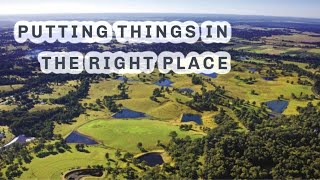
Richard Perkins applies P.A. Yeoman's scale of permanence to landscape design, ordering features from climate down to soil. He uses keyline design to capture water, citing Yeoman's Australian farm that stores 700 million litres in earthen dams on 500-550 mm annual rainfall. The episode covers practical farm work: raising Muscovy ducks, mushroom inoculation with sawdust spawn, and siting infrastructure correctly.
Questions this video answers
Approximately 500–550 mm per year.
About 700 million litres (total in earthen dams).
About 35–40 cm deep.
70 cm.
Measured range 1.35 to 2.42 kg.
Chapters
So we've been talking a lot about putting things in the right places and back in the 50s gave us the scale of permanence, which empowers us to put things in the correct places in the landscapes, whether it's a farm scape or a cityscape.
Pierre Yeoman gave us this scale of permanence. It was the first integrated land planning design framework and preceded permaculture. All these other integrated design frameworks and what Yeoman's genius was was to look at how permanent features are in a landscape. Starting your design work with the most permanent features. The climate really dictates the plants and animal species that are relevant to our confines. And we need to work within those as well as push them in the microclimatic level to extend the range of what's possible. But really land shape is something we need to understand, to divide land up into components to be able to understand water flow. So our design work often begins with optimizing water through a landscape. It's why I've always chosen keyline design above any other approaches. Because really, keyline allows us to optimize water, the biggest limiting factor to agriculture. Most organisms are 70% water like we are. And it's the limiting factor of production as well as what will influence land prices and usefulness of land. In the future. More wars will be fought over water than have ever been fought over oil. It's obvious. And water issues all around the world. Seven of the 10 biggest rivers not flowing to the sea year round anymore. Things like this show us that there are major problems with how we distribute and manage water. Water flows in a very particular relationship to land shape. It flows perpendicular to contour. Keyline design also PA Yeoman's work allows us to gracefully build soil whilst optimizing water in the landscape. And everything in the keyline layout is parallel. So it works with farming, it works with fixed width and machinery and fixed width nets, electric nets and infrastructure like portable field pens, etc. And then yeoman's proposed that we put farm roads and access in relationship to water supply to catch and store water for us that we see beautifully in his farms. You can read his works at the Soil and Health libraries online. Out of print Health and agricultural books. All of Yeoman's books are on there and bit hard to read for some people. It's old English but very incredible books that have been overlooked. And when we put these systems in place, it gives us placement for tree systems to protect these expensive systems. Just looking at our road, you know, these roads cover hundreds of thousands of kilometers over Sweden, and they are rotivated and packed several times a year. And they're in the wrong place in landscapes often, which just makes them very expensive liabilities when they could be collecting water, harvesting it for us, and keeping systems working. Tree systems protect those expensive systems, and then that allows us to place buildings in landscapes. Many permaculture books refer to starting at your back door and working outwards. And that's an attitudinal principle that people have taken literally and to their detriment. If you are managing anything bigger than a homestead, you definitely don't start at your back door and work outwards. You plan patterns to details, and this scale of permanence is the best example of patterns to details I can think of. We put in the mainframe to optimize each layer of our design according to how permanent a feature is in the landscape. And only then we see where fences belong. And you notice soils at the bottom of this. Soils are extremely easy to build. On the flip side, they're also extremely easy to damage. And so we don't put our focus here. There's many tools, you know, every level of regenerative agriculture, whether we're grazing, livestock planting, perennial systems, annual vegetable gardening with no dig, etc. We can build soil using various tools and techniques. But we must be building soil if we want to call ourselves regenerative. We've got to be capturing carbon and putting it back into our topsoil, because it's that carbon that feeds the soil food web, that carbon that buffers ph, and you grow things that want to thrive in those buffered pHs, and it's anticompaction. It's what drives the engine of the soil food web. So we must be building topsoil. But this is the order. I've worked through my design work for nearly a decade now, and there's no better way to approach larger landscape design in my mind, anything small, holding or bigger. This is the pattern for how to organize permaculture design. And it's something that really rubs off clear with our course participants. And we see some great design work that's practical and doable. Here's a picture of Pierre Yeoman's farm, Yabarne in Australia, just outside of Sydney. And what's going on here? This is a dry climate, 500, 550mil of rain or something, and he was able to keep his keyline irrigated pastures green when other people went yellow and grasses were going oxidized and about 400 hectares and two people could irrigate this in half a day with no pumps or electricity. And you see here keyline dams placed in the correct place in the landscape. But what's interesting here is all the lines you see around the landscape. Now these are all developed by farmers with, you know, farm tools, bulldozers, excavators. These are large earthen dams, 700 million litres of water stored in earthen dams. Now this is a dry climate in Australia where water harvesting is perhaps necessary for irrigating parsleys year round. That's not a concern we have here, but the design is what interests me here. Here is landform telling the designer where to place water where it wants to gather naturally. Then placing roads to act as open. So these roads have cuts on the inside that act as very passive overspills, cut to a very shallow grade, maybe 1 to 200, 1 to 400 over, spilling water from one dam to another all the way around the landscape. And then what Yeomans had done is put lock pipes through the dam wall on contour. So these little ditches on contour, he could open a gate valve and flood these. And because they were precisely on contour, they would flood over and across their entire length and then passively irrigate the pasture below. And this is a wonderful gravity based, long term, resilient system. And then he would put tree systems on contour to protect those expensive road and infrastructure developments. And then applied this in his book the City Forest to how to design settlements, where in this case these would be paddocks divided up for grazing of livestock. But equally they could be house divisions in the city plan working on gravity, where all houses had their own irrigation. So water supply all of the sewage going into contour strip forest to clean the waste of the city before it left the city boundary. And all infrastructure placed along roads. So roads going around the landscape carrying water from one place to another or up the center of ridge lines where they're protected. Water sheds off on both sides of them. So there's a place for water in landscapes, there's a place for roads, there's a place for things like sewer, Internet, cables, etc. Electric lines right next to the roads where utility companies can find them immediately. And it's living testimony to the failure of following such pioneering, thoughtful land design is, you know, this is 70 years ago and yet we have the problems like we see in our fields today.
So here's one example. Roads in interesting places, they come along with a big grader and they rotivate these roads and Then they pack them again. But this is after one rainfall event, and it's just interesting. It's the day we were talking about, you know, placing things in the right.
Place in the landscape.
But when you consider how many, you know, Sweden is full of these kind of roads, and the road becomes the stream when it rains and a lot of soil is moved downhill, it's ultimately going into our streams and into the lakes. But it's a huge cost. Like, roads are a massive cost and liability if they're not in the right place in the landscape because of the sheer amount of effort to replace the materials and also to come along and grade and pack them again up. Here is a classic example of people not understanding maps or just not focusing their full attention on, you know, what they're actually working with. So when we came to the farm here, this house is a rental house that's owned by an owner that owns all of these. They had a lawn up to approximately here. And when they installed the fiber optic, what was interesting, you know, as a gigabit second Internet being installed, here's the box for it here that leads to these houses. But they actually were the first company I saw that had a map that showed this was part of our field. And yet, because it was a cut lawn and then just grass, our fence wasn't up at this point. They just looked at the ground and not the map and installed the cable here. So when we pulled our keyline plough through the ground here, we cut the cable five times. I wrote about this in the book because it's all about placing things in the wrong place. But having seen that company's map, I realized that we actually own this lawn. And so I requested permission to dig up the cables. This hole is still here because I've never filled it in. But we also broke the cable four times up here. And the company, you know, it's a couple of thousand euros to fix that. But I requested permission to dig it up myself because I wanted to know if I was liable. And turned out that they were all buried 35 to 40 centimeters deep, which is not good enough. It was contracted to be 70 cm in agricultural fields. But what's worse is I have a cable now sitting across here. And then rather than follow the property line, it kind of randomly cuts across the field. And it's just sloppy. You know, there's no excuse for it. To be honest, my personal job here, coming down the fence, when we got to this place, it's kind of. Rather than follow the fence line, they've cut the cable straight across here again, like in the middle of a field, agricultural field, just like up at the top where the greenhouse is. It's too shallow, you know, and it's just savings, cost savings. It's laziness, you know, these are long term investments that are being put in for the benefit of the community. And you know, it's a written contract that it must be a certain depth and for good reason. You know, it's. Most people are not doing anything with their soil even 35, 40 centimeters deep, but it's not good enough to write a contract for 70cm and then put it in in the wrong place, you know, we agreed that it would be on the fence line, but not deep enough, you know, it's creating hundreds of years of problems by a little bit of money saving. It's not worth it. I would love a job as a property divider. I would love to use the yeoman scale of permanence to divide landscapes up into useful tracts of land. What happens here in Sweden, like many countries, is that properties get cut up and divided. So when we were looking for a farm in the first place, we looked at many properties that looked really good on paper, like beautiful buildings, big amount of hectorage, low cost. And then you look at the map and it would be like a three kilometer strip of land, 100 meters wide, like totally unusable except for monocultural forestry or something like this. And it's barbaric, you know. Same goes in other European countries. I've got friends in Portugal that have problems where when the owner of the land dies, the property is split up into multiple parcels and then nobody knows where the brother lives anymore. And you can't move forward with these things. But really we need to be dividing landscapes up into usable landscape units, like usable properties that people can live on and make a living. And that's my dream job. I've always had this plan. I'd love to write a book. When I lived in the uk, I thought I'd write a book about a keyline plan for the whole country. How the population would be distributed around the landscape if it was designed to run on gravity in an efficient way. And it would be a really cool project, but I would need some collaborators to do that because it's a big one. But then I thought, well, why not just scale out to Europe and include the rewilding of Europe and reintroduction of Orax and woolly mammoths while we're at it and just have a paint a picture of what the future of Europe could look like it's a very ambitious project, but it's the sort of thing I find very tantalizing. And I might go with. I'm just coming up to check the birds. They're really nice. We had no problem separating the birds on slaughter day, and the team that were on field selection said it was actually a lot more peaceful. And they didn't do any penning. They just walked in and picked up the birds they wanted to select. And it's very low stress, and we just like this system. It works so much better, I think. And, yeah, it's the model for how we're going to produce boilers in the future. We've got some little ducklings today, and we've got a bunch of little Muscovies coming. We're going to start trialing different feed ratios for raising pastured muskevies, and they're one of the best pastured ducks you could possibly do. So we just got some Muscovy ducks. We thought they were chicks, but we've been weighing them. They range from 1.35 to 2.42. And Muscovies have a big weight difference between male and female. We haven't decided if we're going to run them in pens like this or in net setups. And we're just going to do some feed trials because we've not raised them specifically as meat birds. And the Muscovies are probably one of the best pastured ducks species. They have a much better capacity to turn food to meat, as it were, than some of the other ducks. And they're the only unrelated duck to a mallard. These are South American tree ducks, not mallard water ducks. And I've read some controlled studies in sort of conventional AG where these were deemed to be the best converters. And quite a big difference between male and female compared to other species. But a really high carcass weight, 74 to 76% of the live weight. And so I'm interested in these as a pasture bird. They're good foragers, and, yeah, I want to see how they do. So we're going to work out a feed schedule. These birds are 8 weeks old, and at 8 weeks they should be weighing between 1.7 and 2.3 live for the female and male. And that's about where they're at. And these have been sort of foraging, free roaming in a farm nearby. But I want to just get some breeding pairs together. And we have a drake from previously, so we might start breeding. A Muscovy can have 195 eggs a year. And so we could start our own little breeding cycle with some of these perhaps, but I want to raise them up for meat and think about processing. You typically need a wax tank for the efficient feather plumage removal. And these birds have much less feathers than water ducks and less bits to get off that's hollow. Partly why they have a higher conversion ratio. But they're pretty little ducks.
So just the ones that me and you just came out with just two kilo used to draw moisture up to the stump. So you do get really heavy fruitings from them when you've waited long enough.
So it's time to inoculate mushrooms. We have got one of the six month strip grains of polstama shiitake, some blue oyster and some pearl oyster. That's a sawdust spawn. And we're putting all those into birch today. And then we have turkey tail medicinal mushroom and a bunch of phoenix oyster, which is an edible Indian style oyster. It grows on pine and conifer. We like it turns spruce into food. So we're using angle grinder adapters from field and forest. And then we have a drill adapter here for plugs. We don't normally do plugs. We normally do sawdust spawn. These are the thumb inoculators that you dig into sawdust spawn to inoculate the logs. And some cheese wax here to seal it all up. Keep the moisture in, to keep the moisture in as the mycelium starts running. We prefer sawdust spawn because it runs quicker, smooth, more economical. You can get a lot more logs out of it. But this is the way these species came. So decided to do some more logs. So the dalles. This is turkey toast, the medicinal mushroom. No, this is the oyster, isn't it? Phoenix oyster. We don't usually do plugs because the plugs only just fit in. So you have to hammer them a little with the size angle grinder bit that's applied. And that's a pain that takes a long time compared to sawdust one. But after that they fit in quite nice. And then they just need waxing to seal in a bit of humidity to make sure that mycelium stays alive. Happy days. Turning spruce pleasure food. The angle grinder bit by comparison is much quicker. And the inoculation process is much. Because we're using sawdust corn and then filling each hole. So we like that better. Okay, so this cheese wax that is covering the. No, no, no, no. We're gonna have to go for that. And the important thing with the wax is to make sure. It really seals the hole. I don't know if you can see that, but it sort of bubbles as it fills up holes. We need to make sure that it's totally watertight. And you want to be quite economical with the wax, because there's one there.
Anyway.
You should be quite economical with the wax, because when you're doing hundreds of logs, if you're using four times what you need, you need 60 kilos, not 15 kilos of wax. And the birds we found have been the biggest threat to the wax because they like to peck at it and make their nests because they're quite clever like that. So typically, using wood less than five, six weeks old fashion is good. And stacking them up somewhere that's dank and dark and humid, like here in the understory of the larch and spruce and birch here. So this is the pearl isa, and this is a thermonoculator. Very nice. The sawdust. So you dig this in with a stabbing motion, and it fills up in there. And once it's full, that's the perfect amount that I then fills up just below the surface of the log, which means I can put wax in there and seal it up very efficiently with the amount of wax I got. So I just go along the log doing like this. It's much quicker than using plugs and way better use of. Of the spawn. Mr. Spice, what are you up to here?
I'm gonna try and propagate some of Mr. Stamets lovely trimites versicolor area. We can't get any of this stuff on the outside, which is really lovely. Live running mycelium. I'm just gonna spread it across some cardboard.
You've poured boiling water through the cardboard?
Yep.
Just boiled a kettle and then. So that's as sterile as it needs to be. Not a lot of other competitors, particularly like the cardboard anyway, which makes it a great substrate to use.
And we're growing this up so we can then inoculate it somewhere else.
Yeah, and they really like the grooves and the. On that cardboard because it gives it. They like to. They like to run in straight lines because they're used to going up and down, you know, in between the linging in the trees. So they love that. And none of this. All this would have gone to waste otherwise. So it's very efficient.
Very nice. Yeah. Simple tool, but much quicker. And you get a lot more logs out of the same weight of spawn. Very nice. What are you guys up to? You are doing Blue Oyster. Very nice. So one change, we're going to make. When we go to the UK to pick up a livestock trailer, we're going to pick up some 25 meter nets. These are all 50 meter nets we use at the farm. But I think with the ultimate setup of three of these pens, we'll four of these pens and 800 birds. A 50 and a 25 meter net would give us good space and not be too large because they take up a lot more ground than necessary when you have two 50 meter nets and we're trying to get the animal impact but also give them more space but keep the nets in fairly close. Right now they have a lot of open space which is a potential so the predator invitation. But we do like the results so far. It's very nice. So in placing this greenhouse, we're intersecting with the fiber optic cable. It's meant to be dug at 70cm. Here it's dug at 35cm and the cable that they use to locate it should be above the wire to protect that. If you're digging, for example, it's laying to the side here, it's dug about 40 centimeters. And so we've been doing an exercise in squaring up proposed dig site for the digger that's coming and putting out strings for the pad. But the pad is a little bit wider and longer than the tunnel because we want to install drainage which we have these pipes here to ensure that this is well drained for the winter keeping of animals. There's a lot of water coming off this roof. There's no gutters yet. There will be when we fit them. There's a lot of water anyway generally coming down this slope. So we want to be able to keep the greenhouse well drained. But we've been toying with the idea of where we actually want the tunnel and we don't want it any further down. We want to leave this gap above the tree lane so that we can get through with the ATV or with animals, etc. Which means we must go over this fiber optic a little bit. So we've been doing some volumetric calculations because it's mainly here that you see this big lump of soil that we're going to have to move to flatten the pad off. Polytunnels can be put on a slope long ways, but not sideways. It's not good for the structural integrity. So we've been doing some basic calculations to see the amount of soil needed to be moved and making sure everyone's fully aware of how to square up the line so that we dig in the right Place by measuring the diagonals and we've got them to within a centimeter. That's perfectly square enough. We've used the laser level to look at the highest points compared to the lowest points to see what sort of soil depth we need to dig away so that we could work out how close to this cable we're going to get to in our digging process so we know whether we have to move the proposed layout or not. Now, it does require digging down to the level of the wire here, but we want to see if the driver is willing to dig a trench to expose the cable and see if we can get it down another 20cm or so, because there'll be no machine work going on here ever. And inside of this marker we see that we'll never be digging or doing anything on top of the cable. We're going to have 50 centimeters for the drainage. And the tunnel doesn't even start till here. So the only place that the tunnel is crossing is this little corner. But then we'll have 50cm off this line is the Stadler tunnel. And then we have staging. So we're going to have this staging all the way along both sides of the tunnel. And that will serve to keep rabbits up off the ground during the winter for meat rabbit production over the top of the chicken bedding. And then in the spring it will be for our potting on space. We're going to try growing on transplants much bigger to increase the amount of crops we can grow per year. And space has been a limiting factor for us that we haven't bothered doing that. But we think we can double the revenues. I think we can get our market garden up to €75 per square meter. And that's my little mission for myself now, is to see how far we can push that. And that's amazing figures for very small, short season growing we worked out then, even with the staging, we have enough room for eight beds. It'll be over 1100 tomato plants in the intensive start we do here. So we have all this ready and the tunnel frame has been started to be put together. All the hoops are assembled and some of the side bars. So we're just waiting for a dig in now. And we have a big pile of gravel ready. It's been very wet here recently, which has been needed. But we have 10 tons of gravel up here that will be laying some of the gravel on top of the drainage pipe with a bit of geotextile to keep that free. And then a bit of soil on the top we're going to put up this greenhouse a bit differently. We're going to put a geotextile 50cm all around the outside, tucked into the ground, and we'll put wood chip on top of that so we're never having to cut grass right the way up to the tunnel, which is a bit of a liability. Row covers are coming back on now. It's getting much chillier. There's no danger of frost yet, but it's certainly cold in the mornings and so we're keeping more sensitive crops under cover now. And same goes in the other north beds here. Lots of tunnels coming back over. We're approaching the last few days of our farm scale permaculture course and it's been a really nice course with a lot of interesting projects. We're still hearing the last of the presentations of people's projects, but a lot of land managed by this group and a lot of inspiring thoughts and ideas just here in the chilla. Just looking at some of the daikons, that's a new vegetable for us this year and they've come really well and popular with the chefs. So we've only got a few days left of our farm scale permaculture course and it's been amazing. It's a really nice group. Turns out today we had the last of the presentations of people's properties and they're managing three and a half thousand hectares between them amongst about 24 people or so. And that's amazing. It's, you know, it's amazing to see people being exposed to the best models out there and being exposed to, like, the business and design thinking that makes it all work and people really taking it on and it feels really potent. I'm really proud of the people that have come here and the diligence with which they're lapping up information, but also going to be applying to their projects. And it's. It's exciting. You know, there are more and more people turning to this who have serious assets and taking on big responsibilities, who are passionate about this stuff and, and that's what's really going to make it work. It's passion, determination and that sheer desire to just do what needs to be done.
That's.
That's what makes farming work. I've said that a million times. But basically a business like this works on passion and determination and if you haven't got that, then farming is going to be a really challenging livelihood. We've been talking a lot today about efficiencies of building up your own infrastructure versus Buying it. I've just seen this new Aussie company, like beyond the Chicken Caravan company that make mobile chicken shelters also, they as a new company making huge scale ones up to two and a half thousand layers. But it's interesting for me because these, you know, I can build these for €1500 and have 400 hens. And so next year we plan to double the hens, but I will build two more of these. I really like the design. I've been checking out the chicken caravan. It's no time saving. In my mind, it's a big expense. €15,000 for a chicken caravan that can hold this many birds. And to be honest, I don't actually see any time saving at all. It's just a lot of money to pay off with eggs. And so I'm happy just building two more of these. Something we want to do is take chickens to our neighbor's land next year. The grass here is thick and dense and these beautiful ladies are laying it down. It's vegetative growth, so it's not gonna kick it back. You can see actually past the tree lane where they were yesterday, and it looks pretty flat. And I'm gonna walk across the tree lane, which I don't normally let people do. It looks flattened down, but this grass is ready to pop back up and we're not bringing animals in here until November, if we have any left at that point. And at which point it will just be pumping and we'll have a really nice stockpile grass. So the turkeys are doing really good and they're getting bigger now. So we took the biggest half and these are growing on. We're going to do maybe two thirds of these after the PDCs ended. We've got a bit of a busy schedule. We'll be doing chickens next day, turkeys, veg boxes, and then a few of us are driving to England to pick up our new livestock trailer. So busy times ahead. I've got a long list of jobs I need to get done now for the end of the season, and a big part of that is going to be putting a bit of time every day into the online training. So we'll be announcing more about that as we know it, but I'm aiming to release that at the end of this year. And it's going to be like nothing else out there. It's going to be really important for folks who are looking to design and get started on the right foot.
All that effort we've put into business.
Management and time planning, time motion studies, it's really going to help people get started in the right way, which I'm seeing on the ground here more and more and it's just, yeah, it's very potent and exciting. But I wanted to show you up here. You might hear there's a forestry machine going in the background. I can just see it in trees over here. They're taking out all of this forestry here. And I've said before in previous videos, these entire hillsides around, all the way into the horizon, they're all planned to be cleared in the next four years. It's going to be catastrophic to the hydrological cycle Already where they clear cut behind where the pigs are right now, we have two streams that weren't there before and you know, that's the way it goes here. It's a big, you know, industrial monocultural practice. These are not forest systems, they're monocultural single crop systems. And when you cut them all. We've been talking a lot about tree systems and perennial cropping and how trees regulate hydrological cycles. And you see it very clearly in Sweden when they clear cut, it has massive implications to diverse and to the lake systems. Sweden has a lot of lakes and it wreaks havoc on them. This machine is half a million euros and it's only economic to run 24,7. So now timber is cut every day of the year here. And this thing is an impressive piece of engineering. I have no doubt about that. I mean it's felling 80, 90 year old trees, stripping them and slicing them into whatever desired length in, you know, 25, 30 seconds of tree. But that's a powerful tool to wield and you know, it makes a mess of the soil as well as the habitat and water cycle here. It's maddening to, you know, to have insight into all of these regenerative design practices and yet see, you know, the sad implications of not following nature's patterns. I mean, that's all we do here. That's what this whole training is about for people, is to invite people to see the world through a different pair of goggles. You know, to deconstruct the patterning we've been left with by friends, family, society, institutions and start to see the world around us in terms of ecosystem processes and natural patterns. I'm up here now at the. We're on our neighbors front field. Cows and sheep are doing good but I'm really, I want to have some kind of lease on here because we're now grazing right up into their front pond paddocks. Even with the trees Gone. There's going to be beautiful paddocks and I want to keep grazing these into the future because I'm willing to invest in the water pipe network and bring chickens over here next year. Especially with our new chicken design. I think it's going to be very easy to bring poultry into here and run it in straight lines throughout this whole life cycle. But this ground is, you know, very low quality compared to ours. The richness of the material on the ground is poor compared to our land and chickens are the answer to that. On a small farm, poultry just provide this rapid boost of fertilization. Someone was commenting on an older video about, hey, we've got to acknowledge that that's imported nutrients from another farm. And hey, I totally agree and I'm very aware of it. But while people are still willing to sell their nutrients, then I'm willing to buy them and put them into my farm. That's a contextual choice. That's down to each of us. But for me, I'm very willing to kick start this farm's future because I've also made a plan to become debt free very quickly. And I'm very happy to educate my customer base to start to eat things like geese and rabbits and pigeons. I've been looking into pigeons recently because I've always wanted to do pigeons. The bird that will fly off, feed itself, come back and we take the squabble for, you know, very beautifully textured meat is something I'm very interested in. You know, fish, rabbits, geese, pigeons, these are energy efficient animals. But in the meantime, you know, we've got a farm that hasn't had animals on it for decades. And so I want to boost my fertility cycles and get my pastures going again. And so I'm very happy to use imported nutrients in my context if it's what I want to do. It's, you know, a profitable way to farm all the enterprises we're doing here. Very profitable. And so I want to demonstrate that whilst boosting up our land and then when we don't need to do those things anymore because we have a customer base that's educated to buy other things. I'm very happy to switch because my personal needs are very low. But there's a lot to be said for that. We've got to be pragmatic. You know, we started up with eggs, chickens, turkeys, vegetables. Now we've got sheep and pig for sale and we'll have some beef for the freezer this year. These are things people eat all the time. You've got to Be smart. You can't come in too idealistically because you're working in a globalized food marketplace and you lose if you don't play strategically. And so, yeah, I'm very happy to take on all this land. It's a way to really extend some of our productions and improve all this land. But I only want to do that when I have the security of a lease. And so it's a neighbourly agreement. We're great friends with our neighbors and they're wonderful neighbors to have, but I need a bit of security to invest in a new flock of sheep and new water pipe network, etc. So that's it for today, folks, just a quick update because we're super busy with the course. I'm busy and doing evening sessions after dinner and it's, you know, I don't get a spare minute. We got a lot to do after the course too, so I'm gonna try keeping putting videos out as often as I have been and I know a lot of people really value it. So thanks for your comments and time as always. You can find out a lot more in our book, Making Small Farms Work. However, there might be a temporary gap in books for sale because we've run out of books. New books are coming soon, we've got thousands more coming and I love to hear the feedback from people around the world. I know a lot of people have got a lot from that book. It's written to be a very pragmatic, straight to the point book and that's what we're doing here and excited to update you always. With the online course, a lot of things are getting clearer for us and we're trying to make it very efficient in terms of time inputs, but make it very personal and peer supported too. And we've got some great ideas coming up for that. A lot of editing to do still in the meantime and I'll be posting updates in the coming months as it gets quite quieter here. I'll be putting a lot more time into that and I'm hoping it's ready before Christmas. I. I can't promise anything, but let me know if you're interested and I'll keep you posted with updates on that. Thanks so much for your time and we'll see you in the next video.
More from Richard


A review of short and intensive season on a mixed farm and restaurant/event space in Sweden






Alskade Kyckling Exploring complexities of poultry production in Sweden and what we stand for


