Packing PASTURED POULTRY and NO DIG grown vegetables
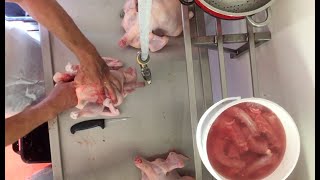
Richard Perkins walks through processing and packing pastured poultry on his farm, sharing bird weights, pricing compared to industrial organic chicken in Sweden, and the chiller capacity limits that constrain his operation. He also covers vegetable box contents and upcoming product plans.
Questions this video answers
2.18 kg
2.28 kg
About 300 birds
About 11:00 am
€12 per kilo (including VAT)
Chapters
So I haven't put out a video for a few days and I made a couple of videos, but the audio was so bad not even I would put it out. So here's an update about the pastured poultry. We've culled all the birds now and finished that batch. And updating you about that process and how the birds went as well as some other things going on at the farm, It. As I said, the birds have all been processed now and they turned out really well. Some people have been asking about them. They turned out 2.18 on average in the first slaughter that we did with the pastured poultry course and the day after with the intense. And then we did most of the birds. So we did a batch of about 300 in good time. We finished by 2 o' clock. And that's pretty good for a team in their first proper session. We can get that down to about 11 o' clock in the morning with a team that's trained up over, you know, several sessions. Those birds average 2.28, I think, so pretty good. We'd raised them up in the roller pens the last couple of weeks so people could get experience with that because it's a different way of doing things. And I really like that model. It's 300% more space. And some people asked about how do you avoid green mussel when the birds can move around? And to. To be honest, I've never seen green mussel in broilers at all. And that can be caused by too much flapping, etc. But I think that comes more from sort of frantic flapping that would happen when a bird is being caught incorrectly or something like that. Like healthy stretching of wings and moving around is part of the bird's natural physiology and is to be encouraged. And you might remember I made videos last year about the roller pans that we built. Be able to do a thousand birds much quicker by giving them automatic water, as well as only weighing out one lot of feed. It's no quicker moving 14 boiler pens with a thousand birds or moving the roller pens, it takes the same amount of time. But the feed and the watering is what saves a lot of time. Plus it gives the birds a whole lot more space. And I appreciate that because the Salatin model, even though it's quite intensive, it's actually 20 times less intensive than organic boiler regulations because of the fact we move them every day and then twice a day in their later life. But I like that the birds have more space and people ask about predators. We've never had predator issues with our broilers. Not a single bird has ever been lost to predators. We have eagles and hawks and foxes and there's wolves around, but no risk as far as I'm concerned. One of the interns was designing up a roller pen model with shade nets for the French climate that also acted as a predator screen. And that could be a smart idea. But I've not been worried at all about the birds. So that worked really well. And you can see here with some images of the packing. We are packing with someone that takes the birds out of the chiller and has chicken on their hands. Obviously it's greasy work with CH chickens. And so they are placing the birds after checking the grade, placing them upside down. I'm doing the bagging here and my trick is to basically get a good workflow going and make sure the outside of the bag remains clean all the time. And then I squeeze the air out under my arm and give it a twist. Put the cable tie on and then we hot shrink wrap. These are hot shrink wrap bags. So a couple of seconds in 80, 90 degree water and they shrink around the bird really beautifully. And then we snip off the top and shrink wrap the top as well. Now, some people like to not secure the tie the cable tie straight away and then pull it tight after shrink wrapping. But I found that if you get the right size bags, you eliminate the need for that extra handling. And that really saves time in the packing. Packing a few hundred birds like this takes a couple of hours. We're redoing the grades to make sure the birds are A be C graded and a grade would be perfect and good for restaurant or consumer. B would be a slight blemish, but perfectly edible. Something like a damaged wing or a little nick in the skin from the plucking machine. Something that will mark on the label in a coded form. And we will explain to a customer because many of our customers don't mind that in any way whatsoever. But we wouldn't give a bird with a slight nick on it to a restaurant that's serving whole roasted birds, for example. But most of our customers are, you know, totally fine with that. And then seabirds are ones with broken wings, things that we will eat for ourselves as opposed to selling as a premium product. So birds are all packed and we've got birds for fresh delivery, frozen delivery. And then here is hearts and litters. We do them in of front 500g bags. Each human serve chill is cleaned out. So we've got all birds freezing here, fresh Birds local, separate. So tomorrow, once we have some impact on vegetables and solid heads, we'll be lowering all this into the bag and things will be up. Some people have asked about or have exclaimed, claim that our birds are expensive and that this model only works because we can sell chicken expensive here in Sweden. And I just want to put that into context. I have done that before, but I think people are perhaps misguided by that. We sell our birds to private customers for €12 a kilo, including VAT. Now, the only other option in Sweden is mass produced chicken that's organic and that costs €14 and a half euros a kilo in our local shop. So we are undercutting big industrial organic producers and it's worth pointing out they're raised in a totally different way, they're non comparable. We talked a lot about this during the past with poultry course. We're raising birds in very small groups, moved daily or twice daily onto very fresh ground where they are encouraged to get a lot of forage. They given time restricted feeding, which is encouraging them to eat a lot more greens and insects. And whilst that doesn't replace their feed needs because they're burning calories, obviously growing quickly, it does give them a lot of vitamins and minerals. Mass produced birds are raised in huge batches and whilst they might even be outdoors, they're basically in a huge shelter and there's so many of the birds that there's very little forage left just by their activity. And they're not moved so regularly either. These are the sorts of companies that will, you know, if you look up their websites, there'll be a chicken walking around in the sunset in long grass with the sun going down. It looks all beautiful, but it's very far from the reality of their production model. In fact, they're unlikely to be willing to show you their production model. Whereas we will show people around, we'll bring our customers to the farm, like on the open day we just had with a couple of hundred people visit and we'll happily show people our slaughtery in session. And we put videos on YouTube detailing all those things. And that's, you know, it's quite telling because a modern producer and a modern slaughterhouse just wouldn't make it. And to film, you know, the only time you see chicken processing is in undercover and activist kind of videos. And so we're very proud of our model and the fact that we can sell it cheaper than industrially produced birds is quite telling to me. And so I think they're very good value now we're allowed to do up to 10,000 birds a year, classed as zero production. It's not even considered farming here in Sweden. But that's a lot of chickens. And whilst I could do that in a year, to be honest, I prefer mixed farming. I don't want to just be processing chickens that would be doing 600 birds a week for 18 weeks in the summer that we can raise them. And that's, that's a lot of work, you know. And our chiller has been built around a capacity of about 350 birds and that suits us, you know, a decent amount of income that could be making up just a family living for six months of part time work. But it's, you know, fits nicely with the other enterprises that we run here at the farm. And so that works well for us. And I think if you lived in a country where chicken sells for cheaper, you probably find your feed costs are also much cheaper. Like the feed costs make up 40% of the entire revenue of the enterprise. And in many countries like Germany, some of our interns are from Germany, they can sell boilers at the same price as us and their feed is significantly cheaper, which makes it an even better enterprise. But you know, you balance this enterprise with numbers, it's not much more work to do an extra thousand as it were. It doesn't take long to raise them on the ground. And for some of you, you have access to mobile slaughteries or slaughtery services where you can get birds processed and packaged and the waste taken away for two or three euros a bird in different parts of Europe certainly. And that makes it an extremely attractive enterprise to get started on because basically raising them in the field takes no time at all. And if someone else deals with all the slaughter, except then it makes it a very low cost, very easeful startup. In fact, one of our interns from Denmark is planning his business on someone else's land, doing exactly that. And it's the most lucrative of all the little enterprise plans that people have been coming up with when you consider time in and investment in etc. So I still really stand behind it as a great startup enterprise. And whilst it does have flaws of relying on industry genetics and relying on imports of grain, it is a fantastic way to build pasture and build soil for the long haul whilst creating good profit, paying off expenses very quickly and providing a product that you just can't buy in the stores here, you know, we are the original pastured poultry producers in Sweden and there's just nothing like it on the market. It's why we do so well at Noriko rings. You know, every week different people have been going off to the Ricoh rings and they always come back exclaiming like, ah, yeah, you basically are Ricoh. And that's partly because we have such a diverse product portfolio and we were doing Ricoh before Ricoh existed. So, you know, we steered it to be the same time, place and date that we were already doing drop offs. And because we have a big portfolio, it attracts many customers. We notice that with our vegetable sales here, you can see some of the veg going out this week. So veg packing. What is going in the box still?
So in the first box we have.
Spring onion, we have fennel, fennel for the first time.
We have radish and we have peas.
Going in the first box, we're doing three boxes again.
Three boxes again. So the first box is all kind of fresh and crispy stuff, so stuff you can kind of eat straight away. The second box is more hearty and cooking ingredients. So we have beans, courgette, pie, pans, beets, kale. And the third box is known as the tasty box, has microgreens and a mix of herbs.
Beautiful. Very nice. What we've noticed with the vegetables is, you know, having a diversity helps you sell vegetables if you just have salad mix. It's hard to sell all that in the rural location that we're in. And likewise, having fresh chickens on the market again increases sales of other things. Eggs are a fantastic gateway product for everything. Vegetable boxes or other meat products, etc. Things like sausages have been going really well and I'm just fishing with this weedless lure. I'm just trolling for pike while Ragnar's asleep. This is a weedless lure that stops you getting stuck in the lilies. There's so many lilies at this time of year. I've been out on a canoe trying to catch pike and I've only caught a couple of little ones so far, but I haven't been out for long on it. But I'll be trying to get some nice pike for the table soon. We've had a big switch out in the market gardens. Both the gardeners left and we've got two new gardeners coming in at a very busy time of season. But they've been fantastic so far. The level of organization and thinking and communication has gone up 10 notches and I left them alone for their first harvest and pack session and they've done beautifully. So that's a great relief for us because we've Been having problems for the first half of the year. People working hard but not being so organized or effective. And it's been a real challenge. We've lost some revenue from the garden due to the cold and the mistake with the compost I made at the beginning, but also with the management subsequently. But that feels like we're back on track and that's where it goes sometimes. This farm is made up of all the people coming through it and especially when we have intern groups, etc. It's, you know, it's a little bit of a risky and wild way to run a farm, but we've generally been extremely blessed with how well things go and how well things flow and it's, you know, it doesn't always work out. There's always some people that aren't a good fit for the place or, you know, have a difficult time socially or under pressure, not living up to their expectations of what things were going to be like. This is a farm with a lot of manual processes that are heavily observational based and our job is training up a new generation of farmers to do that skillfully. And it's a big springboard. As I've said many times in videos, it's not for everyone. This is a springboard where people can test in their own experience, are they up for it? Are they willing to put in what it takes and go the extra mile to make it happen? Because if they're not, then farming isn't a life for them, you know, and that's an amazing opportunity that we create for people. But it does come with stress and challenges. This was meant to be a really stressless year for Johanna and I. We scaled down a bit due to the drought last year and the fear of another drought coming this year. But also because, you know, we've just taken on way too much in the last five years and sacrificed a lot of our own personal space and time for relationship and family. And it's time to claw that back in a bit now. Yeah, it hasn't gone totally to plan this year how I would like and having interns and relatively inexperienced crew has been a big challenge. But things seem much more back on track now. We have a great team and we've added another couple of people to the team just to help off lay some of the pressure. So I'm really looking forward to getting that team rolling together. But it's already feeling a lot more efficient than things have been for the first half of the season, which was pretty exhausting for me. I think that's it for today folks. Just a little update video. Hope you find that useful. Seeing how we pack chickens and just seeing some of the products coming out of the farm, we've decided not to take the turkeys yet, grow them on bigger and we're actually going to process them and sell smoked breast meat and then put some into sausages with the forest raised pigs. We've been having amazing sausages, Forest raised Linderud, the only heritage Swedish pig. And those sausages have been going down really well. People have been loving them. So we're looking forward to making a bunch more products this year. And so yeah, thanks so much for watching folks. I look forward to continuing continue sharing everything we can. You can find out a lot more in our online training. Still the lowest cost, most affordable training in regenerative agriculture you'll find online covering everything from pastured poultry to market gardening to holistic management and how to actually go about all these enterprises. And the price of that training is going to go up shortly. It's going to go through a big overhaul in the coming months as we release Regenerative Agriculture the book and overhaul the online training. But that's the best place to find 8090 hours of footage you won't find on YouTube in a highly structured, organized course that you can remain on month by month and turn it off whenever you wish to. So it's a very affordable way to get very in depth training with a lot of practical spreadsheets and resources for you to download on there as well. So thanks so much for watching folks and we'll see you in another video soon. Don't take, don't, don't take, don't.
More from Richard


A review of short and intensive season on a mixed farm and restaurant/event space in Sweden






Alskade Kyckling Exploring complexities of poultry production in Sweden and what we stand for


