PAPERPOT TRANSPLANTER and other farm jobs
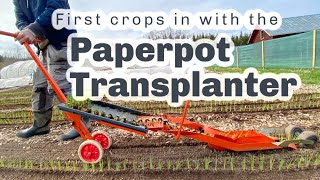
Richard Perkins presents a farm update and tool demo focused on using a Japanese paper pot transplanter to transplant spring onions, plus greenhouse seedling status, livestock movements (hens, broilers, cattle), and plans for aerial farm footage and new membership/content offerings. He describes practical tips for operating the transplanter (pressure, line guides, dealing with compost and old roots), reports planting volumes and seedling sizes, and outlines upcoming work (many beds to plant, interviews and membership materials).
Questions this video answers
2,000 spring onion plants (in first described run) ; later referenced 8,000 plants in total planted 'in a matter of minutes'.
About 50–60 cm tall (still in pots).
About 1.4 kilos each (estimated).
About 100 beds to go out next week.
Operating in 10 countries, over €100 million moving through Rico Rings.
Chapters
Okay, welcome back to another episode, folks. Today we are using the paper pot transplanter for the first onions of the year and other things around the farm. Little tiger, what's happening here? I don't know. I think the cows are having their nails cut. What funny noise. Cancer. Scansum is a little wary. He's wondering what's going on. So spring onions have been pruned. We don't always do this, but it helps to create bigger bulbs and stronger roots. And use the Japanese paper pot transplanter today. Show the crew. See how that goes south. Beds are getting full and so there's a lot of peas. Kales still haven't got the peas up on their stakes yet. And it might be a little while until we do because it's been very cold. Got some nice spinach developing, lots of kales. Water's coming out of there. Yes, but not right now. But these beds are pretty nicely prepped. We've got chicken manure for a bit of fertility and they've been gone over that. They're nice and loose. So should. There's quite a lot of old onion root that might clog up the paper pot. We grew onions in here last year, but this looks fine. This should be ideal. So that's actually two trays has given us this whole bed. Trouble is with our beds is they don't always end at exactly 10 meters. They tend to grow in width or shrink in width over time, just depending on how we rake them. In theory, these chains are 14 meters, so two chains 28 meters. So we anticipated we would need two meters spare. So we've planted spares for each bed. But this finishes up exactly. What I like to do with the paper pot is because the furrow is here, that's what's making the trench. I will actually manually lift this tool off now and. And just bed in the last bit by hand, which is no problem. And it just saves pulling all the material off onto the pathway. So pretty nice. First spring onions. Now, as I said before, we also have to test the Curley's paper pot planter against the Japanese model. But we'll do that in a separate video so we can really go through the nuances with it. So using the bed roller just to give a guideline, certainly when you're learning to use this, you need to keep an eye that the plants are getting buried properly, which is an element of pressure on the handle. You've got to keep an eye on how the things are feeding out of the tray. And you've got to keep the Tool going in a straight line. So having guidelines helps. With three rows in the bed, I wouldn't necessarily mark them because it's pretty easeful. Four rows, five rows. You've got to be very tight, so it really helps to have lines in. So these were some of the first crops we seeded that you might remember from old videos. They've been in these tiny cells. You see, they're multi sown, three or four to a cell. They've been in there a really long time. Now they have matted roots where they've been sat up on wood to keep them off the ground. You see, they've air pruned perfectly everywhere else. This is just where they've been sitting. Now, ideally you would just keep them on like chicken wire, some kind of mesh grid, and they would tie totally air prune. But as we see with this bed, it didn't cause any problems with untangling and I doubt it damaged the roots in any way, in any significant way. Anyway, so happy with that. Flag. Pretty good first time. Pressure's on, the camera's on. So you see how we just. We bed this in at the start of the row and that's because it's got to dig its furrow anyway. And the tool is now sat stably in the ground with the foot underneath and by the wheels so it doesn't fall down. You don't want these to fall over because you'll never get the paper chains back properly into their tray. So you've got to be a bit mindful. Then we just peg down the end and you often have to just tuck in the first couple of the crops. But you can see as soon as it's off, it's burying them nicely. I found in our thick compost, you have to put a little bit of downward pressure on the front of the tool, but only slightly. And that's because if you put too much pressure on, you lift the back end of the tool up. So it's a little. There's nuances to this tool. You've got to just find the little delicate touches that make it work, that give you the right coverage in your ground. There's 2000 spring onion plants that are precision transplanted in no time at all. We love it. Okay, testing for selmet. Look. Easy peasy. Feels good. Now, This tool was originally made for spring onion planting 45 years ago. It's going to be interesting to test this against the Curley's paper foot transplanter and we'll see. I really like this tool and for me doesn't actually need improving. I think it's when you get the. The handle on the little nuances. It's absolutely beautiful, especially in our lovely beds. So 8,000 plants in a matter of minutes and these guys really smashed it. And for the first time that was perfect. Now it's essentially a really simple tool. But you'll be surprised. There's little nuances with all these tools that make them effective. And I've seen some people struggle to make straight lines or get the crop in buried properly. So they've done an exceptional job. Looking forward to getting a lot more beds planted now. I think it's a whole family. It's all family. Okay. Looking in the lean to. We have got always quite full in here. A lot of things have been kept back in here because we've got a lot of stuff outside. A lot of transplanting going on next week particularly. I think there's a hundred beds to go out next week. Lots of crops for the big tunnel. Look at these crazy tomatoes. So these are. Some of These are now 50, 60 cm tall still in those same pots. They look strong and healthy, but there is some starting to put on flower buds. We can pick them off, but that's about all we can do now. The ones under the lights here are a little bit more stabilized because they've got a bit more light. These are obviously reaching up to get light. I'm still fine with that because there's not a lot we can do about it anyway. It's way too early to get them out still and I think they'll be fine. Multi zone Hakari. They're ready to go out now. Hoping they will do well for us this year. Had some big problems with flea beetle, although it never translated to not being able to harvest. Beautiful Hakari. Lots of chards. Very nice crops going. They've done a great job keeping the temperature in here. If you look back to videos a year ago, we had a lot of problems at the start last year due to weather, but also some incompetencies. And I just feel like this crew of Fabiana Selma are doing a fantastic job and they've been just jumping straight on it and they're doing really fantastic. So really looking forward to seeing the garden full and blossoming. And I just thought now we should do an aerial tour of the farm where I just fly over with the drone and talk about what we're looking at. And then we could do that repeatedly throughout the season to see how things change. I think that'd be really cool to see. The contrast as things really start to grow now. Okay, first, brave hens making it out. You can see up here at the top. So still really early grasses just getting going up here. This is actually the marshy patch you see as a spring here. It's a lot greener up here on the actual pasture. This is kind of a boggy zone that turns to rushes. You can see the rushes just popping up there. Bit windy, but the birds are out and exploring. They're not venturing so far away yet, so. So we've been trying to save the grass, to not impact the grass. We've been moving the egg mobile within the nets there so that they can spread the manure around, but we don't want to move too much while the grass isn't growing and impact all of it. I'd rather have a heavy impact in a small space and then wait for the grass to get. Hey, girls, let's have a look in here. I think whilst there's a lot of hens in here, most hens have been going out. Now. You can see a lot of them are sitting underneath, but they're mostly coming out and exploring. They're fed outside now and warded outside, so they have to come out if they want to eat and then they're going back in nicely on their own. Sure. Always love when a new flock come. The birds look really nice, really sharp beaked at this point and still growing. Tiny body mass under all those feathers. These probably weigh about 1.4 kilos right now, so even the little broilers, who don't look so big, already far surpass them in weight right now. Hopefully it's not too windy for you to hear. Broilers are back up. You can see the impact they've had on the grass behind them. Even though we're so new to growth in the season. But it's only a couple of weeks until these birds are ready for their one bad day, as it were. They're growing well. They seem in very nice health. Happy birds. You see, they're feathering out a lot more now. Quite relaxed in the afternoon. Temperature is quite nice with the sun we've been getting, but it is cold in the mornings and nights with a lot of cold wind. And as I've said in probably every video I've ever made about boilers, you see, they're always moved with the plastic on the same side, orientated to the wind, which is coming from back this way. So that really gives them a lot of shelter. It's a little microclimate, so Hooves all done. We just got the IBC over here. We have no water line running over to this farm. This is the neighbour's land, so just an IBC with a hose to a float valve. Time to bring the sheep up soon. Now we need to castrate the young bull here and we will take Skansen for beef later in the year. I think we'd like him to serve the cows one more time and then he will go for beef. Quite a lot of it too. I'll be very sad to see Skansen go. He's an amazing bull, isn't he? Yes. Hey, dear. This is the naughty one, the jumpy one who likes to try and escape. But yes, you can see we're impacting the ground quite heavily now. The grass is in a lot less. It's in a lot less heart than our land. You can see how our land looks compared to this. But we're impacting this bit very heavily, as you can see. But I want to do that because they're bale grazing anyway. We had some heavy rains and we got some more coming. So we need to make sure their food is in different spots, that they don't damage the neighbour's land too much. But I would rather impact one bit of land heavily than graze them around and impact nearly everywhere nearly as hard. Doesn't make sense. It's best to take the worst land and sacrifice a bit of it. And counterintuitively, perhaps, although it's true for most things in life, it's best to put your energy and focus on the best land and not sacrifice that. Same with anything. You put all your attention into your best people, etc. Or your best products. If you run a business or whatever, that's the way it is. So some people find that counterintuitive, but always treat the best land with the most animal density and intensity and try and improve your best land. You get the best returns in that way. So don't mind sacrificing this for a bit. I'd rather they do that than start zooming around the land before. It's actually really started growing at this point. So I had a really great interview yesterday with Thomas Snellman, founder of the Ricohrings that we've been championing locally here and selling most of our products through to date, as well as some of our supporters and students setting them up in other countries too. Now in 10 countries, over 100 million euros moving through Rico Rings, which is fantastic. Thomas is a lovely man, really humble man who never really set out to you know, with the expectation this would grow, he was looking at how to support local producers in the area he lived. And just amazing, you know, the snowballing and the journey he's been on since that's going to come out in the farm like a hero experience and we're aiming to release that in one to two weeks hopefully. There's a lot of back end things with something that this and it's going to be two to three long form videos a week that will hopefully then lead to leaving on the tour that I've been planning for the last year. If that's impossible, then I will just continue with long form videos. I think the ones that I've done so far have been extremely valuable and I think a lot of people will get a lot from the content there. And so it'll be those interviews or farm tours, whatever happens with the Corona situation, along with a private Facebook group. And I'll be doing questions and answers weekly throughout the season for members of the subscription site. It's going to be the cost of a coffee per week, low cost site to hopefully include anyone that's really interested in these things and hopefully a lot of the people that we interview can be involved with that to help answer questions, etc. Too. We're also going to be making ebooks of all the farmers we interview to come up with a resource of all the best regenerative farms around Europe. It's going to be awesome. So excited for that and I'll let you know as soon as I know more about that. But really interesting to hear about how much opportunity and how much sales increase a lot of people are having in these strange times as the desire for local integrity food is increasing and hopefully we'll be here to stay. So yeah, looking forward to connecting with more people in our new membership site and seeing how we can help exalt each other in our practices. Okay, that's it for today folks. Sorry about any wind issues that affect noise. I can't always tell when we're out in the field until we get down back to the office and start cutting video. But just a quick update showing you what's going on. It's been busy times. I'm off the farm a lot at the moment, just coordinating some of the projects running in the background. But lots of videos come. I'm going to make some aerial footage for you so you can really see how the farm develops over the season as well as seeing the neighbors land around and how that's responding. And I'd like to make some in detail tool videos coming up, especially looking at the paper pot transplanting. We've got a lot of beds to transplant soon, so I'll expect the gardens to be filling up very soon and making more videos about how we deal with different crops that come. Etc. Thanks so much for watching folks. You can find out a whole bunch more in our links below, our book, our online training, etc. See you in a video soon. Bye for now.
More from Richard


A review of short and intensive season on a mixed farm and restaurant/event space in Sweden






Alskade Kyckling Exploring complexities of poultry production in Sweden and what we stand for


