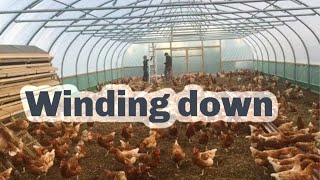
Richard Perkins walks through his farm operations: moving hens into a polytunnel for winter, taking 12 pigs to slaughter, and raising slower-growing Linderud heirloom pigs that yield roughly €15,000-€18,000 in meat after butchery costs. He's planning an on-site smokery to process sausages and smoked goose breast.
Questions this video answers
12 pigs (and 'processed how many? Fourteen, something like that' referenced).
Linderud (an heirloom Swedish breed); grows about half the speed of modern Yorkshire breeds.
He mentions about "€15,18,000" worth of meat coming back butchered and estimates butchery costs at ~30–35%.
Chapters
So the eggmobile is empty and all the hens are up in the polytunnel. And I've just been taking the pigs off to the slaughtery. We're picking them up on Tuesday to go straight out to customers. I've just been reflecting. I wish I could have made a video last night on the long drive because I had a lot of thoughts coming up about why chickens are so important for small farms. I never set out to be a poultry farmer, but I think it's a super important tool in the regenerative agriculture move. This is where the pigs tend to get nervous. It's the bridge crossing. So today the rest of the pigs are going. We've processed how many? Fourteen, something like that. And 12 are going to the slaughtery to go out to customers pre sold. We'll be dropping them off next week. So the boar is going to come in and see the females and then we'll try and get them all down in one piece. So I took the pigs yesterday and so we took 12 off to slaughter and we've done more than that for ourselves for sausage and putting down in the freezer. And it's quite lucrative. Pigs are much more lucrative than things like sheep and cows in the sense that, well, for us, we haven't paid much money to raise them because we've been getting so much spent grain from the brewer. But the Linderud, it's an heirloom Swedish breed and it grows about half the speed of modern Yorkshire breeds. But that's been no issue to us really, because time isn't important if the input costs are very minimal. But I think that's about €15,18,000 worth of meat coming back butchered. But the butchery cost will probably be 30, 35% of that. With the sheep, it's quite high as well. I mean, butchery costs are quite high here. So I was interested to have a look around the slaughtery just to see, like, how simple that sort of facility is. One thing with bigger animals you must have a vet present both before the animals are slaughtered, but also to inspect the meat and offal afterwards. But I quite like supporting a local family business. It's about an hour and a half drive away. Trailer did really good. Very happy with this trailer. Might sell it on and use the opportunity to go back to the UK and put some of that money into plants or whatever that I can bring back in a replacement trailer. So about half the price in the uk. So my daughter lives in Bristol, so I'll be going back there. I'm going back there in October, actually, so I might do the same again. IFA Williams solid trailers. But it just goes to show, you know, it's not been much work with the pigs other than putting up the fencing, which is also then spread between the cows and sheep. Sheep for turning that into agroforestry. But it's, you know, it's definitely very different to running poultry, which I think for a small farm is, you know, the most lucrative thing going. Last day packing and we have an inspection. Astra do look very proper and we've got a full of chickens some often. So we're having. We normally have inspections during the season to see how the process is going and check hygiene. But now we're having an inspection for the packing process, which is basically birds come out. Carla's chief bird organizer. She throws the hook that was hanging on it here. They get cleaned later and then it goes into a poultry shrink bag. Got to make sure you get the right size bags for the birds you get. We use them for turkeys and things too. And the air gets squeezed, squeezed out by hand. You put a cable tie on and they get dipped in one of our skalders at 90 degrees Celsius. Then the top of the bag and the cable tie is trimmed off, put on a scale and Astrid records the weights and the grades of the birds. We communicate about that. And then they're packed into our lovely trusted kanga boxes with ice packs. At which point when we're done, Matt takes them off to storage spaces and we do a clean down in here again, job done, laundry's done up at the house and we do that separately. We bag the laundry because in some of the regulations they talk about having a toilet and a washing facility for clothes in the actual facility. But we argued that we have a toilet just outside and if we bag the washing and do it in our normal laundry facility in the house. But that is how we'd like to do it and they've approved that. I would have never set out to be a poultry farmer, certainly not in a foreign country. I mean, it's really not about the chickens for me. We set out with our holistic context to regenerate soil and make a working viable farm. That was a demonstration to particularly young people coming into this field who wanted to get started themselves. It was really critical to us that we set up with profitable models that paid back their expenses and gave profit in the first year. Because that I feel is so crucial. I've said this so many times in different ways in different videos. But it's got to be working economically and time wise so we can attain quality of life and run a decent business. We can do that in any way. We've shown that through all the different enterprises we're doing here. And as we go into the new business structure with a couple of the sort of core. The core team that have been here over the years join the business. We're really shaving off things that aren't optimal and really focusing in on the things that we know and are proven. Chickens are going to the greenhouse. So winterizing for chickens. This tunnel has just been put up and we've put down some of the bedding from last year. Some of it's quite well composted, some of it's been litter lying on the top. We put down some good compost in between the darker rows to inoculate because this is the subsoil pad and we want to get life going in here. So we're bringing in one of the eggmobiles and we're still. It's a work in progress, you know, it's the way it goes. We're trying to get the birds off the field because it's so wet. Not so good for the pasture now. But we've got one of the nest boxes up and we'll put the other one up. We've kept it high off the ground with some steps to encourage them to go up, clean their feet on the way up, basically because that's an issue. When the birds aren't moving on to fresh grass every day, it's harder to have clean eggs. So it's one way to encourage them. We've got them facing to the west so they're darker in the morning when the sun comes up over this way. And basically the procedure is to park up this one. Finding it for the first time. We park the eggmobile up over there and just create a tunnel and we let them out the back door and count them as we go so we get a sense of any losses and can have an accurate number. We count them regularly throughout the season just to make sure birds aren't going missing. But we'll let them scratch through here basically and level it out a bit. And then we're going to put down peat moss and the peat moss will make a deep litter system over the winter. It's this very fine powdered dry peat moss. But we want them to have fun scratching through all this. First we put up the mesh to protect the plastic on the sides of the tunnel, just battened on there. So they've got a lot of scratching and levelling work. We'll leave them for a couple of days, get the other nest box set up and bring the other hens in here too. So now the hens are all in, we're just letting them have the opportunity to scratch through here and level it out. And then we'll start to add peat moss as a bedding layer. We'll just keep adding to over the winter. Got to watch the ventilation in the tunnel. Obviously you get dramatic differences. Quite a sunny day. The first sort of main frost is season now. It's, you know, good 15, 16 degrees in here, so we can ventilate it at the sides here if we want to. Got the nest boxes. These are the new nest boxes up on stilts to allow for the deep litter over the winter and put some little steps just to help them get up that don't get in the way of egg collection. But this is the basis of how we roll. At the moment we just have the water on the float valve, but that's going to be put in. Yeah, with a sort of frost free. We get heating cables here that you put down water pipes through a valve and very low energy use keeps the water from freezing up. So we'll be using that all winter. Some small boxes being prepped. Matt, where are you off to today? Back to Torsby and to Sune. Yeah. Veg, eggs, chicken, turkey, lamb, Liverpool. I think that's it. Bit of everything. Yeah, bit of everything. Most of the beds are going to sleep now. We've just got the last few boxes and gardens have done really good this year, despite the late wet weather. It's not been the easiest year for gardening, but then I guess in Sweden it never is really. It's very different from year to year, actually, the conditions that we're working within. I think last year was the wettest year we'd had record for 100 years and the year before was the driest for 100 years. But gardens looking great. Really excited about how the beds are developing and how our cropping planning is refining each year. But it's worth knowing, you know, like market gardening's increased in popularity compared to any other kind of enterprise you see in regenerative ag. But it does take a lot of time, you know, it's why I come back to poultry so often. It's the same revenue we can generate with a third of the input time. So we love the gardens, but it's. It's worth really reflecting on the time you've Got and you know what you want to do in a day. This is the fish tank experiment with the King's Rhefaria. It's unlikely this will produce fruit, but you can see the mycelium has run through the straw layer and it's actually going down into the compost below here. It's kind of cool. You can see. See the roots as well. What do you think, Lisa? Pretty cool. So, still doing a bunch of micros and we're testing the difference between using the halide lights and the T5. It's actually less mole problems with things like sunflower here. But we're going to. The customers are really enjoying these and especially through the winter when there's not a lot else available. So we're actually picking up some samples of fava bean and buckwheat wheat and peas grown very locally just about 20km away because we like doing microbes. It's a very good use of space. I mean, you can literally make a family income from this little 7 by 4 meter lean to greenhouse. This cost us €1500 to build out of. These are the windows from the Stockholm police station. Pretty simple setup, but it's, you know, it's amazingly lucrative if you can supply that much. I mean, it's more than we could sell in here. But it's a lot of restaurant customers that like to have garnishes on their dishes. And also in the middle of winter, there's nothing really local and fresh. There's only stored vegetables like potatoes and carrots. So we're going to play around with the idea. We'll soon have the fire on in the house every day that pumps heat out on here based on the thermostat. But we're liking these halide lights. They give a bit of heat but. But they also prevent moulding, which is good. I'm excited to try more local seeds because it's, you know, it's very seed intensive doing micros. These guys are just putting their feeders up. So last year we had feeders down that were on legs on the ground. But it's a bit of a problem with the amount of bedding that this many chickens move. They've done a really good job like laying out the layers of composted manure. And we'll be building up a peat moss as the season progresses and that will get quite deep. That's why we built these little legs for the birds to get up as well as legs up the side so that they can get across without getting in the way. For collecting eggs. But nice job on the new nest boxes. These will end up in the new egg mobiles that we construct over the winter or spring. So a couple of months in and the pond's healed up really nicely. Been really enjoying having the geese here. They're great guardians for these ducks. There are foxes around and I've said before, these are kind of sacrificial birds in the sense. I'd rather the fox went for a duck than take out a load of chickens in close space. But the geese do a great job of protecting them. I'm really excited at the possibility of possibly building a meat processing facility. It'll be a separate wagon. We've actually had an idea to lift up the intern wagon with a crane and lift it over the top of the slaughtery and put it down on the inside of the yard. It's a much better place for building the smokery. And we're thinking originally we were thinking to build an egg packery on one side and a smoking facility on the other side. But we're considering the option for like a meat processing room so we can do sausages and cut meat down. Because things like pastured geese. I'd much rather raise pastured geese feeding themselves on grass and forage than poultry. But people here, there's no market for it yet. But I bet if we could do grass fed, smoked goose breast, filleted and packaged, then people would be a lot more willing to try it. We've been trying out. We're expanding to a RICO that's about an hour away. And we just joined on Facebook and got approved for that. So we put up an ad and sold enough to make it worthwhile to test it out. And we're looking to really branch into rico. I think it's a great way for us to go, but I'm really excited to do more. Ducks and geese would be optimal in my mind. Still got to connect up the water to the tunnel now. And we want frost free water all winter. We kept the animals, the hens in this barn last winter, but to be honest, we preferred the time we kept them in the small tunnel. But now we have a tunnel big enough to deal with the numbers we have. Miso is just chasing the ducks, but we need to get water across. We know now where we want frost free water, but it's a bit late in the year to start a big project with digging to install that. So I think we'll do that early in the spring. We've got lots of exciting things coming up with planning I think the Misa is doing a bit of herding you see here. She's scared of bigger animals like sheep and cows, but. But she's very good at herding ducks and chickens and so that's become her role on the farm. She's recovering well. She got scabies from a bold fox, but she's recovered well from that. See they're coming to me for protection actually. Here's a building project going on, but it's not ours, it's the cable getting dug down. So what they do, this is a heat welded pipe that's getting dug under the river here and they're injecting. Well, they're drilling a hole down under the river and they're putting that cable basically all the way down to the intern wagon that's soon going to become meat processing facility. It'll go under the road then and down this side, which is more logical. And they've done some of their markings here because it's cutting over to this pole here. And as I said when they had planning meetings with us, they're leaving the wire from that post upwards for the next five years as security and taking down the wires that go through the land here so it won't make too much disturbance on our land, which is nice and it's really wet for digging and things. Now you can see this is kind of the worst that our field gates have ever got. Now it's nothing compared to many farms. But I don't like it. I like to keep the pasture in really good condition. Eggmobile's empty now, just sitting there. And we're going to do some work on that over the winter and build another one. But really everything's closing down now. All the boiler pans are empty. The slaughtery's been used for the last time this year so it's a case of packing everything down now. It.
More from Richard


A review of short and intensive season on a mixed farm and restaurant/event space in Sweden






Alskade Kyckling Exploring complexities of poultry production in Sweden and what we stand for


