Raising/Fishing/Hunting/Foraging 100% of my diet
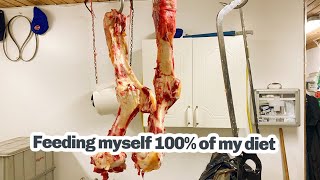
Richard Perkins (farm vlogger) explains he is closing down commercial operations to focus on homesteading, aiming to supply his family’s food entirely from his farm plus fishing and foraging. He describes following an animal-based diet (mostly meat, fat, organs, some fish, honey and fruit), intermittent fasting, and believes this approach supports health, weight optimization, and easier on-farm self-sufficiency. He outlines existing freezer stores, livestock plans, berry/honey production, and upcoming educational offerings (book release and online masterclass).
Chapters
Welcome back to another video folks. I'm just here packing down our beautiful grass fed cow into the freezer. I wanted to talk a little bit in the video about the diet I'm eating and how I'm planning to live exclusively off my farm and fishing and foraging next year. Well, it's been an epic few weeks work. The gardens are finally back to the standard they should be and should be maintained to at all times. I talked about it in the previous video. It's a lot of work to put right, but I'm very happy that this is being put down properly as the winter comes in now. So as a lot of you know who follow Instagram and follow me on Facebook as well as YouTube, my life's changing a lot and in two weeks the farm shuts down and I'm closing down commercial operations here certainly for the next year, maybe longer. Lots of reasons for that. I'll tell you more about it over the winter, but what I've told you in the past months is I'm going to be transitioning this channel to represent more of the things that I'm excited about in life and that includes homesteading for now, as well as fishing, as well as hunting and foraging and looking after my kids and how I think that should be done. I've got a lot of things to share in that area and as some of you'll know, I bought a beautiful fishing boat recently which I essentially swapped for the camper van that I had and that just suits my place on the west coast perfectly. I'm hoping to get a bit of lobster fishing in once the farm is packed down before the lobster season ends and that's going to be a real asset to me and the kids going out fishing and going on adventures, gathering crabs and lobsters, etc. In the future years. So with the title of this video, I I'm aiming to live exclusively for my farm or hunting, fishing, foraging trips. That means purchasing nothing. Now that's really aided by my diet. So I think I'd better start by explaining what I'm doing. Now I'm not a nutritionist, I'm not an expert in many things, but I understand a lot about a lot of things and some of you will be provoked by what I'm going to say and that's fine, just rest with it. I'm not going to engage in debates on YouTube comments. It's not worth my time. I'm not advocating anyone do what I'm doing. I'm just sharing what I'm doing and why and that's what I've done through this entire channel with honesty and integrity, and that's what you can expect from me. But for 20 years now I've been reading anthropological, historical, archaeological, evolutionary biology works. In fact, most of the things I read and listen to in terms of podcasts, etc. Are outside the field of farming, because that's what I've spent all, all my adult life focused on. And I'm very interested in what would be an ancestrally appropriate diet. And that's a very complex picture and there's a lot of different studies. But I'll tell you where I'm at with it. Basically I'm eating an animal based diet and I believe humans evolved as animal focused omnivores. Now we have very different diet patterns around the world through all different factors, but I think we clearly evolved eating primarily fat and meat and getting most of our calories from animal fats. And of course we would have eaten eggs and honey, we would have eaten some very nutrient dense leaves, and we would have eaten fruit, probably more so the closer to the equator you lived things like honey, etc. Now, can we evolve to eat many more things? Yes, yes, I'm sure we can, certainly on an epigenetic level. But the thing that's always struck me is that modern grains and modern vegetables are nothing like our ancestors would have consumed. And so I'm interested in this idea of phytonutrients, anti nutrients and toxicities created by things like seeds and plants that can't defend themselves. Obviously animals can run away. Fruit are often designed to be eaten, to carry their seeds away. But I think we can all agree wherever we stand in our dietary choices, etc. That it's things like processed grains, sugars, processed oils from vegetables and nuts and seeds and processed food in general that is leading to the unhealthiest population we've ever experienced in western civilizations. Diabetes, heart disease, these are all lifestyle illnesses. Right? And so I did this diet before and I didn't eat any carbs at all at that point. This time I am eating carbs primarily from honey and sometimes from fruit and just a little bit less than 40, 50 grams a day. And I'm primarily eating lots of beef, I'm eating lots of pork, I'm eating organs, and that's really important. I mean head to tail, so I mean heart, liver, spleen, pancreas, testicles, everything. Some of those I take in supplement form in dried powder because I don't particularly enjoy eating spleen or pancreas. But I know that those nutrients are important. I've always looked at hunter gatherer documentaries and these things, and I see that, you know, meat and fat is what sustains these people's calories. And sure, they will eat some tubers, some leaves, but that's not the things they sing and dance around the fire when they get home with. That's things that they fill up or eat medicinally or whatever. And that's fine. You can eat what you want. I don't care. I don't want to debate it. I don't want to, you know, hear about it. All I know is that we have been fed a lot of nonsense around diet. On one level, you've got all of the lobbying from big corporations and industrial food lobbyists that have led to some very weird dietary choices. On another level, you've got this big error with epidemiology studies, which is where most of our modern, you know, if you sit down and state the things that you know from living in your culture, what is good to eat, what's bad to eat, a lot of that actually, you know, a lot of common knowledge comes from epidemiological studies. And there's a massive problem with them. A simple, you know, I don't want to. It's obviously way more nuanced and complex than this. But a simple example would be comparing vegans to meat eaters. But then it takes into account nowhere in these studies that most vegans are very healthy by default because they're the sort of people who have moved away from the conventional, choose healthier lifestyles, do exercise, yoga, whatever, tend to not drink, smoke, take drugs as prolifically. And then on the other side, you've got meat eaters lumped together. So you've got people that eat fast food, drink loads of beer, live a sedentary lifestyle, grouped in with people that eat the sort of food. So just, you know, it's like I've experienced with agronomy data. It's usually just so limited in its practical application that it's, you know, I have to toss it out the window. I know this topic is going to be so provocative for some people and questions like, yes, but can everyone eat like this? They are very nuanced discussions that I could speak hours about, but don't have time to do that here. One thing's for sure is I eat far less than most people. Most days I'm eating pork belly with some honey, or I'm eating a couple of Encro steaks, or that's the equivalent. The total that I eat in a day. I haven't eaten vegetables at all for two months now and I haven't eaten any grains. I don't drink any beer, I don't eat any bread. I've totally quit carbs and vegetables and I feel fantastic. I'm only eating animal, basically, that includes fish, that will include wild game and I will eat some honey and some fruits. And so I got really into this idea of what, you know, applying this sort of analytical thinking that I've put into the farming world to how little do I need to do to secure my entire diet. And it's much easier when I don't eat grains and I don't eat vegetables because I can hunt fish. And I've already got two cows that I'm keeping over the winter. They will be ready for harvest next August. Got five ewes and four lambs that I'm not going to breed on. I'm going to eat them as I go and then I'll replace them with a different breed. Same with the cows, I'm not going to breed them. And I've also got the freezer stock. So this is pork freezer, two whole pigs in here, plus some extra mince, couple of chickens. This is half a cow freezer with dozens and dozens of mackerel too. Some of those are used for lobster fishing, but there's half a cow, 120 kilos of beef and about the same of pork. And then I've also got this freezer full of organs and lamb. And then this freezer underneath, some bread for the gang is all full of a year's supply of strawberries, black currants, red currants and gooseberries. I'm going to keep 10 hens just to have fresh egg supply. And bear in mind I'm going to be feeding my kids and so I'm not subjecting them to this diet. Although I do sneak things like organ meats and these nutritional dense superfoods into their food in a way that is more easily accepted by them.
But I think it's a very interesting one, that idea of can we sustain the world population with regenerative agriculture. I think bottom line is, yes, if we have a lot more farmers and some help with deregulating some of the silly industrial regulations. Could everyone eat like this? Yes, if more farmers were doing the sort of models that we've been showing. And I'm eating so little and I still work physically. I mean, I watched thousands of people working and I'm an expert in time and motion studies and I see that eating so little. I usually have far more energy and outwork people around me, but I also don't get tired. So I'm intermittent fasting. I'm eating once, sometimes twice within an eight hour window. And then I don't eat, I just drink water the rest of the time. And I'll tend to, if I'm working physically hard, like 12 hour days, putting down the wood chip and weeding, I'll eat at 11 o' clock in the morning, say and then maybe at 5 o' clock and then I'm done. I don't eat close to sleeping and I don't eat more than twice and I never have ever since I was 18.
So eating like this has been amazing.
I did this a couple of years.
Ago, some of you that follow us will remember, but I had about three and a half kilos of belly fat.
From carbs and not working very hard last year because I was running the hero tour and sitting around a lot, being sedentary. Within three weeks of eating like this, I lost three kilos. I'm back to just below 80 kilos, which is exactly what I've weighed since I was 18. And some people will approach these low carb, high fat diets as a weight loss mechanism, but I think that's inappropriate and better described as weight optimizing diet. And so if you've got excess fat, you will shed it quickly if you're burning fat as your primary source of energy, not carbohydrates, and you'll adjust your weight to what your skeleton is designed to hold. And what's interesting is you build muscle without even working out because you're eating a lot of protein and you're not processing any of these funny other things. Now it's worth saying I'm also, I know some people will think this is a very extreme diet, whereas I think I'm really looking into all the emerging science coming from doctors and people who are studying new areas of nutrition, asking the right questions in the right places. And that is interesting to me because I don't think that's been done in conventional nutritional wisdom. But I'm not attached to anything in an ideological sense. I'm playing around and experimenting for myself. And I've also been dealing with burnout and emotional exhaustion. And so what I've also noticed is the brain fog I've been holding immediately disappears when I eat like this. I feel lean, I'm strong, my mind is sharp and awake in a way that it hasn't been for years. And so I feel Great. If I stop feeling great, then I'll change that. And next year if I'm just eating exclusively from the farm or things I hunt or forage or fish, I don't know how it'll go, I'll let you know. That's part of the experiment and part of the fun for me and just really living in to these questions that I don't think most people have anywhere close to the information you would need to answer them. And so I'm trying to do a lived experience of it for my own benefit and I'm happy to share that. And I think it's interesting. I probably won't stick 100% to it if I go and visit friends or, you know, I'm sure there will be times when I don't want to be totally antisocial and say that I can only eat this or that. So I'm sure there will be times when I eat things outside of that. But in my day to day life.
Here on the farm, I think I'm.
Very happy eating like this and I feel so good. And I'm totally confident that I can get 100% of the macro micronutrients that I need in the right balance through this diet, which you can't do on a plant based diet.
But I don't even want to discuss.
That because there are no cultures on this earth that are primarily plant based in their diets. A lot of misinformation out there about blue zones. And there's a bit of a ruckus on Facebook when I posted something about meat.
There's a lot of bad information that's been debunked over and over and I.
Guess it's very easy to find things that back up how you want to see the world.
That's great. Go do that.
Not so interested in discussing it. You can smash it out in the.
Comments below, but I don't think I'll be showing up.
I'm just sharing what I'm up to.
So I've already got a bit of a head start with the amount of meat and frozen berries I've got. The only thing I need to do next year is get bees again. Now, we've had top bar hives from the very beginning, but we only had them in the first couple of years. And my thinking around these top bar hives is they're very good for drone health and bee health in general, but they're not particularly great for honey production and I want to eat honey. So I'm thinking of getting the traditional boxes that people have here in Scandinavia, where they need a little bit more insulation for the winter months. And that's something I'm really excited to do, is to have bees again, maybe six, seven, eight hives, and produce enough honey for all of my carbohydrate supply. Now I also have thousands of berry bushes, top fruit trees, grapevines behind me. I have strawberries all over the place. And maybe that's something I will expand into the market garden. I won't be growing vegetables in the market garden next year. There might be the few odd perennial vegetables I start to add in. I'll have flower beds and we've got things like asparagus, rhubarb, etc. But I tend to just not eat that at the moment, so we'll see how long that ends up moving on for. But I feel so fantastic that I've just keeping on that track for now and I'm happy to share my journey with them. So it's going to be really interesting to see because basically my time is going to be spent moving animals, butchering animals, doing charcuterie, going on fishing trips. I've got, you know, some of the best salmon, trout, char grayling, sea trout, cod fishing, halibut fishing, mackerel fishing, lobster fishing right on my doorstep, both around here and on the west coast. We've got roe deer, mainly here, and I don't think I'll be hunting moose because I'm not really interested to be part of the hunting team. I just want to sit out and shoot deer from my back door. Essentially one or two a year is all I'm going to need, and I'm excited to process them and bring you with me on that journey. I've got friends in other parts of Sweden where we can easily get wild boar, we can get elk, and I can also trade some of my farm meat for those sorts of things too. And picking berries, so there'll be strawberry flushes in the middle of the summer, there'll be berries later in the year and top fruits. I can go wild berry and mushroom picking and wild collecting, and I just.
It.
It makes me laugh because it's so easy to meet your own needs. You know, I've always said there's a massive difference between homesteading and commercial farming, and that's usually finances and regulations. But homesteading in a place like this is so incredibly easy. It's funny to me because to make my human diet is really no work at all, especially when you cut out things like grains and vegetables, which are the most work of all the things we could do and arguably not the most nutritious or optimal for an ancestrally appropriate human diet. Well, I know that's going to stimulate some of you and I'll leave it there. I'm interested to know if you think it'll be an interesting theme to have running through the next year on YouTube. I can bring you with me hunting and fishing and show you how we do charcuterie and the butchering and processing. I'm just about to make four legs of serrano ham and that's very easy to do. I'm sure many of you already do that or have seen that done, but it's nice to just take the time and that's why I'm excited to homestead now is to just take the time to do those things for myself rather than really having to optimize everything all the time just to make cash flows work in the commercial setting. It's now time where I want to make things work to optimize my life. I love this time of year with the landscape changing. There's hues from gold to oranges, reds is so beautiful and the air is cool and I'm hoping we get a nice crisp, snowy winter. But you never know. The weather is changing quite dramatically. The further north and south you go, the more weird the changing weather patterns it seems. But who knows? I'm looking forward to closing up the farm now in a couple of weeks and taking some peace and quiet. Things are going to change here on the farm. I'm not going to be running so many trainings here at the farm. I might run an annual farm scale design training because I think we have more to offer in that space than any of the similar sort of trainings that are around Europe. And I might even do some short events at other people's farms. If you're interested in keyline design, holistic management, passive poultry, farm planning, economics, all that stuff, it might be that I can come to your farm and generate some income and get a network surrounding you so you can always be in touch about that. And I won't be doing so many of those things. I'm interested to do some culinary events, possibly because I've got all the infrastructure set up for hosting people and so I might team up with some of Europe's famous chefs to do some exquisite pop up restaurant things, but more for local people obviously, but that could be fun. I'm still excited about this idea of a farmer meetup to get together and talk with like minded people and couples, etcetera to, you know, iron out kinks and communicate about things that all your friends who aren't farming can't really relate to or not really interested in. And that's something that I'm open to, open to suggestions in the comments below. But I think the main thing to tell you about is the Ridgedale Builds book is going to be live within a couple of weeks. We've sent out all the Kickstarter copies now and so we're opening that up to public sale. I've been getting great feedback from around the world with that and super happy to see the proliferation of some of the simple, low cost designs that we put out over the years. And in other news, the online masterclass that I run, which is by far the most nutrient dense and broadest online regenerative agriculture training on the market, is going to be running January and February this winter and it's a great time to do farm planning to start up next season. It's an eight week, very intensive training and we're going to open registrations for a week in November. So I hope you, like thousands of past students, will benefit from that. And so that's coming soon, so stay in touch and look for notifications if you want to join us for the online masterclass. We're making some changes to that. I'm going to be a lot more present with live Q&As and some other changes going on in there, so really look forward to that. Okay, stay well, be good folks. See you soon.
More from Richard


A review of short and intensive season on a mixed farm and restaurant/event space in Sweden






Alskade Kyckling Exploring complexities of poultry production in Sweden and what we stand for


