REGENERATIVE AG Live Q&A with Richard Perkins
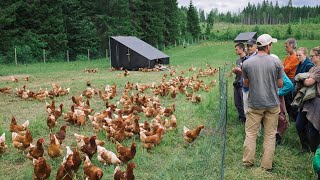
Richard Perkins answers live questions about regenerative farming, covering no-dig market gardening, poultry breeds, pasture management, and vole control. He discusses whether to rent or buy land, how to scale a market garden, and recommends books like Kick the Hay Habit and suppliers like Potter's Poultry.
Chapters
Okay, welcome to this live Q and A, folks. Now this is something that I've enjoyed doing in the past and because of the breadth of regenerative agriculture, obviously it's a lot of random questions in different directions. My aim is to sit here for 90 minutes and answer as many of the questions you have the best that I can. And perhaps some of them will tie together and I will do that in the order they come in. And I'd like to hear from people where you're listening into from. So in the chat section if you want to just let us know where you're listening into from, that would be great to see and to hear. Before we get started in the questions, I just want to mention, and I'm going to put a little comment in the links here because this will be the last time that I'm doing a Q and a on YouTube until at least next year. And the reason for that is that we are really putting a lot of effort into the farm like A Hero Experience, which is low cost membership site that we're running through till the end of the year at least. And because of the COVID situation, I haven't been able to do the planned farm tour this summer. So I've started that by recording long form conversation interviews with the people that are coming and so the people on the tour. And that's been an amazing process. So far we've got 75, at least 75 of the best regenerative farmers in Europe and we're doing an ebook series to complement the visual aspect of their farms and get a great resource together of all the options that are out there. And part of that's come about because I felt like the movement often is looking to America, Canada, etc. For solutions. But we have all of those in Europe and there's people doing amazing things. I've done about 20 interviews so far. People starting on rented land, people inheriting family farms, people starting with no money, people starting on very modest budgets, people starting with a lot of capital and investing in high end gear and all range of solutions across the board of the sort of enterprises that fit in the scope of regenerative agriculture. It's been amazing to hear everyone's stories. And so before we crack on, I just want to say that at the end of this YouTube live the hero membership for that site is closed. And so if you want to join us for the rest of the summer, we have a growing Facebook community, a private community on there. We where I'll be doing live questions and answers to answer Your questions specifically weekly now to the end of this year and there's two to three episodes of long form conversations being released every week. And we'll have that book together, so people that join up afterwards will be paying a slightly higher price point and won't have that book in the package. So if you want to join us for the rest of the summer, it's the hero. Membership price is €75 for hundreds of hours of content and direct access to me through questions and answers for the rest of the year. So you can find out more about that in the links that I've posted in the chat and without further ado, we'll crack into some of your questions. So, first question came in from Claire about hearing that cutting hay or silage can set land back for years. And what's your take or ideal solution there? And any thoughts on the ecological value of hay meadows? Yes, I would say that there's a couple of different tracks to think about in that regard. One is the approach of kicking the hay habit. And there's a great book called Kicking the Hay Habit that I would recommend to see those of you that are further south in Europe that have the potential to actually get off winter feed or diminish it to a large degree. Where I am in Sweden, it would be extremely challenging to be able to stockpile grass and graze into the winter all the way through. We can do that as far as possible, but you need to manage grass quite differently to be able to do that. But it's quite an interesting cost analysis to look at that element and see how it is. You can actually really minimize the amount of winter feed needed. Now I'd say a great book to get into that is Kick the Hay Habit and recommend that. And then on the. On the flip side of that, there's something to be said for cutting hay or silage off the same land over and over and not having the benefits of animal manure and urine and trampling. So when we're dealing with livestock, we're dealing with those two elements with not just the actual physical grazing, but the impact of their manure and urine and the action of hooves on the pasture, which has an impact too. So one way you could deal with that is by rotating your silage or hay fields in a grazing plan. And that could be a different way to approach that. If you're constantly taking hay off a site and not putting the manure back, then, yes, that will be detrimental. Obviously, hay meadows have a lot of wildflowers and insects, invertebrate Life that's of ecological value, but that comes down to management. And so you can deal with all grassland things by management alone. And so I would say it's worth checking out some other resources on that and seeing how you can minimize winter feed. That's the approach I would be taking if I lived further south. So I see people are listening in. I'm just going to zoom through the comments to see. Okay, there's people from all over Europe, Canada, South Africa. Okay, awesome. It's always fun when you do these kind of things because you, you have no idea who will show up. But I see South America there also. That's great. So welcome and yeah, I'm really happy to share in this way. And I put links to the farm like a hero experience if you want to be involved in weekly Q and A's for the rest of the summer with us. So on a previous Q and A, you mentioned blowing up voles. And are you able to give in to find out more? Yes. So you need to look this up with your local regulations. The reason I've mentioned blowing up voles is that voles are sexually mature in something like 40 days and they have litters of up to 15 pups and it's an exponential growth problem. And if you have an episodic problem with voles, you need to deal with it. You can't poison them, not very easily at least. And predator species are not that effective unless it's highly targeted predator species like weasels, for example, like ferrets, someone actually coming in specifically to eradicate them. And that's because they spend most of their time underground. So they're quite well hidden and they're reproducing really fast. And so what I would say is, you know, if you have one or two, it's probably not a major issue and part of the balanced ecology, but certainly where we are, we've had absolute episodic problem and lost a lot of trees. And so I wanted a practical solution. And with voles it's really important to actually destroy the holes as well because if you kill one through a predator or poison, they will come back in the hole, another one will come back in the hole and the problem just keeps perpetuating. So I looked up different solutions and I found a rodinator. So like a rodent rodinator, and that's an American built tool that basically pumps propane and oxygen into the hole and impacts anything in there through percussion, but also destroys the hole. And so we use that to break apart the tunnel networks and they're very extensive, obviously now it's essentially a mobile bomb that you're operating underground. You need to be careful and there are companies that will possibly come and do that for you and I think they exist in the uk. There's also UK versions of this tool and I think that's the most effective way I've seen against voles, ground squirrels, those kind of creatures. But yes, you could do a bit of digging around on the Internet. You can also find on YouTube, you know, showing how these things operate and you can see kind of redneck solutions where people are hooking up their oxy tanks and rocks flying by their faces. And I wouldn't do it like that, I would do it safely. It's a tremendous force. You're dealing with explosive gases, so you need to be very careful. But as far as these low cost solutions go, like these little vibrating, sonic ultrasonic things you stick in the ground, that's great if you've got a lawn of 20 square meters. But that's not a solution for agriculture in any way, shape or form. And planting different types of plants and putting up owl perches, great, do all that too. But that is not going to solve a crisis for you, that's for sure. So that's my take on that. Children and the farming business. What's worked well to keep a balance? Well, Josh, I think better to start a business running and get those first few years out the way then have kids, if you can deal with that in a planned way. And you know, obviously there's many. I'm speaking to a lot of people on this tour who are dealing with kids. I've just been speaking to someone this afternoon who is. His wife is the primary income generator and works full time and he's in charge of a newborn baby and a young child running his operation. So it's, it's doable, but it's a lot of stress, I would say. And so I think you need. It would obviously be different to every circumstance, whether both parents are at home or whatever. But it's, it's tough to start any business and to start a farming business, as I always say, is really tough. And I think it's important to really project that in and factor in whether you've got the time to balance all of that. Because everyone I know that's been really successful in their business has put in long hours for the first years and that's the nature of it, as far as I can tell. And it's not an ideal time to start if you just had A newborn baby, that aside, it can be done, but it's not advisable. That's my take on it. But once the children are a bit older, then they're naturally very curious about the world around them and natural processes and start to become actually helpful, maybe after six, seven years. Before that, it's, you know, there's a grace period where standing in all the wrong places and letting things out that should be kept in offense is. It's got to be allowed to learn the ropes. But yeah, it takes a lot more time to do anything, obviously. And this year has been a really good example of that for us here at the farm because we've kept our son at home because of the COVID thing, and it's a lot of extra work. It adds another whole job essentially on top of the work we already do. So plan it well. Okay. People listening in while they're doing their chores. That's awesome. Starting from scratch on pasture land. Ways to start market gardening on a pasture well, the approach that I've always been putting forth is the no dig approach. And we've started gardens on pasture with all the tenacious weeds you would find in the pasture, such as buttercup and horsetail, couch grass, etc. And I know many people who till market gardens and end up, you know, spending a lot of time tarping, using flame weeders, false seed, bed preparations, etc. It's definitely less work to approach that with no dig. And as a grower, who I've been growing for since I was 18 years old, and I can say for sure I would never consider growing vegetables on the market garden scale in a tilled system again, because the benefits of no dig are profound and far outweigh any inconveniences, which are very limited in my experience, to having to pull out something like a mescaline crop because you're not tilling it in, or the big workload that goes on in the beginning, however, that's best done at the time of year when you're not doing any gardening anyway, or certainly in my climate, I wouldn't be doing anything anyway. I would recommend approaching pasture by grazing it or cutting it down at the end of the year when the grass is going into dormancy so it's not going to grow any more that year. And then I would cover it thick. And people that do no dig successfully put enough material down in the beginning, a lot of material, and then I like to put wood chips in the pathways. A lot of people are emulating that nowadays, and I think It's a way easier way to go. The limited amount of weeding we do is just always very relaxing. And you know, I've seen a lot of market growers all over the world, but especially in Europe and you know, I definitely wouldn't want to be spending my day managing, managing that. So do it in the autumn optimally and leave it sitting. And we have always covered it up with a breathable membrane. I'm not a big fan of putting unbreathable tarps over the soil. That's not a recipe that nature's got a way to deal with and I don't believe in that. I think putting breathable non woven geotextile is optimal. Like not this black woven geotextile. That's horrible stuff. It disintegrates, it ends up all over the place and frankly it looks disgusting, you know. And so even when we put our beds away in the winter we, we have a kind of earthy brown colored non, non woven textile and it looks really attractive still and neat and organized. And I've said many times like it the appearance of the gardens, A for marketing, B for joyful working conditions and C, it just saves us so much time with weed management, water management. You know, we just have an easeful flow in the garden. So there's many benefits to that. And once the heavy load of compost has been put in the beginning, you're never putting so much again. So it's a big time saving. So that would be my tips is start in the autumn when the grass is gone into dormancy, cover it up with the appropriate material and you'll be very happy about what's there in the spring. And that's my take on that in a nutshell. Okay, so scrolling down a bit, it's always a bit of fun trying to keep up with the questions here. So someone listening in from Thailand, Alaska Greetings. What's your experience with market gardening in an orchard setting? What's the cons and benefits? Well, that's a good question. I've always been talking, certainly in the last few years I've been talking a lot with our training participants about my idealized market garden, which would be actually putting in rows of trees, more like the sort of silver pasture lanes in our field, trees over berry bushes, even in blocks of 10 meter beds. So you've got a decent amount of annual cultivation with divisions of perennial crops. And that's what I would do if I could here. But it's most of our gardens on the neighbor's land, so it's it's not our land and their condition was no planting trees. So we respect that. Obviously in terms of actually growing straight under an existing orchard. There's a Great video on YouTube channel from Terra in Luxembourg. They were in the Farm Like a Hero Experience talking about updates to the plan that they did in the video while I was there and I think it was September 2017 or 18. They took a conventional orchard on grid planting and put in market garden underneath and then perennial crops in the actual rows of the larger trees. I think it works really well. And in that video I made a lot of recommendations to leverage their income off the same land. Rather than making the typical mistake of expanding the area they cultivated to make more income, it almost always pays to do less and intensified a lot more. And so the interview with them on the Farm Like a hero experience, we're looking at what they've actually done in response to that and. And they've achieved a whole additional salary at Luxembourg standards just by changing bed spacings and crop spacings and going into no dig. So that was fantastic to hear. That's a great example. You could get a good visual representation of the tree spacing and you know how well that works because I think people often quite concerned about shading, for example, and that wouldn't be my biggest issue. I think it can be very beneficial for some crops. Another nice one is Marino's farm, the Dutch farmer. He's got a great YouTube channel and we just interviewed him last week. That will be an episode coming out in Farm Like a Hero Experience quite soon. But he's farming under random orchard trees that aren't in a grid spacing. So he's had to design his garden to fit the best configuration under those trees. And it's quite dense shade. I think there's a great little video from farmers friends taken at their place on YouTube. So have a look at that like. I certainly think it's a great way to make use of that space and there's some pros and cons. Obviously at the time of year that all the leaves are falling off, that's possibly needed a bit more management to clean up as well as fruit fall, etc. But that's not a big deal in my mind and the benefits from integrating those systems I think are much more beneficial. So I would do it. And if I ever start a different farm that I'm allowed to plant trees in my garden, that's the way I'll be doing it. Do you receive any EU subsidies and are they blessed well, well, no, we get some. We get like a micro payment for having these old Swedish heirloom cows, but it amounts to a totally insignificant amount of income. It's not, you know, it's nothing. I specifically don't really want to run on subsidies because I believe it's part of the picture of regenerative ag is like, if you think about most industrial farming on most of the Europe, these are businesses that don't work. They only work because they're subsidized by the government. So if we need and want to usher in a better way of producing food and nourishing communities, we need to design that fundamentally around businesses that work. Otherwise no one's going to get involved in that. So, personally, I make a point of that, but I think it's important too, from a larger sort of policy perspective. You know, the quickest way to change farming would be to eradicate subsidies, but obviously that would be catastrophic and no one would have food for a while. But that being said, there's nothing wrong with taking subsidies and leveraging that as a, you know, a way to claw back a bit of taxation or whatever. So I'm not against people using that. I'm against the role they play in the larger picture. And I would much rather myself run business with freedom and autonomy than take handouts that require me to do any kind of paperwork or affect my management and decision making in any way. The skill of this type of farming is absolutely flexible, holistic management. And so I wouldn't trade that in for anything. Okay. Okay. Cosmina from Romania asking about passive boilers just starting up and do we leave the lights on 24 hours in the Buddha? Yes, if they're heat lamps. Not. Not daylight. That's got to be a more natural cycle. But heat lamps, yes. You've got to imagine there are little chicks sitting under mama's wing and coming out just to peek around and going back in again. So heat lamps on 24 hours, and you want to be raising those up the first few days, 32 degrees on the backs of the birds, and then you want to start raising those lights or turning some off eventually to make sure you get down to ambient temperature in three to four weeks, depending on when you get them out. We actually like to get ours out at three weeks of age because the quicker they get out, the better they forage. And once they're getting bigger in a brooder, those conditions start to become a little bit stressful and they're not the most hygienic compared to being on fresh Pasture and moving daily. We actually just put our last lot out on that. 17 days old and they're thriving. So. But three weeks is good. The industry would typically do four weeks. But make sure the heat is adequate and well measured because that's very critical for young birds. The most critical thing for young broilers, Clean water. Absolutely, clean water. And that will affect health and well being and also food intake. And so it's very important. And then good temperature is important too. Is it possible to visit our farm in the next few weeks or months? No, not this season. That's not possible. We have. We are able to run our training, but it's the trainings we put on this year with Joel Salerton and our farm scale design training. We have a lot of logistic work because Sweden is now sort of ramping up in the COVID cases and we're allowed to hold those events, but we have to do a lot of logistics to be able to do that in the appropriate way. And so we are not open to any other visits because it's just too much of a challenge to manage that. And we don't have anyone available to manage people other than what they're managing themselves on the ground. So that's not possible this year, I'm afraid. Where do you get shrink bags? The supply you recommended does not ship in the EU anymore. Shrink bags. We now use a supplier in Sweden and I'm imagining it's possible to get them in perhaps Poland or Germany quite easily. I don't know the links off the top of my head, but what you want to just be careful on is making sure that the plastic is really food grade. And there are lower quality bags from China, but they've got some of these, I can't remember the name of the chemical, but they release things that are definitely not what you want in contact with your food. But they're here available in Sweden in all different sizes, so I'm sure they're fairly easy to get hold of. You just might need to look to a neighboring country if that's more common, but I'm afraid I don't have a link for you. And when do you mix the chicken, food, starter pellets and grain? Do you grind them together or mix them after milling wheat? That's a good question. We. We have broiler pellets, organic pellets that are already pelletized. We mill the grain on its own and we then mix them together and that works really well. And quite a coarse milling is good. If you get too much Flour, you'll get a lot of wastage. And food is obviously a high proportion of the running cost of that enterprise. So we like to do quite a coarse milling and that seems to work good. And it's much more beneficial than not milling the grain because of the conversion ratio. Don't forget to make sure they've got good access to grit. And so for while the birds are in the brooder, it's good to introduce grit, specifically grit. For chickens, you can use angular grit if you've got it lying around. But it's not the same as just sand, you know, it's specifically aggressively gritty, if you see what I mean. And it's, you know, it's not very big cost. It costs US maybe €15 a year to raise thousands of birds for the grid. So it's nothing. But I find it's better than using just random things. Once they're out in the field, obviously they should be able to find that for themselves. But it doesn't hurt to throw a handful in to the feed now and again just to make sure you're getting optimal feed conversion there. And I like to in the brooder also cut turfs out of the grass with fairly short grass on and put them in the brooder at the end of the brooding cycle just so they get used to standing on grass, pecking at it, you know, balancing on it. Because it can be quite overwhelming for a little three week old chick to come out onto pasture, especially if it's grown up a bit to just navigate around. I think, you know, it's good to get them used to that as quickly as you can. Okay. In the uk there's a distinct lack of agricultural land to purchase. Hang on my, let me. The questions are all zoomed off. See. Okay, lots of questions coming in. Okay. Yes, here we are. In the uk, there's a distinct lack of agricultural land available to purchase. Alternative optional renting makes me uneasy, especially if you're putting a lot of effort into soil regeneration or you know, investments that can't be moved. What's your take? Well, personally, I, when I moved to Sweden, I was going to rent a farm and it was a property, probably about 15 million euro property right outside Stockholm, but in the countryside on the archipelago. And it was all ring fenced with beautiful 2 1/2 meter elk fencing, beautiful lakes. A property that I would never in my wildest dreams be able to access. And the farmer had retired, was in his 60s and he got subsidies for cutting the grass. And so I know if I come along and start an unwanted dairy cow beef herd and a boiler enterprise. He would get more income from subsidies because of the grazing. And I could run a business where I didn't need any infrastructure really at all. And so I actually took a holistic management grazer. This was the week after I got to Sweden, with no intention of having really considered living in Sweden at that point and got permission to do this. And that would have been a really good business and a massive sales market in Stockholm. But I decided in the end not to do that, because the things that I wanted to do here at our farm, with an educational perspective, I knew that I would need to own the farm to do that, because there's a lot of things we do here that I wouldn't do if I was just trying to make a living on my own. You know, we just don't need to do a lot of things. We're doing them with our secondary objective, which is to inform and educate others to get started. So I actually needed to purchase property to do that, I felt. And other than that, if I was working for myself, I would consider renting because just some of the people that I've interviewed already on the farm, like a hero experience. It's an instant way to get started. I've been speaking to market gardeners who rented a piece of land, a few thousand square meters for €500, put in ten grand investments, and in their second season they're turning €100,000 at 70% profit. But if they'd had to save up to buy land where they are that was in, in Central Europe, they would have had to spend €40,000 an acre now a hectare in that location. So it depends. I mean, you know, if you can get a good lease agreement, that's the key is seeing if you can get a longer term, you know, 10, 20 year lease agreement would be important. And I would make sure that the things you invest, infrastructure wise, are movable. You know, caterpillar tunnels, cabins that are turned into storerooms or grow rooms or chillers that you can lift on the lorry and move water piping around fields that you can coil up and move portable fencing. You know, all the infrastructure needed to run these kind of enterprises is fully portable. So it depends on the context that you're making decisions. If you want to be in a specific area next to the market or next to family, or next to where you grew up, or whatever it is and you can't buy, then I would definitely consider renting, but I would just make sure I get a good contract. And I've also spoken to people on the tour already who didn't get a good contract and have had to relocate the farm and been okay with that. But that's a lot of work, especially if you're doing. They were market gardeners as well, and so they had to rebuild all the beds, essentially and start again. It's doable, certainly when you're young and highly passionate and motivated, but certainly as you get older, you wouldn't want to have to do that. So be careful with your agreements. That's the main thing. Okay, so question about small plot of land, 2 acres that's less than a hectare, 75% is on slope, 5% is forested. What enterprise would you advise me to do? Well, it's very hard to get into that without any detailed understanding of the context. So the first thing I would say and recommend you to do is write out your holistic context. You know, get very clear what you're trying to achieve. You could do many things. You know, it's probably seven or eight different enterprises that fit that land base. And it's impossible to say without really seeing a detailed map what that slope looks like. But I'm not here to advise you what you should do here to support you when you know what you want to do. And I could help you get clear in what you want to do by like. We have a free mini course on my website, Richard Perkins co. I would recommend taking our free mini course because that's all about writing out your holistic context and it guides you through how to do that so you can really identify for yourself things that are going to lead you towards the quality of life you want to live. You can then tie that to financial needs, etc. And then look at the market concerns around you and find the options for enterprises that fit you. And that's really why I wrote this book. I mean, the whole point of the enterprise comparisons in this book are specifically to give people coming into farming or people considering adding enterprises to their farm the opportunity to weigh up these things. And that was the whole point of the comparative analysis. It's like, okay, you've got two acres, so that's 8,000 square meters here. Five or six enterprises that fit on that space and all these other ones, they don't. You need more land or you'll never make a useful amount of money. So rather than me give you any concrete ideas of what you should do, I'd recommend really starting at the beginning and getting clear what you're trying to achieve for life and Take it from there. And there's a lot of free resources on our site where you can go deeper into that. Do you have any thoughts on building a vineyard three to six acres, but incorporating a market garden with it? Is there a way to mix the similar to. Is there any way to mix the two similar to what you do with your tomatoes? Yes, there could be typically intensive vineyards on such a spacing that you wouldn't really have so much room for beds. But I wouldn't consider market gardening on more than a few thousand square meters. Certainly in the type of market garden like hand tool based market gardening, you're not going to want to do more than a few thousand square meters. As one person's role. I think one person can excellently manage 1500 square meters of beds if they're really good, and I mean exquisitely managed. I've heard of people doing 2 to 3,000 square meters, but then you start to need a bit more mechanization and cover crops and you're not producing intensively and all the beds all the same time. So really the market garden element is not comparable in scale to the vineyard. So I would design part of the vineyard around it. Possibly, but you would want the majority of the vineyard to be probably a bit more intensive to make use of that space. So yes, they could definitely be combined, but I wouldn't combine them with the intensity of rows that you'd have in a typical intensive vineyard. I would space it out a bit more. And because of the small size of the market garden relative to the size of the vineyard, I would just consider carefully, you know, how to, to go about that. Okay, all right, people from all over, that's great to see. Let's see. Do you think that Rico would be a success? Do you think that RICO would be as successful in the UK given our easy access to major superstores? Well, you lot need to answer that for me because I'd love to see it spread there. I think the density of people in a small space mean it could be highly successful. Obviously you've got more access to major superstores, but most major superstores don't supply the level of quality of food that you find on our RICO rings, you know, and so you're tapping into a market for people who specifically want local food of a quality and freshness that no superstore has. And usually they're wanting a bit of the connection to the farmer and the why you're growing it. It's that story of what you're up to that excites people and taps into part of what they enjoy about food too, you know. So yes, I think it could work in the uk. I've spoken a lot previously on videos about critical factors for making Ricards work, etc. Also interviewed Thomas Nelman, the founder of Ricoh in the Farm Like a Hero experience, which is very interesting to me and changed my perception on it a bit through that conversation. But yes, I think you could make Ricoh very successful in the uk. I know some of our students over at Moy Hill set up a Ricoh ring in Ireland. I'm not sure how that's going for them, but it seemed to be starting up over there. So yeah, go for it and let me know. I'd love to promote it if you do make that. And Rico's now In, I think 15 odd countries. The first one's in America, Canada, South Africa and 12 European countries, I believe it is. Okay. I've seen a lot of family farm examples and cooperative enterprises. In your experience, are there many examples of two to three person non family spouse partnerships that you're aware of? Yes, but they tend to be. The ones that I'm aware of tend to be more stepping stones for people. Like, I've seen a lot of our interns start businesses together as a stepping stone to moving more on their own. I think it could be very relaxed. I mean, I don't have much experience of that. I've all. I've run many types of businesses, like micro businesses and. But I've always done that on, on my own or in the family context where I see the pros and cons of that too. But one of the downsides and something we've been talking a lot about on the interviews for the hero experience is how people manage that element of things because it's unique and different to everyone. Right. And I think there's something very nice about separating business life with your family and private life because it can be really easy without quite strong discipline to have undefined boundaries between work, rest and family, etc. You know. And personally, I've got a massive aversion to talking about work after dinner because I talk about farming for the last 20 years and that's all I talked about. I mean, I don't. I do have friends that aren't in the farming world, but I specifically never talk to them about farming because I enjoy the fact that they don't care anything about it. And I also have a lot of other interests, but my whole day is based around talking about farming. It's like the last thing I care about at 10 o' clock at night is eggs. So I think, you know, it can be touchy and I think every couple will have a different way of dealing with that. But I think you need to go into it with quite clear boundary conditions to maintain that balance. So I think there's a lot to be said for working in cooperative enterprises. And having said that, most cooperative enterprises I've seen are people specifically who work together somewhere. Like I was saying, the people that have come through here and have gone off and started brilliant little businesses or have met working at a farm anywhere else, or have been very close friends and have the benefits there of knowing each other very well and being able to deal with tough challenges with a background of trust that you wouldn't get from interested parties, as it were. So I'm not so aware of any cooperatives set up by people just seeking people to come and be involved. I think, you know, that's much more unrealistic. I'm sure it happens and I'm sure there's great examples, but I don't know of them personally. I think you need very specific working relationships. Like you really want to work with someone for a season to know their capacities. And if you don't have that going in, I think that could be a bit rough, you know, potentially, potentially. But I think it's very much worth pursuing in that it's very nice to have your work life a bit separated sometimes. And I know a lot of families or couples that I speak to do find it challenging. And let's face it, relationships are challenging. Running a business is challenging. Raising kids is challenging. Farming is challenging. So to do all that in a very traditional nuclear way is really intense. And it's definitely not for everyone. Yeah, Jeremy's asking. Okay. Only got experience in a hobby garden and would like to step into more full time operations. Where should I start getting that knowledge in the real world? Well, I recommend, and I'll say again to everyone, just because this is the last Q and A I'll be doing on YouTube this year. We are focused all summer now on interviewing people who are just starting up. People who have made that transition from hobby growing to professional growing, people who have been conventional farmers who are turning into regenerative ag now tool makers, all kinds of enterprises. And hearing like 70 to 100 people tell their stories is probably much more useful than me telling you what I think of that because, you know, it's very easy. And another reason that we made the farm like a hero experience was because often when you have Internet personalities and we all know the well known growers, the well known farmers, and it's very easy to project stuff onto people and myself included, right? Where people are looking for standardized solutions in farming, where there are no standardized solutions. And so I'm very aware that my words can be taken, you know, very strongly, very literally. And that's not the point. It's like, yes, I can plan farms and I can run a business and I can show you what I do. But there are many people that don't have a voice on, you know, social media who also can share that. And in a way they're much more relatable because they're not someone you see on YouTube, they're just someone random, that someone getting on with it and doing great. And that's really what I wanted to do with the tour, is shine light on all those people. Because there is a plethora of places all over Europe, in every country that are doing amazing things. So my advice in a simple way is try and spend a season with someone doing specifically what you want to do. You know, if you're very interested in market gardening in a very particular way, then go land there and put yourself into that situation, make yourself useful to that person. And the time invested will save you a huge amount of money and time, essentially. And that's where I would get knowledge. It gives you the opportunity to trial things out without the risk of starting up and help someone else out, hopefully. And that will also give you the real world direct knowing of, yes, I want to do this. And it's much better to find that out before investing lots of money and time setting something up. And that's really what our educational focus has been at our farm, is giving people that sort of springboard of pumping them up with knowledge and how to run workflows and how to organize things on the ground, but really getting them to test out in their experience what it is they actually want to do. And some people come here as I'm going to be a market gardener and they leave here and set up a chicken business and they never think about vegetables again. So it's very helpful to be exposed to that. And I would circle back round to that holistic context piece too, getting really clear what it is and not coming into this with a fixed idea of I must be a market gardener. Because, you know, the, the things you're trying to, the objectives for, the quality of life you're shooting for don't necessarily involve vegetables at all. You know, it might Be you'd be better suited as beef farmer or whatever it is. So I'm just saying that because I think that's where I would always start is getting clear about the context within which you make decisions. Okay. So yeah, if you're not with us in the farm, like a hero experience, I would recommend joining there because we will be having these kind of Q&As every week now till the end of the year as well as hearing the stories of all manner of people in all manner of circumstances. And I think that's very valuable rather than just isolating a few of the well known people and trying to emulate what they do because that's quite limited in scope and. Yeah, okay. I heard you were considering Thailand for a farm and what made you decide against that and are your approaches applicable in the tropics like Thailand or Laos? I went to Thailand when I was 18 and I went there every year afterwards. I was deeply involved in meditation. And I love Southeast Asia. I've traveled all over the region there and I've lived in Thailand over three years and I nearly bought land there primarily because I was living at a farm there and managing it and I could afford it. Land is much cheaper there obviously and I love Thai people and the culture there. And particularly in the north of Thailand, it's very rural and beautiful and a bit higher altitude, so a bit less intense there. I decided against it because the lands, the legal situation around owning property is quite challenging and the approaches I have on our farm are not so appropriate directly to the tropics. The tropics is a whole different ball game. I've spent a lot of time designing, farming, consulting in the tropics and I love the tropics. And it's also very easy to romanticize the tropics and forget about grass that grows 6 meters tall in a few months. And you know, dengue fever, malaria, heat exhaustion, then you know, humidity where your clothes don't dry for four months of the year and you know, this kind of thing. But I do love it and I love the array of crops. You know, in an area like here in Sweden, we have 26 species of tree. You know, in Thailand there's probably 2400 species of tree. So it's definitely a different ball game. I would say whilst I have expertise in tropical agroforestry and I would be working primarily with agroforestry systems, with integrated animal systems and possibly aquaculture, not aquaponics. Not a fan of that aquaculture, like the integration of perennial crops Small animals and water systems is how I would approach a lot of situations in the tropics. Some of the best farms I've seen are out there in that way, kind of like Chinampa systems, but adapted to Thai conditions. That's what I would have done out there. I think the ecological thinking and pattern approach translates, but the, the way that our farm looks and the things we do are not what I would do in Thailand. No. And I would say yes, I could help people with the tropics, but it's. My work is so much more focused on cool, cold climates now that I think it's better going off to someone who's really, you know, full time in the tropics. Yeah. Okay. Cool. Hi. From India. Great. You can join us. Riddle Landscapes of Utah, Kosovo, Portugal. Great. It's amazing where people show up from. Thanks for joining. It's really fun to see. Okay. There's a small field next to our house, about half hectare that's been heavily grazed and compacted. What would you say is the easiest way to regenerate the diversity on this field? Animals well managed at appropriate density. And again, this is the sort of question that needs a lot of context, you know, and that's something we could explore in our Facebook group or something. But you need maps, photos, then we can get serious about the appropriateness of things. But it's, it's too broad a question. But typically compacted, heavily grazed pasture, all you need is animals and manage them well. It's a management question. So holistic management, that's where I'd go with that. Could you talk a little bit about watering too much and too little? Thanks. From Arizona. Well, we're in different climate zones, so here in cool, cold, temperate climates, three to four centimeters, that's like, what is that, one and a half inches, two inches a week? It would be adequate for the average of most annual vegetables, for example. Certainly some crops need heavier watering. Squash, things like that. And really with watering, like, you know, I know people that don't water their gardens at all, typically, like hobby gardening. I don't know any market gardeners that don't irrigate. But, you know, you can grow a lot of things without irrigation in some climates, but yield is really proportional to watering. And you, you know, just like we are 70% water, so are plants. And so water yield, you know, if you've grown squash and then grown squash is irrigated properly, you get triple the yield on the same plant in the same space with the same work. So it's, it's pretty important thing obviously where you are you've got probably much higher levels of evapotranspiration. I would start to consider drip irrigation there, which I wouldn't consider here with a high rotation in bio intensive system. I prefer aerial watering to not have have all that logistical nightmare of header pipes etc through the gun and needing to change different drips for different row spacings and crop spacings and all that sort of stuff. So yeah, but you'll need to think about effective use of watering. You know, if you have access to a lot of water that's less of a problem. But drip is in a hot dry climate, definitely drip irrigation is the most effective use of water and will penetrate deeper into the ground for sure. But too little water will be a big problem. Too much water, it's yeah, equally a problem. So you're aiming to like we have a rain gauge at the farm so the process of managing water is looking at the forecast which is very typically wrong here because we live in a strange valley between two larger ridges with a lake in front of us to the south. So the weather is never what it says on the weather forecast. Although I get the impression a lot of people feel like that anyway. But we'll look at what's anticipated, we will measure what actually comes and we will adjust our watering based on that. You could say. In a hot dry climate quite different from ours, I would recommend, you know, tapping into other growers in those kind of conditions. Maybe Steadfast Farm would be a good example to think about to look at how people are watering and dealing with shade netting instead of like we have everything under cold like cloches in the spring that you might want shade nets to be able to grow lettuces longer in the year. Example. You talked about. No dig. You've mentioned you learned a lot from Jean Martin. His methods of flail, crop day risk cover and you don't do it. Why? Well, I didn't really learn so much from Jean Martin about crop production. I enjoyed his work immensely and I think he's had a major impact on the scene. I suspect he's created more farmers than anyone else in recent history. But I, I mean a lot of his methods are taken from Europe. They're standard ways that people have done organic agriculture here for decades and most of the big American YouTubers example are doing things that have been done in Europe for generations or certainly in the last 40 years with plastic mulch covers and all this stuff. That's what I learned at ag school when I was 18, but I worked with that for many years and it's, it doesn't strike me as the best way to deal with soil management. I loved his approach to standardizing and planning and really taking on from Elliot Coleman's work. And I really appreciate that. And that's definitely helped influence me coming back to market gardening because I walked away from market gardening having entered farming through that because it was just hard to make it pay compared to other enterprises. And still today, that was the purpose of the comparative analysis in this. You know, I've said over and over again, most new farmers are coming into market gardening. Why? Because of access to land skills, low cost of startup, you know, those kind of things. And that's great and we need that and I love it. But if you really dig under that, market gardening is the least profitable of all the farm enterprises in terms of time input. Many of those enterprises need much more land or a little bit more skill or whatever it is. But the reason I'm pointing that out is market gardening is spreading massively and a lot of people are coming into it through the influence of YouTube and stuff like that, but they're not being exposed to the whole gamut of regenerative agriculture because most of the market growers that you hear about are not coming, coming from the farming background where they're working with those other enterprises. And I think that's a real shame because. And it's something that's evidenced by people coming here, you know, with the sole goal to learn about market gardening and actually coming into contact with laying hens and falling in love with that more broad enterprise and leaving and setting up a totally different enterprise. So it's worth really thinking about. But anyway, I'm digressing, but I don't believe in tillage. I don't believe in cover crops. They're not necessary in the no dig system. With good compost, the ground is covered all the time, full stop. I don't get many weeds. I don't need to harrow. I don't need to keep the pathways clean. They're exceptionally clean. Look at our market garden. It's, you know, it's. And I'm not saying just to blow my trumpet, but it's the cleanest market garden I've ever seen. And we don't need to deal with all of those problems because we didn't create those problems. Most growers create all their own problems. So you can't, you know, you get where you're headed, as it were. Yeah, okay. Talking about orchards, market garden integration how would you minimize the competition between the trees and vegetables? Well, this is where I would be very happy to have that in a linear row, blocks of 10 beds with rows of trees. Because essentially trees want to grow in fungal soils. So if you want to grow trees, you want to focus on creating fungal rich soils that support the trees to thrive. Likewise, if you want to grow vegetables, you want to support the soil and microbes for bacterial soil that make vegetables thrive. And I say that over and over again, like we take a lot of credit for growing vegetables. You don't grow vegetables, they grow themselves. Right. Your job is not growing lettuces, it's farming microbes. And that allows plants to express their physiology. That ties back into. The last question is like, if I take care of soil in the way that I do here, I eliminate nearly all the problems that market gardeners typically have. And I've got a thriving soil basis. That means I have thriving healthy plants, which means I don't get nearly any plant pest disease problems that would be typical in a tillage system. If I integrated tree rows into that, I would be preparing the ground in a different way in that alley to create the conditions for fungi. So they are organisms that want absolutely no tillage. Certainly you could till to get the tree well established, but then convert it straight over to no till. But they need a lot of carbon material. So I'd be doing deep, thick woody mulches. I would be using mycorrhizal fungi to inoculate that. Now there are mycorrhizal fungi in all soils. They don't like tillage though. That's the first thing that dies when you till. But if you put a mycorrhizal fungal product onto a fruit tree, it's, it's transforming its root system by. It's growing that root system by 700 times in three weeks. There's peer reviewed studies on this. Like I use a product called Root Grow Professional is one you can get commonly in Europe. There's many types around, Paul Stamets sells them over in the states, etc. 700 times increase in root mass in three weeks. That's water in and walk away kind of thing. And I would be putting rock dust potentially. So what are fungi eating? Carbon and minerals from rock, from mining rock and feeding it back to the trees in exchange for sugars from the tree. So I'm making a fungal alley where the trees want to stay rooted in. Right. And then I'm cultivating the. Or I'm not necessarily cultivating, I'm Doing no dig. I'm focused on biological activity with my vegetables in a bacterial soil and bacterial based compost. So the trees don't naturally want to root into that because they want to be in the optimal soil for them. But then if you've got the nice alley, well, you can just root prune them every couple of years for surface feeding roots. That's something I do over on the north beds in our farm is we have a spruce forest on the edge and they have surface feeding roots that creep out into the garden where there's a lot of water being held by the carbon material. So every couple of years I'll just trim that with a spade vertically to cut those surface roots and that does fine. So you could do it like that on a big scale or in a mechanized system you could use a root pruner to go along the tree lanes. And what you see in many larger scale agroforestry operations where you have walnut over wheat in a combined sort of, you know, board acre scale is you start to see the roots really rooting deep and going right under the roots of the annual crop because they don't like disturbance. And so you get a much better use. And the land equivalent ratio, the LER of agroforestry in Europe is 1.4 to 1.6. So by that means essentially if you grow wheat here and walnut here, by putting them together you get one and a half times more productivity for the same land units. So well worth doing. And for me I wouldn't be concerned, but I would manage the water in that way. Okay, which breed of chickens do you use as egg layers and boilers? We use a Loman Brown and I would recommend people use brown hens. Brown eggs are much more sought after, much more associated with sort of natural country eggs and they don't show any dust or dirt in a way here in Europe you're not allowed to clean eggs, so that's helpful. Most of the market in Europe is actually white eggs, but customers buying direct from farms prefer brown eggs. The boilers we use are Ross308. It's a kind of Cornish cross. And there are slower growing breeds like the Freedom Rangers. Personally I don't like them and they are much less cost effective. And my experience with Cornish cross rustweeds is this totally management based. So we do a very different style than most people in that we do feeding with, we do restricted feeding where they're getting hungry in between and that's making them forage a lot more. I know a lot of folks cut corners there and do unrestricted feeding for a limited time. But that's way less preferable for the bird. And so I really highly recommend a slightly increased workload of separate feeding. It's much better for the birds and we find our birds grow fine, we don't get bad legs, heart attacks, all that. That's all down to management alone. And we've kept laying broiler hens for over a year and they grew to eight kilos. They were laying goose sized eggs every second day, sleeping up on the perches at the top with the laying hen. So it just goes to show, it's totally about management alone. Will the intensive course be held this year? Yes, we are doing a farm scale design course. It's shrunk down to nine days so that people only take a week off work. That's in July. There's a couple of spots left on that, but that's it. You need to look into your travel restrictions. Like we're holding the course and we put in provisions to be able to do that with the regulations. But you need to look at the travel arrangements for yourself. We've got Joel Salatin scheduled for August, four day masterclass there, which is probably one of the most exciting trainings I think that we've hosted. And that seems to be on. I just talked to him yesterday and it appears still on as far as he's concerned. So that's fantastic. Have I considered having dual purpose hens like Salatin? No, because of the availability here in Sweden, I would thoroughly investigate that and would have tested that for sure if that was available. But here we're very limited. We only have one type of boiler chicken or the slower type that's used more in organic agriculture, but that's just way less economical. Like if I run my numbers against the numbers for the Freedom Ranger, it's just, what's the point? I have such a short season anyway and in terms of laying hens, we get Loman White and Loman Brown, you know, and that's it. So if someone could supply them. Yeah, I'd probably try them. I would expect the eggs to be lower. I get 95% lei from, you know, a few weeks after buying them until end of November and then it starts slowly going down over the winter because we keep them in unheated tunnels. But I would say. And they're quite aggressive and I like that because they're much more aware of their surroundings and less susceptible to getting predated on. I would imagine dual purpose birds will not lay anywhere near their Eggs. And someone always says, yeah, but the record number of eggs for this type of hen is this many. But it's like, yeah, but you've got to be very careful planning an egg business because it's down to them numbers every day, every day and they add up. And there's no way a dual purpose hen lays 95% for that long or that translates to about 80% year round. And dual purpose birds are not consistently doing that and they probably eat less feed. So you've got to balance the cost equation. But to get a dual purpose hen to lay optimally, it does take a bunch of food. So I would say in today's market in Sweden, like, I'm certainly not against the idea. I know it works for people over there. But the, the meat chicken industry is like, most people do not want to buy an old hen, they want to buy a broiler because that's all they've ever eaten. And that's the way it is. You know, we have school kids growing up here who don't really understand that chickens have bones in them. You know, we had a, we gave 50 chickens to a local school. All the teachers came around, looked around the farm, spent half a day with them because they were looking at ordering a couple of thousand a year. So we were willing to give them our time. Came back for feedback on the chickens and we're like, how was the chickens? They were like, kids didn't like them. We're like, why? And they were like, they had bones in them. These are whole chickens, right? And we were like, how old are the kids? They were 17 and 18. So, yeah, we're in the land where, you know, school kids think that the milk tanker is coming to pump milk into the cows. So. Do I have any suggestions? I've lost some questions here. Okay, sorry. Sometimes the questions updates and it just totally throws the. Okay. Seems like we're not going to be able to get through all of these questions in time. But. I'm sorry, folks, I've totally lost my place. So I'm just going to tap back in. I would say we've got half an hour. Well, 20 minutes now. And I want to say again, for those that have signed in later, that we are, this is the last Q and A we're doing on Facebook this year and we are doing this weekly over at the farm. Like a hero experience. If you read through the comments, there's a link there to what that is. And today, for the next 20 minutes, it's the last time to sign up for that at the HERO membership level, which is 25% discount with the books that we're creating this summer thrown in. So it's €75 for the rest of the year for hundreds of hours of Q&As and detailed interviews with some of the best regenerative ag farmers in Europe. So I'm making a plug for that because if you want to join us for the rest of the year, there's 20 minutes to do that in the HERO membership level of joining. I'm gonna just tap back in where I found because it's doing a funny thing, but someone saying Terra in Luxembourg was an example of a three person partnership and yes, that's true and that's a great example. So I recommend looking at Terra. They're dear friends of ours and I think they do an incredible job. Where have the pigs gone on our farm? Well, we got rid of the pigs because you'll remember we were using the pigs as a climatic trigger in the forest system. And at some point you've got to let the trees grow. Like you need seven, eight year old trees to withstand the snorting pig. And so we've taken pigs away. I think the first couple of paddocks that I sometimes show in videos that we've been transitioning over to agroforestry with grass underneath and wider space trees, they're ready to receive pigs, I would say. But I think what I would do to bring pigs, I've really missed pigs and I was going to buy a few this year just for homesteading, but I haven't found any for sale locally. What I would do is perhaps even consider just raising more traditional Yorkshire pink pigs for the season. Just growing up a few pigs to fill up my freezer because I really enjoy eating pigs, but I haven't done that yet. But I would say half that forest land could take pigs, but the other half, we want to really let the trees grow up now because what happened when the pigs went through all kinds of tree species that you don't see in the landscape around here grew up like oak, ash, tilia, that's lime. And they're the trees I want to transition the land to. But in order for those slow growing sort of canopy trees to get established, I need to take pigs out of there for some amount of time. So that's the reason they've gone. Okay, some Germans here. I love what's going on in Germany, you folks. There's. It's a real groundswell going on right now in Germany, it seems. And I've had a few interviews from Germany the last couple of weeks for the hero tour. Okay. You enjoying the book? Good. I hope many people have enjoyed that. Is there a platform where experienced farmers are sharing their knowledge with others? Well, that's the Farm like a hero experience. That's the whole aim of what I'm doing for the rest of this year is to interview all the upcoming and established regenerative ag farmers, get them involved in long form conversations, build a community where we can communicate, share ideas and really build the European community. Because I feel like the era of good Facebook groups is kind of over. And so we wanted to try and really build a more private community where people have skin in the game and are more engaged in that way. And so join us there. And that's where I'll leave that. Do you know any farmers who integrate insect breeding on the farm? First for animal consumption, secondly for customer consumption? No, I don't. It's a really poignant question right now because someone just passed me an article and I will try and put this up in the private Facebook group on the Farm like a hero experience because something very interesting happened where they just changed the laws around this. And so that does become a possibility. For poultry feed, for example, through mealworms or that sort of thing. You do need to do the mathematics because obviously with, you know, to feed a flock of a thousand hens, you, you would need a large amount of mealworms. You would be spending half your day farming mealworms. So you've got to ask yourself if you that fits your context. You know, it's all lovely having these idealized systems, but you've got to really unpack what that involves and whether that's actually what you want to do with your time. But I will remember to dig that up. I'm going to write it down and try and dig that up and put it on the Facebook group because that's recently changed that allows people to do that on the commercial level. You weren't allowed to do that before. I think you still need an inspected facility, but that wouldn't be so hard to do, I imagine. Could you use geothermal to grow crops all year round with the shortest period of light being about nine hours and a quarter? Yes, probably. I would need to think a bit longer. But like we can't grow year round here because there's no light available in the winter. But if you've got nine hours of light, yes, you should be able to grow year round for sure. You could also look at Jean Pain composting that's a great way to. It's a regenerative technology farm scale, compost whilst heating a greenhouse and your house. And that would be. Look, Is the UK a good country to start a farm and make profit or is emigrating overall a better choice? I mean, you know how to answer that. Well, I think there's a lot of great small farms in the UK and there's a bunch in the tour coming up. And I would be farming in the UK if I could have afforded to buy farmers. And most people are either renting land or they've inherited, you know, a bit of property or have a very large garden or something, but I didn't come from that. And a farm like I have here would be a million euros in England and probably in disrepair, whereas we paid a tenth of that. So it's, you know, I think the UK would be great. You know, our friend Jake, who runs Oxden Organics with his parents, he's selling all of his produce within five kilometers of the farm. Like, there's not even anyone living five kilometers from my farm. You know, like, we think we're doing pretty well selling everything within 50 kilometers, but we're in a very, very rural situation with low population. So I think the UK's got a lot more burgeoning organic food scene, etc. You know, people are. I think Scandinavia is a bit behind the times. No offense to anyone, but I think it's, you know, a decade or two behind the leading edge of things further south. That was certainly my impression when I moved here. And most of the things that we've been doing here, we've been pioneering, you know, there weren't people doing posted boilers and no big market guns at a commercial scale. You know, it was. Maybe there were one or two. I don't want to offend anyone, but I don't think there was much going on to speak of, for sure. And that stuff is way more established in Germany and France and England. So I think the market's ripe for it. I think you're competing with a different thing, which is like nationwide distribution, etc. But people will always value freshness, local quality and knowing the farmer. That's an experience you can't get anywhere else. So I think the UK could be a great place to start farming. And if I could, I would have started to farm there for sure, because I know that country like the back of my hand. So I, you know, I would know how to deal with things in a much more refined way. Blessings from Ireland. Yes, blessings to you and can eggmobiles be made compatible on fairly steep, irregularly sloped lands? Yes, they could. I would not build eggmobiles like ours on really steep land. And I keep telling people, don't build eggmobiles like ours anyway. It's this standardized solution thing. It's like I've seen probably 150 ridgedale style eggmobiles all over the world now. And it's cute, but I told people very clearly we built them because of these constraints like very narrow gates and high wind that we need to park into and all this stuff and the fact that we needed to pull it with an atv. You know, build it however you want, but know why you're building it that way. If you're on a steep slope, you might need to consider the design quite carefully. But another thing you could do possibly is if you have like one solution we've worked with the farmer with where they have flatter land and then steep slopes, is just to run the eggmobile at the top and the bottom and have the fencing up and down the hill. So if you can do that in any way, that would be helpful. And if not, then I would consider possibly multiple, like either a very innovative axle design, but if that's beyond your capacity, I would consider going much smaller pens. And multiple smaller pens might be the way to go there. It's usually always possible, but you would have to really think about it carefully and be safe as well. When you start chickens, do you start to kill them and sell meat or first was just selling eggs? I'm not totally clear what you're asking, but we immediately began with laying hens and boilers and did a lot of feed experiments and calculations and used that to build the business. And I think it's a good way to start that. Many people I'm speaking to on the tour are doing the same. If you can afford it and do a year where you can run experiments and gather data, if you can afford to do that economically, it's. It's priceless because we immediately start the second year with very like dialed in feed ratios and already a customer base where people can start spreading the word for us. And word of mouth is still the best sales method. And so that's how we started, you know, just scaling it up with the customer base. And we needed to because we're in the middle of nowhere. And so it's really important. Cool. And I just got a message from my collaborator saying that people are commenting further below that they can't find where to join the hero experience. I'M just posting that there for you in case that's the case. We're gonna have to start wrapping up soon. I'm going to take a few more questions. How important is the no dig method to you? It's very important. And for me, I wouldn't consider growing vegetables with digging because it seems unnecessary. I've still got a few friends that do till the soil. But yeah, it's really got to come from you and your context in the resource base you've got and what you're trying to achieve. Personally, on my journey, for the last half my life, I went to ag school specifically for growing veg. I went into the farming sector through growing vegetables on other people's farms. I can tell you I will never grow through tillage again because it's not necessary. You talked about potential for breeding tree crops like chestnuts. Any other idea, like walnuts, hazel. Yes, all of those. Like it. You know, it's not going to come out of ag programs and universities. It's going to come out of weirdos like me and you or you know what I'm saying? I think yes, there's scope for all of those to be bred, to be grafted. There are groups on Facebook, I think, certainly for Chestnut. But you can get involved with them. I would, I would say yes, more, more, more. And Tree Crops is where it at. Is where it's at. And I would read Tree Crops A permanent agriculture by J.R. smith because that was the first regenerative agriculture book. You could say. Yeah. Does Farmlike a Hero have a private unique audio RSS fee to subscribers? I'm not totally clear what that means. I'm not very techy, but all of the interviews are available in video format and audio format and they're downloadable so you can listen to them. I know most people like to listen like a podcast as they're working and then the Q and A each week is there's a place in the platform where you can write questions about anything. And unlike YouTube, we organize those into farm design, vegetable production, animal production. So it's a lot more structured and easy to listen to and to find the answer to your question also. And that goes out on Fridays every week where you can see the previous weeks questions. So that also comes out in an audio form as well as video like this. So that's what I can say about that. I think we will. I'm just gonna. I'm sorry. For those of you who I don't have time to answer your questions, I would recommend that you join us for the summer, we've got 10 minutes at the hero price if you want to join us. And as I said, it's the lowest cost membership we could consider putting together and it's, it's a lot of architecture behind that. So I think we've got a very exciting summer to share a huge amount of content with you. I think the main challenge is people are going to be keeping up with the amount of content we're putting out there, but it's, it's really great stuff to be listening to while we're working and a lot of people seem to be thoroughly enjoying that so far. So that's. Membership price for joining ends in 10 minutes. If you're not sure, you can find out what others are saying on the website, see what they think, but also you can join later on. It's just you'll pay more and you wouldn't get the books that we're producing. Of all the different farms and looking through how they roll their businesses, what's the source or manufacturer of your mats? For the roll out nesting boxes, I use Potter's Poultry or Potter's Hill, something like that in the uk, Potter as in makes clay pots, Potter Potter's Poultry, they make the mats. You combine them as pre cut mats or massive rolls and cut them yourself. And most of our other gear is from sedge beer in the uk, like that's for the broilers, like kill cones and electric stunning gear, stuff like that. Do you think there's a place for Agaricus mushrooms in regenerative agriculture? Yes. Thoughts on Curtis Stone's libertarianism? I'm not going to comment on that. What is 300 by 356? Is that a maths question? I'm not sure what the question is. Do you have problems with squash, figs, borers, powdery mildew? No, mildew will be about like airflow, aerial watering, that kind of thing. So you manage that through management, essentially other pests and things is down to, you know, ultimately a balanced ecosystem. And you know, that's not an adequate answer, but I feel like we're running out of time to really explore that. We don't have really with this year we've got a few. What are they called? Cut worms. They eat the bottom of lettuces because we haven't tilled our beds for so long that certain crops have grown in the same space many years. But it's an insignificant problem. It's not economically, you know, affecting us in any way, so we don't really have that many pest Problems other than the classical Swedish problem of flea beetle, which is prolific. And the Spanish slug is starting to appear, which is what most people here in Sweden deal with. But we use insect nets and that's sufficient. If you put them on as soon as you seed or transplant, that tends to do the trick. We own your book Regenerative Ag. Thank you. We would like to read more about Regenerative Ag. Which three other books would you recommend? Well, that's a hard question. I've got 35,000 books in my library and you know, it depends on the topics you're most passionate about. But I would recommend reading Alan Savory's work about holistic management, regardless of what form of production you do. Certainly his newer editions that are written with general readership in mind. I would recommend reading Eric Tomsmeyer's Carbon Farming Solution. That's a great one. I would recommend. Well, you could go to our website riddale permaculture.com and there is recommended reading on there and I think it's on about the about page or something, I can't remember. But what I've done there is divided up the books I recommend as key books for each part of Regenerative Ag. It's also in the back of our book. So if you've got our book, you should read the book you got because look, it's references and recommended reading. So there you go, divided up into all the chapters of the book and that's where I would go for that. Okay, what's your favorite farm animal and why? Peacocks, followed by pigs. Peacocks because they're awesome. Pigs because they taste good. Thoughts on Dan Kidderidge soil amendments. To be honest, I'm only partially exposed to them and I don't have time to sort of follow up all the things. There's a lot of talk about that in the States when I was over there a couple of winters ago. I think they're probably good and I personally have all the sort of soil amendments I need that I'm not really looking for new solutions in that way because it's, you know, we don't have many issues and all the sort of low tech ways detailed in our book are totally adequate for all of our needs. Okay. Any tips for finding access to a key lime plough in Norway? Nope. I don't think there's anyone with a key lime plough in Scandinavia except ourselves. But if you're willing to come and pick it up from the farm, you can rent it. I think we charge €350 a day to rent that with the tips and breaking points, you, etc. But it's a heavy old beast. It weighs about 550 kilos. Ours is a 6SB, so it's ideal for pasture renovation and tree work. I'm welcome to lend that out, but you need to bring it back too. So another option is just buying the actual wombat points from Keyline Australia and welding them onto a crappy old subsoiler that you'll find in Norway anyway. That would be an easy way. Second best solution is buy the whole shank and mount that onto a plough frame. But if it's, if you're. Not, if you're an hour away, then come and borrow us. If you're 10 hours away, I wouldn't bother. And I would focus more on livestock management and things like that. Okay. What type of people succeed and fail at regenerative agriculture? Well, I think we'll end with that. I think everyone I know that has been succeeding is extremely disciplined and willing to conduct study on themselves, like time and motion studies, to challenge themselves to find optimal workflows and pathways and placement of things. They're open and receptive to feedback from the landscape and from customers and from mentors and people around them. And they've got that sort of get up and go get them attitude. It's like farming is never a 9 to 5 job. It's a lovely ass to think that you could, you know, fit things into a standard work week. But particularly with livestock or, you know, summer intensive enterprises like market gardening, there's times you're going to work a lot more than that. And, you know, everyone I know is put in very long hours at times. You can be smart about it for sure, but it's, it's a hard, laborious job and it's the most rewarding job. So, you know, I think it's the best lifestyle you can have, really. And it's really a lifestyle, but you need that sort of determination to get whatever needs doing done. Whenever it needs doing. You know, it's not dinner time, it's feed boilers, then you're having dinner time. You know, you can't put animals in fences and mobile field shelters and then forget about them. You, you have to elevate the level of importance to the same level as your newborn child. You know, so it's for people who are willing to dedicate themselves in that way. And everyone I know that's got those kind of basic character traits is doing pretty well. And the access to information is incredible. You know, I made this farm and I wrote book for people to have access to the sort of information I wished I would have had when I was growing up. Because this stuff is not taught in ag schools, you know, and the people coming here that have been to ag school are often in a far more disadvantaged space than the people here coming from the city who have worked in an office job and want a change of life style because they're more malleable, they're open to entrepreneurial ideas, and they often have like a sense of business and how that works and customer relations and stuff like that. So, of course, you know, some people have good experiences at ag school, but funnily enough, all the best farmers I know of, none of them went to ag school. So that's interesting in itself. And all you need to succeed in anything in life, you know, it's not just about farming. It's like, you know, those same character traits are across the board with everyone I know that's successful in work and business, etc. So, yeah, take, you know, we'll end on that note. Take use of the resources out there. You know, when many of us started, there was definitely not a YouTube and there wasn't books as comprehensive as what there are now, where people have really refined and leaned their businesses. And just like this hero experience we're putting together this summer, it's like hundreds of hours of content for the price of a meal at a restaurant. It's a really, you know, there's access to knowledge and there's access all over the place in a way that we've never had before in history. So eat it up, you know, and, and enjoy it. And the whole point is to have fun doing it too. And there's going to be problems, there's going to be mistakes and try and learn from other people's, but also forge your own pathway and really define your context rather than just trying to, you know, emulate what someone else is doing. Because there's nuances and contextual differences in every single one of our time, place and circumstances. So it's really got to be you. And if you're passionate, then it's passion that sells. It's passion that makes business work and that translates across the board. So I think we'll leave it in there. I'm going to sign off now and I look forward to seeing many of you in the farm. Like a hero experience. We're going to be putting a lot of stuff on throughout the summer now, till the end of the year, certainly end of November. So I look forward to staying in touch there. We will be putting out farm Updates on our YouTube channel as always, but I won't be doing any interactive Q&As there, etc. So hope to see some of you there. Thank you very much for joining us and we will see you in the video soon.
More from Richard


A review of short and intensive season on a mixed farm and restaurant/event space in Sweden






Alskade Kyckling Exploring complexities of poultry production in Sweden and what we stand for


