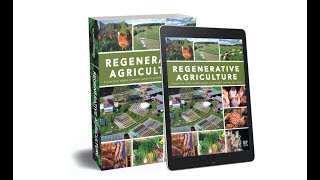
Richard Perkins (speaker/author) previews his nearly finished manuscript "Regenerative Agriculture: The book" in a YouTube video. He shows a 740-page, image- and data-rich manuscript (reported as 93% complete) containing 22 chapters that cover holistic land management, keyline design, water systems, agroforestry, intensive oyster and mushroom production, various pastured livestock enterprises, market gardening (major updated chapter), microgreens, soil biology, sales/marketing, financial planning, the human element, comparative enterprise analysis, and case studies. Perkins emphasizes abundant enterprise spreadsheets, monitoring sheets, full feed/recipe data, infographics, and production notes; he also discusses self-publishing plans, printing in Poland, estimated retail price (~50–60 EUR), shipping/weight concerns, and a planned crowdsourcing campaign for the first print run.
Questions this video answers
740 pages
93% complete
22 chapters
Poland
50–60 EUR
Chapters
What's up YouTube? It is minus degrees outside, still snowy. It's 20 degrees in the seating room, which is awesome. And today I just got back this wad of paper. This is 740 pages of what I think is the most broad reaching and information rich book on regenerative agriculture on the planet. It's not Quite done, it's 93% done and I hope to be done by the end of the month. So today I thought I'd give you a sneak little preview to what to expect inside this work that I've been building upon for years now. And it feels like we're on the home stretch. It's been shrunk a little bit and my big concern is finding a way to print this book in a format that weighs less than 2 kilos. Otherwise I'm not going to be able to ship it out easily to you. I want the content to remain there and the publisher would probably get rid of a lot of the content and so I want this to be self published and I want to keep the content the way I put it. There's a lot of these double spread beautiful images. It's a super information and graphic rich book and we've got 22 chapters now. So it starts with the context and introduction, defining your context, holistic management, decision making, maps, landform and principles, keyline design, water systems, Agroforestry, indoor intensive oyster, mushroom growing forest, raised pigs, building up infrastructure, fencing on the farm, pastured broilers, pastured turkeys, pastured eggmobiles, grass and grazing. And that contains pastured beef, micro dairy and sheep Enterprise no dig Market gardening is a major new updated chapter. Microgreens, nurturing the soil, food web, selling your produce, Financial planning, the human element and the comparative analysis. And then there's a bunch of case studies of past students from the farm who have gone off on a low budget and created their own farms. It's been laid out super nice. Let's just jump into each chapter is starting with this beautiful double spread. We're looking at drone mapping here and how all that works. And let's just jump into some of the layout of the book. Keyline design here. We've got new graphics in all these sections. I've been working with a graphic designer who's doing an excellent job. Some of the material is just updated for Making Smile farms work, but a lot of it is brand new chapters and brand new information into agroforestry here and we've got all this beautiful data coming out. Let's find some enterprise Spreadsheets here it's a bit of a mess without a book binding, but here you'll see now we haven't got the spreads here, things that have evolved and changed on the farm. And we're detailing how to run Silver Pasture as a business. You've got all of your business enterprise spreadsheets looking at the numbers, looking at the finances and then there's nice infographics that summarize all those going into oyster mushroom intensive indoor oyster mushroom growing. That's a new chapter in the book looking at low tech ways to do mushrooms and all the business spreadsheets for that forest raised pigs, how to deal with the produce, how to add value, all of the business spreadsheets. Shaban this is an intense book and the aim is to get the maximum amount of information to people at minimal cost. I mean books are incredibly good value. When you think about the distillation of information in this book, it's. It's crazy business. But that's what we're here for. Full feed sheets down to the gram and monitoring sheets so you can just take them out. And you've got complete data sets here of how to run these enterprises skillfully. And this is all based around our experience here at the farm. Got all our regulations marked out so you can essentially copy that information to work with your regulators. How to smoke meats, how to run the enterprise. This is all the financial sheets. Then you've got your summary infographic at the end. Whole chapter now on pastured turkeys. You've got all your feed sheets based upon what works best for us in our research. All of your business planning there, eggmobiles. And what I've done with all these enterprises is scaled them up to making a similar income so we can do a comparative analysis, dimensions and how to build everything. Got monitoring and planning sheets. So much stuff in here. It's just been a mammoth task. But I'm super happy to be coming to the end of it. Grass and grazing. Got chat on micro dairying here, business plans for that sheep as an enterprise. Looking at how to handle sheep and looking at the numbers, how that works. Some of this is not totally tidied up yet, but you get the picture. Pastured beef there. And we've got this huge section on market gardening, how we lay out the beds and tools we use. There's crop notes for all the different crops, how we deal with pests and diseases, how we start plants, all of the seeding data and different tricks and techniques we use, how to run the wash station, all Your seeding and planting calendars. Wowza Manousa. Then it finishes up again with all the business planning and business numbers. Then you got a chapter on microgreens here, how to run a microgreen enterprise. All the data of how to seed that, nurturing the soil food web. Then we go into how to sell your products and we have some of the best selling methods on the planet through these pickup points that we've been operating. So it tells you all about that and guidelines for setting that sort of thing up. Financial planning, it goes through different ways to consider starting a financial plan. And then it looks at a whole year's farm plan across the enterprises. There's sheets and sheets of it so you can see what the whole economy looks like in considerations for how to balance that. And then we go into a big chapter on the human element and this looks at why and how we act the way we do and how agriculture has influenced that that over the last millions of years. It's a big chapter about the pattern language of psychology and society that's been shaped by agriculture. And then we get into how to deal with employees and long term placements, volunteers working with education, leadership stuff. And then we jump into a comparative analysis of all these different enterprises where we start to consider like what needs to go in, what you get out, how much land you need. Da da da. This chapter still needs a bunch of work to explain these infographics and data sets, but that's what I'm working on these next couple of weeks. And then we go into a chapter looking at some of our past participants and their case studies of what some of the people that have been to our farm have gone off and done on super low budgets. And it's super beautiful. I'm so happy to include this. I haven't double edited it with them, but we've got some great case studies of people doing amazing work study starting off super low cost and really happy to include that sort of thing. So we're getting there. We're getting there. It's been a long, long winter. I am nearly done and wow, you wouldn't understand how perfectly this will all play out if I'm ready and done and clear with this as our season starts. Finally it's been, you know, I started this book twice last winter. I even went away on a big writing retreat and I put it down because it's such a headache to manage this kind of process. It's huge undertaking, especially when we're managing other stuff going on and have a young child, etcetera it's, you know, it's been tough but I'm feeling mostly there. I'm feeling like this is an incredibly valuable book because it's just super dense data backed up with experiential sharing and loads of imagery. Because I feel like personally I'm a big image based learner and I think a lot of people, everyone responds well to images. Just seeing how something is done can inform thousands of little decisions. So I wanted to pack it full of imagery for that sake. And so yeah, this is my gift to the world and I do not intend to be writing any more books certainly for a long time. And this should, should be able to help people set up. We've had amazing reviews of our old book that's sold in over 90 countries around the world. And again I will be selling this direct from the farm. We're self publishing and I will make a separate video about why I believe in that. And I'm considering even starting a press to help other people publish books. But that's another story. But I'm super happy with the, the format of the book and the, the layout. There's a lot more, you know, it's been properly edited this time. My first book was just getting information out there, but having like properly laid out margins and all that, it obviously makes a massive difference to the reader. But just having this amount of data packed into a book is, you know, there's nowhere you can go and get all this data in one place. And the fact of having this comparative data for everything in one context makes it so much more accessible. So the things that I've put in here that we're not doing are I've used and collaborated with other people using their real enterprise data in comparable climatic zones. So that really helps to make a level playing field and really show you what stacks up. And I think sheep unfortunately are the worst enterprise of all. But market gardening is not so far behind. And that's been something I've been talking about for the last years is massive increase in the amount of people that are starting to market garden but such a lot of labor input for the returns when you look at other types of farming. So that's it for now. I'm super excited and thanks for everyone who's been offering support and wanting to get behind this and support it. It will be hopefully done very soon. And I've had some great help from George Weedon who's done some amazing graphics work for us. And soon we're going to get this off to the copy editor. To have it properly look through and just keep negotiations going with my printer. We're printing this in Poland again. We have a wonderful ethical printer there who sources good paper and good inks and that's what we're excited about. And yeah, wow, I'm excited. I hope you are too. And I'll keep people posted and I'll be announcing a crowdsource campaign to generate the first print run because it's going to cost a bunch to get this printed. It's a huge book, but I've got to find a creative solution now to keep the weight down so that I can keep the postage cost really low. It's going to be cheaper, hopefully to ship than my previous book because I'm going to subsidize that cost and make it one even cost anywhere in the world just to make things like Amazon and big publishing houses obsolete. Because that's the way I want to do things. And not to push anyone's buttons, but just, you know, I want direct information to transferred from me to you. I like that direct transition model and I like to personally read the names of people who buy my book and send it off. It's really cute and touching to me. And so that's the way we're going to roll and I think we'll do. It's going to be somewhere in the 50 to 60 Euro mark for the book. I mean, it is a complete manual. I mean, there's not many books on farming with that much intensity of data that are that big. So I'm excited and I will keep you informed. Thanks so much for watching and I'll see you in the next video soon when I'm finished. I hope.
More from Richard


A review of short and intensive season on a mixed farm and restaurant/event space in Sweden






Alskade Kyckling Exploring complexities of poultry production in Sweden and what we stand for


