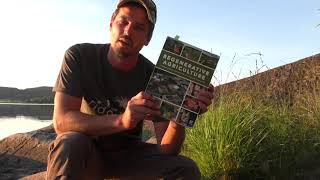
Richard Perkins is finishing a 750-page book on regenerative agriculture, a major expansion of Making Small Farms Work with eight new chapters covering design, implementation, and case studies. Joel Salatin praised it. He plans to self-publish in print and ebook before Christmas 2019.
Chapters
So I've been getting so many emails and comments about when this book is going to be finished that I just, to be honest, don't have time to answer all those kind of emails. And so I thought I'd make a quick update on the video channel here just to let you know what's going on with the book at this point. So it's been a real labour of love. And I worked all winter pretty solidly full time on this book as part of the reason we didn't have poultry on the farm over the winter. And I'd been working on it the winter before too. Now, as I've said in the past, this is a major update of making small farms work. But it also has eight entire new chapters, it's double the size and it's very dense. It's a huge manual. Now I'll tell you about some of the feedback I've got from other authors as well as thinkers in the field. But I was very disappointed not to get this done by the end of, by the start of the production season this year. It was critical to me to try and do that because once I'm in the season it's incredibly hard to do anything like working on a project like this. This is not something you can pick up for half an hour here or there. You need sustained blocks of time to really focus on, particularly editing. You need to be really, really clear thinking. And summer is my time of high workload. Lots of people to manage a whole farm to manage, a whole outside business to manage, and long hours with little sleep with the sun up. You know, it's 9:30 at night and it's still broad daylight and that's the way the rhythm of farming works in Sweden. Now I wanted to get that done, but it's not a work I want to rush. Now I got some wonderful feedback from other authors, including one of the world's most famous farmers, Joel Salatin. I'm just going to read you a few words because this really blew my mind and really inspired me again after feeling a little bit down after a long winter, sat at a screen, which is not my favorite thing to do. But Joel read the book through and a lot of times you pass a book to other authors or thinkers, they're skimming through it and just offering a few words, advance praise or something like this. But Joel said he read through the whole thing and he says you've created a masterpiece. Congratulations. And I'm super proud of what you've put together. And he says the book is perhaps the most eclectic, comprehensive compendium of small farm wisdom that I've ever seen. It's going to be a must for every inspiring integrity farmer's bookshelf for many years to come, starting with my own. And welcome. Thank you for your attention to detail, love of experimentation and passion for functional truth. I can't think of enough superlatives to describe this wonderful book. And yeah, he doesn't know what else to say except you're the bomb and I can't wait to see it in print. I'm not a technologically minded person, so I'm excited to have the first printed copy. Well, Joel Saliton was a major inspiration to us, obviously with our pastured poultry. And you know, one thing I appreciated about Joel's work was the amount of data and numbers shared in his work. And that's really what I've tried to do with this book, is share such a lot of detailed data and all the way through to whole farm finances, just sharing all our data because I feel like that is a cornerstone for people to go off and do things effectively for themselves. So the book is going to be much the same in terms of content. Whilst I got some amazing feedback and praise from other authors and thinkers in the field, my editor went to town on this and went way above the expected call of duty for her job and suggested some major structural work. And whilst I was kind of impatient, I'm a kind of impatient person. I like things done on schedule because I've got such a busy life to manage. But this book feels like it really deserves time and effort to get it right and so there's a few things that need doing. Now one thing the editor suggested that I really like is that this book needs to be in sections color coded across the top of the page, for example, so that you can really reference a different material. So she suggested a major overhaul of the order of the chapters so that the first bit of the book is about the design methodologies we use, which is namely keyline design, holistic management and farm scale permaculture design. The second part is about implementing those mainstays on our farm. And then there's a major section looking at 12 comparative analysis for different farm enterprises suitable for small scale regenerative agriculture, going into details of how to run those enterprises and comparing all the numbers, time inputs, etc. So that people have a recipe, at least that's compared in the context of what we're doing here in Sweden. And whilst that's not directly applicable to other people in different time place and circumstances. It gives a sounding board, giving people a way into seeing, well, how much money do I need, how much land do I need, what do I need to invest to get so much out, and which enterprise is going to fit my context best. And so that's a large section of the book. And then the last section is looking at case studies of some of our past participants who have gone off to do amazing work setting up businesses based on what they've learned with us and other inspiring people in the field. So that's a great thing. And I think a good point that the editor put forward is that people won't read this as a book. It's dense pages and it's currently at 750 pages. So it needs to be built in a way that every chapter stands alone and makes sense on its own. And I think there's work to do on that. The other major error is that I don't know much about InDesign. Now. I had an expert in the village come round and she was very impressed with what I've put together, considering that I've done this entirely manually. That is, this is a program that's used for dense editorial work and it can be programmed so that everything is automated. Now that's great if you know how to do that. But I'm a farmer and educator and I don't know much about InDesign. So I've built this entirely manually, which does make editing a lot more work. And editing must be done carefully and clearly. My first book, I wanted to just get information out, and this book, I want to get much more information out, but in a very refined, clear way and make the editing, you know, really worth the price tag that this book is going to cost. This is going to be probably the most broad and deep information rich book in the field. And I don't think anyone's ever shared such clear, detailed numbers as we're putting forward in this, as well as detailed design methodology that's appropriate for people not only in our cold temperate climate, but in cool and warm temperate climates too, as well as principles that translate to any climate at all, essentially. So anyone looking to scale up permaculture to the farm or integrate more regenerative practices into an existing farm will benefit from, from this book wherever they are in the world, I think. And it's going to be, you know, a pretty important text for the field. And I'm not saying that to, you know, blow my own trumpet, but it's, it's a massive work and it's A huge labor of love and I think I want to get it right for you lot. Basically I'm going to self publish this book. We had great success self publishing, making small farms work and I really enjoyed that process. I've sent it off personally by hand, every single book to over 90 countries and I've read the name of every single person that's read that book and that really warms my heart as well as informs me like who's buying the book and I love that, I love that personal touch. And I've been in contact with five different publishers about this book and basically all of their deals are pretty similar. It's a pretty standardized industry I guess, but they're not what I want to achieve through this book. I'm really into self publishing, which I've talked about in many other videos and I've also helped several other people self publish at this point and I really believe in it. I feel like that industry has not moved on in a quick enough pace compared to how the world is moving on, how people are getting information and the possibilities people have to do their own startup. So I will self publish this and I'll be offering an ebook version also, much the same as I did with our previous book, but we haven't set details yet. So the next step on this I started going through the book but it needs, I bet need help at this time of year. I've got interns at the farm and running a farm, it's just not compatible with sitting down on a computer for long hours. It's just not going to happen. I do want it out before next winter and so what I've decided to do is employ the help of colleague from Poland who put me onto the printer of our last book, an ecological printer who's really concerned about printing ethically minded books in a really sustainable way. As far as that happens in the printing industry, friend that was just here on our no dig Market Garden course has put me onto their editor who's an indesign wizard who can skip through this and do all of that, putting things into their correct styles and categories so the editing becomes a bit more fluid and automatic and they can do that way better than I can. And then once I get this back, I'm going through looking at grammar and spelling, all those kind of mundane things, but then there's a few chapters that need attention and rewriting a bit and then I'm considering adding in adaptations of certain enterprises that are more culturally contextualized for places you know that aren't Like England where I grew up, or Sweden where I'm living now. So, you know, trying to cater for people in more diverse situations than we're in ourselves here. And I would like to address the grain question. It's not something we'll ever do at our farm, but it's such an important piece to the regenerative ag piece and many of these enterprises are based on grain inputs and the only trouble with our climate is the limited lack of experience that I can draw from. I do know a few people in the field who I can hopefully glean information from, and that's something I aim to be doing. But basically I'll get this book back by end of July with all the technical editing done and then I will proceed to edit. I've already edited up to here, so about a third of the way through, but there's a bunch to do and it's going to take time. But I want to get this right and I hope to not be writing any mammoth books for a long time from now. And so I'm really excited about that. And yeah, I'm sorry that I can't answer your emails about when it's coming out or how to order it. I'm not selling the old book and I haven't been for many months because this is just going to make that so redundant that, you know, I'm not going to continue. I could be selling ebooks and books for the last half a year, but I want to wait and it's going to be worth the wait. So thanks for bearing with that. I aim to get this out by the end of this summer or certainly by Christmas. I would hope to have this published and good to go as soon as that becomes available. You'll hear about it if you follow us online. I'll be announcing it possibly through a Kickstarter campaign to get the initial printing. It's going to be very expensive to print this book. It's a huge book. It's bigger than the Permaculture Designer's manual or the Edible Forest Garden books that you might have seen. And it's in full color all the way through. And so as you can imagine, it's probably one of the most expensive books to print in the field. But that's the way it should be. I want it in full color because pictures tell a thousand words, as they say, and it's, you know, it's so rich to see things in image form. So that's the way we're going to do. I'm excited about it. I'VE kind of still got it in my head that I don't want to put it down and pick it up totally fresh in the winter because so many nuanced little things that you're thinking about in the writing and editing process will be lost in that way. So. So I'm hoping to get this out in 2019 and it will be available from the farm and you'll hear about it if you follow us in any way. So don't worry about it. It'll come and I want it to be the best book it can possibly be and influence a whole new generation of regenerative farmers. And that was the intention with this book, as it was with our previous book and our trainings. And we've been, I would say, relatively highly successful in turning out successful new farmers. And this book should lift the whole bar by quite a long way. So, yeah, I look forward to sharing more updates with you as we go. Thanks so much for bearing with us and for your interest in, you know, in supporting us this way. And it's a lovely mutual way to support each other. So thanks so much for watching, folks. I hope that will inform you a bit of the process behind writing a book like this. And yeah, look forward to seeing you soon in a Farm update, looking at some of the crops coming out and how the animals we're doing as we approach the end of our first internship this summer. And yeah, some wonderful productions that have gone on. So thanks for watching folks. Don't forget to hit subscribe. Share this and like the video if you think others will benefit from it. And we'll see you in a video soon. Bye for now. It.
More from Richard


A review of short and intensive season on a mixed farm and restaurant/event space in Sweden






Alskade Kyckling Exploring complexities of poultry production in Sweden and what we stand for


