Root Trainers/ Air Pots: Make your own at low cost...
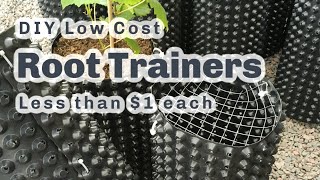
Richard Perkins builds DIY air-pot containers from plastic rolls, cable ties, and chicken wire for about €0.80 each instead of €8–€10. The homemade pots air-prune roots and grow larger grapevines and chestnuts that can survive vole damage before planting out.
Questions this video answers
About €0.80 each.
About €8–€10 each.
150 pots.
64,800 holes to drill.
About 18 hours.
Chapters
So in today's video, we are looking at making our own root trainers, low cost root trainers, to save a bunch of money growing up trees and other perennials in big air pruning pots to get high quality plants for planting out at a later date. So this is basically air pot and they come in slightly different shapes and sizes, but the typical thing is they have plastic screws that hold them together and you wrap them around the base and the base is important. So the whole point is that trees and shrubs will root out to the edges and then air prune because they don't like growing in air. And the base is off the ground like the other root trainers we have, which are held up off the ground by their container. These just have it integrated into the base. But These are about €10 where we live and we're trying to make them for about 80 cents each. So that's going to be a fun trial to see if we can use materials lying around to make something that's factor of 10 times cheaper. We like factors of 10. So this is the grapes and the danger with these, these are just rooted cuttings, but they start to grow together like so. So we want to get these in bigger pots. They're going to grow out much bigger to go down at the vineyard where we've had a lot of problems with their voles. And so basically I'm just going to have to eat a lot of strawberries. We basically want to build these pots, get these planted up, fertilize a bit more, put, put them on stakes so we can get good plants and space these out again here in the propagation tunnel just to allow them to grow. And if this design works well, we've got a lot of chestnut and other trees popping up that we can get out too. So hopefully this will be useful for other people too. Okay, prototype root trainer. Making this is to replicate what's known as an air pot. It's a bigger root trainer, but they're about €8 each. For something this big here we want to make 150 of them. So we're testing ideas, gotta have things off the ground. So we're in rapid prototype mode. So root trainers, these are going to be drilled out to allow plant to root out. These are going to be for grapevines that we want to go big to put them out at a stage where voles are going to be, you know, they're not going to be able to take out a really young plant. Now it's designed around our augers so we can plant this eventually into an auger hole. And the design challenge is how to do this at scale with rolls of building material. This is what you typically put between the foundation wall and the soil. And chicken wire seems to work in a swiftish way to create a bottom that will lift the root mass off the ground with holes for cable ties. So we're going to test it with compost with a plant, see if we like it and then work out a production model. So we are using bedding from the winter layers. This is basically peat moss. Nice, nice worms in there. Peat moss and chicken manure to see if this mesh holds up the material. And then these plants are rooted cuttings. And we don't want them getting root bound. These are five different very cold, hardy grapes. These are rooted cuttings that are becoming root bound just so we've got an opportunity to help these out. And they're also growing very tightly together in the greenhouse that they will start to send out their little feelers and join together that we won't be able to do this at a later stage. So the aim is to give them bigger pots, get better root development that will concentrate roots down. And we'll be leaving these for another year or so in the pots before we put them out. So these root trainers are going to be 12 leaders in size. So we're cutting down the sodium of plastic. This plastic is €50 and we can make 75 out of one roll. That comes in at 66 cents per 12 meter tray. We need to then have cable ties to connect the pot together and put a little bit of chicken wire in which we have lots of scrap lying around. But essentially we get the finished unit about 80 cents, which is way cheaper and way more fun than buying plastic. Already made one. So to drill these out is 64, 800 holes to drill. So Kevin's doing multiples at a time, which does make sense. How hole, how big do the holes have to be? Well, basically big enough to come in contact with air, but not that big. So a little production line going on and we'll see how many we can get done. Okay. New design has clip in the middle and this clip is holding the bottom two holding this wire in place. We're using square wire because it's quicker to cut and it's held two sides like so. That feels pretty strong. We're going to fill it up and test it. Okay. So run out of cable ties. Ends have been going well. Gustav has refined the bottom end technique I over a sauna bucket to get the precise end because doing a little production line like this, you want everything as, even as possible. Now, the only thing that could have been improved slightly, we think, is the drilling of these holes. Now, we didn't want to make the holes too big because it will promote water leakage and drying out a lot quicker. But you can see they're drilled in different places when we're drilling multiple layers at once. And it, it makes it a little bit more time consuming to feed through the cable ties. However, it doesn't take long. Anyway. We calculate it will take about 18 hours to do these pots on your own. 150 pots, they're €8 each here. They're costing us about 70 cents, so we're saving them. Two days work listening to podcasts or whatever you like doing, you're saving a thousand euros, so very worthwhile. But we're going to have to finish this up another time and fill them up. We're going to make a big old potting mix out of our old winter bedding with some different preps added to it and pot up all the grapes. So one of the main reasons we want these fruit trainers is to grow up the grapes really big to put on this vineyard. Now, there are grapes still in here, but voles are particularly fond of grapevine. So we had some big problems, and to be honest, we've just let them go a bit rampant in here. But what we want to do is you can see the alders doing really well. I want to come in and prune a little bit more of the side branches now to let more light into here. I'm basically using these alders as a pole, a nitrogen fixing pole, in order to grow grapes up. Now what we need to do is put a lot bigger plants in to make sure they survive. We've got plants that were growing right up into the trees that just got their roots severed last year and the year before. Here's an example. This is a great. This basically not being cared for very much, but it's growing up okay. And you see they're going off, off into the tree. But we've lost a lot in here that I want to give this a good overhaul. We can graze through here. You can see the growth that these alders have put in. I want to take off, basically leave 40% of the crown, take all the side shoots off. It'll let a lot more light through in here. And then once the grapes are all really established in their root trainers, we'll take our auger bit. You can see grapes come right out Here. But yeah, we'll take an auger bit and put chicken wire around the base of the root system so they don't get eaten so easily. I always said that I'll retire when I get a bottle of wine out here, so I guess it'll be a while till we get there. But, yeah, we'll see how it goes. It's really becoming nice in here with all the native lilies that are popping up. Got some beautiful plants that are getting quite well established. So agroforestry week, making cheap root trainers, that's a big success. We'll finish them up tomorrow and make a nice mix to plant things in. I think we'll come down here, do a bit of pruning, do a bit of fencing up in the forest after the logging work so we can bring the cows and sheep up into that area. We were having a look at the fencing job to work out what's involved, to fix it. It's actually quite easy, I think, you know, it's a day's work for a fencer and we're just going up to scope the job out and think about what we need to think about yesterday and we went up to the forest patch where Winston the ram is, and it's interesting, like, because the cows and sheep have been in there a lot. You can get down and look under the trees for like 30 meters in any direction because they've pruned the branches and that's allowed a lot more light through. So you get a lot more parsure species growing up there. The same conditions across. In the backside of the property adjacent to our neighbor's property, the trees are similar age, same density and you just. You can't see more than a couple of meters in any direction. So I'm willing to change our grazing plan and get a bunch more. It's beautiful here with all these meadow flowers. Yeah, I want to change the grazing plan, have the cows and sheep get up into the forest patches just to crash through and graze a bit. And I could even do that in here on these alder. But I want to prune these up quite a lot higher. So I will probably prune them up to here at this point in order to just let a lot more light down into the base of here. And then hopefully next summer or the summer after, we will get the grapes in here and get it operational again and expect much better results. I think part of the problem in here has been water voles also. I see them swimming around sometimes and they're just. There's a network of holes that go up to the alder. You see we've got the alder on the other side that's also growing up well, so we need to get grapes on that too. But great success with the route trainers. That's been a fun day. Just getting a little workflow going and and it's nice we see with you know, you can always weigh up your time versus money you can save and sometimes it's important to save time and just spend money. Sometimes it's great to put the time in doing some repetitive tasks that's just easeful and fun to do and save a lot of money in the process. So that's all in the video. Just a quick one just to let you know about these root trainers. We'll show you them as we fill them up and talk about the potting mix and see how they go throughout the rest of the season. But thought you might like to see that little process we've been through today. So thanks so much for watching our videos, folks. Appreciate your views and comments and shares and likes and subscribes and all the stuff that you do on your end of things and we'll see you in the next next video. Bye for now.
More from Richard


A review of short and intensive season on a mixed farm and restaurant/event space in Sweden






Alskade Kyckling Exploring complexities of poultry production in Sweden and what we stand for


