S4 ● E103 Mushrooms, rain, jobs and real eats
A vlog-style YouTube episode by Richard Perkins covering a morning of mushroom foraging (chanterelles and other species), ongoing farm projects (barn support, mushroom log inoculation, woodland thinning), livestock planning (decisions about keeping/butchering cows, sheep and duck management), garden updates and an upcoming market-garden no-dig intensive workshop, and a practical cooking segment where Ben demonstrates burgers made with locally raised pork/organs and homebaked brioche and condiments. The video closes with speaking/book availability notes.
Questions this video answers
30 people
Model 362 (he considered a 261 but chose 362; said it is 0.7 kilos heavier)
At least 7–8 kilos of mushrooms
Chapters
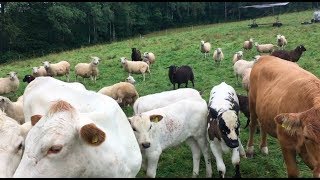
Its morning chore time and I'm out picking chanterelle. So it's morning chore time. We're winter chanterelle in. Some nice hedgehog mushrooms too. But they're everywhere this year down here. Quite dark in the mornings now. It's harder to spot them. But this is a wood worth combing meticulously. I think these mushrooms are just everywhere. Well, it's breakfast time. These grey autumn days are here with us this week. Not a bad find. I found some yellow chanterelles as well. Very nice. Clever. Mama here had some piglets. Forest raised piglets. She's quite defensive. She snapped at a couple of people and rightly so. You know, they're intruding on her space in her birthing area. Piglets seem fine. You see them in the back there. This was her nest and we found her totally underneath this with the piglets. You can't really see the scale of it but she made a really good den and you could just see her nose sticking out and hear the little grunts of the piglets. But she's abandoned that now and she's out in the young woodland. Perfect. Do you want to play in your sand pit or you want to go see the cows? That is a cool outfit that you got, dude. Check it out. Cows. Cows or pizza. You want to come eat pizza? No. No. Alright, let's go see the cows. Come on then. So all these trees have been cleared now. Pretty quick work. Changes the landscape. It changes the feel of this paddock. Actually we're back in what we're calling K2 and I woke up this morning thinking differently about the calves. There's not been much interest in buying the cow calf pears and you know, it would only suit a small farm like ourselves or homesteader. And so I'm thinking right now I might take this one and this brown one for beef. They're still quite small but the economy of carrying them over the winter is just not worth it for me. So I'm thinking to keep Clovermay and Vida and keep breeding them. Which means I would need to breed them now to have calves next June and let them stay over the winter with their calves. Try and winter graze as long as possible and then take this one for beef in the spring. All those sheep are leaving soon and I had wanted to get rid of all the animals off the farm to clear out space and time for my winter schedule. But you know, to sell all these cows live, the reason we couldn't take them now is that you can't. Wean a calf for, you know, seven months. Seven, eight months. So we want to, you know, wouldn't be till January that they're weaned. But it's a funny thing to sell all these beautiful cows. These aren't just normal cows, these are cows you can hand milk in the pasture out here, you know, and so, so they're pretty special cows. But one cow's worth of beef is worth just as much as all of these cows, like. So I'm thinking it just doesn't make sense to sell them, you know, I'm just going to eat them instead because I really like beef. We got some little sheep in the flock. It's a bit of a mixed bag for us, but we want to start afresh with a new flock of sheep. And yeah, I changed my mind a bit about the cows today. I'm still sitting with it. But it means that we would need to have a bull around pretty soon if we want to go with this plan. So our aim with the grazing now is to spend as long as we can get him down through K2 and 3 and then we'll go back to K1 that had the turkeys on it. I want to spend as long as possible getting through there so we can stockpile some of our grass on our farm. Normally growth sort of ends, you know, October, but it, you know, last year we still had vegetative growth into November, December, it depends on the season. We had a warm spell again late in the winter last year. But curious, you know, I'm thinking it through and working out the finalized plan. But I like grass fed beef and it's hard to buy good beef here even, you know, grass fed beef has often got funny things fed with it too. A lot of grass fed producers still feed a lot of grain. There's a bit of confusion what constitutes grass, I think. Look at that. What's in here guys?
It's got hen, turkey, leeks, wild mushrooms.
What a pie just for scale. That's my hand. That is a man over pies. So you might remember right in the start of the season when Matt first arrived, we were up to these stains in the wall. With cow belling for the winter, we decided never to keep the cows in here again. And it's been a brooder all season. But now what we're doing is building some support structure into this building. It's always had many tons of hay above it. And the trouble is these old buildings, they don't just fall down, they fall down over, you know, several decades. And this wall I don't know if you'll be able to make it out, but this wall is leaning slightly outwards. It's a cordwood construction. It's cords of spruce with mud holding it all together, and then a thick lime blaster on top. And there's no danger that the barn is going to suddenly cave in. But what we want to do is put some support in and it's not worth rebuilding this. I have considered taking this whole wall down because the roof doesn't actually rest on it. There's part holes going up into the roof section that the roof stretcher is on. But I thought about smashing this down, building it with concrete blocks, but it's just not worth it for a building this old. You may as well start the whole thing again, which is just astronomically expensive. So we're putting up some poles of free timber that we've got to support up a beam to take the weight on these roof beams. And we'll do the same on the other side, locking them in to the top beam. And that way give the roof a bit of rigid structure that makes it feel stable. And it will probably last the rest of our lifetimes before the building will need replacing at some point anyway. So that's the project going on and this is going to be empty or with ducks. Some of our breeding Muscovies will stay in here over the winter. It's been incredibly wet recently and gardens are still kicking out some good crops. Mr. Goose is letting us know he's here, but everything's going back under cover and some beds being put away for the winter now. And we have an end date for our boxes and shares and we don't want to push that because you just never know with the weather here. But we've got 30 people coming. Not this weekend, next weekend for our market garden no Dig intensive workshop. It's a new thing for us. Do a little short weekend training, but we had such high demand for a short market gardening intensive that we decided to put that on. But quite a bleak bleary day, but the garden's still looking great and really nice produce still coming out of here. Well, wild mushrooms are really kicking in. But there's also shiitake is here on their logs. So we're getting just continuous flushes up here. But we've also got some namako coming up. This is Foliota microspora or namako. It's used in miso soup. It's quite gelatinous mushroom, but really good. It's very widely cultivated in Japan and Quite nutty taste. Not so common here, but it's a really good one. And we got a nice big flush of these and also on the logs over there too. Just now checking on another patch. This is a blue oyster and it's been sitting here three years. But now it looks like this mycelium is bursting through and it's getting ready to fruit. Should be fantastic. There's a long inoculation time here. Nice bunch in the middle and same with this bunch. These are more. What is that? That's another blue oyster. You seen the myceliums coming out to the ends there? It's. It takes a long time here. I almost gave up on mushrooms to be honest, because they were. The birds were pecking out the wax. Same with this though. This is on big old stuff and this is also blue oyster. But with this recent damp weather, you see that mycelium is just ripping through now and I think we'll get some oysters this year. They started coming in December time last year and then the frost killed them back and you know, it's taken so long I just thought it's not worth doing. But then given the amount of mushrooms we've had since, we've put a lot of mushrooms in this year as you've seen on the videos, because it's definitely making sense. There's a young chaga, something to keep an eye on in the future years. Some beautiful old birches down here. This is actually just on the edge of the neighbour's property. Check out these little puff balls. Billions of little spores. These things are so small that they can travel in the upper atmosphere. That's why mushrooms have colonized all the way along the same lines in latitude because you automatically have the same daylight length and same vegetation types. So here we're collecting chanterelles that grow with pine or birch and I used to collect them in Thailand too. Growing on pericarp trees like a false teak tree. Ben's finding chanterelles. Very nice. Here you see the mycorrhizal union with this tree. Perfectly symbolized. Look. Beautiful. This place is just full of mushrooms everywhere, from big mushrooms to teeny mushrooms. It's just totally loaded. All kinds of species. Some beautiful fly garricks there. But there's just incredible amounts of my colors and fungi. This is how it goes. You just suddenly find a little patch and near them some other little patches and this is just five minutes picking. Seems like all these chanterelles, the golden ones are hanging out. Same mycorrhizal connections. There's golden ones. Oh, there's loads of them. It's just full. We're finding. Look at the size of these ones. We're gonna have four baskets today. I'm gonna stop filming, start picking. Look at the microwave. Gnarly ripping through the forest floor. Beautiful connectors, communicators, fungi. The Internet highway. This is a beautiful patch. No. Wow. This whole fridge is just full. There is at least 7, 8 kilos of mushrooms in here. Very nice. Hi, soggy dog.
Richard.
Yeah. Are you unhappy about having a beam.
Here in the middle of the window?
No, I'm very happy about it. These guys are doing an awesome job done on this side. And this is the wobbly side. It's actually became apparent in the spring there's nothing holding this beam up other than a bit of lime plaster. Very nice. When you've got five tons of hay above you, ducklings grow fast. She's a good mum on this one. It makes me curious. We've got the Muscovies that we're going to start breeding in the winter. Excited to do parsley ducks. I think it's going to be much nicer as we move away from broiler production in the years to come. Just testing out my new saw I picked up in the UK. I went for 362. Very nice saw. I was considering a two six one because that's big enough for most of the things we need. But this saw is just a little step up. It's only 0.7 kilos heavier and it's a lot more robust. Very nice saw. Much better suited to the felling work we have to do here. Very impressed with it so far. So all the mushroom logs done for now. We've got a few dozen over there in different stacks. But very nice to get that job done. We've inoculated all of the mushrooms we got from Paul Stamets. That will do for this year. And, yeah, be thinning this lot out. There's some beautiful old larch that we want for timber and birch for firewood. But I want to start opening this up, getting rid of some of the spruce because I just don't care so much for spruce. And I want to open up the ground here. See how we've created a lot more light now. We'll start to get a lot more forbs and grasses. Come back once we've sent the pigs through here again. The river's up high at the moment. Lots of rain recently. It's super wet on the ground, you see. It's been very Muddy over here where we coming through with the rhino to bring up spent grain for the pigs. But going to do some work down here to make this bridge area more passable in all weather. It's not been a great year for blueberries this year but lots of lingonberries coming. Time to go pick lingonberries. Make lingonberry sauce for grass fed beefsteak. With all the sheep going I'm thinking to bring the. Well, I mean the cows will take a lot longer to graze through the farm so that will increase our length of winter grazing. But I'm thinking to bring the sheep so bring the cows up into these woodland pastures because they will start to take a lot of tree leaf as well as the forbs and grasses down below. This is the paddock up at the top where they started the season where Reuben still is now. But lots of medicinal herbs in here for them. And it would be very nice to sort of clear the undergrowth that you can see through here a bit. And you know the cows will keep it up at 5, 6 foot tall. They'll take away all the leaves up to that point and that will allow even more light to the ground. And you know, as part of the process of turning this back to you know, open. More open agroforestry which is so much more valuable to us. As I've talked about many other videos. You know we can turn a lot more production per square meter whilst allowing nature to do its own succession and produce. Produce valuable lumbers that aren't just monocultural spruce. Started wallpapering in the treehouse. It's a. It's a very nice. It's quite dark in here. It's very nice old style. Brightens it up a bit. I mean it looks really dark on the camera but it's really lightning in that. Bit more thinning to do to get a bit more light into. Into here. I'm going to see what happens when they come and cut the older forestry which is off to that side. I want to keep all of this riparian air intact. But I might thin a few trees just to let a bit light filter down. South is down this way. Got a lot of windows so it's very nice to have that view of the lake. I might take out one more row of trees and get them to the local sawmill. Been happy with it. Very nice. Polytunnel's going up. Our neighbour lent us this scaffold frame which is super handy. It's too tall for a step ladder except for the edges. Very nice. It's quite clayey here in Fountainfield. These bears are ready to move tomorrow. Still just trampling down. Very vegetative growth. But it's good to have that layer of COVID on the ground. If this, you know, if this had been grazed recently by the cows and sheep, it would just be a mud bath in there right now. Pig burgers. Burgers. So for most people, burgers are like a quick junk food. Right. But John, tell us a little bit about how you do burgers with style.
These burgers have got pig hearts, they've got pig kidneys, they've got some porcini mushroom powder in it. It's also got minced pig. Well, yeah, minced from the pig. So it's about half off, all to pork.
Very nice. Much more nutritious. Yeah. And that's porcini powder from the mushrooms we're picking.
That is just a bit of ground flour to help them crispen up. But it's got inside it, it's got the porcini powder from local forests.
Very nice. Seasoned with some herbs and a bit of salt. Pepper. Yep.
Homegrown herbs and onions and all homegrown condiments.
We like it. And then tell us about the bun. Because most people would go for crappy white processed flour.
Yeah, that's the most crucial thing, I think these ones is Beth has made some beautiful golden brown brioche buns.
They're around here?
Yeah, they're out of the oven.
Wow, look at that.
Beauty.
What's brioche? It's like a sweet enriched dough with.
Eggs, butter and a bit of sugar.
Homemade chips. Homemade chips. Tell us about the ketchup. What's in the ketchup?
It's got apples from the tree down by the sauna and it's got tomatoes from the polytunnel.
Yeah.
And a bit of molasses. It's sugar free, actually.
Sugar free ketchup, Real deal. And then this is farm coleslaw. Carrots, cabbages, peas. What else is in there?
Homemade pickled carrots.
Yeah.
Baby carrots.
From the gardening. Yeah. So this is like a real.
Awful, real.
So Ben, can you lead us step by step? Ben's worked at some fine establishments under some famous chefs, so he's going to now show you how to correctly load a burger.
So I'm going to have aioli, homemade ketchup. I don't know if it's the professional way to do it, but it's just.
No, it. What's this one?
That's an aioli.
What's aioli? For people who don't know what.
Aoli Mayonnaise. That's with. With garlic in it.
Garlic mayonnaise?
Yeah. Garlic mayonnaise? Yeah, yeah.
Nice thick layer of that.
Quite a bit of that for me.
I don't know. I don't know.
I think I'm gonna have a little bit of salad. Just a little bit on the bottom.
Is this the onions?
That is the caramelized red onions, yeah.
It's got biochar and effects. Yeah.
They've gone really dark, haven't they? I think because I baked them in the oven with the lid on, they seem to have kept all of their color. I've never seen them go quite as.
What do you think they took from the. The iron pot?
I don't think so.
O. I think so. And then what would you go on top of that?
I'm going to go for? Cheese.
Cheese and tomato. Cheese.
Tomato. And then I think we've got some homemade ketchup and the lid. Yeah, I think that's enough cheese. Look at that. That's how I'm going to do it.
This is how burgers on the E45 are going to be in the future.
Half organ meat and half.
And served with wedges.
Yep, just. Just wedgies.
Wow. That is the real deal. So that's it today, folks. Just a quick update and I'm off tomorrow. Early in the morning, driving south for a speaking gig at the food hackathon, which is a way of getting people together to think about redesigning the food system. So I feel like in a good position to inject a bit of farming reality into that. You can find a lot more in our book, Making Small Farms Work. We just found out we're getting a new shipment next week and a lot of people have been emailing about getting copies of that so you can place your orders again once they come in. I'll put them live on our website again. You can order from there. Look forward to seeing you in the next video.
More from Richard


A review of short and intensive season on a mixed farm and restaurant/event space in Sweden






Alskade Kyckling Exploring complexities of poultry production in Sweden and what we stand for


