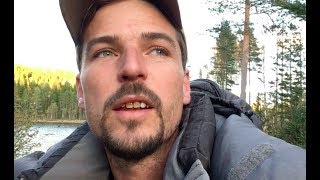
This content was created by Richard Perkins. This content was uploaded by Richard Perkins. This is a YouTube video titled "S4 ● E115 LEANing further in..." created on October 9, 2017, and last edited on December 20, 2025. It features Richard Perkins discussing the operations and strategic planning at Ridgedale Farm, focusing on optimizing farm processes, reducing workload, and improving economic efficiency through lean management techniques.
Chapters
So there's not so much to share from the farm at the moment because.
We'Re really wrapping things down. There's less and less animals, less things to do.
I'm actually up at the lake up in the forest here with these beautiful floating islands made of moss and trees.
Growing where we sometimes come and fish. But I thought I'd just keep sharing.
The process of some of the discussions.
That are going on behind the scenes.
We're talking about leaning the farm and.
Really like looking at what's profitable and what's not. And we've done so many time and.
Motion studies here that we've really got.
A good sense of what's worth us doing and what's not. And as we shave down the people at the farm and the educational activities.
There'S so many things that we do just for the benefit of people coming.
Here that we don't need to do anymore. We actually talked today about getting rid of the sheep altogether and we just.
Got the last few sheep cleaning up.
Inside the vineyard today as grass, grass cutters.
But we're thinking of getting rid of the sheep totally and not starting a.
New flock and just doing cows for.
Beef and just beef for ourselves.
Because the economy is met by eating those cows ourselves. It means we can eat premium grass fed beef for two or three euros a kilo in Sweden, where it's, you know, between 15, €20 a kilo here. So it looks like rabbits are also going. And we've had a hard time with the rabbits. Someone's dog ate a bunch of them, a couple escaped. And we just see that as we move forward with a sort of leaner model, we're focused on like what works, what's the best use of our time now when there's very few people at the farm to actually get the revenue out that we want. So we're kind of working with the revenue we want to get out of the farm. We all want an annual salary for 7, 8 months work and working backwards and forwards with that in our financial planning for the year. And so we're shaving off everything that doesn't work and rabbits. It just feels like there's no point starting up another enterprise when we can get the same revenue by scaling slightly the enterprises we already do and know how to do. So rabbits are out. We're just eating the last rabbit in the next couple of days. Matt's been preparing them for the kitchen.
We still like the idea of the ducks and geese and we've just let the Muscovies out. We've been doing feed trials with the Muscovies, but we're going to let them free range a bit now until the cold weather really kicks in. Then we're going to keep them indoors a bit when it's really cold because Muscovies have problems with their feet freezing here in the winter, it's so cold. We like ducks, we like geese. But again, as we scale up other enterprises, we're looking to invest in the meat processing facility. Then it really opens it up. And I mean, pastured ducks definitely viable and better economy than the sort of broilers. But it's also a lot of work to get that established and to get it into the marketplace place because it's less familiar with people. So it will start small and slow on the background still, I think. But if we're able to then smoke, you know, smoked duck and then chop it down and sell it as packaged smaller sort of family packs, I think it'll work really well. We talked a lot today about really leveraging Rico. It's much better economy to sell vegetables as bunched. We're going to go with this 1 for 30 crowns, 10 for 250 crowns model and do a lot more loose vegetables. We might actually stop selling our vegetable box. And the reason for that is there's a lot more vegetables in it than people are often paying for. And that's been a great model for starting out with.
And we're very happy we did that. I think it's a great way to start a market garden for many reasons, actually. It takes a lot of the risk out and you develop the sort of customers that are really flexible and appreciative.
But we see the economy could be.
Put up 40, 50% just by selling loose vegetables and allowing customers to have that choice, which is ultimately what they want.
So that's a big part of the.
Market garden development for us.
These little streams here full of brook.
Trout, little brown trout, delicious eating. And the guy that used to own our farm was a master at catching these. I've been coming up here and just scouting out. They're very susceptible to movement. So you have to come down real low to the bank and sort of fish over the edge without them seeing you. And we've been stocking our pond with them. And I love brown trout.
And I'd like to grow out more fish, actually. Not as an economic thing, but as a nice way to add fertility to.
The irrigation water for the market gardens.
But also out of my interest. I've always fished since I was a young boy. We've been talking a lot today about the tools we want to invest in to really optimize all jobs around the farm next year, as well as minimize the risks for using expensive tools and machines for things that aren't necessary. This year, for example, we've been using the ATV quite heavily and it's a massive fuel cost, but it's also cost me about €4,000 to fix other people's breakages just from that one machine. And there's smarter ways to do some of the farm chores that we're working out now. And again, it's that time and motion study thing. There's so many benefits to keeping really.
Detailed records whenever you start a new enterprise. The time it takes to do basic daily chores and finding identifying the leverage points where you can take time off everyday tasks. And that's something we've always done well at. But now we're like really stepping it up and we're really wanting to take this all to the next level. Like, you know, how do we actually do a 40 hour work week? That's a bit of an ambitious kind of starting point, I guess. Like you gotta. Something I'd say is like, hey, when you start a small business, you're gonna put your whole life and soul to it. You know, I've been working between 12 and 16, 17 hours a day for years. And I was willing to, you know, but now I'm saying, hey, I'm not willing to do that anymore. I've got a family, I've got kids, I don't see enough. I got other commitments outside of here that I don't get to attend to. But I think it's realistic. When you're starting something up, you've got to be prepared to put that time in knowing that, hey, two or three years down the line, you settling into it, you've stabilized it. And I feel like this is this beautiful point that we're at Ridgedale now is that we know what works, we know what the marketplace looks like, and we know we can derive the income by dividing out work amongst a few key people, dividing up the incomes that way and having a really stable and high quality of life by reducing the time it takes to run all these enterprises. As I said yesterday, in the video market, gardens are where the biggest leverage point is. And so we've just been listing all the tools we want to buy to absolutely optimize everything. And I'll be talking more about that in coming videos. And I think the next sort of month or two of videos are just going to be documenting the management decisions and the planning that go in behind the scenes. And it might not be the most interesting viewing for some. There'll be less like, views around the farm, but it'll be all the back end stuff. That is what makes this stuff work. And it's the most vital bit, actually. It's what we get into in our trainings with people at the farm. It's, you know, it's decision making, economic planning. These are the things that make it work. If you want a profitable business, you basically have to plan well, keep tight records and keep monitoring your plan to end up where you want to be. Something we've been doing is walking around the farm today and just pointing out things that we don't need. Things that are just sitting around, old farm machines that are just sitting there that aren't used, you know, even from 50 years ago that are just taking up space in our barns and just really categorising all the stuff lying around and getting rid of things that we don't use. And I'm doing that process in the workshop now. All the market garden tools are going outside on field boards, basically. So in each market garden segment you have all the tools you need to operate those beds. We'll be ordering a few more tools. We're talking about the paper pot transplanter, but we're also going to have a second set of everything. Bed rollers, board forks. So you have what you need right in the bed where you need it, so you're not walking around. We're going to have permanent irrigation set up everywhere. And basically the movement around the farm is going to be minimized. I remember when I was in Denmark with Mikael, that video was really popular earlier in the season. The guy that set up his market garden with a couple of our old interns, he was wearing a pedometer. Now his market garden is pretty small and it's got a packing shed about 50 meters away. And he lives in a little house 50 meters away, and yet he walks eight kilometers a day. He's also seeing chickens out in the field as well as cows. But it just goes to show, you know, a lot of time is spent moving around and putting things in the right place is so vital to farm layout. But then minimizing movement between different things is so important. And it's a big part of our time in motion studies. So we know now where the best places to put things are. And we're just going to really invest in tools and spend money to save time, which is money, essentially. It's always time versus money. People talked about, you know, do you make all your own compost? And no, we don't. We buy it in because it's cheaper than the time it takes us to make it. We can make it all ourselves if we wanted to, but, you know, we're running a business. It's time versus money, and you've got to make those decisions based on data, so you got to collect that data in the first place. The workshop is going to be getting a really big overhaul, where we're just taking out all the tools that we haven't used in the last two years and there'll be a sort of place we put them all just before we scrap them. But we're basically going to just lean down the workshop and just repaint it and put up a new toolboard where all the essentials are. We're looking to really do a lot of visual, sort of management guidelines where everything's photographed. So, hey, this is how the workshop should look at the end of every day. And this is how you plant microgreens in exactly this order, using photos in the sort of lean farm method. It's very effective. I'm a visual learner, primarily, and many people are. And so everything around the farm is going to have photo boards of, hey, this is how you do this task. So that it just cuts out a lot of the confusion that comes from having different people, but also, like, people taking on their own way of doing things. It's like, hey, no, this is the way we want you to do things. If there's a better way to do it, then let's discuss that and we can change it.
But if not, this is the way.
We do things and it should look like this every single time. So it looks like we're going to have three or four interns at the farm. I'm thinking three is best. So we have one each between Nicholas and Matt and myself, who will be learning everything about the farm and its operations and basically taking responsibility for an animal enterprise. And then coming to the market gardens, Matt and Nicholas and I will all be taking a delivery day each so that we share that load, so that we're all on farm as much as possible and we're trying to organise it so we all get weekends off completely, several weeks in a row, and then a busy weekend doing all the chores around the farm. So it's going to be chickens, both broilers, layers. There'll be turkeys in the height of the season, there'll be pigs and the market gardens but the way we make our market garden calendar is so that all of the tasks are written for the weekdays now, obviously, as seedlings or young transplants that might need irrigation at the weekend. And you know, farming is obviously not a 9 to 5 job. You do what needs doing when it needs doing. But we're really radicalizing the structure for next year. So we, you know, we're really looking at like, hey, how do we get down to that 40 hour week? And it's, it's a cool aiming point and it's a really cool process that we're going through, looking at how to optimize every single process from record keeping to accounting to deliveries, to processes on the farm, to how we store things, how we organize workflows, etc. And we've always done quite well at that. But we've collected so much data and got so many perspectives from so many people now that we're just taking that to another level. It's super exciting and it's kind of one of the most exciting things for me is like those design processes of like, how do you take this, you know, 10 steps further than it's ever been before suddenly? And so there's a lot going on now and there's a lot that's going to happen over the next month while we sit down and plan this. There's going to be a lot of whiteboards and computer stuff and it's looking like, you know, it's exciting to me that we keep moving forward at such paces all the time. And I think that's a big part of Lean as well, is that you're always looking to improve on everything all the time. You know, taking projects on each year to address and get better at. And that's the natural flow that we have here. But it's cool to put it in a concrete way. I think Lean has really helped, like put that in a way that we can all relate to concretely and clearly, rather than me making decisions based on that kind of thinking on my own. So it gives us a structure to keep moving forward. But that's what keeps it exciting for us, is that we're always looking to optimise, optimize, shave seconds off here and there. And that's what really, you know, keeps it fresh and keeps us moving forward in a way that moves us ever closer towards our holistic context. Our objectives. We'll be starting the next weeks by writing a joint holistic context. And it's going to be some. The biggest point, as I said in the video yesterday, is time, you know, time for my kids, time for my partner, time for, you know, relationships outside the farm and leisure time outside the farm. And for me, in the last three, four years it's been, you know, I grab my time. I go fishing in the evening sometimes, I sometimes go salmon fishing down, you know, and I'll go to a visit aboard to go do some work aboard or visit my daughter, which feels like a holiday, you know, but really it's like, hey, no, you know, what's the highest vision we have for it? And let's design that in and let's go for that. So I'm really excited for it and it's, you know, I'm going to be talking a lot about this in the coming videos because that's all that's going to be on my mind for the next month really. It's super cool that Nicholas and Matt are staying on and putting this time in now. We're going to be running our seasons, I think sort of April to April and so this is time they're putting in voluntarily to set up a new system and then come back again in April and we start the. And so our wage year will be sort of April to April. But very excited to have less people on the farm right now we have the best team we've had all year and it's a much smaller team but everyone's just focused and doing their thing and it's been incredibly supportive to me. I've been having time off to focus on the online training and just take some rest because I got a bit exhausted from, you know, I've been getting up five o' clock for the last couple of months and going to bed past midnight sometimes most nights, even doing all the back end stuff and you know, making information and sharing that and doing a lot of stuff that I have to do on computers and stuff. So it's been really great to get some, some break and you know, be able to sleep in till 7 o' clock is wow, that's a luxury for me. So I've been getting some energy back and yeah, just really starting to focus in my mind on some of these questions and that's super cool process. So I'm excited to share that with you in the following weeks so you can find out more in the book Making Small Farms Work. Super excited to share that always as ever and we'll see you in the next video.
More from Richard


A review of short and intensive season on a mixed farm and restaurant/event space in Sweden






Alskade Kyckling Exploring complexities of poultry production in Sweden and what we stand for


