A YouTube video (S4 E117) by Richard Perkins and Sam documenting how they build low-cost 'eggmobiles'—mobile chicken houses—by salvaging caravan chassis and other free materials. They discuss practical steps (dismantling caravans, fitting chassis, wooden frames, mesh flooring, nest boxes, tar/bitumen protection), preferred choices (lightweight caravan chassis, brown hens), dimensions (eggmobiles ~5 × 3.5 m), timelines (ordering 1,600 point-of-lay hens arriving around 10 April; birds at 16 weeks; a month until full lay), and economics (order of 1,600 hens ≈ €135,000 annual revenue; chassis investment ≈ €1,500; two eggmobiles costing <€3,000 combined and expected to generate >€65,000 in first year; estimated ~€35,000 revenue per eggmobile).
Chapters
Today we're just putting an order for 1,600 hens for next April. So laying hens are becoming our biggest enterprise at the farm. How to build an eggmobile for €1,000. Well, first you pick up a rubbish caravan. This one got driven home at three miles an hour for 6km because it's got no tyres. Luckily it didn't grind up. The road look beautiful. And basically we'll take the reciprocating saw list, chop it in thirds, smash it up, and what we do end up with is quite a nice chassis that's very lightweight compared to like a car trailer. And it's got the length, so caravan chassis are really good for this. And our lighter eggmobile just doesn't get stuck because it's so lightweight, even when it's wet. Needs a bit of work. This wheel is no good. Handbrake's not working. But we can fix all that. Just a bit of job. And then we got a new chassis for the new Eggmo. The benefits of such a lightweight trailer are so much so that I am considering getting another wagon and lifting up the heavy egg mobile and dropping a new. Dropping this sort of car trailer that's under it is very heavy in itself and putting a caravan trailer under it. It looks shabby now, but this will turn into a beautiful new eggmobile of the same design that the other two up in the field are, because we're very happy with that design.
So there's a bunch of junk to.
Take away, but it gives a new lease of life to this wagon. And you see they've already got their stabilizing feet integrated, which is really nice. This one will get painted up with tar and new wheels put on, because these wheels are. I drove it home with a tyre sort of sticking off just from down at the neighbours. One thing that's very nice about this trailer is it's basically only got two bits of metal there, but it's got an arm sticking across so we can put wood to support the floor joists. It's also got this metal on top of the main chassis, so the chassis is in really good thick. Very nice.
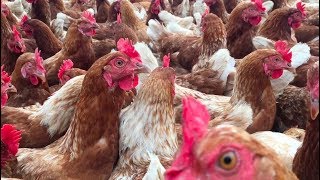
Believe it or not, 90% of eggs in the marketplace here in Sweden are white eggs. But white eggs are a nightmare to keep clean. Brown eggs are actually preferred by customers of sort of small scale local ag, and the odd speck of dirt doesn't show up on them. So it's no problem. Where in Sweden you can't clean eggs. So we're going for. They're slightly more aggressive. They're pecking me right now, but I actually like them. That aggressiveness means they're good at protecting themselves. And we, you know, haven't had any predator problems except for birds that were already outside the fencing. And so I like the brown hens. These are lowmen. They're pretty much the only birds you can get here in Sweden, other than the white variety at any kind of scale. We buy point of lay hens from a small farm and, you know, our order of 1600 brown hens is significant to them, despite the fact that their other smallest farm customers are buying 20,000.
Birds at a time.
But most people are buying white hens. So to order 1600 brown hens is significant enough that we need to plan this far ahead. Those birds will come perhaps 10th of April, which is the earliest we can get them outside. And it allows for a changeover with this flock because it takes some weeks for the hens to start laying eggs in full production. So we get a bit of a crossover with this FL before. Hey, he's pecking my fingers. We get a bit of a crossover with this flock before we clear this out for the summer's tomato production. We won't be planting out tomatoes till mid May or so, so it gives us time to get the birds up in production. We get the birds at 16 weeks, but then they typically don't start, you know, a good amount of production for a month.
After. Getting down to the basics, there's a lot of work to do. It's a very mouldy caravan, but essentially we just want the chassis from under here because that's what we'll be using. Caravan chassis are the best for eggmobiles, in my mind, because they're extremely lightweight and yet long and wide and big enough to take an eggmobile, which we extend out the sides, our eggmobiles, typically five by three and a half meters. And is it worth the effort? Yeah, in my mind it is. I mean, we just put in the order for 1600 hens for next spring. That's a revenue of about €135,000 a year. And so this is, you know, a €1500 investment. By the time we've built new nest boxes and built up the eggmobile, and we'll have four of these roaming around the fields on a few hectares, generating, you know, about €35,000 each. So if we can cut the investment cost down and pay them off by a factor of 15 fold in the first year, then that's really good. In my mind, there are much better quality eggmobiles you can go and buy, but if you look at the purchasing cost, it's incredibly expensive when you're selling eggs. So quite like the frame. It's actually going to be lighter than the second one we built and we've.
Got to get some new tyres.
However, the nut configuration is different to most standard cars. So we're taking the van into the local mechanic on Friday and we might get him to change the wheels for us. But essentially we'll just be building slats that rest straight over this frame, bolted into the frame and try and make it even lighter than the second Eggmobile and see if we can run a single wheeled version. We've been building double wheels for all of our other Eggmobiles that stop it.
Sinking in the mud.
But I think if it's enough, you get away with single wheel. We'll see. We also need to take the front. This bit's all rusted in and it's a bit seized in here. But we have a replacement, one of these we can bolt in. So a little bit of fixing up. We'll probably paint this with bitumen, which will help resist the chicken manure that will inevitably land on it. I've also kept the mud guards that we'll put back over the wheels to stop manure going in there. And then it's up with a wooden structure with free timber we've collected and put a mesh floor and skin the whole thing with tin sheet. So taking disc brakes out so they can't ever lock up and seems like Land Rover kind of wheel spacing. So we're going to go to the mechanic and get some new tyres put on that. Put a little coat of bitumen on here, which is great for. For protecting against chicken poo. And we're deciding whether this is going to be for EggMobile 3 or 4. And we could also lift the heavy original Eggmobile up and drop it straight on this frame perhaps. It's probably about a sixth of the weight of the existing trailer. So not sure where it's going to go yet, but it's going to be an Eggmobile. So fun to be making plans already. We haven't sat down and had all our meetings. That's basically set for the end of this month and for November, but we.
Have to make some decisions ahead of time.
That's the way it goes. We may not build these Eggmobiles until next season now, but it's good to be prepared. And when you're working with free resources and other people's waste, you've got to take opportunities when they come. So we could go out and buy a trailer. Relatively inexpensive compared to how the revenue of the enterprise goes. But if we can find stuff free in the village, then that's how we like to roll. It's how we've built our farm up less than the cost of an average house around here.
So you can see this is pretty much how we built the original egg mobile, which is on this heavy car trailer. And I'm actually bringing all the materials home to build it. In this case. It's a few years ago now, but essentially it's going to be the same build for this new wagon. We basically stripped the trailer and we're laying the chassis down. The framework that holds the mesh up so the chicken poo can go down into the pasture, Go straight on the metal. We tarred the metal and basically it's about three and a half by five meters. You need to account for the amount of roosts and the amount of egg space egg boxes you need. And you need to look that up for your regulations. A lot of people always asking me the exact sizes and dimensions of ours, but really you got to get your roost space down and build it around that. Which is part of the reason why we have this wedge shaped roof a so we can park into the wind. We get very strong winds here occasionally, and it's the most efficient way to get that many roosts into a flat sort of horizontal space. So the roosts are actually up in the air. Now, this eggmobile is a lot more timber than the second version. So we'll be copying the second version on the chassis that we're working on now. But the idea is the same. We use metal mesh, we use fencing pins to hold it down in the floor. But the exact same sort of structure is in both of them. We use less timber in the first one, but bitumen is a great substance to deal with chicken manure. We've never cleaned out the eggmobiles. All the poop goes on the floor and it's perfectly. It works fine as it is. Having built the first one, I'm very happy to build the subsequent ones like this. I think the design is really good. And there's some images of building the nest boxes there. That's, you know, Sweden in the spring. This looks a bit like this. This was a few years ago now. But the, you know, I feel like the design is tested. It works very well. We're very happy with it. And that's how we're going to keep building subsequent eggmobiles. So we're going to have four soon. Missed my daughter a few years ago. She's now turning seven. And the rollaways have worked very well. I mean, basically the only expense is building the nest boxes. We're using a marine ply and putting on this tin sheeting, you see. I mean, it's these two that we're going to build over the winter and spring are going to cost less than €3,000 for both of them and they'll bring in over €65,000 in the first year. So it's low cost. I mean, anyone with basic carpentry can build this on their own.
I actually built these structures single handedly.
Without help, just using support posts to hold up verticals while I got the framework together. And, you know, it's pretty simple stuff if you can use some basic tools and you know, it works very well.
Thanks as always for watching our videos. Glad so many of you get so much out of them. It's a real pleasure to share in this way. You can find out a lot more in our book, Making Small Farms Work. We'll see you in the next video. Sam.
More from Richard


A review of short and intensive season on a mixed farm and restaurant/event space in Sweden






Alskade Kyckling Exploring complexities of poultry production in Sweden and what we stand for


