S4 ● E119 A new chapter and a new context....
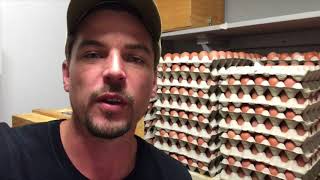
Richard Perkins (with team members) records a farm-planning session focused on restructuring their Swedish farm business. They review the past season, learn accounting software, and plan organizational changes including separating business entities, writing a charter and contracts, and exploring shareholder/profit-share options. Operational goals include sharing market gardens with animal enterprises, improving efficiency (buying time-saving tools), re-evaluating sales channels (moving from veg boxes to loose sales/Rico), scaling microgreens, expanding poultry (1600 layers ordered), and potential value-add projects (smokery). They aim to pay full-time, year-round salaries from a seven-month main season by increasing profit — estimating the farm needs over €200,000 profit to provide a decent living wage in Sweden. Practical details and investments (costs, interns, season timing, chores, infrastructure works) are discussed alongside reflections on work–life balance and upcoming travel/webinars.
Questions this video answers
Over €200,000 of farm profit.
1600 layers ordered; expected to bring in over €120,000 as a sole enterprise.
Approximately €10,000.
About 30,000 Swedish crowns (~€3,000).
Potentially three interns (one intern per lead, 'one intern each').
Chapters
So down to four of us, plus Ragnar, four and a half. How are you guys feeling? So the team have left yesterday and it's Matt and Nicholas, Johanna and I. We're going through a big planning process. So what we're looking to do is redesign the whole business structure. And I'm separating certain parts of my business from the ab, the sort of limited company we have now. Basically, we're starting today to assess this year how it's been for us and what's gone well, what's not got so well. We're all learning the accounting program, so we're all getting our heads around that and looking at how it goes. Part of our structure for next year will be everyone takes over the farm for a month in winter so we can all leave the farm and take a proper break. And so everyone needs to know some basic stuff about how the accounting works. So we're having a good look and talk about how the year went. And then we're starting to make our holistic context this afternoon and really, you know, sitting down to see what we want, how we want our lives to develop from here together and, you know, moving into a very different space. Both Nicholas and Matt are from foreign countries, so it's quite a big step to have them come over here. And there's a lot of jobs around the farm to do. We always stack jobs in order and decide what we're doing. And then what we're going to do is go through optimizing the enterprises. We're talking about tools we need for the market gardens to optimize workflow, take about a thousand hours off the workflow. We're all going to be sharing the market gardens with the other animal enterprises. So we're looking to just totally transform the efficiency of each enterprise, which are already pretty efficient, but we just want to make it top notch. Then we're going to reevaluate our sales plans because we're thinking to really focus on rico, we might stop doing our veg box, for example, or offer the box, which is actually just made of RICOH bunches, and really streamline the way we harvest and sell. And then we're looking into the legal structure of this arrangement with, you know, shareholders or profit sharing, however we're going to do and how we're actually going to get paid because the financial year runs January to December, obviously, but the enterprises kind of run April to April. So we're just working out how we're going to plan and do that. We're going to make a charter that Protects the farm's interest. We're going to be sharing decision making equally among the enterprises we run, but then we also have other enterprises that are based from here. In my previous business, I've been running half my life, so I want a charter in place that protects the farm and the sort of flavour of the farm as it was. And write contracts for each other to protect ourselves. And contracts are so important, especially with friends and people you love very much, because that's where things get sticky. So we all want clear contracts for our own good. And all the time just clarifying like responsibilities and things that come up. So we're making a big online parking list to work out answers to questions we don't know yet and then working out a few short courses and how we're going to have interns. We're going to have one intern each, so three interns next year perhaps, and working out when our season actually runs. So it's a lot of thinking and with young Ragnar around, it's hard to get, you know, concentrated time at different times in the day. So a lot of thinking to do in these next weeks. Really exciting. We got a month now before Matt and I go to Thailand, so it's really nice. I've also got a trip to the UK starting on Monday to go see my daughter. She's turning seven. And I've got a few webinars and lots of meetings to have in the meantime. So we're. It's going to be busy times. Also releasing the online training, so that's taking up some time in the background getting that all prepped. So I'll keep sharing these videos as we make our context clear and our plans clear. But basically we're all looking to get a full time salary out of the farm year round, working a seven month season. So I'll actually work two extra months in the winter looking after the farm when things are quieter. To get the kind of salaries we all want out. For a decent living wage here in Sweden, we need to generate over €200,000 of farm profit. So one of our big tasks now is to sit down and work out where we want to put our focus, which enterprises we want to actually scale up or add value to the products that we have now with less people here, we're doing a big cleanup of the farm. Still got the veg station, the washing station, set up the last veg box and then we'll be packing that down for parking the van over winter. Lots to do, tidying up the gardens. There's still A lot of crops in the ground that we'll be selling as loose bunches on Rico's after the veg box subscriptions have finished. But a lot of the beds have got put away now for sleep for the winter. Just covering them up with our geotextiles to protect them a bit. We've had to take the windbreak down as they've been working on putting this cable all along the road here. So there's a high strength electric cable that goes into our field and up to the neighbours. So digging across the yard they've put in the high strength electric cabling and they've been digging down the ditch actually, which is great for us here. They've crossed over our water and electric lines without damage. Very nice. And they're putting in this very big cable that will replace the lines in the field and hopefully when they reshape it will actually give us a whole new ditch from about here onwards. Down the hill the ditch is there but it's overgrown so it should get shaped nicely into a more functional ditch now. So this machine is laying high strength electric and that copper wire you see going in above it with the yellow tape so that they can detect it with metal detector. This is replacing the overhead electric lines. But something interesting about this machine is basically a curved flute that they first gone along with a ripping unit that's pretty similar to the keyline plough shank. And you can adapt the keyline plough shank with the same sort of funneled fitting on the back and lay water pipe in the field up to 60cm deep with this particular foot. But they're basically using a very big version of this. And obviously the excavator can move large rocks and get down 80, 90 centimeters deep and then just pulling the cable through. So they first laid the cable out and then they can just walk along one guy just checking it's flowing well, just dragging the pipe into place. Getting cold now.
It's getting colder. But the farm is quite empty it feels like. Yeah, it's like all these spaces where used to be a lot of people around like the veg station or gardens just now just.
It's quite. We had a really nice team from the last part of the season, didn't we?
Yeah, it was really nice.
And how do you feel about this next month planning all the new enterprises?
It's exciting to get down to the core of it and really try and. Yeah, I mean we just looked at the numbers, right. And that's really to see what actually happened. The whole Year and summing up all the little costs and details that spread out so far over the whole season. It's very cool. It's cool to look at solutions on how to really reduce costs and increase the value that we have.
Cost a lot. Having a lot of people. No, yeah, not going to be so many people next year. Misa will be here. So we see that a big part of the costs we've been putting in basically investment costs like setting up things like silos this year for example, to save on feed costs and things like this and infrastructure for people, which we basically don't need to make any big investments. We completed all the fencing this year at the farm and we pretty much don't have any investments to make other than some innovative tools that will save us time and building a couple more eggmobiles and maybe putting water pipe into the neighbors to run the boilers over there. But basically we've done all our major investments at the farm that our running costs are going to go down very significantly now.
Now what we're looking at is spending money on efficiencies. So essentially you're in a way, you can look at it like you're not actually spending money, you're receiving time, buying time.
And time's always been the weakest point in like certainly in my holistic context and with Johanna, time is the one thing we've consistently failed at having time. Time for family, time for recreation. And it's been a full time, full on slog for four years now. And it's been great. And I wouldn't change it. I don't think you could. If you want to set up a, you know, small business in a rural area selling farm goods, then you have to work pretty hard. But I think now we're at a very different chapter and that's what's exciting is that we actually can really focus on quality of life. And we've been joking about a 40 hour work week, which it's not. You know, farming is never going to be 40 hour work week, but it can be. Including multiple weekends off in a row and not working after dinner, you know, waking up a little later could be nice.
42 hour.
Yeah, between 40 and 55, totally acceptable. So one of the big questions going to be about what things to scale up and what things to add value to. For example, we can increase the revenue of broilers, for example by building a smokery which is €10,000 investment for the smoking facility as well as a bit of groundwork to put, put the facility in the Right place. Moving one of the wagons around. And layers. We've already ordered 1600 layers, so that brings in over €120,000 as a sole enterprise that only needs two more eggmobiles, about 30,000 crowns or €3,000. Investment and gardens is looking great. Just selling products loose, which is what customers seem to want, and it brings in far more revenue as well as keep working with our restaurant customers. And doing microgreens is a great one. It's a very good enterprise. If we scale up the market for it. We're selling several kilos a week. But it's. I mean, it's very profitable enterprise if you can scale it, which is hard in a rural situation, but something that we're experimenting with more varieties this winter and probably will scale that up because there's no fresh vegetables available in Sweden during the winter. Just storage, carrots and potatoes. Potatoes and things like this. So besides putting the garden beds to sleep for the end of the year, setting off the last of the veg at Rico, it's basically the farm chore is pretty simple. Now it's feeding the hens and collecting eggs. We do that twice a day. And we've been opening the nest boxes at night time and they're not roosting in them. So that's working quite well. It means we don't have to get up until near breakfast time. So our chore time has gone back for like an hour, hour and a half of what it is in the summertime, where we try and coordinate all the different farm tasks at the same time, just to get the day going with everyone sort of, you know, checking in and seeing how things are going. But now it's getting darker, the days are much shorter. And that goes down to like. It gets light at 9:30 soon and then dark at 4 in the middle of the winter. And it's much colder now. So it's, you know, it's a time for lighting fires in the house. Every day we've started to light the fire in the house, we go out in the morning and nest box is already open. So we just feed the birds. Then we come straight back after breakfast and get the first lot of eggs. Because most chickens lay their eggs in the lowest nest boxes and it gets quite crowded in there. And then we'll go back again at 3:30. So we'll do the pigs at the same time in the morning and then at lunch and dinner as well. And the cows have moved once a day at the moment, and the sheep are separate. They're going through the vineyard just cutting grass in there and they're going to be outside probably till December time grazing. They're still on the neighbor's land and they've got our whole farm to go back round and so pretty easy days. And it's still hard to find time when we're all totally available because we whole list of jobs around the farm to do, just tidying up, fixing up things. And it's nice because these guys know the place so well that they, you know, intuitively see things they want to do just to wrap up the season. So we've compiled all that on a list today and prioritized it and we're just finding times in between. We talked a lot about what we actually want here. Holistic context today and we're starting to write our joint holistic context, but starting just by talking about the things we really value. Things that went well this year, things that have gone well characteristics over the years so we can refine them and define them and get them down on paper. It's a really interesting process. It brings up so much stuff to really dramatically change the business and our lives in this way. And all respect for these guys for considering this, I mean it's a cool, you know, opening and opportunity. I think it's really cool. But it's also like a quite dramatic shift to be able to commit to a sort of two, three year thing down the line in a foreign country on the other side of the world, whether you're not close to family. That's more for Matt, who's from Canada. But for Nicholas, you know, in Germany, it's not so far to pop in and out. And he's been coming back here in the winters to help when I've been off doing courses or going on holiday or whatever. But it's really cool that they're even considering it. And it's a lot of work to do. You know, it feels overwhelming, especially at this time in the season when we're all exhausted. Nicholas quite fresh still because he's just popped in at the end of the year. But it's also funny, it's such a different vibe when all the people go and it's quiet at the farm and we're all used to sort of hustle bustle around here. So yeah, we'll just keep plugging away at this and I expect some really interesting things will come out of it. We've got to increase revenues and get smarter with our time so we can all move deeper towards the sort of quality of life we're looking for. And for me that's massive. You know, it's so important now with family and just the amount of things that I've got out. These years of working so intensively has been huge and I wouldn't wish for it to be any other way. But now I'm, you know, I'm not getting old, but I'm, you know, getting halfway nearly, and I want to just chill out a bit, really, and enjoy what we got. And I'll still work very hard. I don't think I'll ever stop, you know, but I want to have enough time to treat this more like a normal sort of occupation and do things as and when I wish. And, you know, that's. It's going well and it's. As I said before, it couldn't really have happened differently before this. I think if you're starting up a rural business or any kind of business, you need to hammer it for some years. You know, most businesses fail in the first couple of years and, you know, nearly all small farming businesses don't ever actually get started. You could say, you know, I think we've done really well and there's so much to celebrate and we've had amazing people come through here and everything's contributed towards the whole. And it's, you know, there's been things that have been amazing, things that have been not so enjoyable and we're just clarifying that now to, you know, address those things, eliminate things we don't enjoy and really focus on the core needs we all share, communication and time and financial security and all those things. And yeah, I'm excited to keep sharing this process with you and let you know how it goes. And thanks for everyone that's been signing up for the online training. That's awesome and I'm really looking forward to it and I appreciate the comments and I really enjoy the fact that, yeah, we're just putting out this simple thing that's like a genuine offering for people that want this type of training. And I really understand it won't suit everyone and it's, you know, out of reach financially for some people, and that's all fine. You know, I feel like it's. We're never gonna do the hard sales thing and spam people emails three times a day and, you know, I'm just not interested in that. It's like we're pretty clear what we're trying to do here and who we're trying to help and support, and everyone's got to make their choices. You know, we're clear and we want to support people who've got clear for themselves. And so great to see some people joining up and I'm excited for this. I think it's going to be the best supportive mode of training we've ever offered and could offer. Super excited for that. Anyway, thanks for watching the videos. You can keep up to date by subscribing and please share the videos. Like them if you enjoy them and look forward to documenting the winter process, which is a very different season at the farm. Find out more in the book Making Small Farms Work. We'll see you in the next video. Can.
More from Richard


A review of short and intensive season on a mixed farm and restaurant/event space in Sweden






Alskade Kyckling Exploring complexities of poultry production in Sweden and what we stand for


